Thursday, June 25, 2009

No sophomore slump for “Kramer the Namer”


Missing Mark
by Julie Kramer

Julie Kramer's debut novel, Stalking Susan, involved Minnesota investigative journalist Riley Spartz pursuing a serial killer of women named Susan. Some marketing genius at Doubleday thought it would be a good idea to send a galley to every Susan on their mailing list. He must have been right; I couldn't resist reading it. And I found it to be an exceptionally entertaining debut.

In Missing Mark, Kramer is sticking with what works--namely an appealing protagonist and a strong supporting cast. Aside from her considerable mystery solving abilities, Riley is a constant font of info on the TV news biz, and I, for one, find it as fascinating as the cases she investigates. Likewise, the series' supporting characters are uniformly interesting without being too quirky to be real.

Good news, the entire gang is back this time around, including some characters I didn't necessarily expect to see again. The plot of this second novel involves a missing persons case. Specifically, it's Mark, a bridegroom who fails to show on his wedding day--or in the several months that have passed since. Riley's cases are never simple, and this investigation quickly grows convoluted, with any number of possible explanations, suspects, and motives. However, Riley's boss thinks a missing bigmouth bass will garner higher ratings for sweeps. She may be right.

Two-thirds of the way through, I figured out who-done-it and why. I have no idea where that intuitive leap came from, but it was no fault of Kramer's plotting, which is tight and well-paced.

I don't have a lot of time for mystery series, but I'm going to stick with Riley & Co. (For readers intrigued by this book, I'd suggest backing up and reading Stalking Susan first. Lucky you, it's just been released in paperback.) So far, the name books are a nice blend of light and dark entertainment. They're not terribly violent or graphic and the mysteries within feel fresh.

In conclusion, I'm Recommending Riley and Judging Julie to be well worth your reading time.
Comment Permalink

Tuesday, June 23, 2009

Another winner--why do I even doubt?


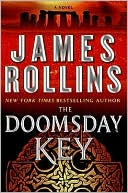
The Doomsday Key: A Novel
by James Rollins

Yes, I doubted, very briefly. I'm ashamed. It's not that The Doomsday Key doesn't start off in a readable and totally entertaining manner. It really does. Rollins has what he does down to a science by now. He quickly reintroduces the main players (a few of whom we haven't seen in a while: Rachel Verona and Seichan) and establishes their relationships with each other. In addition to the ladies above, all the main Sigma players make their appearance, but as usual not all of them are heavily featured on this adventure. Seichan fans rejoice, she has a major role and experiences tremendous character development in this novel.

After the characters are reestablished, (again, as you'd expect) the action starts. A motorcycle chase here, a shootout there, a dash of international travel. Now, I love James Rollins with all my heart, but these opening salvos--while very well-written--felt a little... generic. My moment of doubt.

Happily, it didn't last long. Once Rollins set the main plot in motion, all such thoughts vanished. Seriously, WHAT was I thinking? For me, things really kicked into high gear with the introduction of a new character, Professor Wallace Boyle, whose lecture on peat bogs thrilled me to my soul. I know, peat bogs, who'd a thunk it? But again, that's Rollins' gift. He must look at the world through curiosity-colored glasses; he can find the wonder in the most unlikely of places and subjects. And even more brilliantly, he manages to string together a laundry list of disparate fascinating topics into the plot of a tight, tense thriller. And he does it again and again.

I know I'm being very, very vague about the plot. It would be a shame to give too much away. The central plot revolves around a plague from the past and a plague of the future: hunger. As characters in the novel expound, there will soon be a tipping point where there are far too many people on this planet to feed. Who gets to choose who lives or who dies? If you had the power and resources to make the hard choices, what would you do "to save the world?" And would you be a hero or a villain?

It is the exploring of the above questions that entails ancient artifacts, hidden rooms, booby traps, prophecies come true, missing bumble bees, miracle-performing saints, love triangles, the final resting place of Merlin the wizard, polar bears, teddy bears, and the world's healthiest apple. And I didn't even give you a hint of the real shocker!

A lot of thrillers make the goal, save the world, whatever, and end abruptly. Not so here. There was a nice... cooling down period after the action ended. It's a chance to check in with all the major characters, and a chance for Rollins to leave us with another of his signature cliff-hangers. This one isn't as brutal as some he's written, but those invested in the series will be left with a question to keep them wondering for the coming year.

A final note: Is it wrong that the author's afterwards have become my very favorite part of these novels? This may be the longest one yet (And for God's sake, DON'T read it before you finish the book!), and I am staggered by how much true stuff was worked into the novel. I mean, pretty much every too-amazing-to-be-true fact was, in fact, true. James Rollins, you rock my world!
Comment Permalink

Monday, June 22, 2009

Something wicked and whimsical this way comes...

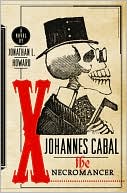
Johannes Cabal the Necromancer
by Jonathan L. Howard

Faustian novels don’t come along every day. Inexplicably, I’ve read two in a row. However, Johannes Cabal the Necromancer and The Angel’s Game are as different as night and day. If Carlos Ruiz Zafon’s dark gothic drama is night, then Jonathan Howard’s light comic fantasy must be day.

As the novel opens, Johannes is pursuing an audience with Satan, to whom he sold his soul some years earlier in exchange for the secrets of necromancy. As you know, Satan never gives something for nothing. He proposes a wager—Johannes must collect 100 souls within a year’s time or forfeit his life as well as his soul. To aid in this endeavor, Satan lends Johannes a “carnival of discord.”

From there, the first half of the novel is picaresque, almost like a series of linked stories: Johannes and the Vampire, Johannes Meets a Ghost, Johannes Takes on a Madman. You get the idea. The second half of the novel is really an extended dénouement, and I’m not entirely sure the two halves join together gracefully. The latter half of the novel is more dramatic in tone and features less of the comedy that buoyed the opening.

When he puts his mind to it, Howard does have that distinctly British comic voice. Here are two brief examples:

* The mayor of Murslaugh was a jolly, ebullient man of the sort who, in a well ordered world, would be called Fezziwig. That his name was Brown was a powerful indictment on the sorry state of things.
* We’re supposed to be doing the devil’s work and you’ve gone and contaminated it all with the whiff of virtue. I really don’t think you’ve quite got the hang of being an agent of evil.

One of the problems with this novel is that it’s a redemption story. As the seeker of redemption, Johannes starts out as a fairly unlikable character, and remains so for much of the book. Truthfully, I generally wasn’t sure if I was rooting for or against him in his wager with Satan. His brother Horst is repeatedly described as “the charismatic one,” but we’re told this rather than shown. While Horst is definitely the more likable of the two, there are few characters to care about in this novel.

As I read, there was one revelation regarding Johannes’s motivation that I kept expecting to be revealed. I didn’t expect, however, to have to wait all the way until the penultimate paragraph of the novel. It’s an ending, of sorts, but leaves me thinking that we haven’t seen the last of Johannes Cabal the Necromancer.
Comment Permalink

As good a starting place as any...


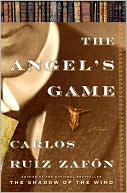
by Carlos Ruiz Zafon
Let me start by saying that I haven’t read The Shadow of the Wind. Ruiz Zafon has stated that The Shadow of the Wind and The Angel’s Game are the first two of a quartet of linked novels that can be read in any order. Reading this prequel, I genuinely feel like it’s a fine starting point.

The Angel’s Game is the story of writer David Martin, and it’s atmospherically set in Barcelona, Spain roughly between 1900 and 1930. The story opens when David is a very young boy. His childhood is a chronicle of deprivation. Despite his modest background, David forms strong relationships with writers, editors, and booksellers. They see an innate intelligence and a natural talent that they mentor. David Martin is a born story-teller.

It is this ability that attracts the attention of French publisher Andreas Corelli, who offers the young writer the proverbial offer he can’t refuse, because The Angel’s Game is essentially a Faustian tale. Oddly enough, it was this central theme that I found least interesting. It was the many supporting characters and their stories that captivated me. The love triangle, the happenings at the bookstore, the murder mystery, and, of course the Cemetery of Forgotten Books—it sounds like there’s a lot going on, and there is, but it all manages to blend into a cohesive story.

Zafon does a brilliant job of developing Martin’s character from innocence to bitter experience. I often found myself wondering how that sweet little boy became a not very admirable adult. It was unfortunate, but the evolution was entirely believable. And Martin is a fully formed character, with many different facets. I especially loved the relationship that developed with his young assistant. And despite the darkness of the tale, a match-making subplot had me laughing out loud.

I’d heard talk that some readers are disappointed with the endings of Zafon’s novels. I don’t count myself among them. The ending of the novel is strange, and may hurt your head if you think too long about it, but how are you going to end this story anyway? I’m looking forward to reading The Shadow of the Wind, and seeing where Zafon goes next with his epic.

Thursday, June 4, 2009

My friend Nicole is the devil

Have you met my friend Nicole? She's the devil. You heard me.

On the very day that I write that I'm drowning in review books she puts this temptation before me: http://infinitesummer.org/

I'll save you the click. A bunch of folks online are making it their summer project to read David Foster Wallace's 1,079 page brilliant, challenging novel Infinite Jest. I have always wanted to read this monster. This is absolutely the best opportunity to do so. Unfortunately, I owe reviews on 12 novels.

Nicole's like, "Come on, we should all do it. It'll be fun!" Grrr.

Now, clearly I don't have time to read this book, but just, you know, out of idle curiosity, I downloaded a lengthy "sample" on my Kindle. I've just read Dave Eggers' forward and the opening of the novel. And OMG, this is the perfect book to read on a Kindle! Even a fully tricked out Kindle weighs like a tenth of that doorstop. The built-in dictionary will help with tricky vocabulary. (Although, there were already words in the sample that the dictionary couldn't help with. Kekuléan. Really?) And instead of having to page all the way to the back of the book for footnotes, you can just click on them and then click back. If I ever read this book, I'm definitely reading it on the Kindle.

Nicole, you suck.

Now this is cool... I just googled Kekuléan and found this:


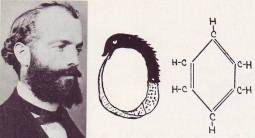
"I stare carefully into the Kekuléan knot of the middle Dean's necktie."


"Kekuléan" is not a type of knot. To Hal, the knot he is focusing on resembles the, self-consuming, annular shape of the snakes that inspired August Kekulé's discovery of Benzene's molecular structure. August Kekule (1829-1896), a renowned German organic chemist was the principal founder of the theory of chemical structure. His most famous work, the discovery of Benzene molecule's structure, is said to be inspired by a dream. "Kekulé's Dream" was that of a self-devouring snake, the shape of which, he used to describe the Benzene Ring. Hal's intense focus on this annular, or ring-like, part of the tie is the first reference to annular shapes.

That's one small part of this amazing Infinite Jest wiki:
Everything imaginable is fully annotated. No that it matters. I am not reading this book.

Tuesday, June 2, 2009

Drowning in Review Books

A question from a friend just reminded me that I still owe reviews on about a dozen books. Just when I think I'm getting ahead, I fall behind again! The next couple of weeks should prove disasterous for reading and for blogging.

I work for a graduate school IRL. One of my many jobs there entails organizing and running academic conferences. My biggest, most grueling conference of the year begins this weekend, ending with graduation next weekend. I'll be working like mad this week, and next week will be exhausting, non-stop, 16-hour days. Not a time to get a lot of reading done.

Part of my problem is that I'm not reading a single book and finishing it. I'm still working on the increasingly delightful Doomsday Key by James "Jimbo" Rollins on my Kindle. I'm also reading a galley of The Angel's Game, Carlos Ruiz Zafon's soon-to-be-published follow-up to The Shadow of the Wind. That's about 1,000 pages combined, and I don't owe a review on either title. D'oh! I just really really wanted to read them, and will surely wind up reviewing them anyway. The review's not the time consuming part.

So, my latest acquisitions from Amazon's Vine program are Johannes Cabal the Necromancer, a debut novel by Jonathan L. Howard. It's a Faustian, period, comic novel featuring the eponymous necromancer, the Devil, a charismatic vampire, and a carnival of the dead. What's not to like?

I wasn't wowed by the leftover choices. I could have picked my friend Chris Kuzeski's latest--and I probably would have--but I'm expecting a galley from the publisher. So in the end I went with Joe Finder's latest. Joe writes a reliable page-turner. The sort of novel you can read and review quickly and enjoyably. I really need to stay away from the 600-page literary fiction until I get these review numbers down.

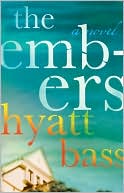
Finally, the good folks at LibraryThing are sending a copy of The Embers by Hyatt Bass. This is another debut novel. It's one of those family drama/family secrets novels that can be so compelling when well done. So far, it's gotten mixed reviews.

On the personal front, I am healing. I was so miserable last week that I flew 3,000 miles to my parents' house on the spur of the moment. Surprise! They took good care of me, and I'm feeling much better. :-)

Wednesday, May 27, 2009

Yes!

I reached a milestone this week.

I wrote my first book review less than three years ago. At the time, I was ranked somewhere in the 2,000,000 range among Amazon.com reviewers. Since that first review, I've taken a little more pride in the reviews I write, and I've improved some. I started to move up in the rankings at Amazon. And I started to enjoy writing them.

This week I finally broke into the top 1,000 reviewers on Amazon.com. It doesn't mean anything. Now I have another little "badge" next to my name. But it was a goal, and I made it. I'm happy.

Thanks to everyone who checked off "helpful" when I requested it! :-)

Friday, May 22, 2009

Execution doesn’t live up to the premise


I’ve been reading a lot of new (and new to me) authors lately, with mixed results. Sometimes I discover a new favorite, and other times I find myself desperate to return to a familiar solid performer. Davis Bunn has written quite a few books, so that puts him in the new to me category. Unfortunately, I felt sadly let down by Gold of Kings.

It had a fun premise, an international hunt for ancient treasure. That’s almost always a winner for me. But Gold of Kings failed from the get-go, and it was more a problem of character than plot. In short, none of the characters worked for me. I don’t know if the bigger problem was that they didn’t seem real, or if they were real, but unlikable. I suspect the truth lies somewhere in the middle.

Our first main character is gorgeous, 25-year-old Storm Syrrell, an antiquities dealer out of Palm Beach. Art and antiquities has been the family business for generations, but Storm’s grandfather, Sean, has just died, leaving the business in dire straights. Soon, however, the question becomes did Sean die, or was he murdered? Regardless, one thing he did before his death was spring his old friend Harry Bennett from a Barbados prison. Harry had been locked up for 17 months on a trumped up charge alleging he’d been illegally bringing up treasure within Barbados’s territorial waters. His time in prison has left this “treasure dog” a changed, wary man. Regardless, he owes Sean a lot and is saddened to learn of his friend’s death. Harry’s job is to protect Storm. He and Storm team up to investigate clues Sean left behind, but even though Storm is “smoking” the author makes it very, very clear that neither is attracted to the other. No, that role is filled by our final main character, a federal agent named Emma Webb.

I could write more about the convoluted plot, but I really don’t care about it enough to do so. Bunn hasn’t written anything else we haven’t seen before. All in all, I’m afraid I found the whole thing a bit of a snooze. My recommendation is to skip this novel. You can do better.

Updates on everything...

So, lot's of stuff going on over here in Susanland. Lot's to update:
  • The Jack Kilborn book giveaway was so much fun! Thanks again to everyone who participated, and congratulations to Kristal, Amy, Mihir, Ellen, and Emily. I hope you guys enjoy the novel, and I'd love it if you'd share your thoughts after reading it. (Don't blame me if it gives you nightmares!)
  • I still hurt bad. Yes, I did break my nose, but the doctor says it's very straight and they don't have to do anything further. It will heal on it's own. I am definitely looking much better than a week ago. Better than you are imagining. But, for now, we can all enjoy my photo on this blog page. My friend David took that shot. Best. Nose. Shot. Ever.

  • Yesterday was Vine targeted newsletter day! No, I did not get offered the super high-end camcorder like some, but I scored nonetheless. As you know, I mostly choose books each month. This month I managed to snag the DVD of a movie I've been dying to see, ever since I just missed it in the theaters. It's Last Chance Harvey, starring (my fave) Dustin Hoffman and Emma Thompson. Equally exciting, I snagged a galley of The Girl Who Played with Fire. It's the sequel of the wonderful Girl with the Dragon Tattoo by Swedish novelist Stieg Larsson. Free gifts like this do help cheer an invalid up. I can't wait to dive into both!

  • The only small disappointment from the newsletter was having to pass up a galley of Jimbo's next novel, The Doomsday Key. I'm sorry, Jimbo! The other items were too good to resist. But I am 1/4 of the way throught the Doomsday Key MS you sent, and I'm loving it. I'm so grateful you're such a prolific writer. Jake Ransom got me through the asthma attack, and now Doomsday Key will see me through another tough time. I'm really looking forward to Alter of Eden in the fall, but I fear for my health!
  • I maligned Glen David Gold's second novel, Sunnyside. I wrote a long post about how disappointed I was in the first 150 pages and put it aside for a while. Well, sometimes a break is all you need. I had picked it up again a couple of weeks ago and breezed through another 100 pages with fresh and more appreciative eyes. I was making progress, and then I fell and hurt myself again. Sunnyside isn't really light reading to go with a side of Vicodin, so it's on hold again. I will finish it eventually!

Wednesday, May 20, 2009

A century of secrets and lies, tangled like the brambles in The Forgotten Garden

The Forgotten Garden: A Novel
by Kate Morton

Life has dealt me an unfortunate amount of pain of late. More than vicodin, I needed a really great novel to take my mind off injuries. Kate Morton’s The Forgotten Garden was just what the doctor ordered! It is a triumph of non-linear storytelling, and the epic tale being told carried me away.

The catalyst driving the story is Nell Andrews. Nell grew up loved and happy in a house full of sisters in Australia. All that changed on the night of her 21st birthday. That was the night that her father confessed the secret that upended Nell’s life—he had found her abandoned at the age of four. She’d been left dockside of a ship that had just come from England. She didn’t know, or wouldn’t divulge, her name and no one came for her. He took her home that night, and he and Nell’s mother had raised her as their own.

That revelation changed the course of Nell’s life, but she never had the opportunity to seriously investigate the mystery of her origins until after her father’s death, when she was in her mid-sixties. She made significant progress, but never fully unraveled the truth. As the novel opens, we first meet four-year-old Nell, then 21-year-old Nell, and then the dying 95-year-old Nell. She’s being attended by her devoted granddaughter Cassandra. Cassandra was largely raised by Nell and was closer to her than anyone, but knew nothing of Nell’s secret until after her death. Cassandra’s even more surprised to learn that she’s been left a cottage in Cornwall, England that Nell had secretly owned for years. So begins Cassandra’s quest to finish unraveling the mystery of Nell’s life.

The story jumps back and forth in time, not just between Nell’s and Cassandra’s investigations, but between the actual events that took place between 1900 and 1913 when Nell was abandoned. There is a rich cast of characters from the gothic past, and the story that gradually unfolds is complex, compelling, and utterly gripping. There’s even a cameo by Mrs. Hodgson Burnett herself! I plowed through the nearly 600 pages in record time, and only wish it had lasted longer.
I very much enjoyed Morton’s debut, The House at Riverton. This sophomore effort seals the deal; I’ve become a devoted fan. The Forgotten Garden is one of those books that I just feel so good about recommending to almost everyone. It’s a contemporary mystery, a Victorian drama, a novel of tragedy and triumph, and more than anything else a spellbinding story from start to finish.