Showing posts with label reviews. Show all posts

Monday, November 2, 2009

John Irving’s finest novel in years


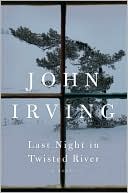
Last Night in Twisted River
by John Irving

I may as well come out and say it: I love John Irving. My love is unconditional. I will defend his lesser novels against all defamers. Happily, I will not be put in that position any time soon, because Last Night in Twisted River is his strongest novel in years. It's a wonderful read!

I recently told a friend, "It's so good it hurts." Reflecting on what I had said, I realized I was right. Sometimes reading his books hurts. He populates his novels with sweet, sentimental, anxious men, and then he tortures them. Mr. Irving's signature blend of comedy and tragedy is again on display. Only in his world does an oft-repeated tale of whacking a bear on the nose with a frying pan lead to an accidental death.

The novel opens in rural New Hampshire in 1954. Widower Domenic Baciagalupo is the cook at a logging camp, where he is assisted by his 12-year-old son Danny. It's a rough and tumble world, personified by the gruff and rugged logger, Ketchem, who becomes the closest thing to family that either Baciagalupo has. Last Night in Twisted River is an epic novel, spanning some 50 years. The aforementioned accidental death is the novel's catalyst. It causes Domenic and Danny to go on the run, sought for decades by a vigilante sheriff. But aside from being the tale of this truncated family's life in exile, this is a story about how you become the person you are.

Specifically, Mr. Irving is looking at how a writer becomes a writer, because that, indeed, is what Danny Baciagalupo becomes--a successful one, too. In fact, Danny Baciagalupo's career is... John Irving's career. There is no attempt to disguise the obviousness of the career trajectory, the subject matter of the books, the literary criticism--all are identical to Irving's. It seems clear that the author is having some fun with the self-referential material, but for fans like me, Irving gives us unusual insight into his process, and possibly some of his own attitudes on the life of a writer. Though, perhaps we can't assume that is so, as Danny has much to say about readers' assumptions about the autobiographical nature of fiction, and the value of what is borrowed versus what is imagined.

In a recent review, I commented on the way that Pat Conroy returns again and again to certain themes and plot elements in his fiction, but "jumbles them up in new and interesting ways." certainly this is true, too, of Mr. Irving. In this novel we again find bears, writers, absent parents, endangered children, New England settings, prep schools, and so forth. It's easy to compare different aspects of this novel to what has come before. A dash of Garp and a soupcon of Owen Meany. But right from the start, the work of which this reminded me the most was The Cider House Rules. Not in subject matter, but in the period setting and the span of the story being told. And probably in the nature of the male relationships in this novel.

Last Night in Twisted River is a long, heart-wrenching story. You won't be racing through it. You may learn more about logging than you ever wanted to know. But John Irving's language is magnificent and you won't soon forget these characters and their epic journey. This book is a must read for all fans of John Irving and of great literature.

Tuesday, August 18, 2009

Science and religion clash in a thought-provoking thriller


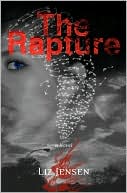
The Rapture
by Liz Jenkins

Apocalypse and dystopia. Everywhere I look apocalypse--at least on my bookshelf, that is. Everyone seems to be writing about the end of the world, and the scariest part is that none of it seems to be the least bit implausible.

The latest addition to my apocalyptic reading is Liz Jensen's The Rapture. Once you get past the notably unattractive cover, the first thing you'll notice about this novel is the superiority of Jensen's prose. Right from the first paragraph, it is abundantly clear that you're not reading the average thriller with serviceable language. What's even more extraordinary is that the beauty of Jensen's prose doesn't slow down this thriller one bit.

At its heart, this is the story of three very damaged people and one very damaged planet. The first-person narrator is Gabrielle Fox. She's the new art therapist at Oxsmith Adolescent Secure Psychiatric Hospital. Gabrielle left the bustle of London for this facility in remote Hadport in the wake of her own personal tragedy. It takes some time for all the details to be teased out, but the result, two years on, is that she will spend the rest of her life in a wheelchair. Doctor, heal thyself. Gabrielle is well aware that she has a lot of issues of her own to work through before she's fully prepared to help others.

Nonetheless, she is charged with helping some severely disturbed young people. Perhaps the most disquieting of them all is Bethany Krall. Now 16, Bethany has been locked up for two years since she killed her mother with a screwdriver. She is not cute, and she is not misunderstood. She is a tough, tough character to empathize with, but you just can't turn away from her.

Bethany has been having visions in the wake of her electro-convulsive therapy treatments. She sees cyclones, earthquakes, and other things she can't possibly know, with very specific details. While at first Gabrielle ignores Bethany's insane babbling, when enough predictions prove correct, she seeks outside opinion. Here enters physicist and expert on natural phenomenon, Frazer Melville (inexplicably referred to by his full name or the appellation "the physicist" at all times). He brings the science--and the romance.

It is fairly formulaic for a thriller to have a romantic sub-plot, but this is a rare example of the romance feeling truly integral to the story being told. The relationship felt organic, and I felt emotionally invested in the characters. Yes, there were times I wanted to slap Gabrielle and yell, "Get over it!" But she behaved consistently as the damaged individual she was.

There's no need to discuss the details of the plot further, but I was pleased by the insertion of some science into the religious "end times" story. This isn't a Michael Crichton-style hard science thriller, but it should definitely leave you with some food for thought.

Provocative, but poorly marketed

Ultimatum
by Matthew Glass

Matthew Glass's debut novel, Ultimatum, suffers from unfulfilled expectations. If you read it expecting to find the thriller it was marketed as, you will be sadly disappointed. If you're open-minded, what you'll find instead is a provocative novel of ideas and politics.

The near-future story is set in 2032. Joe Benton, a good man with good intentions, has just been elected President of the United States. He thought he knew what he was getting into, but almost immediately upon entering office, he learns from the outgoing President that the global warming/climate change situation is significantly worse than anyone has ever publicly or even privately acknowledged. The United States and the whole world is facing a catastrophe--rising tides, flooded cities, millions of people needing to be relocated and much, much more.

When I read the description of the novel, I was expecting an action thriller. Desperate people being airlifted from the rooftops of drowning cities. That sort of thing. On the contrary, this is a serious, intelligent (and realisting, all things considered) look at the tense politics involved in negotiating a crisis. It's suspenseful, but a page-turner it's not.

I can't regret time spent reading books with these dire environmental warnings. What's eerie is that as I was reading the novel, I was hearing news reports that echoed the content of the book almost exactly. Very disturbing.

Wednesday, August 12, 2009

Yet another adult strolling down memory lane


House of Stairs
by William Sleator

I see that I'm not the only adult with strong memories of reading this novel when they were young. In my case, it must have been 30 years ago, but somehow I never forgot the book. I've been keeping my eyes open for a copy for years now, and it's truly fascinating rereading this book that I loved as a child with my 40-year-old eyes.

The novel opens with Peter. Peter has no idea where he is. He finds himself blindfolded and taken to an unknown destination. Removing the blindfold, he finds himself all alone in a truly bizarre environment. Everywhere he looks, as far as the eye can see, he's in a cavernous space filled with stairs. Stairs going up, stairs going down, some with small landings, some connected by bridges. There are no walls, no floor, no railings, no place to feel safe. As he fights vertigo, Peter spies someone below him and calls out.

Unfortunately, Lola doesn't know anymore about where they are or why than Peter does. Their stories of being blindfolded are the same, but they quickly discover other commonalities as well. They are both orphans from state homes and both 16 years old. They discover this is true of the other three kids they meet in the "house of stairs."

Peter, Lola, Blossom, Abigail, and Oliver all find themselves in an utterly inexplicable situation, and they all deal with it differently. They are very different personalities. Survival becomes their first priority. What at first seems to be an entity merely trying to control their actions, quickly becomes far more sinister.

Viewing the reactions of these young people to their circumstances, and finding out how the novel would end, had me turning pages just as fast now as it did when I was a kid. And I'm happy to report that I really enjoyed revisiting this story. I can see that it's a piece of fiction very much of its time, and as an adult I better understand the context of the novel. (Like another reviewer, I, too, thought of the infamous Zimbardo and Milgram experiments.) All that aside, House of Stairs is still a compelling story and a warning to be heeded today.

Friday, August 7, 2009

If Julie & Julia merely whetted your appetite...


Gourmet Rhapsody
by Muriel Barbery

"I am the greatest food critic in the world." So says Monsieur Pierre Arthens on the first page of Muriel Barbery's charming novella, Gourmet Rhapsody. Readers of Barbery's The Elegance of the Hedgehog will remember Monsieur Arthens, and will see other familiar faces crop up. This novella, while not a sequel to that novel, is set in the same apartment building on Rue de Grenelle.

As we can see from his bold introductory statements, there's nothing wrong with Monsieur Arthens' ego. Alas, it is his heart that is failing. He has been told by his doctor that he has 48 hours to live. Perhaps he could depart this world at peace, if only, if only, he could taste that taste once more. The elusive taste he can't quite remember. What is it? Where did he taste it?

The novella is made up of many brief chapters, alternating between Monsieur Arthens' ruminations on the most formative, the most poignant, the most extravagant, and the most serendipitous meals of his life, and reminiscences of Monsieur Arthens by those who know him. These include those closest to him--his spouse, children, lovers--and those who know him more tangentially.

These interludes are only a few pages long, but each character speaks with a distinct voice. So many of these characters left me wanting to know more of their story. I was fascinated with his wife, Anna, and her unusual attitudes. I can only hope that I will learn more of her someday, as Barbery does not appear to be averse to revisiting her character's lives. Of all the people (and things!) that comment throughout the book, his housekeeper's chapter may have been my favorite. There's something so sad about the way he treated her when compared to those whom he was supposed to love. Pierre Arthens is a complex and arguably unlikable character.

But I did like him. How could any foodie not? His language--even within the confines of his own mind--is florid and overblown, but so much of Barbery's prose is interesting and beautiful. Simply put, it is a joy to read. And I defy you to get through this book without running to the kitchen to satisfy any number of cravings the text will evoke. It is, indeed, a rhapsody to the joys of good food, good people, and perhaps a lust for life.

You do NOT want to play Trivial Pursuit with these two!


Spartan Gold
by Clive Cussler & Grant Blackwood

"Fortune favors the bold." That's the oft-quoted motto of Sam and Remi Fargo, the husband and wife protagonists of Clive Cussler's latest co-authored offering. Spartan Gold is the first book in a new series penned by Grant Blackwood. The Fargos are "treasure hunters and adventurers." Sam's background is mechanical engineering and Remi's is in anthropology and history, but both appear to be polymaths. In their line of work, they have ample opportunity to put their numerous skills to good use.

As the novel opens, they're hip deep in the muck of a Maryland swamp. They're looking for buried treasure, but what they find is something altogether unexpected. It's a Nazi-era German mini-sub very, very far from where one would expect to find such a thing. An attempt to get the scoop on local rumors of such an anomaly is aborted by their source's kidnapping right before their eyes. After the Fargos free their friend from the professional operative interrogating him about a shard of wine bottle he found in the Pocomoke, the plot really takes off.

It comes as no surprise when the Fargos' crack research team (at their home base in La Jolla) links the wine bottles to "Napoleon's Lost Cellar," and then links these 12 wine bottles, secreted around the world, to a major hidden treasure. This is because we'd seen the great man make his (unseen) discovery of ancient treasure in the novel's prologue. It is this unknown treasure that Sam and Remi are seeking, but they've got competition in the form of a ruthless Ukrainian crime boss and his henchmen. Unlike the Fargos, Hadeon Bondaruk knows exactly what they're seeking and he will stop at nothing to possess it. So begins a cat and mouse chase across the globe. It's an epic scavenger hunt with a high stakes outcome. Along the way, there's breath-taking scenery and a few history lessons leading up to the inevitable showdown between the good guys and the bad guys.

It's a okay start, as these things go. The characters are more archetypes than flesh and blood people. But, hey, it's a series; there's time for character development later. There are some fun supporting characters, most notably Yvette Fornier-Desmarais. I expect we'll see more of her. Sadly, I can't say the same of their sidekick researcher, Selma. She's a cardboard cutout masquerading as a character. For now, Sam and Remi display that typical Cusslerian insouciance in the face of danger, and snap off witty banter whenever possible. It's easy to joke about their arcane knowledge. (The rugs of Yoruk nomads? Really?) And an early reference to Henri Archambault elicits the response, "the Henri Archambault?" Why, yes, Napoleon Bonaparte's chief enologist. He's practically a household name.

Still, despite their ridiculous knowledge base, the Fargos are refreshingly fallible. This is probably my favorite thing about the novel. They're chasing cryptic clues. They have to work really hard to solve them. Sometimes they even have to sleep on it. The puzzle solving is depicted unusually realistically. (I mean, in those National Treasure films, riddles are solved in a matter of seconds.) Sam and Remi make other mistakes, too. They get lost occasionally. They screw up. What can I say? Imperfect protagonists are infinitely more interesting in my book.

The story is light, very light, and fast-paced for the most part--thought my interest did flag a bit in the middle. But then our heroes took the action into the proverbial lion's den, and that picked things up straight through the ending. By and large the writing is fine, though there are some quirky redundancies to the text.

Fans of Cussler's signature mix of history and adventure will likely give this one a thumbs up. It's nothing to write home about, but Grant Blackwood is off to a respectable start.

Thursday, July 30, 2009

Margaret Atwood makes me want to stick my head in the sand…


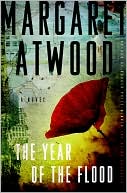
The Year of the Flood
by Margaret Atwood

I know that sounds bad, but her dystopian visions are so profoundly disturbing, I find they influence my thinking for forever after. Say what you will--her nightmares are not easy to dismiss!

Readers of 2003's Oryx and Crake will recognize the world of The Year of the Flood. Neither a prequel nor a sequel, the latter is more of a companion novel. It's set in the same world, covering roughly the same time span. Whereas Oryx and Crake was a post-apocalyptic narrative told from Jimmy's point of view, here the narrators are Toby and Ren. Jimmy, Oryx, and Crake make appearances in this novel, and readers of both books will discover minor characters from the former are major characters in the latter. In short, the two are intertwined, but may be read in any order. It is not necessary to have read Oryx and Crake first, thought ultimately reading them both is an immensely satisfying experience, shedding light on many aspects of the story being told.

Now to the story... Toby and Ren have both spent significant portions of their lives with a fringe religious group called God's Gardeners. Ren was brought to the ascetic group as a child by her mother. Toby found her way there out of desperation in adulthood. Each has professed a disbelief in the tenets of the religion, but the pacifistic and environmental teachings of the group have become deeply ingrained in both. At the opening of the novel, it is Year Twenty-Five in the God's Gardeners' calendar; the Year of the Waterless Flood.

From the beginning, the group's prophet-like leader had preached that a "waterless flood" was coming to wipe out humanity. In addition to their dogmatic environmentalism, the group believed in preparing for this flood with survival skills and food caches called "Ararats." The predicted day has come in the form of a global pandemic. Society has broken down completely. From their respective places of isolation, each woman wonders if she may be the last human left and struggles to survive in this altered world.

As everyone knows, there's nothing like apocalypse to make a person introspective. As each woman reflects upon the ups and downs of her life with the Gardeners and beyond, the reader gradually gleans a fuller picture of the world these women lived in, their individual and joint histories, what led to cataclysm, and what has ultimately happened to the world.

As one might expect from Atwood, The Year of the Flood is a beautiful telling of an ugly story. And what a story it is! In addition to being very much a novel of ideas, it is an utterly un-put-downable page-turner! It's a quick read, with lots of short chapters and white space on the pages. The novel flies by. The ending is satisfying and unsatisfying at once. It sheds some light on Oryx and Crake's enigmatic conclusion and completes this arc of the story, but leaves this reader very much hoping for a final volume of this rumored trilogy.

Monday, July 27, 2009

Set aside your expectations about Harry Potter’s college years…


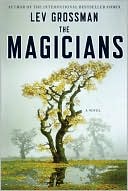
The Magicians
by Lev Grossman

Meet Quentin Coldwater. He's the proverbial smartest kid in his class, and quite possibly the most unhappy. Quentin and his friends are in the process of interviewing for colleges. His most recent interview has gone very much against the plan, and through a series of mysterious events, Quentin winds up in what he perceives to be another world. He suspects he may be in the mystical (fictional) world that he's been a bit obsessed with since childhood. "Is this Fillory?" he asks. "No, upstate New York." This exchange is typical of the ironic blending of fantasy and reality found throughout the novel.

After agreeing to take an entrance exam, Quentin is granted admission to Brakebills, a college of magic. As Quentin would say, "Wait, magic is real?" This may well be the first novel I've read where the characters had a bigger problem with willing suspension of disbelief than the readers did--or at least this reader did, because I was completely captivated from the opening pages.

As others have summarized, this novel explores the education and early post-grad years of several young magicians. No, it's not Harry Potter. After all, it's about kids who read Rowling and Tolkien and watch Star Trek. ("Didn't any of you watch Star Trek? This is basic prime directive stuff.") This is about kids from the real world. They cuss, they binge drink, they explore their sexuality, they make bad choices, and they know all the same pop culture references you do. In addition to these cultural references, Grossman pays homage in ways subtle and unsubtle to classic fantasies. Fillory, for example, might as well be called Narnia. Nonetheless, I enjoyed each allusion I managed to catch.

I was also interested in the way the less, um, magical side of magic was explored. Learning magic is difficult and painful work, and ennui seems to be an epidemic among adult magicians. Really, what are you supposed to do with yourself when all your basic needs are taken care of? What is there to strive for? While Quentin and his friends do eventually stumble onto a quest, he rightly points out that there is a dearth of monsters to battle in the magical world.

And Lev Grossman can write--don't let anyone tell you otherwise. Reading The Magicians reminded me why I'd enjoyed his last novel, Codex, so much. Namely, he creates quirky stories that are wildly imaginative, you never know how they'll end, and which feature some remarkably good prose. It is clear that Grossman is a polarizing author. All I can say is that his work truly speaks to me. Obviously, that's not true of everyone, but I highly recommend The Magicians for readers willing to put aside their expectations.

Monday, July 20, 2009

A flawed debut that still shows a lot of promise


The Last Ember
by Daniel Levin

Daniel Levin's debut novel is a mixed bag. It has a lot of problems, but nonetheless, I see enough promise in this first novel to encourage me that there will be better things to come.

The Last Ember opens with attorney Jonathan Marcus arriving rather abruptly in Rome. Given his background in archeology and classics, he's been summoned by the firm to consult on a case concerning an artifact of questionable provenance. Jonathan hasn't been back to Italy since he was drummed out of the American Academy following a tragic incident. Suddenly his past is coming back to haunt him, as it is one of his former friends and classmates opposite him on the witness stand.

Jonathan is a talented lawyer and performs his job well, albeit with reservations. He has found a clue in the disputed artifact, something no one else seems to have discovered. Unable to let sleeping dogs lie, Jonathan starts down a path that leads him right to his recent legal adversary, Dr. Emili Travia. Soon the two realize they are on the same side as they hunt down clues to the Tabernacle Menorah, the eight-foot, solid gold menorah from King Herod's court, lost for millennia.

All such chases have obstacles, and in The Last Ember baddies abound. Unfortunately, the revelations of their identities, both named and unnamed, were ridiculously anticlimatic. I mean, if you can't figure out the identity of "Salah-al-din" before the reveal, I'll, I'll... revoke your library card! A lot of the "surprises" were well telegraphed ahead of time. Another problem with the novel is that Levin has succumbed to some very convenient plotting. Need to find a person with a highly specialized skill set? One of the protagonists knows just the person! Need to escape the country as a fugitive? I've already got a flight lined up! The two protagonists never make a misstep as they untangle clues that have defied scholars and treasure hunters for centuries--but that's good, because the bad guys and the carabinieri are just as adept at solving ancient puzzles and are hot on their trail.

What does Levin get right? Well, I, for one, really liked the way he blended the Jewish and Christian elements of this tale in interesting ways. It's unfortunate that the Muslims are the villains (though by no means are all of the Muslim characters villainous), but that's the reality of the stories being told at this point in our history. (And that's not a spoiler, BTW.) Had the Catholic Church been the bad guys, that would have been equally cliched. If it had been the Jews, well, lets not go there.

Quite possibly my favorite thing about this novel was the way he really brought Rome and Jerusalem to life. Levin did an excellent job when describing the ubiquitous ruins found in both places, and the way they blend in with contemporary life. I was fascinated with how ancient civilizations literally built right on top of the ruins of what came before, and the underground sequences were marvelously atmospheric!

I think Levin does a really nice job with the secondary characters, with the unfortunate side effict of having the two protagonists appear to be somewhat bland. His prose is fine, and he's very good with pacing. It's not a short book, but Levin keeps the pages turning speedily. And overall, it's a fun story he's telling. There's a lot of interesting history and scholarship. Levin is also making a serious comment on historic revisionism. I can be a very critical reader, but I can't deny that there was fun to be had reading this novel. Despite a flawed debut, I'll be willing to check out whatever Levin comes up with next. I think he has real potential.

Thursday, July 16, 2009

Don't get distracted by the plot


The Wonder Singer
by George Rabasa

Mark Lockwood is a hack. He's a writer without pretension, happy to be making a living. But now he's somehow landed the writing job of all time--ghostwriter of the autobiography of legendary opera diva Merce Casals. Suddenly he has a real investment in his work.

The story of Senora Casals life and work is a major thread throughout the novel. As she relays the triumphs and tragedies of her life, Mark develops a genuine affection for the sometimes difficult lady. And, bored in his marriage, it's an affection of a different sort he holds for her attractive nurse, Perla. All is going well until La Casals up and dies on them.

Suddenly her biography is a hot property. Lockwood's manager wants to reassign the book to a more high profile biographer, and he wants Lockwood to surrender the recordings he and Casals made together. It is at this point that the novel veers off into what might be condsidered farcical territory, with an oversized drag queen added to the troupe of biographers on the run.

The story is interesting on multiple levels--first, simply, for the grand operatic background. And George Rabasa has created a memorable tribe of characters that stick with the reader for some time. However it was here that Rabasa and I ran into trouble. I continually got caught up in the action of The Wonder Singer, and time and time again it became obvious to me that the author was writing a novel about character, not about plot. He hammered it home: character, not plot. And if you read the novel with that in mind, you'll be satisfied. Silly thing that I am, I kept getting distracted by the plot, which led to a somewhat unsatisfying conclusion.

Wednesday, July 1, 2009

Lisbeth Salander is Stieg Larsson's immortality


It feels like a ridiculous cliché to call Stieg Larsson's premature death a tragedy--no matter how true it is. But now, as I am still breathless having finished the second novel of his dazzling Millennium Trilogy, I truly believe this man has achieved immortality. I can easily imagine his creation Lisbeth Salander joining the ranks of the most enduring literary characters. Once you've met Lisbeth, you'll never forget her.

The Girl Who Played With Fire opens quite provocatively, with an unknown 13-year-old girl being held captive by a sexual predator. Whatever ideas you form at that point--you're wrong. Trust me, you are. From there, we have some one-on-one time with Lisbeth. She's been busy since we last saw her, getting a personal makeover and taking some time to see the world. She's been away from Sweden for about a year, and it's time for her to return home. She left without a word to anyone, and she cautiously begins making contact with the people who care about her, with the notable exception of Mikael Blomkvist. Much to his consternation, she wants nothing to do with him, and has refused all contact.

That's okay. Mikael's busy running Millennium magazine and jumping in and out of affairs. And, as it happens, a huge story has just walked into Millennium's office in the form of Dag Svensson. Dag's a young journalist who has been researching sex trafficking in Sweden for years. He's written an explosive book, and he wants Millennium to publish it. They decide not only to take the book, but to build an entire issue of the magazine around it. The question is, how far is someone willing to go to keep a crime quiet?

As an American, I've always had a very positive opinion of the Scandinavian peoples. They always seemed "better" than us, more enlightened somehow. Let me tell you, Stieg Larsson has disavowed me of that notion. The Swedes are just as unpleasant as we are. God, maybe worse! Reading this book, written by a native, is a fascinating glimpse at a culture in many ways quite different from our own. Regardless, it seems that people are people and there's a lot of ignorance, hatred, violence, venality, and sickness in the world.

Others will write more about the plot, but I see no reason to go there. I read this novel without knowing what to expect, and the reading experience was the more enjoyable for it. There were some BIG surprises. That said, the plot was the most flawed part of a luminous novel. On the one had, I absolutely loved it. On the other, Stieg Larsson cheated--not once, but twice! Deep into the middle of the novel, a major plot point revolves around a coincidence. That's not cool. I had a conflicted internal debate, and had just about decided to let Larsson have a pass on at least a semi-plausible coincidence when he did it again! A second major plot point based on a coincidence. That's bad. I was so disgusted at that point that I put the book down for a day. But, I have to admit that when I picked it back up, the story moved along at such a headlong pace that I could hardly bare to set it down again. Seriously, I went without food. Ultimately, it's an amazing story being told, but very flawed from a technical standpoint. As much as I want to, I just can't give it five stars.

Now, what aren't flawed are Larsson's characterizations, and that's what elevates this novel from being one hell of a good mystery to a work of far greater significance. And as I alluded earlier, it is Lisbeth Salander that is his showstopper. I've never met anyone like her. You've never met anyone like her. She's one of a kind; a damaged genius who will break your heart while pissing you off. Lisbeth's past had only been hinted at in Dragon. We learn a lot more about her in Fire. Happily, I feel confident there is still much to unravel in Hornet's Nest. The ending of this novel will leave you deeply impatient to get your hands on the final installment, and fearful of how that one will end.
Comment Permalink

Okay, I did not see THAT coming...


Vanished (Nick Heller)
by Joseph Finder

What the hell has Roger Heller gotten himself into? Vanished, the latest thriller from Joe Finder opens with an attack on Lauren and Roger Heller as they are leaving a Georgetown restaurant. Lauren wakes up more than 24 hours later, badly concussed. Of Roger, there is no sign. In the interim, their 14-year-old son, Gabe, has called in his uncle, Nick, for help. It is Nick Heller, brother of Roger, who Finder is setting up to be the hero of a new series of novels.

He's made a good choice. Born to a life of extreme wealth--all of which was lost in a scandal--Nick gave up the pursuit of cash and joined the armed forces. Now he works as a private investigator for a high-end DC firm. He's tough, charismatic, and extremely competent. Nick Heller strikes me as a character that could go over equally well with both men and women.

Nick and Roger haven't been close in years, but Nick can't leave his only brother's disappearance entirely in the hands of the DC police. He begins his own investigation, while at the same time continuing to look into loose threads from his last work case. The deeper he digs into each, the more convoluted these two cases become. And the more enemies he seems to acquire.

Occasionally I thought I knew where Finder was going with his story, and occasionally I was right. More often I was wrong. A couple times I was completely stunned by a plot development. Joe Finder is definitely more clever than I am. Nick Heller is also more clever than I am, and the man really knows how to throw a punch. Fight scenes in the book were unusually interesting and well-written. Additionally, take it from a native Washingtonian that the DC setting was used with specificity and authenticity. (And observations like, "Washington, D.C., is to lying what Hershey, Pennsylvania, is to chocolate" made me smile.) Plenty of details that ring true do a lot to sell the whole story.

These days, I've got a litmus test for thrillers: Can I read it in a single day? Because it has relatively little to do with how many pages or how fast I read. It's all about a novel holding my interest for hours on end. Vanished passed with flying colors. It's not Finder's strongest work, but it's a good start to a new series.
Comment Permalink

Thursday, June 25, 2009

No sophomore slump for “Kramer the Namer”


Missing Mark
by Julie Kramer

Julie Kramer's debut novel, Stalking Susan, involved Minnesota investigative journalist Riley Spartz pursuing a serial killer of women named Susan. Some marketing genius at Doubleday thought it would be a good idea to send a galley to every Susan on their mailing list. He must have been right; I couldn't resist reading it. And I found it to be an exceptionally entertaining debut.

In Missing Mark, Kramer is sticking with what works--namely an appealing protagonist and a strong supporting cast. Aside from her considerable mystery solving abilities, Riley is a constant font of info on the TV news biz, and I, for one, find it as fascinating as the cases she investigates. Likewise, the series' supporting characters are uniformly interesting without being too quirky to be real.

Good news, the entire gang is back this time around, including some characters I didn't necessarily expect to see again. The plot of this second novel involves a missing persons case. Specifically, it's Mark, a bridegroom who fails to show on his wedding day--or in the several months that have passed since. Riley's cases are never simple, and this investigation quickly grows convoluted, with any number of possible explanations, suspects, and motives. However, Riley's boss thinks a missing bigmouth bass will garner higher ratings for sweeps. She may be right.

Two-thirds of the way through, I figured out who-done-it and why. I have no idea where that intuitive leap came from, but it was no fault of Kramer's plotting, which is tight and well-paced.

I don't have a lot of time for mystery series, but I'm going to stick with Riley & Co. (For readers intrigued by this book, I'd suggest backing up and reading Stalking Susan first. Lucky you, it's just been released in paperback.) So far, the name books are a nice blend of light and dark entertainment. They're not terribly violent or graphic and the mysteries within feel fresh.

In conclusion, I'm Recommending Riley and Judging Julie to be well worth your reading time.
Comment Permalink

Tuesday, June 23, 2009

Another winner--why do I even doubt?


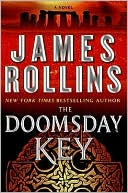
The Doomsday Key: A Novel
by James Rollins

Yes, I doubted, very briefly. I'm ashamed. It's not that The Doomsday Key doesn't start off in a readable and totally entertaining manner. It really does. Rollins has what he does down to a science by now. He quickly reintroduces the main players (a few of whom we haven't seen in a while: Rachel Verona and Seichan) and establishes their relationships with each other. In addition to the ladies above, all the main Sigma players make their appearance, but as usual not all of them are heavily featured on this adventure. Seichan fans rejoice, she has a major role and experiences tremendous character development in this novel.

After the characters are reestablished, (again, as you'd expect) the action starts. A motorcycle chase here, a shootout there, a dash of international travel. Now, I love James Rollins with all my heart, but these opening salvos--while very well-written--felt a little... generic. My moment of doubt.

Happily, it didn't last long. Once Rollins set the main plot in motion, all such thoughts vanished. Seriously, WHAT was I thinking? For me, things really kicked into high gear with the introduction of a new character, Professor Wallace Boyle, whose lecture on peat bogs thrilled me to my soul. I know, peat bogs, who'd a thunk it? But again, that's Rollins' gift. He must look at the world through curiosity-colored glasses; he can find the wonder in the most unlikely of places and subjects. And even more brilliantly, he manages to string together a laundry list of disparate fascinating topics into the plot of a tight, tense thriller. And he does it again and again.

I know I'm being very, very vague about the plot. It would be a shame to give too much away. The central plot revolves around a plague from the past and a plague of the future: hunger. As characters in the novel expound, there will soon be a tipping point where there are far too many people on this planet to feed. Who gets to choose who lives or who dies? If you had the power and resources to make the hard choices, what would you do "to save the world?" And would you be a hero or a villain?

It is the exploring of the above questions that entails ancient artifacts, hidden rooms, booby traps, prophecies come true, missing bumble bees, miracle-performing saints, love triangles, the final resting place of Merlin the wizard, polar bears, teddy bears, and the world's healthiest apple. And I didn't even give you a hint of the real shocker!

A lot of thrillers make the goal, save the world, whatever, and end abruptly. Not so here. There was a nice... cooling down period after the action ended. It's a chance to check in with all the major characters, and a chance for Rollins to leave us with another of his signature cliff-hangers. This one isn't as brutal as some he's written, but those invested in the series will be left with a question to keep them wondering for the coming year.

A final note: Is it wrong that the author's afterwards have become my very favorite part of these novels? This may be the longest one yet (And for God's sake, DON'T read it before you finish the book!), and I am staggered by how much true stuff was worked into the novel. I mean, pretty much every too-amazing-to-be-true fact was, in fact, true. James Rollins, you rock my world!
Comment Permalink

Monday, June 22, 2009

Something wicked and whimsical this way comes...

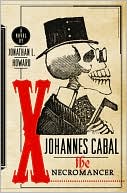
Johannes Cabal the Necromancer
by Jonathan L. Howard

Faustian novels don’t come along every day. Inexplicably, I’ve read two in a row. However, Johannes Cabal the Necromancer and The Angel’s Game are as different as night and day. If Carlos Ruiz Zafon’s dark gothic drama is night, then Jonathan Howard’s light comic fantasy must be day.

As the novel opens, Johannes is pursuing an audience with Satan, to whom he sold his soul some years earlier in exchange for the secrets of necromancy. As you know, Satan never gives something for nothing. He proposes a wager—Johannes must collect 100 souls within a year’s time or forfeit his life as well as his soul. To aid in this endeavor, Satan lends Johannes a “carnival of discord.”

From there, the first half of the novel is picaresque, almost like a series of linked stories: Johannes and the Vampire, Johannes Meets a Ghost, Johannes Takes on a Madman. You get the idea. The second half of the novel is really an extended dénouement, and I’m not entirely sure the two halves join together gracefully. The latter half of the novel is more dramatic in tone and features less of the comedy that buoyed the opening.

When he puts his mind to it, Howard does have that distinctly British comic voice. Here are two brief examples:

* The mayor of Murslaugh was a jolly, ebullient man of the sort who, in a well ordered world, would be called Fezziwig. That his name was Brown was a powerful indictment on the sorry state of things.
* We’re supposed to be doing the devil’s work and you’ve gone and contaminated it all with the whiff of virtue. I really don’t think you’ve quite got the hang of being an agent of evil.

One of the problems with this novel is that it’s a redemption story. As the seeker of redemption, Johannes starts out as a fairly unlikable character, and remains so for much of the book. Truthfully, I generally wasn’t sure if I was rooting for or against him in his wager with Satan. His brother Horst is repeatedly described as “the charismatic one,” but we’re told this rather than shown. While Horst is definitely the more likable of the two, there are few characters to care about in this novel.

As I read, there was one revelation regarding Johannes’s motivation that I kept expecting to be revealed. I didn’t expect, however, to have to wait all the way until the penultimate paragraph of the novel. It’s an ending, of sorts, but leaves me thinking that we haven’t seen the last of Johannes Cabal the Necromancer.
Comment Permalink