Only Time Will Tell
by Jeffrey Archer
Remember decades ago when Jeffrey Archer used to write those fantastic epics? Kane & Able, As the Crow Flies; that’s what I’m talking about! Here’s the good news: His latest novel, Only Time Will Tell harkens back to his glory days. It’s the most entertaining thing he’s written in years, in my humble opinion. Here’s the bad news: What once would have been a juicy epic tale has fallen victim to the publishing industry’s current trend of trilogizing. (New word. I coined it.)
Except, except, this is NOT a trilogy—this is, in fact, the first of the FIVE planned novels that will comprise The Clifton Chronicles. And as entertaining as the book is, and I’ll get back to that in a moment, this is very annoying. Back in the day, you write an epic, it’s 600 or 800 or even 1,000 pages. James Michener did it. James Clavell did it. And, yes, Jeffrey Archer did it. But in the very recent past, some marketing genius realized that you could get readers to pay a lot more for a long book by chopping it into pieces. Maybe pad the text a little, and leave some white space on the pages. What once might have been an 800-page novel is now three 300-page novels. It is the era of the trilogy. And writers don’t even have to worry about writing in story arcs to end each segment. No, just end them wherever—or even better, end on cliff-hanger! And don’t warn readers that they’re only getting a very incomplete portion of the story they signed on to read! And make them wait years to get to the conclusion!
Sorry, was I ranting? It’s true that Mr. Archer (Sir Jeffrey?) and his publishers are guilty of most of my complaints above. For instance, this novel ends very abruptly, with no sort of resolution at all, on a cliff-hanger. So, yes, this new trend is really bugging me. I’ll move on now.
The series is named the Clifton Chronicles after the protagonist, Harry Clifton. This novel opens in 1919, when Harry is a mere gleam in his father’s eye. What follows is roughly the first 20 years of that young man’s life. Despite his very modest circumstances, Harry, it turns out, is a gifted fellow. In addition to being very bright, he’s a truly exceptional singer. Harry’s talents are recognized by several people in a position to nurture them, and so it comes to pass that this dock worker’s son has an opportunity for an education and a future his family could not have imagined.
This first book covers Harry’s school years—the friends and enemies he makes along the way, the triumphs and setbacks, the secrets and lies, and the many, many melodramas. Archer is at his soapy best, and Harry’s story is engaging, eventful, and fast-paced. He’s a likable protagonist, a veritable paragon of virtue, as are his mother, friends, educators, and so forth. You’ll know the baddies when you see them. Archer’s characters are not nuanced. What you see is what you get. But none of this takes away from the fun of the story being told. Only Time Will Tell is not challenging or literary; it’s just good old-fashioned escapist fiction. I had a great time reading it. And as much as I grumble, I will be back for part two. Grrr.
Thursday, September 15, 2011
Wednesday, September 14, 2011
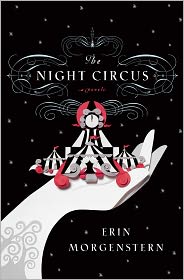
HUMPDAY GIVEAWAY: The Night Circus by Erin Morgenstern
So, did you happen to see the love letter of a review I posted for this novel yesterday? I've read about 80 books so far this year, and this is far and away my favorite so far! And I'm thrilled to have a trade paperback galley of the novel to give away. Plus, I'm looking forward to seeing Ms. Morgenstern on Friday, so hopefully it will be a signed galley!
Oh, and if you don't believe my raves, check out this starred review from Publisher's Weekly:
Debut author Morgenstern doesn't miss a beat in this smashing tale of greed, fate, and love set in a turn of the 20th-century circus. Celia is a five-year-old with untrained psychokinetic powers when she is unceremoniously dumped on her unsuspecting father, Hector Bowen, better known as Le Cirque des Rêves' Prospero the Entertainer. Hector immediately hatches a sinister scheme for Celia: pit her against a rival's young magician in an epic battle of magic that will [Spoiler redacted for your own good.--ST] What neither Hector nor his rival count on is that Celia and Marco will eventually fall in love. Their mentors--Marco's mentor, Alexander, plucked him from the London streets due to his psychic abilities--attempt to intervene with little success as Celia and Marco barrel toward an unexpected and oddly fitting conclusion. Supporting characters--such as Bailey, a farm boy who befriends a set of twins born into the circus who will drastically influence his future; Isobel, a circus employee and onetime girlfriend of Marco's; and theatrical producer Chandresh Christophe Lefèvre--are perfectly realized and live easily in a giant, magical story destined for bestsellerdom. This is an electric debut on par with Special Topics in Calamity Physics. (Sept.)I've become a rêveur. And I already want to read the book again. So, the usual rules apply, and I wish you all good luck!
- The giveaway is open to anyone with a U.S. mailing address ('cause I'm footing the postage).
- To enter, all you need to do is post a comment below by Wednesday, September 21, 2011.
- At my discretion, if there are less than five respondents, I can cancel or extend the giveaway.
- Winner will be chosen by me with the help of a random number generator, and will be announced in the comments section of this thread.
- Please check back to see if you've won. If you have left a way to contact you, I will do so.
- The winner has one week to respond to me at suetu@yahoo.com with a mailing address, or I will choose a new winner.
- If a second winner fails to respond, the book automatically goes to the lovely members of my face-to-face book club.
- Previous giveaway winners are welcome to enter.
- Finally, if at all possible, please comment below only if you're entering the giveaway.
Tuesday, September 13, 2011
“It sounds rather like magic, doesn’t it?”
The Night Circus
by Erin Morgenstern
If there is magic, in the world as I know it, it is found in the pages of books. And Erin Morgenstern’s debut novel, The Night Circus, is the most magical, transporting experience I’ve had in quite some time. It opens in 1873, backstage in a New York theater with these words, “The man billed as Prospero the Enchanter receives a fair amount of correspondence via the theater office, but this is the first envelope addressed to him that contains a suicide note, and it is also the first to arrive carefully pinned to the coat of a five-year-old girl.” And so it is that Hector Bowen learns of the existence of his daughter, Celia. Hector’s response to his change in circumstances is unenthusiastic, but he soon discovers that Celia is a chip off the old block. You see, Hector only pretends to be an illusionist on stage. The magic he practices is entirely real—and Celia has inherited talent.
Hector is not content to merely mentor his daughter. He contacts his associate, Mr. A. H— about a wager. A deal is struck, after which that gentleman returns to London and adopts a protégé of his own, the orphaned Marco. These two young people are raised unconventionally, studying magic under their tutors’ philosophies, all the while knowing there will be a competition between the two of them some day. Enter impresario Chandresh Lefèvre, who has imagined something wondrous. He explains:
“More than a circus, really, like no circus anyone has ever seen. Not a single large tent but a multitude of tents, each with a particular exhibition. No elephants or clowns. No, something more refined than that. Nothing commonplace. This will be different, this will be an utterly unique experience, a feast for the senses. Theatrics sans theater, an immersive entertainment. We will destroy the presumptions and preconceived notions of what a circus is and make it something else entirely, something new.”
And so the venue for the magical competition between Celia and Marco is born. And there you have the bare bones of Ms. Morgenstern’s story. There’s no need to tell more. The magic of this tale is in the language and the characters and in Ms. Morgenstern’s infinitely rich, romantic imagination.
The circus, it is said, “arrives without warning.” Not so this novel. There have been all kinds of pre-pub buzz and hype for this title. There’s a reason; this book is so special that almost all who read it take note. Ms. Morgenstern’s tale transcended the page and brought true enchantment to my oh-so-ordinary life. As it happens, one of the characters could be speaking for the author herself:
“I find I think of myself not as a writer so much as someone who provides a gateway, a tangential route for readers to reach the circus. To visit the circus again, if only in their minds, when they are unable to attend it physically. I relay it through printed words on crumpled newsprint, words they can read again and again, returning to the circus whenever they wish, regardless of time of day or physical location. Transporting them at will.
When put that way, it sounds rather like magic, doesn’t it?”
Oh yes, it does! And I expect to be returning to this circus for many years to come.
by Erin Morgenstern
If there is magic, in the world as I know it, it is found in the pages of books. And Erin Morgenstern’s debut novel, The Night Circus, is the most magical, transporting experience I’ve had in quite some time. It opens in 1873, backstage in a New York theater with these words, “The man billed as Prospero the Enchanter receives a fair amount of correspondence via the theater office, but this is the first envelope addressed to him that contains a suicide note, and it is also the first to arrive carefully pinned to the coat of a five-year-old girl.” And so it is that Hector Bowen learns of the existence of his daughter, Celia. Hector’s response to his change in circumstances is unenthusiastic, but he soon discovers that Celia is a chip off the old block. You see, Hector only pretends to be an illusionist on stage. The magic he practices is entirely real—and Celia has inherited talent.
Hector is not content to merely mentor his daughter. He contacts his associate, Mr. A. H— about a wager. A deal is struck, after which that gentleman returns to London and adopts a protégé of his own, the orphaned Marco. These two young people are raised unconventionally, studying magic under their tutors’ philosophies, all the while knowing there will be a competition between the two of them some day. Enter impresario Chandresh Lefèvre, who has imagined something wondrous. He explains:
“More than a circus, really, like no circus anyone has ever seen. Not a single large tent but a multitude of tents, each with a particular exhibition. No elephants or clowns. No, something more refined than that. Nothing commonplace. This will be different, this will be an utterly unique experience, a feast for the senses. Theatrics sans theater, an immersive entertainment. We will destroy the presumptions and preconceived notions of what a circus is and make it something else entirely, something new.”
And so the venue for the magical competition between Celia and Marco is born. And there you have the bare bones of Ms. Morgenstern’s story. There’s no need to tell more. The magic of this tale is in the language and the characters and in Ms. Morgenstern’s infinitely rich, romantic imagination.
The circus, it is said, “arrives without warning.” Not so this novel. There have been all kinds of pre-pub buzz and hype for this title. There’s a reason; this book is so special that almost all who read it take note. Ms. Morgenstern’s tale transcended the page and brought true enchantment to my oh-so-ordinary life. As it happens, one of the characters could be speaking for the author herself:
“I find I think of myself not as a writer so much as someone who provides a gateway, a tangential route for readers to reach the circus. To visit the circus again, if only in their minds, when they are unable to attend it physically. I relay it through printed words on crumpled newsprint, words they can read again and again, returning to the circus whenever they wish, regardless of time of day or physical location. Transporting them at will.
When put that way, it sounds rather like magic, doesn’t it?”
Oh yes, it does! And I expect to be returning to this circus for many years to come.
Monday, September 12, 2011
Being paranoid doesn’t mean they aren’t out to get you…
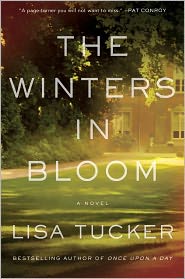
The Winters in Bloom
by Lisa Tucker
David and Kyra Winter have transcended their difficult pasts and made a happy life together. When they married, they never planned to have a child, but five-year-old Michael is the joy of their lives. So much so that the anxiety they feel about his well-being has transformed into smothering over-protection. They are constantly waiting for the other shoe to drop, and on a bright, sunny afternoon it does.
Home-schooled Michael has been allowed out into the yard to play on his own for half an hour. His mother turns away from the window for a moment and he’s gone. Just gone. They know he would not leave on his own, and their fears are confirmed when the police find a note. It states that “Michael is fine and he’ll be back in a day or two.” This does nothing to allay the worries of the Winters, or their frustration with the police investigation. Both David and Kyra have people in their pasts that are unstable or desperate enough to have taken their child.
The story is told in a third person omniscient voice that moves from character to character in the telling of the tale, and backwards and forwards in time as both the reader and the spouses learn the truth of their pasts. This is a relatively brief novel, and the story unfolds in a quick, engaging, and just pleasantly readable fashion. Despite the subject matter, there’s nothing too challenging or serious on the page. Twists and revelations keep the story moving along, and the ultimate revelation of the identity of the kidnapper is satisfying. While both David and Kyra are portrayed as flawed characters, they are almost too good, too likable to be believed. Clearly, the reader is meant to root for this small family to have a happy ending. It doesn’t give the drama an overly realistic feel, but it works just fine for light entertainment. This was my overdue introduction to Ms. Tucker’s work, and I’m very glad to have finally had a chance to read her.
by Lisa Tucker
David and Kyra Winter have transcended their difficult pasts and made a happy life together. When they married, they never planned to have a child, but five-year-old Michael is the joy of their lives. So much so that the anxiety they feel about his well-being has transformed into smothering over-protection. They are constantly waiting for the other shoe to drop, and on a bright, sunny afternoon it does.
Home-schooled Michael has been allowed out into the yard to play on his own for half an hour. His mother turns away from the window for a moment and he’s gone. Just gone. They know he would not leave on his own, and their fears are confirmed when the police find a note. It states that “Michael is fine and he’ll be back in a day or two.” This does nothing to allay the worries of the Winters, or their frustration with the police investigation. Both David and Kyra have people in their pasts that are unstable or desperate enough to have taken their child.
The story is told in a third person omniscient voice that moves from character to character in the telling of the tale, and backwards and forwards in time as both the reader and the spouses learn the truth of their pasts. This is a relatively brief novel, and the story unfolds in a quick, engaging, and just pleasantly readable fashion. Despite the subject matter, there’s nothing too challenging or serious on the page. Twists and revelations keep the story moving along, and the ultimate revelation of the identity of the kidnapper is satisfying. While both David and Kyra are portrayed as flawed characters, they are almost too good, too likable to be believed. Clearly, the reader is meant to root for this small family to have a happy ending. It doesn’t give the drama an overly realistic feel, but it works just fine for light entertainment. This was my overdue introduction to Ms. Tucker’s work, and I’m very glad to have finally had a chance to read her.
Friday, September 9, 2011
In some ways a departure, and in other ways not
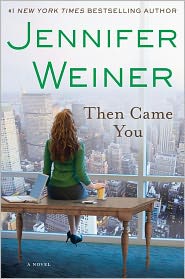
Then Came You
by Jennifer Weiner
I’ve been a fan of Jennifer Weiner’s since her debut novel. The first word that comes to mind to describe her work is “funny.” She always seems to be able to find the humor in any situation, so clearly is was a deliberate choice to leave the funny out of her most recent novel.
Then Came You looks at surrogacy from a variety of perspectives. There’s the 20-year-old college student who becomes the egg donor; the cash-strapped military wife and mother of two who acts as the surrogate; the gold-digging trophy wife who will be this miracle of modern science’s mother; and also the trophy wife’s adult step-daughter. Each of these women has very different lives, problems, strengths, and weaknesses, and each will play a vital roll in bringing this child into the world.
Ms. Weiner is an accomplished story-teller, so the story goes down easy. It’s a quick, enjoyable read. I have read interviews where the author discusses some of the questions she had about the economics involved in these transactions. These are interesting questions, worthy of exploration. And these issues are explored within the novel, but gently. Story wins out over social agenda.
As noted, I did find Then Came You to be a diverting read, but I will be hoping for a few more chuckles in the next novel. Still, Jennifer Weiner is among the very best at telling contemporary women’s stories.
by Jennifer Weiner
I’ve been a fan of Jennifer Weiner’s since her debut novel. The first word that comes to mind to describe her work is “funny.” She always seems to be able to find the humor in any situation, so clearly is was a deliberate choice to leave the funny out of her most recent novel.
Then Came You looks at surrogacy from a variety of perspectives. There’s the 20-year-old college student who becomes the egg donor; the cash-strapped military wife and mother of two who acts as the surrogate; the gold-digging trophy wife who will be this miracle of modern science’s mother; and also the trophy wife’s adult step-daughter. Each of these women has very different lives, problems, strengths, and weaknesses, and each will play a vital roll in bringing this child into the world.
Ms. Weiner is an accomplished story-teller, so the story goes down easy. It’s a quick, enjoyable read. I have read interviews where the author discusses some of the questions she had about the economics involved in these transactions. These are interesting questions, worthy of exploration. And these issues are explored within the novel, but gently. Story wins out over social agenda.
As noted, I did find Then Came You to be a diverting read, but I will be hoping for a few more chuckles in the next novel. Still, Jennifer Weiner is among the very best at telling contemporary women’s stories.
Thursday, September 8, 2011
Diana Abu-Jaber captures a family’s grief and a cookie’s soul
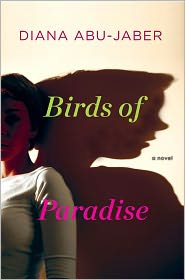
Birds of Paradise
by Diana Abu-Jaber
Tolstoy said, “Happy families are all alike; every unhappy family is unhappy in its own way.” In Diana Abu-Jaber’s fourth novel, the Muirs of Miami are a deeply unhappy family. The tale is set in the days leading up to daughter, Felice’s, 18th birthday. Her mother, Avis, is a talented pastry chef, running a high-end bakery out of their home. Her father, Brian, is a successful real estate attorney. And at 23, her older brother, Stanley, is running a business he’s passionate about. These are privileged people with every reason to be content, but when Felice was only 13 years old, she ran away from home. She didn’t run far. She’s still in Miami, a “beach kid,” sleeping outdoors or squatting in houses. But there’s been virtually no contact with her family since she left, and it’s torn them apart.
This is not a story of abuse or addiction—although there is abuse and there are drugs in her story. No, Felice was a supremely lovely and loved child being raised by flawed, but essentially good, people. And part of the suspense of the novel is the motivation for Felice’s actions. No one can understand why this young girl went off the rails. At one point her father asks himself:
“What. What should he and Avis have done? Put their girl’s face on a milk carton?
Missing: Felice Muir, Age 13.
Kidnapped by herself.
Motivation: Unknown
What child does such a thing as that? Could she have been that unhappy?”
The story is told in chapters that alternate between Avis’s, Brian’s, and Felice’s points of view, until Stanley has his say near the novel’s end. Based on this overly simple summary, Birds of Paradise sounds like a Lifetime original movie. Nothing could be further from the truth! Diana Abu-Jaber is a lush, evocative novelist capturing subtle emotions and interplays amongst her characters. There is all the grief and confusion you would expect of a family in this situation, but beyond the family unit, there are dangerous friendships and complicated interactions. There is so much happening on so many levels.
Abu-Jaber captures the atmospheric otherness of her setting. (“She remembers how Hannah hated everything about Miami—even some of the best things, like the hooked-nosed white ibises roaming around in the grass and the flowers that blew up into winter foliage—a tree or bush opening overnight into flower like perfumed flames.”) And not just the exotic physicality of the place, but the uneasy clash of cultures. (“She’d felt disorientation strong as vertigo after they’d first moved to Miami—as if her magnetic poles had been switched. The drivers were appalling, punching their horns, running reds, cutting each other off like sworn enemies. There were certain shops and restaurants one would not wish to enter unless one spoke Spanish—and not at her halting, college intermediate level, either. There were whole neighborhoods and sections of town where she felt scrutinized and sized up. How many times had she waited by counters while salespeople went in search of ‘the one’ who spoke English?”)
Another reviewer described the novel as layered, and that is apt. On the surface, you have the story being told, the family drama. But in other layers, you’ve got the all kinds of subtext—the psychology of the characters, the social commentary, the time and the place. And there are external stressors ratcheting up tension as the book progresses: a husband’s temptation, the danger of the streets, financial crises, and physical jeopardy.
The language is as sumptuous as the rich desserts that Avis creates, and fans of the author won’t be surprised by the attention she lavishes on food within the text. Again, beyond mere description, the reader must ponder what is being said about sustenance, nurturing, creativity, privilege. The novel’s opening sentence reads, “A cookie, Avis told her children, is a soul.” Things are often more than they may at first seem in Abu-Jaber’s adept hands. A cookie is more than a cookie, and a family is more than the tragedy that defines it.
by Diana Abu-Jaber
Tolstoy said, “Happy families are all alike; every unhappy family is unhappy in its own way.” In Diana Abu-Jaber’s fourth novel, the Muirs of Miami are a deeply unhappy family. The tale is set in the days leading up to daughter, Felice’s, 18th birthday. Her mother, Avis, is a talented pastry chef, running a high-end bakery out of their home. Her father, Brian, is a successful real estate attorney. And at 23, her older brother, Stanley, is running a business he’s passionate about. These are privileged people with every reason to be content, but when Felice was only 13 years old, she ran away from home. She didn’t run far. She’s still in Miami, a “beach kid,” sleeping outdoors or squatting in houses. But there’s been virtually no contact with her family since she left, and it’s torn them apart.
This is not a story of abuse or addiction—although there is abuse and there are drugs in her story. No, Felice was a supremely lovely and loved child being raised by flawed, but essentially good, people. And part of the suspense of the novel is the motivation for Felice’s actions. No one can understand why this young girl went off the rails. At one point her father asks himself:
“What. What should he and Avis have done? Put their girl’s face on a milk carton?
Missing: Felice Muir, Age 13.
Kidnapped by herself.
Motivation: Unknown
What child does such a thing as that? Could she have been that unhappy?”
The story is told in chapters that alternate between Avis’s, Brian’s, and Felice’s points of view, until Stanley has his say near the novel’s end. Based on this overly simple summary, Birds of Paradise sounds like a Lifetime original movie. Nothing could be further from the truth! Diana Abu-Jaber is a lush, evocative novelist capturing subtle emotions and interplays amongst her characters. There is all the grief and confusion you would expect of a family in this situation, but beyond the family unit, there are dangerous friendships and complicated interactions. There is so much happening on so many levels.
Abu-Jaber captures the atmospheric otherness of her setting. (“She remembers how Hannah hated everything about Miami—even some of the best things, like the hooked-nosed white ibises roaming around in the grass and the flowers that blew up into winter foliage—a tree or bush opening overnight into flower like perfumed flames.”) And not just the exotic physicality of the place, but the uneasy clash of cultures. (“She’d felt disorientation strong as vertigo after they’d first moved to Miami—as if her magnetic poles had been switched. The drivers were appalling, punching their horns, running reds, cutting each other off like sworn enemies. There were certain shops and restaurants one would not wish to enter unless one spoke Spanish—and not at her halting, college intermediate level, either. There were whole neighborhoods and sections of town where she felt scrutinized and sized up. How many times had she waited by counters while salespeople went in search of ‘the one’ who spoke English?”)
Another reviewer described the novel as layered, and that is apt. On the surface, you have the story being told, the family drama. But in other layers, you’ve got the all kinds of subtext—the psychology of the characters, the social commentary, the time and the place. And there are external stressors ratcheting up tension as the book progresses: a husband’s temptation, the danger of the streets, financial crises, and physical jeopardy.
The language is as sumptuous as the rich desserts that Avis creates, and fans of the author won’t be surprised by the attention she lavishes on food within the text. Again, beyond mere description, the reader must ponder what is being said about sustenance, nurturing, creativity, privilege. The novel’s opening sentence reads, “A cookie, Avis told her children, is a soul.” Things are often more than they may at first seem in Abu-Jaber’s adept hands. A cookie is more than a cookie, and a family is more than the tragedy that defines it.
Wednesday, September 7, 2011
A Conversation with Raymond Benson
Yes, it's the last of the New York chats (when I had the annoying, destroyed voice). Nonetheless, this brief discussion is well worth watching, because Raymond Benson is a lovely, animated conversationalist. It's really a lot of fun, and under seven minutes long.
We are, of course, discussing his latest novel, The Black Stiletto, which I had not read at the time. He throws me a little bit when he quotes his Library Journal review. They described the novel as "a mashup of the work of Gloria Steinem, Ian Flemming, and Mario Puzo, under the editorship of Stan Lee." I was all, "That's, like, a lot of influences." Ah, such brilliant repartee--which is why these are just fun conversations between old friends and not interviews.
Having since read the novel, I have to say that Library Journal pegged it! The Black Stiletto is a lot of fun, and my review may be seen here. Enjoy!
We are, of course, discussing his latest novel, The Black Stiletto, which I had not read at the time. He throws me a little bit when he quotes his Library Journal review. They described the novel as "a mashup of the work of Gloria Steinem, Ian Flemming, and Mario Puzo, under the editorship of Stan Lee." I was all, "That's, like, a lot of influences." Ah, such brilliant repartee--which is why these are just fun conversations between old friends and not interviews.
Having since read the novel, I have to say that Library Journal pegged it! The Black Stiletto is a lot of fun, and my review may be seen here. Enjoy!
Tuesday, September 6, 2011
Man Booker Prize shortlist announced – and I've read only read one...
Hey readers,
I hope everyone had enjoyable holiday weekend! I zipped over to Sacramento to bask in the warmth of sunshine and good friends. Didn't get nearly as much reading done as one might hope. So, for the calendar watchers among you, I'll note that I'm blowing off this week's Mailbox Monday post. I skipped Monday this week, and there were only three books, so we'll just add them to next week's list.
No, there's something much more interesting to report on this week... The race is heating up for the Man Booker Prize! The longlist of 20 (IIRC) has been winnowed down to the traditional six. And pundits and book-makers alike have been shocked that the presumed front-runner, Alan Hollinghurst's The Stranger's Child, did not make the cut. Here are the books that did:
The Booker shortlist
Carol Birch Jamrach's Menagerie (Canongate Books)
Author of nine previous novels including Scapegallows and Turn Again Home – longlisted for the Booker Prize in 2003. Jamrach's Menagerie was inspired by the real-life sinking of a whale ship in 19th-century England and charts the fortunes of the charismatic Charles Jamrach, a leading wild animal dealer.
Julian Barnes The Sense of an Ending (Jonathan Cape – Random House)
The fourth novel by Barnes to be shortlisted for the Booker prize, yet he has never taken home the award. Focusing on a group of old school friends, this novella is a meditation on the themes of ageing, memory and regret.
AD Miller Snowdrops (Atlantic)
The debut novel by one-time Moscow correspondent of The Economist, Snowdrops is a tense psychological thriller that unfolds over the course of a brutal Moscow winter. The book tells the story of a young Englishman caught up in a corrupt property deal in new Russia.
Esi Edugyan Half Blood Blues (Serpent's Tail)
The second Canadian on the shortlist. Esi Edugyan's second novel is partly set in the aftermath of the fall of Paris in 1940, following the fate of an arrested German, a black jazz trumpeter called Hieronymous Falk, and in Berlin 50 years later as his bandmates retrace his steps.
Patrick deWitt The Sisters Brothers (Granta)
The second novel by the Canadian-born, Oregan-based author. The Sisters Brothers is a darkly comic western about two outlaw brothers who are hired killers – one reluctant, the other more gung-ho – as they reconcile their relationship during the west coast gold rush in 1851.
Stephen Kelman Pigeon English (Bloomsbury)
After finishing his degree, Stephen Kelman worked as a warehouse operative, a careworker, and in marketing and local government administration, until finally deciding to write in 2005. His first novel is written from the perspective of aseven eleven-year-old Ghanaian boy caught up in Peckham's gangland.
Full disclosure, I stole the book descriptions and photograph above from an article in London's Independent. The correction in the last write-up is mine. (Bad job, Independent. Get your facts straight.) But I know the character's age because it's the only book on the shortlist that I've read so far. Click the title to see my review.
I also have a copy of Jamrach's Menagerie in my apartment that I've been wanting to get around to for months. Well, it just moved up the TBR pile. Look for a review soon.
However the title that is now the front-runner to win the prize is Julian Barnes's The Sense of an Ending. Mr. Barnes has been shortlisted for the Booker three times previously, but has not won yet. The cognoscenti seem to feel that this is his year. The novel isn't due for it's U.S. release until late January, but it is now on a lot of people's radar, including mine.
So, readers, have you read any of these books? It's not a super high-profile list, with the exception of the well-known Barnes. In fact, Kelman's Pigeon English and Miller's Snowdrops are debut novels. Do awards and nominations influence your reading? I don't mind telling you that the only reason I read Pigeon English was because it was longlisted. I definitely take note of the Booker and the Pulitzer prizes. The National Book Award and Nobel Prize, not so much.
Well, get cracking if you want to take part in the fun – the winner will be announced on October 18th!
I hope everyone had enjoyable holiday weekend! I zipped over to Sacramento to bask in the warmth of sunshine and good friends. Didn't get nearly as much reading done as one might hope. So, for the calendar watchers among you, I'll note that I'm blowing off this week's Mailbox Monday post. I skipped Monday this week, and there were only three books, so we'll just add them to next week's list.
No, there's something much more interesting to report on this week... The race is heating up for the Man Booker Prize! The longlist of 20 (IIRC) has been winnowed down to the traditional six. And pundits and book-makers alike have been shocked that the presumed front-runner, Alan Hollinghurst's The Stranger's Child, did not make the cut. Here are the books that did:
The Booker shortlist
Carol Birch Jamrach's Menagerie (Canongate Books)
Author of nine previous novels including Scapegallows and Turn Again Home – longlisted for the Booker Prize in 2003. Jamrach's Menagerie was inspired by the real-life sinking of a whale ship in 19th-century England and charts the fortunes of the charismatic Charles Jamrach, a leading wild animal dealer.
Julian Barnes The Sense of an Ending (Jonathan Cape – Random House)
The fourth novel by Barnes to be shortlisted for the Booker prize, yet he has never taken home the award. Focusing on a group of old school friends, this novella is a meditation on the themes of ageing, memory and regret.
AD Miller Snowdrops (Atlantic)
The debut novel by one-time Moscow correspondent of The Economist, Snowdrops is a tense psychological thriller that unfolds over the course of a brutal Moscow winter. The book tells the story of a young Englishman caught up in a corrupt property deal in new Russia.
Esi Edugyan Half Blood Blues (Serpent's Tail)
The second Canadian on the shortlist. Esi Edugyan's second novel is partly set in the aftermath of the fall of Paris in 1940, following the fate of an arrested German, a black jazz trumpeter called Hieronymous Falk, and in Berlin 50 years later as his bandmates retrace his steps.
Patrick deWitt The Sisters Brothers (Granta)
The second novel by the Canadian-born, Oregan-based author. The Sisters Brothers is a darkly comic western about two outlaw brothers who are hired killers – one reluctant, the other more gung-ho – as they reconcile their relationship during the west coast gold rush in 1851.
Stephen Kelman Pigeon English (Bloomsbury)
After finishing his degree, Stephen Kelman worked as a warehouse operative, a careworker, and in marketing and local government administration, until finally deciding to write in 2005. His first novel is written from the perspective of a
Full disclosure, I stole the book descriptions and photograph above from an article in London's Independent. The correction in the last write-up is mine. (Bad job, Independent. Get your facts straight.) But I know the character's age because it's the only book on the shortlist that I've read so far. Click the title to see my review.
I also have a copy of Jamrach's Menagerie in my apartment that I've been wanting to get around to for months. Well, it just moved up the TBR pile. Look for a review soon.
However the title that is now the front-runner to win the prize is Julian Barnes's The Sense of an Ending. Mr. Barnes has been shortlisted for the Booker three times previously, but has not won yet. The cognoscenti seem to feel that this is his year. The novel isn't due for it's U.S. release until late January, but it is now on a lot of people's radar, including mine.
So, readers, have you read any of these books? It's not a super high-profile list, with the exception of the well-known Barnes. In fact, Kelman's Pigeon English and Miller's Snowdrops are debut novels. Do awards and nominations influence your reading? I don't mind telling you that the only reason I read Pigeon English was because it was longlisted. I definitely take note of the Booker and the Pulitzer prizes. The National Book Award and Nobel Prize, not so much.
Well, get cracking if you want to take part in the fun – the winner will be announced on October 18th!
Friday, September 2, 2011
Never trust a monk—or a publisher
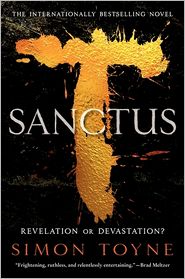
Sanctus
by Simon Toyne
Once upon a time, I used to describe myself as, “the person who read Dan Brown before The Da Vinci Code.” Subsequent to the unprecedented success of that novel and its many, many “Da Vinci clones,” I’ve been completely burned out on religious thrillers. Until now. Kudos to Simon Toyne on a highly entertaining debut novel, and for writing a religious thriller that didn’t feel like the same old thing.
Most of Sanctus’s action takes place in and around the historic Citadel in Ruin, Turkey. I’m mildly amused to see that I’m not the only reader tricked into thoroughly Googling this fictional landmark in this fictional town. Props to Toyne for making his setting seem real enough that I asked myself, “Why don’t I know about this place?”
In Toyne’s reality, this Turkish Citadel on a mountain is perhaps the longest continuously inhabited place on earth. A sect of secretive monks has lived there since before the birth of Christ, studying, praying, and guarding their “Sacrament.” The exact nature of that sacrament may be the most closely guarded secret on the planet. Only a handful of the hundreds of monks know the truth, and apparently some of the initiates to the inner circle can’t handle the truth.
In the novel’s opening pages, Brother Samuel is locked in a room after his traumatizing initiation. He knows they intend to kill him. Rather than die passively with the secret, he attempts a daring escape—climbing out the window and up an unscaleable mountain. Once he reaches the summit, Brother Samuel attracts worldwide attention when he plummets 1,000 feet to the ground on live television. His actions are as incomprehensible to watchers as they are tragic.
Back in the States, we have previously met newspaper reporter Liv Adamsen. She is mourning the absence of someone close to her. After 8 years, he has been declared legally dead. The connection between these two people was not immediately apparent to me, but when it is finally made clear, it is pretty darn cool. Other major and secondary characters are introduced along the way. Make no mistake, this is a book about plot, not character, but Toyne does such a good job cloaking his characters in hints of intriguing back stories that I continually wished to know more.
Given that this is a 500-page tale of a centuries-old struggle, Toyne does an exceptionally good job of containing the sprawl. The cast is made up of a manageable number of people. Toyne has plotted very cleverly. Everything and everyone is there for a reason. He does not indulge in the superfluous. And he keeps the story moving swiftly with short chapters, lots of white space on pages, and revelations at regular intervals. Rather than dwell on dreary theological issues, Toyne’s tale is all about the action. He’s written some very bloodthirsty monks and the body count is high. Will anyone make it to the end of the novel?
By the time the Sacrament is finally revealed, you’ve been given enough clues to have figured it out on your own. I did not realize before starting this book that it is the first volume in yet another trilogy. (And, I swear to God, publishers, you have to start warning unsuspecting readers about this before they invest their time in an unfinished story.) While the novel does come to a reasonably satisfactory ending of this arc of the story, it is clear that there is much more that remains to be told. I feel a bit torn about this. Clearly I enjoyed this novel. But I’m tempted to quit now and cut my losses. I don’t feel that I absolutely must go on, and I’m somewhat grateful for that. I guess I’ll read the description of the next novel and decide then if it’s of interest.
by Simon Toyne
Once upon a time, I used to describe myself as, “the person who read Dan Brown before The Da Vinci Code.” Subsequent to the unprecedented success of that novel and its many, many “Da Vinci clones,” I’ve been completely burned out on religious thrillers. Until now. Kudos to Simon Toyne on a highly entertaining debut novel, and for writing a religious thriller that didn’t feel like the same old thing.
Most of Sanctus’s action takes place in and around the historic Citadel in Ruin, Turkey. I’m mildly amused to see that I’m not the only reader tricked into thoroughly Googling this fictional landmark in this fictional town. Props to Toyne for making his setting seem real enough that I asked myself, “Why don’t I know about this place?”
In Toyne’s reality, this Turkish Citadel on a mountain is perhaps the longest continuously inhabited place on earth. A sect of secretive monks has lived there since before the birth of Christ, studying, praying, and guarding their “Sacrament.” The exact nature of that sacrament may be the most closely guarded secret on the planet. Only a handful of the hundreds of monks know the truth, and apparently some of the initiates to the inner circle can’t handle the truth.
In the novel’s opening pages, Brother Samuel is locked in a room after his traumatizing initiation. He knows they intend to kill him. Rather than die passively with the secret, he attempts a daring escape—climbing out the window and up an unscaleable mountain. Once he reaches the summit, Brother Samuel attracts worldwide attention when he plummets 1,000 feet to the ground on live television. His actions are as incomprehensible to watchers as they are tragic.
Back in the States, we have previously met newspaper reporter Liv Adamsen. She is mourning the absence of someone close to her. After 8 years, he has been declared legally dead. The connection between these two people was not immediately apparent to me, but when it is finally made clear, it is pretty darn cool. Other major and secondary characters are introduced along the way. Make no mistake, this is a book about plot, not character, but Toyne does such a good job cloaking his characters in hints of intriguing back stories that I continually wished to know more.
Given that this is a 500-page tale of a centuries-old struggle, Toyne does an exceptionally good job of containing the sprawl. The cast is made up of a manageable number of people. Toyne has plotted very cleverly. Everything and everyone is there for a reason. He does not indulge in the superfluous. And he keeps the story moving swiftly with short chapters, lots of white space on pages, and revelations at regular intervals. Rather than dwell on dreary theological issues, Toyne’s tale is all about the action. He’s written some very bloodthirsty monks and the body count is high. Will anyone make it to the end of the novel?
By the time the Sacrament is finally revealed, you’ve been given enough clues to have figured it out on your own. I did not realize before starting this book that it is the first volume in yet another trilogy. (And, I swear to God, publishers, you have to start warning unsuspecting readers about this before they invest their time in an unfinished story.) While the novel does come to a reasonably satisfactory ending of this arc of the story, it is clear that there is much more that remains to be told. I feel a bit torn about this. Clearly I enjoyed this novel. But I’m tempted to quit now and cut my losses. I don’t feel that I absolutely must go on, and I’m somewhat grateful for that. I guess I’ll read the description of the next novel and decide then if it’s of interest.
Thursday, September 1, 2011
Origins of the Black Stiletto
The Black Stiletto
by Raymond Benson
“My mother was the masked vigilante known as the Black Stiletto. I just found this out today, and I’ve been her son for forty-eight years. All my life I knew she had some secrets, but needless to say, this is a bit of a shock.” And with those opening sentences, I was absolutely hooked on Raymond Benson’s latest novel, The Black Stiletto.
In Benson’s world, everyone knows the name of “the Black Stiletto,” but her identity has been a mystery for decades. From the late 50’s through the early 60’s, this woman donned a mask and leather costume and took to the streets to fight crime. After a few years of activity, she dropped out of site, never to be heard from again—except for the comic book series, the feature film, and other pop culture references—until the day that suburban Chicago accountant, Martin Talbot, got a call from his mother’s attorney. She’d left a letter and a locked box in his care, to be given to Martin “in the event she died or became incapacitated.” At the age of 72, Judy Talbot is in pretty good shape physically, but Alzheimer’s has hit her hard. Most days she doesn’t even recognize her son.
So that’s the set-up. The story unfolds in three narrative voices, two in the present day and one in the past. The first is Martin’s account and reaction as he unravels his mother’s true history. His mother has left behind a number of items, safely stashed away, including several diaries. Martin begins reading the first, for the year 1958. The second voice is his mother’s own account, writing in her diary as a young woman. It’s the Black Stiletto’s origin story. Every hero has one. Within her diary she summarizes her life story and what led her to becoming a masked vigilante, until she reaches the present day in 1958, and then carries her story forward. The third voice is that of Roberto Ranelli, who appears in both timelines. Back in the 50’s, he was a mob enforcer. In the present day, he’s a 78-year-old man, just paroled from Sing-Sing after 52 years. And he has revenge on his mind.
There is much that is delightful about this story. As I mentioned, the premise grabbed me right away. All I could think of was how it would feel to learn something that stunning about your mom! And while there have been variations on this story, with movies like Kick-Ass and other pop culture treatments, this one’s a little different. The period setting is exceptionally well-handled. It was an interesting time historically and socially, and Benson uses the period to great effect. He’s also having a lot fun with his audience. There are occasional nods and winks such as:
“As I drank another glass of whiskey, my eyes fell on a stack of Fiorello’s comic books. The latest Batman was on top. I picked it up and thumbed through it. In my foggy state of mind, I read a bit and couldn’t help but laugh a little. The premise was silly—some millionaire dressed up in a costume, had a secret identity, and went out to fight crime. Who would really do such a thing? I suppose that was the germ of the idea that would change my life.”
Judy is awesome! She’s a feminist (“I’ve learned a lot in my short life about how the world treats women.”) and a lady with an interesting system of ethics. Still, I have to admit that I loved Martin’s briefer appearances in the novel. I am captivated by his journey. There isn’t much to Ranelli. He has a role to fill, and he does his job. The book moves fast, and can be read in a matter of hours. It truly is pure entertainment.
The novel’s greatest weakness is the actual writing. I don’t think most readers attracted to this title are looking for gorgeous prose and exciting use of language. I wasn’t. The prose is very casual and idiomatic, with a lot of direct address to the reader, but it was clunky and awkward at times. It got weird with tenses occasionally, and the dropped g’s and all the “gonna”s and “gotta”s and other written dialect got on my nerves a bit. Possibly this is just my peeve.
Nonetheless, Raymond Benson has done a terrific job of setting the hook. This is just the first of a proposed five-book series. The Black Stiletto comes to a very satisfying conclusion with a full story arc in both time periods. Still, there are many unanswered questions that are a part of the larger Black Stiletto mythology. Martin says, “I’m just going to have to read more of Mom’s diaries to learn more. There’s also the mystery of the other items I found. What’s with the JFK campaign button? The heart-shaped locket? The roll of film?” And so forth. These are questions I want the answer to! I want the whole story, and I want to know how it all turns out for Martin and his family. Yes, I am hooked.
P.S.: This is one of the cleverest book trailers I've ever seen. Check it out! Also, I'll be posting a fun video interview I did with author Raymond Benson next week.
by Raymond Benson
“My mother was the masked vigilante known as the Black Stiletto. I just found this out today, and I’ve been her son for forty-eight years. All my life I knew she had some secrets, but needless to say, this is a bit of a shock.” And with those opening sentences, I was absolutely hooked on Raymond Benson’s latest novel, The Black Stiletto.
In Benson’s world, everyone knows the name of “the Black Stiletto,” but her identity has been a mystery for decades. From the late 50’s through the early 60’s, this woman donned a mask and leather costume and took to the streets to fight crime. After a few years of activity, she dropped out of site, never to be heard from again—except for the comic book series, the feature film, and other pop culture references—until the day that suburban Chicago accountant, Martin Talbot, got a call from his mother’s attorney. She’d left a letter and a locked box in his care, to be given to Martin “in the event she died or became incapacitated.” At the age of 72, Judy Talbot is in pretty good shape physically, but Alzheimer’s has hit her hard. Most days she doesn’t even recognize her son.
![]() |
| A free teaser story |
There is much that is delightful about this story. As I mentioned, the premise grabbed me right away. All I could think of was how it would feel to learn something that stunning about your mom! And while there have been variations on this story, with movies like Kick-Ass and other pop culture treatments, this one’s a little different. The period setting is exceptionally well-handled. It was an interesting time historically and socially, and Benson uses the period to great effect. He’s also having a lot fun with his audience. There are occasional nods and winks such as:
“As I drank another glass of whiskey, my eyes fell on a stack of Fiorello’s comic books. The latest Batman was on top. I picked it up and thumbed through it. In my foggy state of mind, I read a bit and couldn’t help but laugh a little. The premise was silly—some millionaire dressed up in a costume, had a secret identity, and went out to fight crime. Who would really do such a thing? I suppose that was the germ of the idea that would change my life.”
Judy is awesome! She’s a feminist (“I’ve learned a lot in my short life about how the world treats women.”) and a lady with an interesting system of ethics. Still, I have to admit that I loved Martin’s briefer appearances in the novel. I am captivated by his journey. There isn’t much to Ranelli. He has a role to fill, and he does his job. The book moves fast, and can be read in a matter of hours. It truly is pure entertainment.
The novel’s greatest weakness is the actual writing. I don’t think most readers attracted to this title are looking for gorgeous prose and exciting use of language. I wasn’t. The prose is very casual and idiomatic, with a lot of direct address to the reader, but it was clunky and awkward at times. It got weird with tenses occasionally, and the dropped g’s and all the “gonna”s and “gotta”s and other written dialect got on my nerves a bit. Possibly this is just my peeve.
Nonetheless, Raymond Benson has done a terrific job of setting the hook. This is just the first of a proposed five-book series. The Black Stiletto comes to a very satisfying conclusion with a full story arc in both time periods. Still, there are many unanswered questions that are a part of the larger Black Stiletto mythology. Martin says, “I’m just going to have to read more of Mom’s diaries to learn more. There’s also the mystery of the other items I found. What’s with the JFK campaign button? The heart-shaped locket? The roll of film?” And so forth. These are questions I want the answer to! I want the whole story, and I want to know how it all turns out for Martin and his family. Yes, I am hooked.
P.S.: This is one of the cleverest book trailers I've ever seen. Check it out! Also, I'll be posting a fun video interview I did with author Raymond Benson next week.
Subscribe to:
Comments (Atom)