Showing posts with label 4-star review. Show all posts

Thursday, August 15, 2013

“Sometimes you can tell the truth better through stories.”

The Truth
by Michael Palin

The quote above is one of more than a dozen that wrestle with the nature of truth in this second novel by writer, globe-hopper, and former-Python, Michael Palin. At the heart of this struggle is Keith Mabbut. Keith was once a crusading investigative journalist, but the hard realities of life have turned him into more of a paid corporate hack. Having just wrapped his latest commissioned work, he’s finally about to indulge in a passion project, his first novel. He queries Tess, a lady friend:
’Do you prefer fact or fiction?’
‘Oh, fiction every time. I hate facts.’
‘Why?’
‘Facts are just facts.’ She shrugged dismissively. ‘They don’t amount to a row of beans. If you want the truth, read Jane Austen.’
Tess has a point, but hers is one of many views that are examined in this morality play. Interrupting Keith’s well-laid plans is his agent with the best offer he’s received in years. It’s a commission to write a book about the reclusive activist Hamish Melville. For decades, Melville has been a tireless defender of the environment and a crusader on behalf of indigenous peoples. And he’s ducked the press entirely, creating quite the aura of mystery:
“I’m not interested in talking about myself. I’m interested in what I can do, in the time left to me, to prevent a little of the damage we seem hell bent on inflicting on this long-suffering planet. I’m not the story.”
After some internal wrangling, Keith does accept the assignment, along with the punishing six-month deadline. Now all he has to do is unearth a man that no one can find. This leads Keith on a journey far from his comfortable London existence. Eyes are opened. Much is learned. And, indeed, a book is produced. But when the manuscript is submitted at last, the nature of “the truth” again comes into question. Whose truth? And how many of the parties involved have their own agendas that have nothing to do with the truth?

Palin, himself, is a writer who has delved into both fact and fiction—with fact winning out a majority
of the time. The man has exhaustively documented his travels to the remotest corners of the world, and it’s clear that his personal experience has colored the tale he’s chosen to tell. And he tells his tale well in the clear, clean, elegant prose that seems to come so naturally to the British.

The Truth is more character-driven than plot-driven, but as the novel moved towards its inevitable conclusion, I found myself turning pages faster. I had gotten caught up in the story and was hungry for the revelations that finally came. As the character at the center of this study, Keith Mabbut makes a fine protagonist. He’s likeable, idealistic, kind-hearted, and yet still somewhat foolish and flawed. His personal life is in a fair amount of disarray. At the age of 56, he’s got a lot to learn and he knows it.

I remember reading Palin’s debut, Hemingway’s Chair, 15 years ago and anticipating some Python-esque comic novel. That gentle story couldn’t have been further from what I was expecting. This time my expectations were more in line. The Truth also features a certain gentleness and civility—and yes, of course, some humor—but there’s nothing over-the-top or wacky about the tale. It may not be the novel one would expect from a comic genius, but it looks with clear-eyed affection at the human condition. Says one character of the events depicted:
“It would be an interesting cautionary tale. And I trust you enough to know that you would tell it honestly, but charitably, too. Everyone, no matter how admirable they appear to be, is simply human. Prone to all the imperfections, temptations and mendacities that go with the territory.”
Ain’t it the truth.
Thursday, August 8, 2013

“Perception is reality.”

Big Egos
by S. G. Browne

“It used to be you were stuck with your own personality, your own identity, and any adjustments to your persona would only be as successful as your acting ability. That all changed with the introduction of Big Egos.

Not everyone wants to alter who they are, to live a life that isn’t theirs and pretend to be someone they’re not. There are plenty of men and women who are perfectly content with their lives and their struggles and the comforts of their own identities. But for those who can afford it, for those who seek the thrill of experimenting with alternate personalities and temporary identities, Big Egos offers a respite from the mundane…

On CBS is an advertisement for Big Egos, ‘Does your lifestyle not fit the person inside of you? Try someone else on for size! For $3,000, you can change who you are by purchasing a DNA-encoded cocktail of your favorite dead actor, artist, writer, musician, singer, athlete, politician, talk show host, or television star. All legally approved by their respective estates, because if there’s one thing estate holders love, it’s money. You can even purchase an officially-licensed fictional character like the Luke Skywalker, the Mary Poppins, or the Harry Potter…’”
The quote above sums up well the premise of S. G. Browne’s latest novel, Big Egos, set in the world as we know it with this one notable exception. Our first-person narrator works in quality control for Big Egos, so he’s an insider, an endorser, and a high-volume user of this product. He’s also a man in a less than satisfying relationship, and he’s experiencing serious second thoughts about having talked his best friend into his first ego trip:
“I never should have introduced Nat to the world of Big Egos. Not that I haven’t enjoyed spending time with him. We’ve spent at least one night a week over the past month going to ego parties and bar hopping, pretending to be Luke Skywalker and Han Solo, Dean Martin and Frank Sinatra, Butch Cassidy and the Sundance Kid. I’d almost forgotten how much fun we could have together.”
That does sound like fun, doesn’t it? But there’s a dark side to this technology, and Browne’s light tale gradually becomes nefarious, heading in unexpected directions. Regardless, there are laughs to be mined from start to finish. First and foremost, Mr. Browne is a social satirist, and this set-up provides rich ground for examining contemporary culture.

Additionally, the author has great fun with the personas of the many famous characters that pass
through his pages. It’s affectionate satirizing reminiscent of the film Midnight in Paris. The following snippet even features an eminently imitable character that appeared in that film, but Mr. Browne is playing with a much broader cross-section of popular culture. Always, however, it’s the extensive literary parody that I can’t resist:
“Give me a boat,” says Hemingway. “And the open sea. Nothing else matters.”
“What about complex sentences?” says Faulkner.
As for his own writing, Browne’s use of language is smooth, unobtrusive, and peppered with amusing observations:
“Every day, Emily brings a Cinnabon with her to work, and nibbles at it and picks at it, until it’s nothing but a corpse of a cinnamon roll. A pastry victim, gutted and left for dead on her desk like breakfast roadkill.”
Character development is a lot trickier. It’s hard to get to know characters that are constantly shifting personas. His narrator is a slick operator with a distinctive voice. The rest of the cast is more superficially developed. It should be clear, by now, that this is not a character study. Browne keeps his plot moving forward at a steady pace, and Big Egos is a quick and entertaining read. Consider it required reading for all pop-culture junkies.

Monday, July 22, 2013

“The next step in human evolution”

Chimera
by David Wellington

David Wellington’s latest novel, Chimera, opens with a prison break. Except, Camp Putnam isn’t a typical prison:
“Sergeant Brian Lourdes had a pretty good security clearance. Not enough to know why those seven men had been locked away so tight. Not enough to know why they were so dangerous they could never be set free. But enough to know what would happen if they ever did get out. Enough to know it could mean the end of America.”
That’s page two of what may be horror writer Wellington’s break-out thriller. So, right from the get-go, readers are told the stakes are high. We learn a few other disquieting facts about these escaped “detainees” in that first chapter. They dodge bullets moving at inhuman speed and gaze at the world through solid black eyes. Cue the eerie music!

Next the action moves to Fort Belvoir, Virginia, and the office of Captain Jim Chapel. Chapel, a veteran of Afghanistan, works at INSCOM, the army’s Intelligence and Security Command handling oversight on weapons system acquisitions. As the novel opens, he’s not exactly field-ready, having lost his left arm in combat. But receiving new orders he notes:
“DIA was the Defense Intelligence Agency, the top level of the military intelligence pyramid. DX was the Directorate for Defense Counterintelligence and HUMINT—HUMINT being Human Intelligence, or good old-fashioned spycraft. DX was the group that used to give him his orders back when he was a theater operative in Afghanistan, but he hadn’t worked for them in a long time—these days his work was handled directly by INSCOM and he hadn’t so much as spoken to anyone in the DIA in five years.”
Therefore, Chapel is an odd choice to track down and, well, neutralize these escaped detainees. What little he learns about them is deeply disturbing. He’s working mostly in the dark however, repeatedly told by superiors that information is on a “need to know” basis. Chapel’s given two things to help track the fugitives down. The first is a list of targets the detainees may be going after. And the second is a “guardian angel” whispering in his ear:
“Captain, I’ll always be with you. But this is as physical as I get. The sweet little voice in your ear, making helpful comments and keeping you company. I’ve already been briefed on your operation, and I’m looking for ways to help right now.”
So, that’s the set-up, and it’s a good one. The tale melds a bit of speculative science with a whole lot of action. The entire premise is about pace, pace, pace, and things move along at a fair clip. Mr. Wellington isn’t Michael Crichton, and while there’s a veneer of science to the tale, for better or worse, it never gets bogged down in facts or exposition.

Given the title of the novel, I don’t think it’s too much of a spoiler to reveal that in the course of his
investigation, Chapel learns that, “In genetics a chimera is an organism that has more than one kind of DNA in the same body.” I had to chuckle a bit over that (much like one of the novel’s central characters) because this tale is a bit of a chimera itself. I can think of any number of other novels it owes some of its DNA to. For instance, in his Sigma Force series James Rollins has written about a protagonist with a high-tech prosthetic arm for years, and Mark Alpert mined that territory as well in his recent science thriller Extinction. As for chimeras, Jeremy Robinson went to town with them in Island 731. Wellington’s creations are far less over-the-top, and I’m not implying that he actually borrowed from any of these writers. There are only so many new ideas under the sun. Some parts of Chimera (such as assistant “Angel” who really kept me guessing for the duration of the novel) feel fresher than others. The romantic sub-plot was neither the best nor worst I’d seen, though the whole “good guy hero just looking for love” motivation felt fairly superficial.

As I mentioned above, the novel moves swiftly. Chimera is more streamlined than a typical Rollins or Preston/Child thriller in that it’s a single narrative thread, making it a quick read—very much the sort of thing to make a long plane ride fly by. There were moments when I felt the plot was getting contrived, but author Wellington often boldly addressed these objections heads on, somewhat overcoming the issue. His protagonists are appealing enough—good news as the novel’s subtitle, “A Jim Chapel Mission” seems to indicate we’ll be seeing Captain Chapel again. Additionally, Mr. Wellington deserves brownie points for creating some strong and interesting female characters.

A science thriller-writing pal of mine once commented that “Writing techno-thrillers is really hard.” (Pithy, he is.) But, yes, it really is. I’ve seen a lot of dismal examples over the years. Chimera certainly isn’t perfect, but it’s promising. I’m quite looking forward to the next Jim Chapel mission.

Tuesday, April 9, 2013

Open the pod bay doors, please, HAL

Code White
by Scott Britz-Cunningham

One of the great things about thrillers is that there are so many different kinds! There are crime thrillers, medical thrillers, religious thrillers, techno-thrillers, and many more. Most thrillers tend to fall into one category, but I’ve just read a notable debut that has elements of all four listed above!

Code White is an impressive first effort from medical doctor Scott Britz-Cunningham. The entire novel takes place in the course of a single day, making for a propulsive plot. At the heart of the tale is Chicago neurosurgeon Ali O’Day. She is one of a team of doctors who are attempting to make medical history—and are having it documented live on a national morning television show. They are using a new technology called SIPNI, short for Self-Integrating Prosthetic Neural Implant, to try to restore the sight of a blind child. During the operation, there’s an overhead announcement, “Mr. White, please report to security.” A nurse explains that it’s a security code, “It’s a bomb. A bomb in the hospital.”

Readers don’t have to wait long to find out who the mastermind of the plot is. It’s not a who-done-it, or even really a why-done-it, but more like a will-they-stop-it? Isn’t that always the way with bombs? So, in one corner you have your dedicated doctors trying to save an adorable child, in another you have your mad bomber, and then you have law enforcement. In this novel, that comes in many forms. The threat is first identified by the hospital’s head of security, Harry Lewton, but soon enough both the Chicago PD and the FBI are added to the mix. They do not help matters.

It is the unassuming Lewton who is the novel’s most appealing character. Character development is
generally the weakest element of most thrillers, and I was of two minds about it here. Britz-Cunningham has actually done an excellent job of giving his characters backstories and stressors in the present that influence their actions in the course of the crisis. In that way, they were well-rounded. Still, other than Lewton, it’s hard to get a real feel for them, and it’s hard to work up a lot of sympathy. The biographical details were in place, but the other details that would have brought them more to life—the quirks, the speech idiosyncrasies, the stuff that really humanizes—were absent. So, while there’s room for improvement, character was at least handled with some forethought and intelligence. Less head, more heart next time, Scott.

The plotting is clever and, as you can imagine, fast-paced, especially as the clock ticks down. There’s a significant amount of science, covering both medicine and technology, interspersed throughout the novel. It’s smart and interesting. Exposition is handled well. And then there’s the question of why I titled this review the way I did. You’ll see. Blending so many types of thriller together strikes me as a difficult thing to pull off. It shouldn’t work. But Britz-Cunningham does manage to pull it off. This isn’t a perfect novel, but it’s an impressive debut, and well-worth checking out.

Monday, April 1, 2013

"Catch me next time round."

Life After Life
by Kate Atkinson

In a notable departure, British novelist Kate Atkinson brings her literary gifts to the world of speculative fiction. In her new stand alone, Life After Life, heroine Ursula Todd lives and dies over and over. Beginning on the day of her birth, a snowy February day in 1910, the baby is “dead before she had a chance to live.” Except, in the very next chapter, we again witness Ursula’s birth and she isn’t choked by the umbilical cord. But she does succumb to another fate at the age of four.

And so it goes, living, exploring, experimenting, trying to get it right. It takes readers a while to actually meet the adult incarnation of Ursula Todd. There were so many dangers, so many wrong paths along the way. After a while, I’m afraid, it became just a bit like, “Oh my God, they killed Kenny!” I don’t mean to be flippant, but this little girl died a lot of different ways. Any emotional intensity is severely muted through sheer repetition, and the knowledge that there are no real consequences. It will all begin again.

Which is not to say that there are no effects. Ursula seems to sense echoes of her past lives, sometimes even taking extreme measures to avert past disasters. Ms. Atkinson was rather brilliant in how she seeded these shadows of lives past throughout the novel and Ursula’s consciousness. Other reviewers have written eloquently on Buddhist philosophy, Jung’s Collective Unconscious, and many other sophisticated influences on Ms. Atkinson’s story. But one reader’s religion is another reader’s science. I, for instance, might go on about the physics of multiverses. “She had felt pleased with herself for resisting a yellow crêpe de Chine tea dress…” But in another lifetime, “She tried on the yellow crêpe de Chine tea dress she’d bought earlier that day…”

Buy the dress, don’t buy the dress. It’s one of a million—a billion—details that determine the outcome of our lives. As we watch Ursula live life after life, sometimes more successfully, sometimes less, we begin to determine the pivotal days, the ones that simply need to be survived. And we begin to see the cascading effect of small changes. We become very intimately acquainted with Ursula and the people that surround her.

Now, this premise is nothing new. From Bill Murray in Groundhog Day to Ken Grimwood’s cult
classic, Replay, this has been done before. It may be my imagination, but I feel like I’m seeing more of this sort of tale lately. Variations on the time travel theme. What Atkinson brings to the table is her skill as a writer, and the deadly seriousness with which she carries out her tale. For it is unfolding not in contemporary America, but 20th century England. Intellectually I know the history, but living war after war after war through Ursula’s eyes was brutal. Born in 1910, the girl saw some history, and it’s very clear that Atkinson did her research. The novel lingers longest during WWII, with Ursula experiencing the war from multiple vantages, all of them fairly brutal. War is hell. Didn’t someone say that once? As a reader, I began to feel brutalized, trapped in an endless war that went on for (surely) hundreds of pages. There seemed to be no exit. What is the point of all these lives? That is the question. A big question with major philosophical implications.

Atkinson does give answers, of a sort, though there’s plenty open for interpretation. This book is great fodder for those who want to delve into these mysteries, and for those who want to discuss them with others. It is well written, thought-provoking, and compelling. I enjoyed it, and am glad to have read it, but while I’m usually the most enthusiastic reader and the loudest in my praise, I can’t seem to embrace this one as whole-heartedly as many readers have. I liked it. It was good, layered, well-written, brilliantly-plotted, etc. etc. But it’s grim. Atkinson covers a bloody period of history, and even without the wars, the body count is staggering. I didn’t actually count how many times or different ways that Ursula dies, but it’s a lot. And, frankly, even when she’s living, it isn’t all that joyful. This is an undeniably excellent novel, but I’m glad to have finally reached the end of the line. It’s time for me to move on.

Tuesday, March 26, 2013

Extreme weather and extremophiles

Frozen Solid
by James M.Tabor

I thought James M. Tabor’s fiction debut, The Deep Zone, was flawed, but promising. I’m happy to report that his sophomore novel, Frozen Solid, has lived up to that promise. While Mr. Tabor still has room to grow, this second novel was just as much fun as the first, and far better executed.

Frozen Solid again features his protagonist, Hallie Leland. The government microbiologist has been routed up to Antarctica of all places, just days before the winter-over begins. She’s there to fill in for a deceased scientist—an old friend of Hallie’s, as it happens. Once more, Hallie’s unusual skill set (climbing, diving, laboratory research) is a match for a project’s needs. Unfortunately, her brief visit gets off to a terrible start, as more scientists succumb to an unknown ailment. Tensions are running high in a powder keg environment. Meanwhile, Hallie has suspicions about her predecessor’s death and is having problems with the research project. Is someone sabotaging her work? The entire base? And will she be able to fly out in four days, or will she be stuck in Antarctica for months?

Mr. Tabor gets all of his plot elements into position beautifully. I had a few qualms early on in the novel. There was a brief snatch of clichéd and clunky writing. (“I will find you, she vowed. If it takes the rest of my life, I will find you. Wil Bowman will help me. And you will pay.”) And there were some minor plot contrivances. (Some of those clues were awfully easy to find—even when she wasn’t looking for them.) But once the story got going, those early issue fell by the wayside as the novel’s momentum took over. The pacing of the novel was excellent. It moved quickly and was full of excitement. Sometimes the action in thrillers feels like it’s just inserted to keep things moving, but here it all felt organic to the story being told. Let’s face it, Antarctica is an extreme environment, and when you’re diving beneath the ice or staging a colleague’s rescue, it’s exciting stuff.

Plus, there’s Hallie’s area of scientific inquiry. She studies extremophiles—organisms that survive in
extreme environments—like miles below the ice. Or, an organism that “survives in sodium concentrations that would kill anything else.” This isn’t a Crichton novel. It isn’t as chock full of science, but I wish that it was, because what was there was fascinating. Hallie’s a girl after my own heart… “In the end, she found herself asking this question: Who do you trust when you can’t trust anybody? The answer came quickly: Not who. What. And the what was science. You could always trust the science.” I trusted Mr. Tabor’s science here. Sure, it’s speculative as hell, but it has the ring of truth and some research behind it. Plus, it was super cool! That’s good enough for me.

I like Hallie as a character. I really enjoy seeing a strong, confident, competent, and believable woman at the center of an action/adventure series. (“She knew this was how disasters began: with a single failure that led to two others, each of which led to more, a cascade of events feeding upon itself.”) This is a lady that doesn’t wait to be rescued. She rescues herself—and frequently others. There are a couple of other characters from the first novel in supporting roles, but as Hallie is out of her normal environment, most of the cast is new, and they’re a fairly intriguing bunch. I’m quite willing to believe that it’s a quirky crew attracted to work in Antarctica. Obviously, the setting is an important part of the tale, and Tabor’s Antarctica is a bit more oppressive and depressive than most depictions. It is atmospheric, that’s for sure. His settings are evocative and well-drawn—none better than the underwater scenes. (Yes, that was totally my favorite part.)

When all is said and done, I’ve seen variations on the novel’s central plot before, but it was well-handled and getting there was more than half the fun. I feel that my early faith in Mr. Tabor’s growth as a novelist has been well –rewarded, and I shall be looking forward to his next offering with even more anticipation and enthusiasm.

Tuesday, March 19, 2013

I can picture it on the big screen...

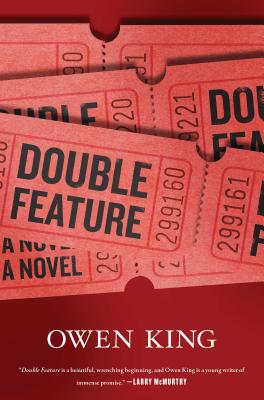
Double Feature
by Owen King

I’m nothing so pretentious as a cinephile; I’m a movie-lover. So, I think, is debut novelist Owen King. But the young protagonist of Double Feature, Sam Dolan, is very much a cinephile and a freshly-minted graduate of film school. As the non-linear narrative opens, Sam is about to start filming the script that was his college thesis. The first third of the novel involves the shooting of this low-budget, indie feature film and the aftermath of that film’s creation. It affects Sam’s life in long-lasting and unexpected ways. Beyond this, Double Feature is about Sam’s complicated relationship with his father, Booth, a deeply flawed and aging B-movie actor. One passage:
“The story was undoubtedly an exaggeration if not an outright fabrication. Booth had been in the business of cheap entertainment for so long that he had gone native. In his telling, everything was a sensation, a shock, a crisis, a betrayal, amazing bad luck, or an unforeseeable confluence. When Sam was younger, his father had let him down. Now that Sam was older, his earlier self’s stupidity mortified him: how could he have expected anything else from a man who relished any opportunity to tell strangers that his infant son looked like a leper? Booth’s fallaciousness was right there all the time, as inherent as the nose on his face.”
It’s bold—Bold I say!—when you’re Stephen King’s son, to publish a debut about a young artist with major daddy issues. Readers tend to read into these things. But I can’t honestly say that I believe Mr. King is working through any issues of his own. Still, he may have some insights into being the child of a celebrity that most of us don’t.

I mentioned above that the novel is non-linear. It moves in time from the opening when Sam is in his early-twenties, back to his parents’ courtship decades earlier, forward to the altered life of Sam’s early thirties, and many points in between. I’m a big fan of this type of story-telling when it’s done right. It’s an interesting way to make revelations, often with answers coming before questions are even asked. Mr. King did manage this device well, for instance, eventually supplying the additional information on Sam’s mother that as a reader I actively craved.

As you can see from the quote above, his use of language is sophisticated. This is not the type of macabre commercial fiction that his father and brother trade in. This is a satirical dramedy, and yes, it’s definitely funny, though not generally in a laugh-out-loud way. Both the characters and the events of the novel have a heightened quality about them, not exactly mirroring real-life, but intentionally so. King has created a fantastic and entertaining assortment of supporting characters. This is one case, however, where I don’t feel that the novel’s jacket copy does them justice or really describes the story accurately. What can you say? No one wants to be guilty of spoilers.

Double Feature is an accomplished debut, but I do have a few criticisms. I felt that both the novel’s beginning and ending were especially strong, but things slumped a bit in the tale’s middle. Further, there are plot developments that occur that are so unbelievably obvious to the reader that it’s hard to credit that Sam can’t see the big picture as easily as we can. It’s true that when you’re living in the moment, these things generally aren’t as obvious, but it still stretched my credulity.

That said, the novel’s plotting was especially impressive. King juggles quite a few literary threads and manages to bring his story full circle in a notably satisfying manner. It’s truly difficult not to develop affection for this loony cast of characters. And one more treat… Do you stay to the very end of films’ credits like I do? Sometimes there’s an “Easter egg” at the very end. This may be the first time I’ve seen a literary Easter egg after a novel’s acknowledgements, but it’s awesome. It’s the perfect way to end this tribute to the magic of movies.

Monday, March 11, 2013

The rocky road to redemption

A Thousand Pardons
by Jonathan Dee

As Jonathan Dee’s latest novel opens, readers get to witness suburban New Yorkers Ben and Helen Armstead give up the ghost on couples counseling. Their marriage is at an impasse when successful lawyer Ben goes off the rails. Staggeringly bad judgment causes both his marriage and his career to implode. His very freedom is jeopardized. And now forty-something housewife Helen must care for their adolescent daughter and find a new path for their lives.

In a somewhat unrealistic turn of events, Helen finds her professional calling. The thing is, realism isn’t everything. I was willing to give Dee a pass on some of the finer plot points, because I was entertained and invested in the tale being told. Husband Ben, stays on the periphery of the narrative, but there’s a third character, a childhood friend of Helen’s who has achieved great fame. This reader was just waiting for him to make an appearance, and of course, eventually he did—though not, perhaps, exactly as I expected him to.

This was my first experience reading Mr. Dee, but I certainly heard the buzz on his last novel, The Privileges, and am aware of his literary reputation. Therefore, I think I was a bit surprised by the simplicity of this novel. The prose is highly readable, but neither remarkable nor overly ornate. Characters were well-drawn and sympathetic (surprisingly so in many cases), but it’s a fairly brief redemption tale being told. It’s just not that deep. I point this out not as a fault; it simply is what it is. And A Thousand Pardons succeeds quite well on that level. This was a quick, entertaining read that I enjoyed more for the story being told than anything else. It moved more quickly and I read the book in no time flat.

I would offer one caveat: Readers who need to have all narrative threads tied up neatly in a bow may feel some frustration with the novel’s ending. I, myself, have no objection to a few loose ends. They leave me with food for thought. Still, this novel’s ending did give me pause. It sort of snuck up on me. I read it, thought, “I don’t know about that,” and read it again. And upon second reading I decided that it was all good. This was an enjoyable and overdue introduction to an author on the ascent.

Monday, February 25, 2013

Patient readers will be rewarded

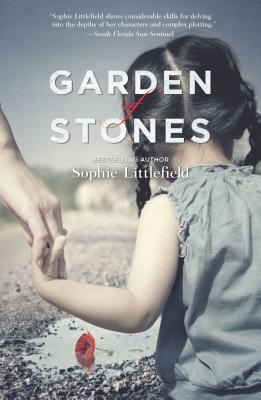
Garden of Stones
by Sophie Littlefield

Sophie Littlefield’s latest novel, Garden of Stones, opens in San Francisco in 1978. The first chapter anticipates the murder of an old man. The second chapter introduces Patty Takeda and her mother Lucy. Patty, visiting her mother in the days leading up to her (Patty’s) wedding, wakes to find Lucy having an early morning chat with a police inspector. Lucy is being questioned because she knew the victim decades prior, and neighborhood residents placed her at the scene. With her horrible facial scaring, she’s hard to miss. The third chapter is where the novel’s structure becomes apparent. It flashes us back to the Los Angeles of 1941.

Having just met the caustic older Lucy, we are now introduced to the stunningly beautiful adolescent version. This privileged young girl is about to suffer a series of blows leading up to the United States’ entry into the war. Her Japanese heritage is suddenly a huge liability. From there, the novel moves back and forth in time between the events of 1978 and those in the 1940’s—with the bulk of the tale occurring in the past. Lucy is sent to the Manzanar internment camp, along with her family, friends, and neighbors. It is events that occurred at Manzanar that directly cultivated the woman Lucy was to become—and perhaps to the murder that has occurred.

Now, I have been a fan of Ms. Littlefield’s for years, and I love the sheer breadth and depth of what she writes from comic mysteries to zombie apocalypses. The set-up above seems like another mystery, but truthfully, it’s more of a historic drama. The subject of Japanese internment strikes close to home to me—literally—having spent the past decade living a block from San Francisco’s Japantown. My neighborhood was greatly impacted by this shameful period of California’s history. I think fiction can be a powerful medium for evoking history. Through fiction, stories live on and are humanized.

I also think that a lot of research went into this novel, and yet I felt somewhat frustrated by viewing this history through the eyes of an unsophisticated teenage girl. Those flashback sections of the novel had something of a YA feel about them. Now, I have nothing against young adult fiction—I read a ton of it—but here I was hungering for a little more…detail …maturity … substance. That would be my complaint.

That said, I found myself very caught up in the story of these characters. Littlefield writes, “It was as if her mother had once been an entirely different person, and Patty faulted herself for never having seen far enough into her depths, for not being curious enough to coax out the story until now.” Lucy Takeda lived an extraordinary life in a period of great historic significance. As events led up to what felt like a climax, I realized that I was only at the center of the tale. As Lucy matured, I became more and more invested in her story. The frustration I’d felt earlier in the novel disappeared. Character development has always been Ms. Littlefield’s strength, and that is again the case here. Still, by the time I’d reached the novel’s end, she managed to truly surprise me with a couple of unexpected plot twists. One, in particular, was really cleverly done.

Ultimately, the murder that opens this novel is little more than a framing device, but as such it works well. Garden of Stones is a great choice for readers interested in mother-daughter relationships, or who are simply looking for a great story set against a historic backdrop. While it took me a little while to become fully invested in the tale, the deeper I read, the more I enjoyed this novel.

Thursday, February 21, 2013

“I know it sounds crazy.”

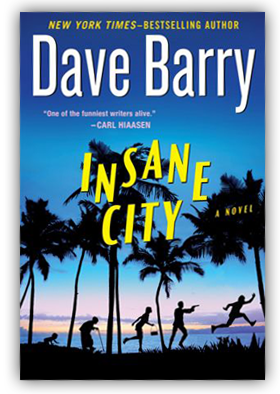
Insane City
by Dave Barry

I’ve been a fan of Mr. Barry’s for decades. He has elicited from me embarrassing snorts of laughter on too many occasions to count. Therefore, and new novel is always an occasion to be looked forward to.

The insane city of the novel’s title is Miami, Florida, soon to be the site of the Weinstein-Clark wedding. At the heart of the tale is groom Seth Weinstein, and the novel’s first few chapters could be the opening of The Hangover III. It’s bachelor party night, and while amusing, I did think to myself, “If this is 300 pages of Boys Behaving Badly, I’m not sure I can take it.” Happily, that is not the case. Well, there is a lot of bad behavior from boys, girls, and, uh, various other creatures, but the bachelor hijinks soon pave the way for a far more absurd and entertaining tale. It’s goofy as all get out, but has both substance and heart at its very core. I could try to summarize the novel’s plot, but I think it would be a lot more fun to share a few brief quotes:
“This isn’t what it looks like.”

“So, you’re not bleeding from the head and hanging out with a Beyoncé look-alike and a Jerry Springer bouncer carrying a large snake?”

“He had to stop being an idiot.”

“Wait, he shot a Jet Ski? Even in Miami, that has to be against the law.”

“I know it sounds crazy.”

“Eventually these people decided that this was just another one of those strange things that seem to happen in Miami.”

“Nothing I hate more than an orangutan shooter.”

“If you’re just joining us this morning, we’re following one of those weird stories that makes you shake your head and say, ‘Only in Miami.’”

“It’s complicated.”

“Even by Miami standards, this was a weird group making its way through the Bayside crowd.”

“Any man fleeing from the police with three women, two children, and an orangutan is a friend of mine.”
Oh, yes, it’s novels like this that make me wonder why I’m considering relocating to Miami. Dave Barry can still make me laugh out loud after all these years. And while no one will ever mistake his work for literary fiction, he did once win a Pulitzer Prize for Commentary. He knows how to write a proper sentence. Furthermore, he did a nice job of creating characters who, over the course of the novel, manage to reveal their true natures.

Don’t come to this one looking for sophistication or subtlety, but if you’ve had a bad day and are seeking a little screwball comedy, look no further. Insane City is guaranteed to lift your spirits.

Tuesday, February 19, 2013

“Extinction is the rule. Survival is the exception.”—Carl Sagan

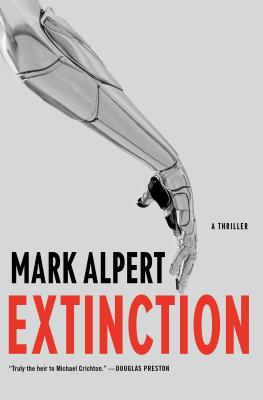
Extinction
by Mark Alpert

Every time a writer is compared to the late, great Michael Crichton, my heart skips a happy beat. I don’t think his large shoes will be filled any time soon, but I am delighted to see other writers trodding the same territory. Mark Alpert is a natural for these comparisons. With a degree in astrophysics and more than a decade on the editorial staff of Scientific American magazine, the man knows his science. Extinction is his third foray into the word of fiction.

After a brief prologue, readers are introduced to former soldier Jim Pierce. Himself an amputee, Jim has turned his engineering know-how to the world of high-tech prosthetics. In the novel’s opening scene, he’s having a consultation with a young soldier, explaining to the wounded man just how advanced these devices have become. The prosthetics Jim builds (and wears) are like something out of a James Bond film, and controlled wirelessly by the user’s brain—just like a natural body part.

Shortly after he leaves Jim’s workroom, an unexpected visitor arrives asking questions about Jim’s estranged, 22-year-old daughter, Layla. The visitor claims to be from the military, but that story quickly breaks down into threats and violence. Jim is more than an ex-soldier, he’s a former intelligence officer, and he knows a Chinese spook when he sees one. What the hell has his daughter gotten herself into?

Alpert’s tale is not a simple high-concept plot that can be summarized in a few sentences or even paragraphs. I suspect I should quit this synopsis while I’m ahead. Extinction deals with a variety of technologies involving machine-brain interfaces. Some are as innocuous as bionic limbs and eye glasses that function as eyes for the blind. Other technologies lead to the threat at the heart of this novel—a dangerous new artificial intelligence, a sort of human-machine hybrid that wants to rid the world of the vast majority of those pesky human components. It is this borg-like entity that may well pull the trigger on our extinction. And Jim Pierce and his daughter somehow get sucked into this high-stakes drama. I’ll leave it to you to uncover the details.

It is unsurprising that Mr. Alpert is at his best when delving into the science that is integral to the novel’s plot. Says one character:
“Just think of it! We won’t be tied to these fragile bodies anymore! If we can store a person’s memories in a sufficiently powerful processor, we can program it to generate new thoughts based on those memories. For all intents and purposes, the intelligence inside the processor would be identical to the one inside the person’s brain. And this will become possible very soon, within the next few decades. There are people alive today who will never die!”
An author’s note at the novel’s end gives readers a better idea of what is fact and what is fiction. It’s surprisingly difficult to figure out in this day-after-tomorrow-set tale. The science in this book is smart, fascinating, and has a really high gee-whiz quotient. Alpert delves enthusiastically into several different disciplines. It’s exactly what I want to see in this type of thriller. Further, Mr. Alpert has fashioned a fun, fast plot in which to imbed all that science. Yes, it is somewhat formulaic, but aren’t they all?

Mark Alpert brings a heap of knowledge to his fiction, and he’s great at explaining complex ideas and building a plot around them. However, it’s the actual mechanics of writing fiction where he’s weakest. This is most apparent near the novel’s opening. Some of the early exposition was truly graceless. Nor will he win any awards for the elegance of his prose. It’s serviceable, but nothing more. And, yes, there were a few plot contrivances. Alpert does better with his action sequences. They really propel the narrative in the second half of the novel. Character development is a mixed bag. A description of how Layla experiences music, for example, was a great insight into how she experiences the world. It was a lovely detail.

Most readers of techno-thrillers aren’t concerned about a little clumsy exposition. Most are looking for some smart, speculative science buried in a propulsive plot. They’re looking for a glimpse of that old Crichton magic. And they just might find it in Extinction.

Thursday, November 1, 2012

Is there hope for the Middlesteins?

The Middlesteins
by Jami Attenberg

Edie Middlestein is a wife, mother, grandmother, lawyer, Jew, retiree, and an addict—not necessarily in that order. Edie is addicted to food, and her story starts not at a certain age, but at a specific weight: “Edie, 62 pounds.” Her life is recounted not in passing years, but in gaining pounds. But the bulk of this tale is relating Edie’s later adulthood. Edie’s children, Robin and Benny, are grown. Even her grandchildren are entering their teen years. At this point, Edie is morbidly obese—well over 300 pounds—sick, and her husband of decades, Richard, has just left her.

In the pages of this brief novel, Jami Attenberg has drawn a detailed character study of a woman and a family in crisis. As you may have gathered, this is a character-driven, rather than plot-driven tale. It’s less a matter of what’s going to happen—because I think we all know what’s going to happen—than whether it’s too late for these people. Is change possible? Is happiness possible?

Attenberg’s characters are finely-drawn, both sympathetic and deeply flawed in almost all cases. The issues with which they deal have the messy complexity of real life, without tidy narrative structures. Is it reprehensible to leave your sick wife? Yes, yes it is. But is it unreasonable to seek happiness? No it is not. These are the sort of issues wrestled with by the members of the dysfunctional Middlestein family.

There are no easy answers, but there insights into human nature along the way. I cared about these people. I hoped for them. In the end, that’s all you can do.

Friday, October 19, 2012

The Queen of England has gone rogue!

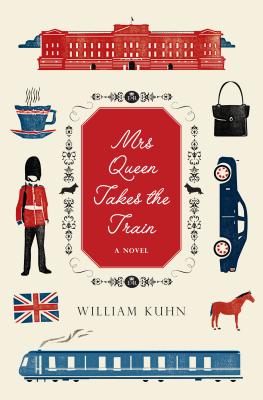
Mrs. Queen Takes the Train
by William Kuhn

Not so much Sarah Palin-style, but she has slipped her handlers. It started innocuously enough. Elizabeth (or “Little Bit” as she addresses herself) has been feeling rather blue. The monarchy has taken more than a few hits in the last several years. After a visit to her favorite horse, the stable girl loans The Queen a “hoodie,” as it has begun sleeting outside. This unusual attire, adorned with skull and crossbones, lends her instant anonymity, and she simply can’t resist embarking upon a small adventure. A jaunt to the local cheese shop segues into an impromptu trip to Scotland.

Back at the palace, panic ensues. A small band of The Queen’s most loyal staff brainstorm about where she could have gone. They’re determined to corral her back home before the press and public get wind of the fact that she’s missing and unattended.

This is non-fiction writer William Kuhn’s debut novel, and he’s off to a winning start. There have been many comparisons between Mrs. Queen Takes the Train and Alan Bennett’s perennial favorite, The Uncommon Reader. The comparisons are somewhat apt, and not even Kuhn is dodging them:
“’Did you read the one about The Queen becoming a reader?’ said the woman in spectacles to the young man at her side. ‘I did enjoy that one. So funny. And of course, being a reader myself, I liked that side of it.’”
That’s the sort of awkward subject that can crop up when you’re a queen conversing with commoners in mufti. But actually, The Queen’s interactions with her subjects are gentle and surely eye-opening.

Kuhn’s story is told not only from the monarch’s POV, but also from that of the staff pursuing her. These are likeable and only slightly damaged individuals. Their pursuit becomes a bonding experience, giving Kuhn a canvas on which to paint several different shades of relationship forming. He spends a fair amount of time at the top of the book introducing his cast, developing the characters, and establishing the workings of the palace.

It’s all rather sweet. But Kuhn isn’t ignoring the real world as he spins his tale. There is social commentary on subjects that include racism, homelessness, terrorism, animal rights, and mental illness, making Kuhn’s novel slightly less twee than Bennett’s novella. I’m not one of those Americans infatuated with royalty, but I found it all rather charming. And who couldn’t find it in their heart to empathize with a queen?

Wednesday, October 3, 2012

Variations on the theme of family


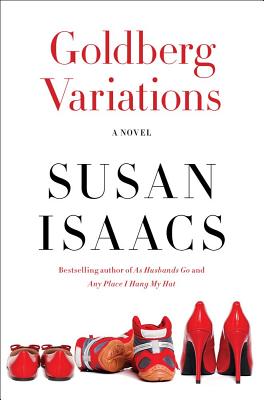
Goldberg Variations
by Susan Isaacs

I cannot honestly say that my failure to date to have read Susan Isaacs was really nagging at me, but when the publisher offered me a chance to review the galley of her latest, I jumped on it. I knew I was well and truly overdue. And what a pleasure this introduction proved to be. Not because it’s some major literary work; simply because it entertained me. Goldberg Variations captured my interest early with its cleverness and humor and kept me hooked through a rapid read.

I should mention that I am listening to Bach’s Goldberg Variations as I type this review—a clever title for a novel about the dysfunctional Goldberg family. Other than the play on the name, is there a deeper connection to the Bach? I don’t know. Wikipedia tells me that “In music, a variation is a formal technique where material is repeated in an altered form. The changes may involve harmony, melody, counterpoint, rhythm, timbre, orchestration, or any combination of those.” Something about that feels resonant to family interactions and the repeated mistakes we tend to make in our interactions with those we love… But perhaps I’m stretching.

No, it’s another classic that may be the seed of this family dramedy. As alluded in the novel’s description, Isaac owes a debt to Shakespeare’s King Lear. She doesn’t stretch the connection much beyond the barest premise. Her monarch is Gloria Garrison, whose kingdom is Glory, Inc., a lucrative and thriving makeover business. Approaching eighty, Gloria finds herself estranged from everyone she was ever close to. She has no obvious heir. With some distaste, she flies the three adult grandchildren she hasn’t seen in over a decade from New York to Sante Fe and tells them:
“I will choose one of you—only one—to come to Sante Fe, learn everything I have to teach about Glory, and inherit the business. I don’t believe in partnerships or co-anything. So no cousin duos, no brother-sister act. One of you will get Glory. The other two will get…nothing.”

Does Gloria sound harsh? You don’t know the least of it! More on her in a moment. Back to the proposition above. When Lear threw down this proposition, it led to murder and madness. Happily, things aren’t that grim here. There is a great deal of humor at the heart of this novel, and much of that comes through the internal voices of the central characters. The novel is told through the alternating points of view of Gloria and the three grandkids, siblings Daisy and Matt, and their cousin Raquel. I found these alternating POVs a really effective way to tell the tale, to get into each of their heads as their weekend-long reunion evolves.

As you may have gathered by now, this is a character-driven rather than plot-driven novel. And at the very heart of it is Gloria—and make no mistake, she’s a monster, but a frequently amusing monster:
“Not that I’m prejudiced, but I never liked short women. All too often they wrapped every work and act of theirs with cuteness. They’d say Oooh when Oh would do. They’d pin back their hair with tiny plastic barrettes as if God had not created taste. They’d stand too close to you and stare at you with their heads back, like you were a human Mt. Rushmore. True, there was a minority of shorties who shunned cute. Those were the dangerous one you have to keep your eye on all the time. They were like those tiny sharks a diver asks himself about—These little things aren’t the ones that bite, are they?—in the instant before his arm gets ripped off his body.”

Make no mistake, Gloria is an unlikable character, and if that’s an issue for you as a reader, consider yourself forewarned. For me, she was over-the-top like a soap opera villain. Her coldness didn’t feel very realistic to me, but that didn’t keep me from enjoying the tale. Her grandchildren, to varying degrees, are significantly more sympathetic, thus saving the novel from being overwhelmed by Gloria’s nastiness.

In addition to family drama, Isaacs is commenting on a number of other character issues: social standing, religious identity, female empowerment, prejudice, and more. These issues are woven throughout the tale in a reasonably natural way. And at the story’s very core is the issue of reconciliation and forgiveness.

Is the novel’s ending realistic? Probably not. And yet, I had absolutely no problem with the novel’s conclusion. As noted above, Gloria’s not a very realistic character—or at least I hope she isn’t. But Isaac entertained me and didn’t make me work too hard. Goldberg Variations was a great introduction to her work, and I shall look forward to exploring further.

Tuesday, September 25, 2012

In God we trust?


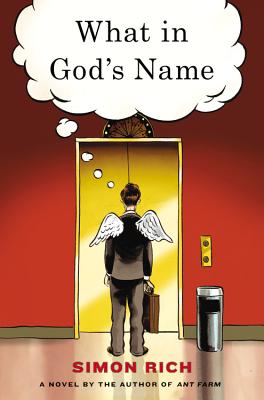
What in God's Name: A Novel

by Simon Rich

Simon Rich's latest novel is set in heaven. Or, more accurately at Heaven, Inc., where God is CEO. Yes, this is the place that you've been reading about in the Bible. But, perhaps it's not quite as you imagined. That is not the case, however, for Craig, the angel at the center of this tale:
"... he was grateful for the chance to finally see God's office. It had fulfilled all of his expectations. God's TV was enormous, at least 60 inches. And his remote control was nuts. A shiny chrome slab that looked like it had been molded to fit his hand. The desk was solid maple, and covered with cool executive toys. There was a Rubik's Cube which Craig could see was impressively far along, and a gleaming executive ball clicker. The kind that swings for minutes on end when given the slightest push."

The image above does not fulfill my own expectations, but then, I didn't know that God was a hard-core Lynard Skynard fan, that angels curse like sailors, or that finding a $20 bill in my coat pocket is a bona fide miracle. A miracle that I may owe to Craig, one of the most dedicated angels in the Miracles Department. As the novel opens, this "Angel of the Month" is tasked with training the beautiful Eliza, newly promoted to the department.

If you are a reader of faith, I think you can already see that this is an irreverent and, yes, very funny take on religion. And if the description of the office above wasn't enough of a tip-off, God is a pretty vapid character. "He didn't want to make the humans suffer. He just wanted them to like him." But he is weary of dealing with them. What God really wants to do is open an Asian fusion restaurant. He decides to destroy the earth and all upon it to clear the path for his next business venture. Can Craig and Eliza change his mind? It all comes down to a bet, a single miracle involving love. Can these two angels save the world? And will they ever go on a date?

If you put your mind to it, you can probably guess the answers to those questions. This is a quick, light, cute, and very funny read. It won't challenge anything except, perhaps, your expectations of an afterlife, but it's a darn good way to while away a few hours.

Saturday, April 7, 2012

A sad tale in any language...

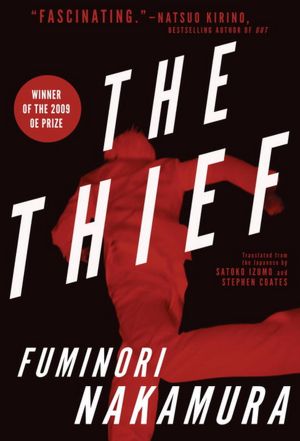
The Thief
by Fuminori Nakamura

As much as I read, I read plenty of novels in translation. I neither seek them out nor avoid them. But as a not especially well-traveled American, I do always have a gnawing feeling that I’m lacking the cultural context to fully appreciate the tale I’m reading. And while that’s certainly no fault of the author’s, that was again the feeling I had while reading Fuminori Nakamura’s novella, The Thief.

It is about—you won’t be surprised to learn—a thief, specifically a pickpocket. Now, Japanese popular culture has disavowed me of any notion that theirs is a gentler, more upstanding society than my own. Much of what I’ve seen out of Japan is even harsher than what we Americans produce. Still, I have an idea that with the prominent role of honor in their society, that to be a thief in Japan is somehow… different than it is here. More of a break with the mainstream, but perhaps I’m overanalyzing.

What I can tell you is that the thief at the heart of this novel is a rather tragic character. Through the course of this brief tale, we get some inkling about how he came to his life of crime. Part of it was circumstance, but much of it was in his nature. For this man, to steal is almost a reflexive action, at times completely unconscious. A psychologist might have a few things to say, but I do know that psychology is not widely practiced in Japan. Regardless, he lives a very isolated life.

During the course of this story, two notable things occur: a woman and her child come into his life, and he comes to the attention of a bigger fish. Regarding the woman and the child—do not in any way assume you can guess the nature of those relationships based on that sentence. Regarding the bigger fish, he’s a scary man. He coerces this pickpocket into participating in some illegal activities. When asked why he was hired, the man responds, “Because you guys have no family. Because you’re all alone in the world and even if you died there wouldn’t have been a single person who cared.”

This is more of a character study than a true crime novel, and as such it succeeds very well. Nakamura does a great job of getting inside the thief’s head. The relationships this man does have are explored. And even career criminals have ethical codes, and this man is no exception. It’s an intriguing look at a man living on the edge of society. And while I note that it’s more about character, there are criminal plots that propel the story forward. Ultimately, the tale is short enough to be read in no time flat, which is probably for the best. This is not a world I wanted to linger in overly long. But it was an interesting place to visit, with no passport required.

Tuesday, March 20, 2012

A convoluted supernatural plot can’t compete with out of this world prose

The Vanishers
by Heidi Julavits

I’m one of those reviewers who tends to start with a plot summary. So, I could tell you that this is the story of twenty-something Julia Severn, an “Initiate of Promise” at the Institute of Integrated Parapsychology. The novel begins by detailing Julia’s complex and troubled relationship with her mentor, Madame Ackerman. Their problems may stem from the mentor’s fear of being supplanted by the protégé, or perhaps they’re due to Ackerman’s resemblance to Julia’s mother who committed suicide when Julia was an infant. For these reasons (and others), things sour, but their separation plagues Julia physically. She leaves school and spends the next year seeking a medical explanation for her physical decline. None is forthcoming until an odd girl literally trips into her life and explains that she’s under “psychic attack.” Offers of both help and employment are proffered.

And that—as they say—is just the beginning. The plot of this novel felt like a game of Three Card Monty, with constantly shifting character identities and allegiances. I didn’t read this novel because the description of the plot interested me. Ghosts, psychics, astral projections? Definitely not my cup of tea. However, a book about mother-daughter relationships and other female rivalries? Now you’re talking! And that’s very much what Heidi Julavits delivered. The whole psychic thing was merely the backdrop against which every type of mother-daughter drama imaginable was displayed.

And all this talk of “drama” sounds dramatic, and some of it was. But a lot of it was very, very funny. And even more of it was weird. And some of it was just plain confusing. I stand by my Three Card Monty analogy. But through it all was Heidi Julavits’ sparkling language. So much of language is merely functional. And, sure basic communication is a good goal. But the sentences of this novel were full of surprises and unexpected turns. They communicated, but they also delighted in a way that is truly rare. This is the sort of novel that leaves me wondering, “Why haven’t I read this author before?” I know there’s another book somewhere on the shelf. I will be digging it up, because Ms. Julavits has charmed me utterly with her inventive use of language. Plot, in this case, was almost immaterial.

Tuesday, March 6, 2012

A collection that is stronger than the sum of its parts

Stay Awake: Stories
by Dan Chaon

Dan Chaon's last novel, Await Your Reply, was my introduction to his work. It was one of my favorite novels of the last few years, and I'm now fan. This latest collection of stories was a more qualified success. First, perhaps, I should note that I'm a long-form reader. Short stories aren't my typical fare.

And these stories were, for lack of a better word, weird. There is a better word, of course, but I can't quite think of it. Mr. Chaon is a world-class prose stylist, so each story was a pleasure to read, but as I delved into the first several in this collection of twelve, I'd be reading along and then the story would end rather abruptly. And I'd be like, What just happened?

These stories were disquieting. The opening sentence of the first story, "The Bees": "Gene's son Frankie wakes up screaming." That's evocative. It sets a tone for the tale of a recovering alcoholic who abandoned his first family and is now in crisis.

"Patrick Lane, Flabbergasted" (Great title!) opens: "There had been several funerals of his old high school friends and Brandon hadn't gone to any of them." It doesn't take a reader long to detect motifs of grief, death, deception, and loss in these tales--which is not to imply that the book is one big downer. It's thoughtful. And speculative. Sometimes funny, romantic, and, yes, a bit weird.

Keeping with the above themes, "Long Delayed, Always Expected"
opens: "When January turned fourty-four, she began to have gloomy thoughts about the future, about mortality and so forth." It recounts the resumption of her relationship with her brain-damaged ex-husband.

Chaon's characters find themselves in extraordinary circumstances, none more so, perhaps, than the parents of a baby with two heads in the collection's title story, "Stay Awake". My favorites were the achingly beautiful "To the Psychic Underworld", the mind-freaking "I Wake Up", and the amusing "Shepherdess", which opens: "The girl I've been seeing falls out of a tree one June evening." As above, it sets a tone for what is to come.

Ultimately, the collection as a whole worked more for me than the sum of its parts. Reading them all together added something that, again, I'm not quite able to articulate. But these stories, which often don't have tidy endings, will leave me thinking. And I will continue to read anything that Dan Chaon publishes.

Thursday, February 16, 2012

Third in a series, but works fine as a stand alone

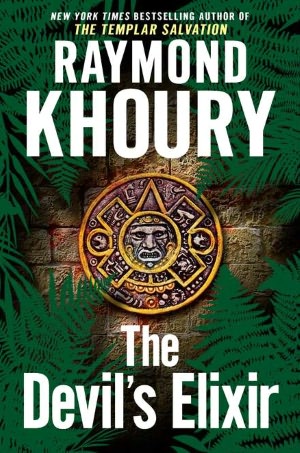
The Devil's Elixir
by Raymond Khoury

As many thrillers as I read, somehow I hadn’t yet made it around to Raymond Khoury.  So, even though I hadn’t read earlier Templar novels featuring Sean Reilly and Tess Chaykin, I decided to dive right in.  Fortunately, Khoury’s enough of a pro to gracefully exposit everything I needed for this novel without spoiling past tales.  I didn’t feel like I was missing a thing.

The Devil’s Elixir opens with three brief prologues that establish elements of the story.  After that, the action takes off with a bang.  Specifically the bang of the gunshot that kills former DEA agent Michelle Martinez’s boyfriend the moment he answers the door to her apartment.  The killers then go after Michelle.  She grabs her four-year-old son, gets out, and calls the most trust-worthy person she can think of, former flame Sean Reilly.  He gets on a plane no questions asked and gets sucked into Michelle’s inexplicable nightmare.  She hasn’t worked in law enforcement in years, but these killers won’t quit. 

Of course, this is barely the beginning of what turned out to be an entertaining page-turner.  As noted earlier, there’s plenty of action, but story doesn’t suffer in service of it.  Things move at a consistently fast pace.  I won’t claim these are the most well-developed characters of all time, but they’re likable enough that I cared about their fates.

Finally, there was a major twist in the last quarter of the novel.  Ultimately, I’m not sure what I thought of it, but I didn’t see it coming at all.  Overall, it was well-handled.  This was a positive enough introduction to Khoury’s work, that I’m much more interested in reading the earlier Sean & Tess novels and will certainly consider reading future works.

Wednesday, January 18, 2012

Naughty was never so nice

Smut: Stories
by Alan Bennett

I’m a fan of Alan Bennett’s wonderful plays, but my greatest affection is reserved for his charming novella The Uncommon Reader.  Coming in at a slight 160 pages, Smut is similar in length, but this book is made up of two brief stories.  In content, they have nothing in common with that earlier tale, but they exhibit the same trademark humor and warmth.  This is a writer it’s difficult not to like.  Therefore, it may be surprising to hear that Mr. Bennett is writing Smut.  These tales are about sex—at least in part.  And though it’s been years since I read them, these stories remind me of nothing so much as the “adult” stories of Roald Dahl. 

The first and longer of the two stories was my favorite.  “The Greening of Mrs. Donaldson” involves a middle-aged widow who supplements her income by acting out symptoms for medical students to diagnose.  There’s much more to it, of course, but half the pleasure here is in the discovery.  The other half of the pleasure is the loveable and very human Mrs. Donaldson.  And then the third half of the pleasure is the gentle humor.

I didn’t like the characters in “The Shielding of Mrs. Forbes” quite as much, but they weren’t meant to be as likable.  The vain Graham Forbes has several secrets he’s keeping from his new wife, but it turns out she has an agenda of her own.

Despite Bennett’s natural sweetness, these stories really do discuss sexual matters in a very frank and adult manner.  Nonetheless, I wouldn’t describe them as graphic.  I wouldn’t hesitate to recommend The Uncommon Reader to anyone who’s ever loved a book.  I won’t be recommending Smut quite as unreservedly.  I think more open-minded readers will enjoy these stories the most.  But I enjoyed them immensely, and I do recommend them.