Wednesday, October 9, 2013

VIDEO: Armisted Maupin in conversation with David Ulin


I know that I tend to go on and on about all the amazing literary events around San Francisco, but I can't help myself.  It's basically non-stop here.  And, as you've gathered, I tend to stay pretty well-informed about all this city has to offer.  Therefore, it was a bit of a shock that an amazing literary conference almost flew by completely under my radar this past weekend!  It was utterly random that I learned of it in time, but thank goodness I did!  I would have kicked myself if I'd missed it all.

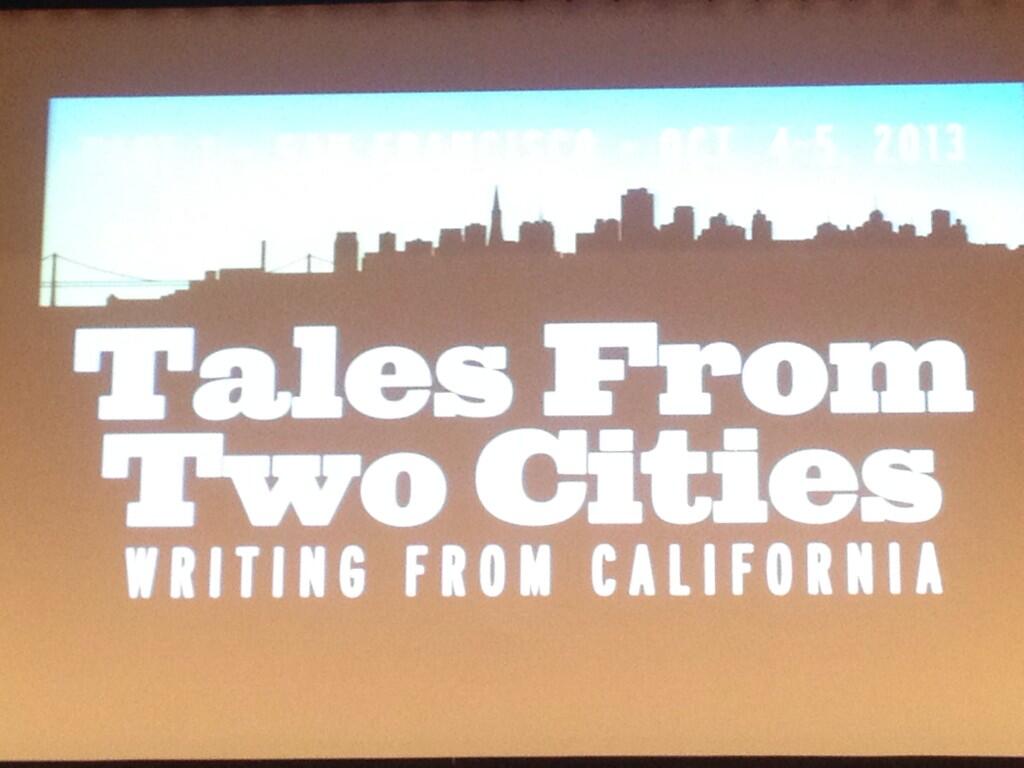
The conference was held at the San Francisco Public Library on Friday and Saturday October 4-5, 2013.  It was free and open to the public.  It's a terrible shame they didn't publicize this wonderful event better because for the most part it was scarcely attended.  What was the conference?  It was called Tales from Two Cities: Writing from California.  San Francisco is obviously one of the "Two Cities," but the other is Los Angeles, and the second part of this conference will take place at the Los Angeles Public Library on February 21-22, 2014.  Angelenos, mark your calendars.  I freakin' hate LA, but gosh I'd love to attend the second half of this event!

Participants of the conference included Tobias Wolff, Robert Hass, Ellen Ullman, Phil Bronstein, Kim Stanley Robinson, and about two dozen more.  The unquestionable highlight was David Ulin's keynote interview with Armisted Maupin, filmed in its entirety above. 

I love Armisted Maupin!  I mean, I've been reading the Tales of the City for what?  A couple of decades now?  I sort of think I live in San Francisco because of these books.  At the very least, they're a factor.  In addition to a deep affection for his fiction, I've met and interacted with Armisted and his husband Christopher around town on any number of occasions now.  They are both just lovely.  It doesn't hurt--I suppose--that I tend to read his novels before they're published, and I always have effusive raves to share before anyone else has seen the work. 

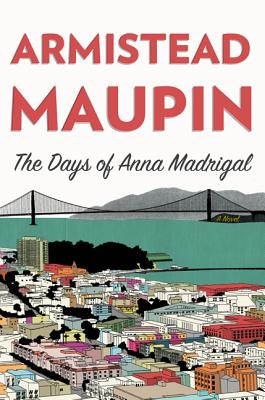
With that in mind, I used a super secret source to acquire an advance galley of Armisted's January 2014 novel, The Days of Anna Madrigal, on short notice.  (Thank you, super secret source!!)  I grabbed it the night before the conference, and I basically power read the novel on Friday morning, before I would be seeing him that afternoon.  Oh, how wonderful it was to reenter Mr. Maupin's San Francisco!  My San Francisco is pretty awesome.  His is better.  And it's populated by such dear old friends.  I so enjoy visiting them. 

I read the novel in a bit over four hours without difficulty.  It's a wonderful addition to the canon.  The only thing is...  I didn't know until hearing Armisted speak that The Days of Anna Madrigal is the very last Tales novel.  If that's the case--and he assures me that it is--then it really is the perfect end to the series.  I just wish that I had known.  I would have savored it a little more.  I will surely have to read again.  Here's a thought...start over from the beginning and read all nine novels!  It sounds crazy, I know, but I've read these books a nearly unprecedented number of times.  They make me happy. 

I'm not reviewing this novel early, and you'll notice I haven't told you a thing beyond the title, however Armisted reveals some tantalizing tidbits in the video above.  (Plus, he's awesome and candid and very, very funny.  I so urge you to watch it in its entirety.)  I was so pleased that I'd managed to read the novel before hearing him speak.  And it was so nice to be able to share my enthusiasm and praise with him afterwards.  He was, as always, absolutely lovely.

Kudos, also, to the wonderful David Ulin, whose work as a reviewer/editor I've admired for years.  He conducts a delightful, spontaneous interview.  And he also gets bonus points as one of the organizers of this conference. 

As for the conference, I may share more of my own video here later, but for those who want more, faster, better, I have great news:  FORA.tv shot the entire event professionally.  You can view the whole shebang right here

Tuesday, October 1, 2013

VIDEO: Antoine Laurain says, "As you can see, my English is very bad..."


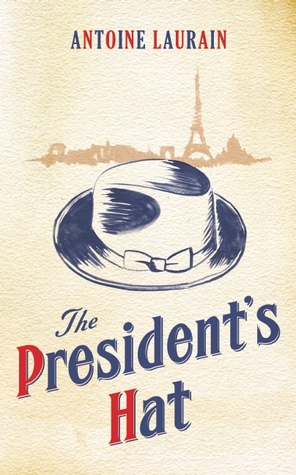
Last week I grabbed my favorite Francophile and headed down to the Ferry Building.  Bestselling French author, Antoine Laurain was visiting Book Passage on tour for his charmer of a novel, The President's HatGallic Books describes the tale like this:

Dining alone in an elegant Parisian brasserie, accountant Daniel Mercier can hardly believe his eyes when President François Mitterrand sits down to eat at the table next to him.

Daniel’s thrill at being in such close proximity to the most powerful man in the land persists even after the presidential party has gone, which is when he discovers that Mitterrand’s black felt hat has been left behind.

After a few moments’ soul-searching, Daniel decides to keep the hat as a souvenir of an extraordinary evening. It’s a perfect fit, and as he leaves the restaurant Daniel begins to feel somehow … different.
My girlfriend wasn't the only Francophile in the house that night.  Msr. Laurain was greeted warmly by his French-loving, French-speaking, French-reading audience, some of whom had discovered The President's Hat in its original language.  As for me, my high school French wasn't going to get me far--I was grateful the gentleman stuck to English.  And despite repeated protestations, his English was more than fine.

Maybe it's just me, but Msr. Laurain seems to epitomize Gallic charm.  His accent is delicious, and my girlfriend all but melted--especially when he mentioned needing an American girlfriend to practice his English.  I got an elbow in the ribs.  His voice has a deep, slightly gravelly quality, and with the accent you have to listen to the video closely.  The conversation with the audience was informal and wide-ranging. 

I haven't had a chance to review The President's Hat yet, so stay tuned, but it's already a big hit in France and England.  The novel certainly has the potential to become a sleeper hit in the States as well, if it can find it's audience.  I could see it winning favor with fans of novels like Mrs. Queen Takes the Train.  I invite you to make the acquaintance of Antoine Laurain on his first ever book tour in the U.S.  Enjoy!


NOTE:  Book Passage will be happy to sell you a signed U.S. first edition of The President's Hat!

Monday, September 30, 2013

VIDEO: David Gilbert and Adam Johnson in conversation


My fall got off to a rocky start health-wise. I’ve been out of balance, and I’ve been having trouble writing for the past few weeks. Ridiculous, I know. But the good news is, I’ve been attending some amazing literary events around town. Sometimes I’m bad about sharing or uploading the video I shoot, but I think this week is the week to feature some seriously awesome events.

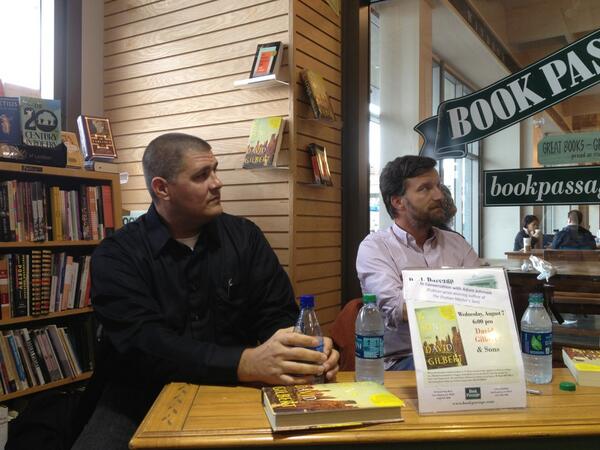
The following video was shot several weeks ago—shortly before I contracted the flu, hence the delay in posting. This is the sort of evening that makes me grateful to live in San Francisco, a city where authors like David Gilbert come on book tour, and a city that is home to an extraordinary local literary community. The night of Mr. Gilbert’s lit event at the Book Passage Ferry Building store epitomized what I’m talking about.

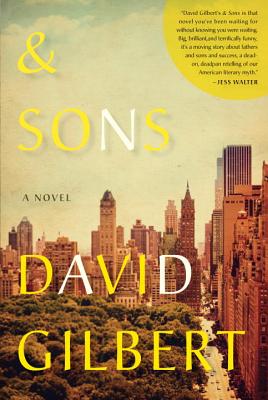
Make no mistake, I was pretty excited to hear David Gilbert speak. His novel, & Sons, is
unquestionably one of the best novels I will read this (or any) year. You may read my rave review here. The novel is wonderfully substantive, and I was really curious to hear what the author had to say about it. It wasn’t until the day of the event that I learned he’d be “in conversation” with Pulitzer Prize-winning novelist Adam Johnson. Amazing! Where but San Francisco can you see these two literary powerhouses in conversation at your local independent bookseller’s?

Now, readers of this blog may recall that I’m a huge fan of Adam Johnson, professionally and personally. I don’t know the man well, but as far as I can see, he’s the nicest person on the planet.  Seriously, the man’s sweetness and gentleness has been the subject of more than one conversation among the local literati. The opinion is unanimous. And, Adam, I’m sorry to embarrass you if you ever—God forbid—happen to read this.

Here’s the other thing that is consistently amazing about the San Francisco literary community… They come out to support each other. On this particular evening, Andrew Sean Greer, Scott Hutchins, and Tom Barbash were among the audience. I’m friendly with all of them, so it was a great social atmosphere. And we were discussing this very thing—the terrific, supportive literary community—after the talk. I said something along the lines of San Francisco having possibly the best local lit community in the country. I said that people always talk about Brooklyn, but that by all accounts, it’s super-competitive out there. Tom Barbash came back with a quote from Vendala Vida: “In New York, writers read each other’s reviews. In San Francisco, writers read each other’s books.” That’s it in a nutshell.

It goes without saying that the conversation between Johnson and Gilbert was fascinating. And I’m so delighted to be able to share it with you in its entirety. Enjoy!


P.S.:  I am confident that Book Passage would be happy to sell/ship you a signed copy of either of these authors' work!

Monday, September 9, 2013

GUEST BLOGGER POST: The Secret Side of Empty by Maria Andreu

Note from Susan: Generally, guests posting to this blog meet two criteria: They have a novel out, and they're a friend of mine. Well, I've never met Maria Andreu, and in fact, I've had no contact with her at all.  (The arrangements for this blog post were accomplished with the help of a third party.) Nor does she have a book out--yet. The Secret Side of Empty is coming in March 2014, so it's still six months away. The reason I agreed to invite Ms. Andrea to post here is that she has an amazing story, and I think she's got some interesting things to say. I'll look forward to eventually reading her fictionalized account of the life she led as an undocumented teen in America.

Now here's Maria...

My book wanted to be a YA novel. I was not happy with its decision at all. The story of an undocumented girl and what her life is like on the precipice, knowing that “real” life will begin for all her friends but not for her, was so intimately mine that I very much wanted to tell it as my story. But the book had other ideas.

I was born in Spain two months before my parents decided to bring me with them on their grand adventure of making it in America. They were Argentinian by upbringing, Spanish by citizenship. Although they projected both those things on me, what I really became was an American kid. I learned my English on Sesame Street. I loved my Baby Crissy doll with her magical, growing red hair. I wore bad 1970s bellbottoms and envied Marcia Brady along with all the other girls my age.

When I was six, my grandfather died in Argentina. Off my mother and I went to the funeral for what we thought would be a two-week stay. My father stayed behind in the U.S. to send us money. Two weeks turned into two years. Finally, out of ideas on how to reunite with his family, my father paid some coyotes to smuggle us across the Mexican border. In many ways I count that as the start of my story, looking across a border you couldn’t see, wondering why I wasn’t good enough to cross it except against the rules. I was 8 years old. It shaped my personality and world view like few other things have.

As I grew into a teenager I understood the real meaning of being undocumented. No social security number. No college. No job. No “normal” life like the one I saw my friends planning so happily. I looked into the future and saw a blank. And then, in a twist almost too cinematic to work in a book, an amnesty law was passed. Three months after I turned 18, I was put on a path to citizenship and my entire future changed.

I spent decades trying to forget all that, trying to “pass.” Finally, it was an angry pundit on the radio ranting about how we should kick out all the “illegals” that got me thinking. I was proof that people just want dignity and a chance at a good life, that we didn’t want to ruin America, but participate in it. Once I’d gotten a chance at that, I turned my back on the people who were struggling the way I had struggled. I still remember the exact spot of road on which I was driving when I understood that I needed to end my silence.

So I began to speak and write about my experiences. I wrote an essay that appeared in Newsweek, another in The Washington Post. I found my voice. I began writing my story as a memoir.

I shopped that version of the story for 4 years. I got rejected by more than 70 agencies. I fought off well-meaning friends who said, “Just self publish.” There is nothing wrong with self-publishing, but I knew that as someone who had felt so marginalized I needed to sell at least her first book the “traditional” way. I was doggedly, unreasonably determined. So I kept at it. I went to workshops. I got critiques. I rewrote. I got such lovely rejections filled with praise for my prose and my voice. Each one broke my heart and echoed with just how much I didn’t belong.

Finally, it was an impossibly young-looking agent at a pitch conference who told me, “The problem with your pitch is that all the action happens when the protagonist is a teenager. Your book wants to be a YA novel.” I thanked her and rolled my eyes internally. Didn’t she get I wanted to be a Real Writer? There was so much I didn’t understand about Real Writing and about the wonderful literature now finding its way out into the world as YA. It would be months before I’d be ready to understand that she was right.

Everything flowed almost as if by magic when I finally let it sink in. I opened up the big YA titles of the time and saw one agency name over and over again: Writers House. I sent a pitch to their slush pile. Within days I had a response from someone. I Googled her name and my heart started pounding when I learned that she was the same person who had pulled Twilight from the slush pile too. I had queried too soon – I only had 3 chapters, and here they were, asking for the whole manuscript. I pounded it out in 10 days. Of course I’d told many versions of this story, so it was ready to be told quickly. I kicked myself at probably blowing my chance… until they accepted me as a client. So, yes, technically I got the first agent I pitched. Their “we’d love for you to be our client” email still sits framed in my living room. They sold my book in a multiple-offers situation in the first round.

So I feel a certain peace with the story coming to the world as a YA novel. I am a big believer in “flow” and things happening as they should. I don’t know if I fully understand the mystery of why this book wanted to happen this way, but I can’t deny the unmistakable ease with which it did. If I were hard-pressed to come up with a theory it would be this: we all love stories. People may resist something that feels pedantic or is trying to push a certain worldview, as a memoir might have. As a novel, The Secret Side of Empty does none of that. It will appeal to anyone who has ever felt left out or who has ever faced a problem that has felt too big to figure out. The Secret Side of Empty lets you get a glimpse into a life you otherwise would probably never see. It has a love story, characters I hope people will like and, at its core, this very complicated problem of the restricted choices faced by undocumented people in general and kids in particular. But it doesn’t tell you what to think. It just lets you inside. Hopefully, that will spark conversations.


ABOUT The Secret Side of Empty

It's the story of a teen girl that is American in every way except for in one very important way: on paper. She was brought to the U.S. as a baby without proper documentation, so she's "illegal." As the end of the safe haven of her high school days draw near, she faces an uncertain future. Full of humor and frustration and love, The Secret Side of Empty speaks to the part in all of us that has felt excluded or has had a secret too scary to share. What M.T., the main character, finally discovers is the strength of the human spirit and the power that's unleashed when you finally live the truth.


Giveaway Info:


Maria is giving away two separate prizes on her tour, a $250 Amazon Gift Card AND a Kindle Fire.

1) For a chance to win the $250 Amazon gift card, OR the Kindle Fire leave a comment on her blog post for that day. Winners will be randomly selected on September 30th.


Maria Andreu’s Bio:

Maria’s writing has appeared in Newsweek, The Washington Post and the Star Ledger. Her debut novel, The Secret Side of Empty, is the story of an “illegal” high school senior. It was inspired by Maria’s own experiences as an undocumented teen. Since becoming a citizen, Maria has run her own business and has become a soccer mom. She lives with her 13-year-old daughter and 12-year-old son in northern New Jersey.

Links Maria Andreu’s website- http://mariaeandreu.com/
Maria Andreu on Twitter: https://twitter.com/WritersideofM
Maria Andreu on Facebook: https://www.facebook.com/maria.andreu.books
Preorder The Secret Side of Emptyhttp://amzn.to/17LaXLX

Wednesday, September 4, 2013

Psycho killer qu’est-ce que c’est?

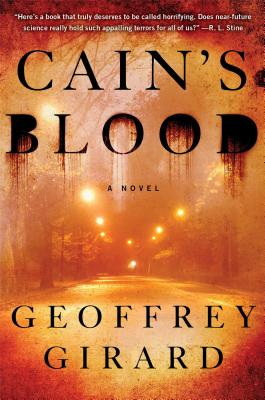
Cain's Blood
by Geoffrey Girard

I heard about this novel’s audacious high-concept premise several months before its publication. Marketing copy said:
“A terrifying debut novel about the evil in each of us: when clones of infamous serial killers escape from a secret government facility, it’s up to a former Army Ranger to stop them… with the help of a teenage killer clone.”
And I was basically like: You had me at ‘clones of infamous serial killers.’ I mean, with a premise like that, it was either going to be unbelievably awesome or excruciating bad. Execution would be everything. And I am officially declaring Geoffrey Girard’s debut thriller UNBELIEVABLY AWESOME. If Cain’s Blood doesn’t rocket to the top of the bestseller list in the land of Hannibal Lecter, well, there is no justice in the world of publishing. And, of course, there isn’t, so who knows.

Okay, back to the story… Honestly, beyond the blurb above, there’s nothing you really need to know. Well, I’ll mention that teenage helper is an innocent, 15-year-old clone of Jeffrey Dahmer. Oh yeah, Girard’s not playing around. This novel is a who’s who of serial murder, with appearances by Ted Bundy, David Berkowitz, Ed Gein, etc. The gang’s all here. As I stated above, execution is everything with a premise this bold. Mr. Girard starts things off provocatively by giving readers a prologue in the form of “A Brief History of Cloning” in which he writes, “Cloning humans, by the way, is still completely legal in the United States, everyone just assumes it’s not.” Uh, I certainly did. Mr. Girard has done his homework on everything from genetics to the differences between psychopaths and sociopaths:
“About one half of one percent of Americans could be diagnosed as sociopaths or psychopaths. So says the National Institute of Mental Health… There are degrees to everything. Ninety-eight percent of that two million are only sociopaths, and most sociopaths are little more than flaming assholes… Guys with no regard for the feelings and rights of others. Care only about Number One, steal for the hell of it, moody guys who screw over coworkers, start bar fights out of boredom, won’t talk to their kids…that kind of thing. True psychopaths are much, much rarer. The difference is important, and also horrible.” [I’ve condensed the quote above with ellipses.]
How is that not fascinating? When it comes to science thrillers, the science doesn’t have to be rock solid, but you have to make me believe it. Mr. Girard did a laudable job of making his outrageous premise plausible. And there was neither too much nor too little of the science. He got the balance just right.

Now, obviously a tale like this lives and dies with plotting and pace. Honestly, there wasn’t a whole
lot to the plot. Some bad dudes escaped and a good, if damaged, soldier had to round them up. But within that simple structure, Girard kept his tale lively, offered up some surprises, and kept things moving at a lightning pace. Turning pages was not only effortless, it was mandatory. I can’t imagine that any reader will be surprised to learn that this novel is full of the most lurid and graphic kind of violence. It’s definitely not for everyone. I’m not generally a fan of gratuitous violence, but I’m not even sure it was gratuitous. All I know is that I couldn’t look away.

Character development is not what drives this sort of story. The damaged soldier thing is a bit of a cliché, but Shane Castillo was a likeable enough protagonist. And Mr. Girard did a fine job with his teen Dahmer, making him sympathic and creepy all at once. There is much that is black and white in this tale, but the author also makes good fodder of the moral ambiguities inherent in the situation. Should Cain’s Blood be your next book club pick? Probably not. But I say give yourself a pass and enjoy the guilty pleasure of this very wild ride.

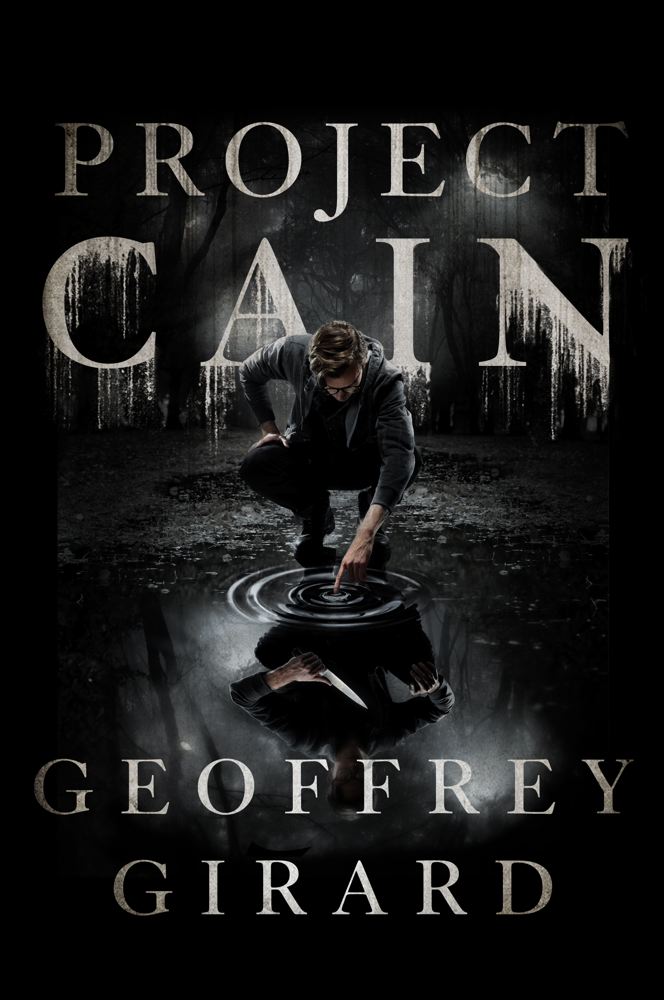
And one more note: Cain’s Blood is actually one half of Mr. Girard’s debut. It’s a complete novel, but he is simultaneously publishing a young adult novel called Project Cain. It tells the exact same story as this novel, but from the POV of the teen Dahmer. I haven’t read it yet, and I know it will be somewhat redundant, but I have to admit I’m curious.

Tuesday, September 3, 2013

“There’s the story, then there’s the real story…”

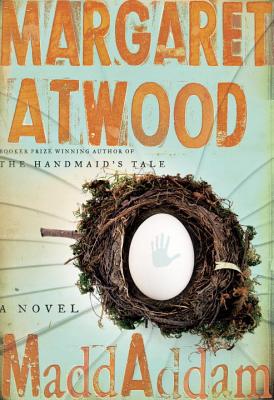
MaddAddam
by Margaret Atwood

Early on in the long-awaited conclusion to her MaddAddam trilogy, Margaret Atwood writes:
“There’s the story, then there’s the real story, then there’s the story of how the story came to be told. Then there’s what you leave out of the story. Which is part of the story too.”
And in MaddAddam, at last, Ms. Atwood gives us all of the above.

It’s been a decade since I first read Oryx & Crake, and four years since I read The Year of the Flood. I loved both books, loved the way the two intertwined and complemented each other. So, in preparation for this final volume, I started by rereading the first two novels of the trilogy. Wow, oh wow, did they hold up well! I realize that not all readers have the time or inclination to revisit books they’ve already read, but in this case it was well worth the extra effort, if only to fully appreciate the connections between the three novels. I don’t believe that a trilogy was planned when Ms. Atwood wrote Oryx & Crake, and yet it was almost as if she had salted away loose ends a decade ago as part of some subconscious, brilliant master plan. For those who aren’t inclined to follow my suit, MaddAddam helpfully opens with a four-page summary entitled, “The Story So Far.” Personally, I wouldn’t consider reading this final volume without having first read the prior two at some point.

When last we visited with the God’s Gardeners, it was the post-pandemic Year of the Flood. We’d been on a harrowing journey narrated through the eyes and voices of two Gardeners, Toby and Ren. In MaddAddam, Toby is back as narrator, and while Ren is a secondary character in the novel, I have to admit that I missed her voice. This time around, the tale is told by Toby alone until late in the novel a surprising second narrative voice emerges.

And it’s appropriate that Toby tells the tale, because it is primarily (Finally!) the story of Zeb, a man that Toby has secretly desired for years. Up until now, Zeb has been an enigmatic character, always hard to pin down. In MaddAddam, it becomes clear that Zeb’s history is inextricably linked to that of Adam One and the God’s Gardeners, as well as that of Crake and the Crakers.

But in addition to looking backward, the story of Toby, Zeb, Snowman, the God’s Gardeners, the Crakers, and the “MaddAddamites” who engineered them, moves forward. The whole bunch of them are joined in an uneasy community. The Crakers are an alien intelligence. Says one of the MaddAddamites, “Their brains are more malleable than Crake intended. They’ve been doing several things we didn’t anticipate during the construction phase.” Amen to that! There are many unexpected complications of joining humans and Crakers together, many of them quite comic. The comic relief is welcome, because Atwood’s post-apocalyptic future is dark. Of all the Craker characters, there is really only one who stands out, a young boy christened Blackbeard. He befriends Toby, and is, simply put, adorable. He is also the entrée for readers into the Craker mind. Can it possibly be accurate to say he “humanizes” them?

There are many dangers facing this little tribe. Probably the most aggressive threat is that of the
Painballers—escaped prisoners who have all but lost their humanity. The matter of humanity is, I think, central to this tale because if humanity is to be measured among the characters, it’s a broad spectrum. The Gardeners and their allies are a fairly admirable bunch, trying to live in peace, sustainably, and protect the Crakers. While the Crakers have some extraordinary natural defences and abilities, left to their own devices in this harsh world, these childlike beings would surely perish. The Painballers are entirely human, but have regressed to an almost animalistic state. And then there are the pigoons—the enormous, genetically-engineered pigs that have acquired an unknown degree of human intelligence in addition to the transplant organ-compatibility they were designed for. The pigoons are a threat to all constituencies, and in MaddAddam, we learn a great deal more about these animals.

I can only write so much here, and yet it is a testament to Ms. Atwood’s epic achievement with this final volume that there is so much substance contained within a mere 416 pages. I want to discuss the role of mythology and written language within this tale, the allegorical elements, the cyclic nature of the story being told, and the connectedness of all things. And, I want to quote her at length, for the sheer intelligence of her thoughts, and the beauty of her expression of them. Truly, I could go on and on.

She has given us the story, the real story, and how it came to be told. Ms. Atwood has looked into our future with this trilogy. She has extrapolated trends in our culture today and carried them into a worst possible tomorrow. Her work is disturbing because her vision is undeniable. Different readers will get different messages from this tale, and will take away different lessons. Despite the darkness, I am left with a feeling of hope. And a very strong impulse to start talking with the bees.

Thursday, August 29, 2013

Comfort reading


So, things have been pretty quiet around here for the past couple of weeks.  It's not, for once, because I've been slacking off.  Nope, I've been pretty darn sick.  (And yet, how awesome is it that I've found a cartoon about flu that is also a literary pun?)  And while I've certainly spent a significant portion of the past two weeks flat on my back in bed, there's also been the necessity of getting back up and working.  So, basically it's been bed and work for a while. 

At one point, I had the crazy thought that I could catch up on my reviewing.  Yeah, not so much.  I haven't had a lot of mental energy.  These are the first words I've written, and even this insipidness is a challenge.  So what have I been doing with myself?  Watching The View and Dr. Phil?  Nah.  I've been reading.  More specifically, I've been comfort reading.

I wasn't kidding about not having a lot of mental energy.  I've got some amazing fall literary fiction in my hands that I can't wait to read.  But I'm waiting.  I just can't handle the literary fiction right now.  I can't handle anything too challenging.  Mostly, I've been seeking the light and entertaining, the diverting, and feel-good or funny fiction is a bonus.  (Though I've made a couple of missteps along the way into darker territory.)  And I've been comfort reading in volume.  I've read 17 books in the past 12 days.  For those who are wondering, here's exactly what I've been reading:

The Last Dragonslayer by Jasper Fforde - I love Jasper Fforde!  He makes me happy when all else
fails.  I read this novel sometime before it was published last year.  But the sequel will be out in a few months, and I got the audiobook cheap, so I decided to revisit book one of this YA series before reading...

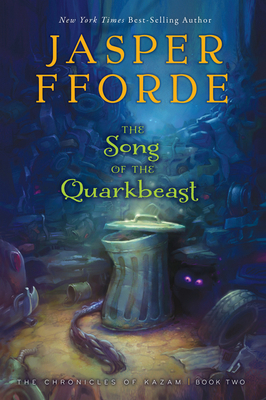
The Song of the Quarkbeast by Jasper Fforde - See above.  Jasper Fforde is awesome, whether
writing for kids or adults, and frankly, I don't see a whole lot of difference in his whimsical tales for either audience.  Also, I love that Twitter will auto-fill the word "quarkbeast."  Jasper FForde is wildly inventive, endlessly clever, and always, always funny.  I love him.

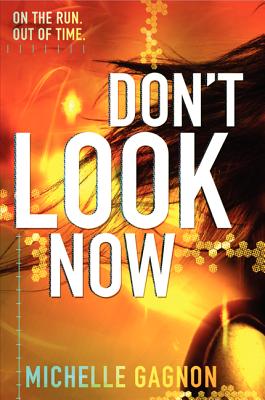
Don't Look Now by Michelle Gagnon - This is the second book in the trilogy that began with the awesome Don't Turn Around, a book that I absolutely could not put down last year.  Don't Look Now suffers a bit from being the middle book in a trilogy, but it leaves me hungering for next years conclusion.  (Michelle lives in my neighborhood in San Francisco and is a friend.  I am planning on getting her very drunk sometime in the next few months and tricking her into giving me the unpublished MS.) 

The Cure by Douglas E. Richards - Now, if you were sick and had a book
called The Cure on your kindle, you'd read it, right?  Sadly, the forthcoming The Cure was not the cure for what ailed me.  I'd describe it as a science fiction novel masquerading as a thriller.  I really have nothing good to say about it, which is unfortunate.  His earlier novels, Wired and Amped, were highly recommended by mutual friend Boyd Morrison, who's opinion I trust.  This latest, alas, is a real miss.  And a real mess.  Made me feel sicker.  Ugh.

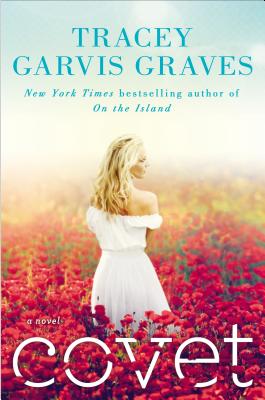
Covet by Tracey Garvis Graves - Did anyone read her (originally self-published) mega-hit novel On the Island?  Man, that was a guilty pleasure!  Everything about that earlier story was extraordinary.  I mean, a young man and older woman marooned on a deserted island?  Extraordinary circumstances.  Her follow-up, Covet, is exactly the opposite.  It's as common a story as they come.  More than a decade into a once happy marriage, a husband ignores his wife and she finds someone else to pay her attention.  That scenario simply couldn't top or even equal the deserted island tale, but the characters grew on me.  It was sort of Desperate Housewife-ish, which the author acknowledges.  It passed the time.

A Bad Day for Romance by Sophie Littlefield - Hmmm, it's been a nearly unprecedented length of
time since I've mentioned Sophie on the blog.  How odd.  This was a bittersweet read for me.  Bittersweet is that it was just as awesome as all of the other Stella Hardesty novels, but it is also supposedly the last.  If that's the case, both Stella and Sophie have ended the series on a high note.  It was fantastic, with all the terrific character-based humor I've come to expect.

Song of Spider-Man: The Inside Story of the Most Controversial Musical in Broadway History by Glen Berger - Oh, that title is so true!  Like millions of theater lovers, I followed this musical's disastrous path to the Great White Way avidly.  It was like watching a train wreck, but you couldn't look away.  This non-fiction work from the most inside of insiders was absolutely fascinating!  Definitely as drama-filled as anything you will ever see on a stage!

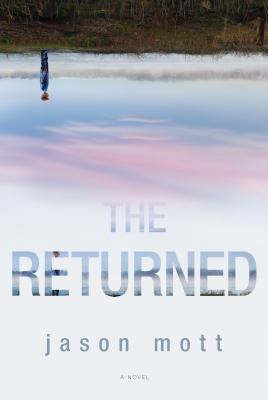
The Returned by Jason Mott - This book had a slew of starred reviews in the trades, and had a ton of buzz at BEA.  It's even being turned into a television series.  I wanted to read it before Tuesday's publication date.  It's an excellent, thought-provoking novel of ideas and emotion.  Probably both too smart and to heavy for sick-bed reading.  I cried a lot.  It's well worth checking out.

Dangerous Curves Ahead by Sugar Jamison  - In an effort not to think so much, I turned to chick-lit.  I have a weakness for chick-lit about zaftig Jewish girls.  There's quite a lot of it out there.  This one was fairly contrived and ridiculous.  She digs him, he digs her; the obstacles along their path to true happiness were pure contrivance.  Still, it was a quick and somewhat steamy diversion.  I've read worse.

Code Name Verity by Elizabeth Wein - This was another misstep from the all-fluff comfort reading.  I've been hearing nothing but wonderful things about this YA WWII drama since it was published last year.  I've thought about reading it time and time again, but it was receiving a galley of the sequel, Rose Under Fire, that finally inspired me to do so.  First, let me say that I don't even know why this book is classified as YA.  It seemed wholly adult to me.  It's an intense wartime tale, and very sad as books about Nazi torture tend to be.  But what a terrific look at women's contribution to the war effort!  Excellent, but I definitely need a break before tackling book two.  Not fluffy.

Six Years by Harlan Coben - It is shocking to me that as many thrillers as I read, I've never before read a Harlan Coben novel.  I am unlikely to suddenly start reading his long-running series.  However, his most recent novel, Six Years, was a stand alone.  I completely enjoyed this intro to his work.  It was fast-paced, well-plotted, well-written, and had an appealing everyman protagonist.  I shall look forward to seeking out more of his stand alone titles.

The Last Girlfriend on Earth by Simon Rich - This book has been on my radar for months, but I just wasn't sure about it.  But picking it up for $1.99 as part of the Kindle Daily Deal was a no-brainer.  I also picked up the audiobook for cheap, which was a good call on my part.  I often avoid author-read audiobooks, but occasionally they're excellent.  I can't imagine anyone who could do a better job reading Rich's material.  And collectively these stories are hysterical!  I couldn't contain my inappropriate laughter in public places as I was listening to it.  Rich's humor is absurd, whimsical, weird, and sublime.  And look, this one may become a television show, too.

Wayward by Blake Crouch - It was receiving this galley of book two in Crouch's Wayward Pines Trilogy that had finally inspired me to read book one, Pines, a couple of weeks ago.  I really loved it!  It was an absolute page-turner, and book two did not disappoint.  It picked up right where the first had left off, and again I'm waiting a year for the conclusion.  BTW, this too has been picked up for television, by M. Night Shamalan with a starry cast.  I could see both Wayward Pines and The Returned working quite well on television, and I'm looking forward to both adaptations.

The Bookstore by Deborah Meyler - This novel concerns 23-year-old Esme, a British woman in New York to pursue her Ph.D. in art history at Columbia.  Early in the novel she discovers that the one night she and her new boyfriend failed to take precautions has led to an accidental pregnancy.  This leads to all the turmoil and conflict one might expect, and also to a part-time job at a second-hand bookstore.  I'm not very interested in pregnancy or babies, but I've spent a ridiculous amount of time shooting the breeze in used bookstores.  I loved the environment and community Meyler depicted.  And I was pleased by this smarter than average example of women's fiction.

Relic by Douglas Preston and Lincoln Child - I've had this audiobook in my library for quite a while now.  It's been nearly 20 years (!) since I first read this awesome debut by this duo who have become two of my favorite authors.  I've been wanting to revisit this novel for ages, but it's always so hard to rationalize these rereads.  But not when you feel really cruddy and are allowed to indulge in anything that might possibly make you feel better.  And it did make me feel better!  After all these years, the characters introduced in Relic have become old friends, but it was really fantastic revisiting their origins.  Pendergast was not yet fully developed into the quirky character he would later become, although I did smile near the end when he said, "It's a bad habit, but one I find hard to break."  And his dynamic with D'Agosta was very different in this first outing.  None of that, "My dear Vincent..." stuff.  I'll be honest, I liked this milder Pendergast.  Relic is still a terrific science thriller and a really accomplished debut novel.  I read it in just a few hours and for those hours I was happy.  I also have the audiobook of Reliquary on deck.  Something tells me I won't be able to wait long before I listen to it.

Never Go Back by Lee Child -  I've been in the mood for a Reacher novel.  I was just getting ready
to raid the audio library when Random House sent over a galley of next weeks release.  Thank you, Random House, for your awesome timing!  Never Go Back is as predictably enjoyable of all Child's other novels.  Reacher is a fascinating character.  Does this latest novel shed new light on the character?  Possibly it does.  But even if it doesn't, he's so endlessly fascinating by virtue of his otherness.  And it is, of course, intricately plotted, with excellent action sequences, and lots and lots of sudden violence.

What's on deck for tomorrow?  I'm not sure yet.  Very likely more comfort reading.  Or maybe I'll take another swing at the forthcoming Alice Hoffman novel.  Hopefully, I'll get my brain back soon.  I've got upcoming novels by Jhumpa Lahiri, Dara Horn, Paul Harding, Lorrie Moore, and so many more waiting to be read.  And, ugh, the reviews not written.  My head spins--but that could be the flu. 

Anyway, readers, hold on a few more days.  I've already written reviews for two awesome books being released next week, and I've got some great video to share soon.  I'll be back up to speed any day now.  Meanwhile, I've discovered that comfort reading is a good thing.  I should indulge a little more often.
Thursday, August 15, 2013

“Sometimes you can tell the truth better through stories.”

The Truth
by Michael Palin

The quote above is one of more than a dozen that wrestle with the nature of truth in this second novel by writer, globe-hopper, and former-Python, Michael Palin. At the heart of this struggle is Keith Mabbut. Keith was once a crusading investigative journalist, but the hard realities of life have turned him into more of a paid corporate hack. Having just wrapped his latest commissioned work, he’s finally about to indulge in a passion project, his first novel. He queries Tess, a lady friend:
’Do you prefer fact or fiction?’
‘Oh, fiction every time. I hate facts.’
‘Why?’
‘Facts are just facts.’ She shrugged dismissively. ‘They don’t amount to a row of beans. If you want the truth, read Jane Austen.’
Tess has a point, but hers is one of many views that are examined in this morality play. Interrupting Keith’s well-laid plans is his agent with the best offer he’s received in years. It’s a commission to write a book about the reclusive activist Hamish Melville. For decades, Melville has been a tireless defender of the environment and a crusader on behalf of indigenous peoples. And he’s ducked the press entirely, creating quite the aura of mystery:
“I’m not interested in talking about myself. I’m interested in what I can do, in the time left to me, to prevent a little of the damage we seem hell bent on inflicting on this long-suffering planet. I’m not the story.”
After some internal wrangling, Keith does accept the assignment, along with the punishing six-month deadline. Now all he has to do is unearth a man that no one can find. This leads Keith on a journey far from his comfortable London existence. Eyes are opened. Much is learned. And, indeed, a book is produced. But when the manuscript is submitted at last, the nature of “the truth” again comes into question. Whose truth? And how many of the parties involved have their own agendas that have nothing to do with the truth?

Palin, himself, is a writer who has delved into both fact and fiction—with fact winning out a majority
of the time. The man has exhaustively documented his travels to the remotest corners of the world, and it’s clear that his personal experience has colored the tale he’s chosen to tell. And he tells his tale well in the clear, clean, elegant prose that seems to come so naturally to the British.

The Truth is more character-driven than plot-driven, but as the novel moved towards its inevitable conclusion, I found myself turning pages faster. I had gotten caught up in the story and was hungry for the revelations that finally came. As the character at the center of this study, Keith Mabbut makes a fine protagonist. He’s likeable, idealistic, kind-hearted, and yet still somewhat foolish and flawed. His personal life is in a fair amount of disarray. At the age of 56, he’s got a lot to learn and he knows it.

I remember reading Palin’s debut, Hemingway’s Chair, 15 years ago and anticipating some Python-esque comic novel. That gentle story couldn’t have been further from what I was expecting. This time my expectations were more in line. The Truth also features a certain gentleness and civility—and yes, of course, some humor—but there’s nothing over-the-top or wacky about the tale. It may not be the novel one would expect from a comic genius, but it looks with clear-eyed affection at the human condition. Says one character of the events depicted:
“It would be an interesting cautionary tale. And I trust you enough to know that you would tell it honestly, but charitably, too. Everyone, no matter how admirable they appear to be, is simply human. Prone to all the imperfections, temptations and mendacities that go with the territory.”
Ain’t it the truth.

Tuesday, August 13, 2013

VIDEO: Andrew Sean Greer on The Impossible Lives of Greta Wells


I know, I know, enough already!  I keep going on about this book.  What can I say?  I love it.  I read it way back in January, and I've been spreading the word ever since.  I can't resist sharing good books.

Now, I'm not going to lie; I am very fond of Andrew Sean Greer.  I have written previously of our
original rom com meeting at Symphony Hall.  In the eleven years since, he's been nothing but delightful every time I see him.  And he has yet to write a disappointing book.  Plus, if you hand him a microphone, he is wildly entertaining.  This was proven to me yet again at his recent book launch party at the Booksmith.  Andy's reading, talk, and Q & A were so much fun that I was kicking myself for not filming them for you.

Fortunately, Andy's local to San Francisco.  He had several Bay Area signings scheduled.  I shot him a note asking if I could film his event at the Books, Inc. (Castro) and, as always, he was happy to accommodate.  I was seated right in front of him, and consequently got better film than usual.  This came out pretty well, actually.  And as it happened, much of Andy's family was present that evening.  I was sitting right next to his mom and young nephew--which will become apparent as you watch.  You'll also be introduced to Andy's twin brother.  It was fun to see him interacting with his family.  I filmed this event from start to big finish.  (I mean, it's not every author that closes a book signing with a couple of ukulele numbers!)

Incidentally, I ran into Andy (and a swarm of other local novelists) at another writer's event last week.  It's so awesome how the local lit community supports each other!  I wasn't expecting to see Andy again so soon and announced, "I'm not stalking you!"  Let me repeat that again here, Andy, because I think I'll be seeing you at Litquake in Palo Alto this weekend...

NOTE:  I am confident that either of the independent booksellers linked in this post will be delighted to sell you a signed, first edition of this wonderful novel.

Thursday, August 8, 2013

“Perception is reality.”

Big Egos
by S. G. Browne

“It used to be you were stuck with your own personality, your own identity, and any adjustments to your persona would only be as successful as your acting ability. That all changed with the introduction of Big Egos.

Not everyone wants to alter who they are, to live a life that isn’t theirs and pretend to be someone they’re not. There are plenty of men and women who are perfectly content with their lives and their struggles and the comforts of their own identities. But for those who can afford it, for those who seek the thrill of experimenting with alternate personalities and temporary identities, Big Egos offers a respite from the mundane…

On CBS is an advertisement for Big Egos, ‘Does your lifestyle not fit the person inside of you? Try someone else on for size! For $3,000, you can change who you are by purchasing a DNA-encoded cocktail of your favorite dead actor, artist, writer, musician, singer, athlete, politician, talk show host, or television star. All legally approved by their respective estates, because if there’s one thing estate holders love, it’s money. You can even purchase an officially-licensed fictional character like the Luke Skywalker, the Mary Poppins, or the Harry Potter…’”
The quote above sums up well the premise of S. G. Browne’s latest novel, Big Egos, set in the world as we know it with this one notable exception. Our first-person narrator works in quality control for Big Egos, so he’s an insider, an endorser, and a high-volume user of this product. He’s also a man in a less than satisfying relationship, and he’s experiencing serious second thoughts about having talked his best friend into his first ego trip:
“I never should have introduced Nat to the world of Big Egos. Not that I haven’t enjoyed spending time with him. We’ve spent at least one night a week over the past month going to ego parties and bar hopping, pretending to be Luke Skywalker and Han Solo, Dean Martin and Frank Sinatra, Butch Cassidy and the Sundance Kid. I’d almost forgotten how much fun we could have together.”
That does sound like fun, doesn’t it? But there’s a dark side to this technology, and Browne’s light tale gradually becomes nefarious, heading in unexpected directions. Regardless, there are laughs to be mined from start to finish. First and foremost, Mr. Browne is a social satirist, and this set-up provides rich ground for examining contemporary culture.

Additionally, the author has great fun with the personas of the many famous characters that pass
through his pages. It’s affectionate satirizing reminiscent of the film Midnight in Paris. The following snippet even features an eminently imitable character that appeared in that film, but Mr. Browne is playing with a much broader cross-section of popular culture. Always, however, it’s the extensive literary parody that I can’t resist:
“Give me a boat,” says Hemingway. “And the open sea. Nothing else matters.”
“What about complex sentences?” says Faulkner.
As for his own writing, Browne’s use of language is smooth, unobtrusive, and peppered with amusing observations:
“Every day, Emily brings a Cinnabon with her to work, and nibbles at it and picks at it, until it’s nothing but a corpse of a cinnamon roll. A pastry victim, gutted and left for dead on her desk like breakfast roadkill.”
Character development is a lot trickier. It’s hard to get to know characters that are constantly shifting personas. His narrator is a slick operator with a distinctive voice. The rest of the cast is more superficially developed. It should be clear, by now, that this is not a character study. Browne keeps his plot moving forward at a steady pace, and Big Egos is a quick and entertaining read. Consider it required reading for all pop-culture junkies.