Thursday, November 19, 2009

I'm a Blue, my ex is Orange--this explains so much...

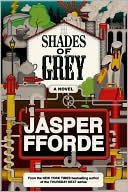
Shades of Grey:
The Road to High Saffron
by Jasper Fforde

6.1.02.11.235: Artifacture from before the Something That Happened may be collected, so long as it does not appear on the Leapback list or possess color above 23 percent saturation.

Did you understand that? You would if you were Eddie Russett, the 20-year-old, first-person narrator of Shades of Grey: The Road to High Saffron. Eddie knows that the above is one of Munsell's innumerable Rules. "The Word of Munsell was the Rules, and the Rules were the Word of Munsell. They regulated everything we did, and had brought peace to the Collective for nearly four centuries. They were sometimes very odd indeed: The banning of the number that lay between 72 and 74 was a case in point, and no one had ever fully explained why it was forbidden to count sheep, make any new spoons or use acronyms. But they were the Rules..." Not surprisingly, this is a society that has embraced "loopholery" enthusiastically.

Eddie's society is a Colortocracy, where social status isn't determined by merit or by birth, it's determined by which color(s) 0f the spectrum you can see, and how much of them. Eddie's a Red, which is next to lowest on the totem pole. Oranges are higher than Reds, Yellows higher than Oranges, and so on. The only ones lower than Reds are the Greys, or achromatics. They can't see any color at all. They're the unappreciated workers of the society.

In Shades of Grey, Jasper Fforde has created a richly imagined future that revolves entirely around color, and the perception of it. Explains Eddie, "No one could cheat the Colorman and the color test. What you got was what you were, forever. Your life, career and social standing decided right there and then, and all worrisome life uncertainties eradicated forever. You knew who you were, what you would do, where you would go and what was expected of you."

As the novel opens, Eddie doesn't want much from life. He wants to fulfill his Civil Obligations as best he can. He wants to marry into the prestigious Oxblood family. And he does have a few fairly radical ideas about improved ways to queue. Other than that, he wants to avoid the perils of swans, lightning, and mildew. But that's before he travels for the first time in his life, to the Outer Fringes, where the Rules are interpreted differently. Eddie's a fish out of water, and we're meeting people and learning about life in the village of East Carmine right along with him.

It is there that Eddie meets a Grey named Jane. He's smitten immediately, and that's even before she threatens to kill him. Jane, rude in a world without rudeness, violent in a world without violence, leads Eddie gradually down a path that has him questioning everything he thought he knew about the Colortocracy--in a world that most definitely does not value questions or those that ask them.

By now, you many have gathered that this novel is a bit of a departure for Fforde. There is so much going on that it's hard to take it all in, and virtually impossible to summarize. While undeniably funny, the humor is darker and a bit less overt. Shades of Grey is more challenging, sophisticated, and substantive than anything we've seen previously from Mr. Fforde. In a word, it's brilliant! The cleverness he has always displayed in his Thursday Next novels is dialed up several notches here, as he points his satirical eye at a world so strange and outlandish that comparisons to our own are inescapable. I'm not convinced that all of the Fforde Ffanatics will embrace this latest work, but I suspect most will. And I, for one, with be looking forward with great enthusiasm to Shades of Grey 2: Painting by Numbers and Shades of Grey 3: The Gordini Protocols.

If only the author could go back in time...


The Kingdom of Ohio
by Matthew Flaming

I love debut novels and I love time travel stories. I love trying something new and potentially finding a favorite new author. Alas, that's not how it worked out this time. The simple truth is that The Kingdom of Ohio was a real slog to get through. More bluntly, it was the most boring time travel story I've ever read.

I'm not going to go into real detail with regard to the plot, but the novel is set in New York in 1900 at the time that the subway is being excavated. Our hero is Peter Force, one of the subway workers. One day, while looking out the window, Peter sees a woman collapse and rushes out to help her. She's tattered, but beautiful. She tells him that her name is Cherie-Anne Toledo, and that she has traveled somewhat inexplicably seven years into the future, and from Ohio to New York. The basic questions of the novel are, is she mad, and if not, how did this happen and what does it mean?

The story is stranded in a mass of superfluous detail. For instance, the world of this novel is exactly like our past (complete with starring roles for some of the preeminent figures of the time: J.P.Morgan, Thomas Edison, and Nicola Tesla) except for one major thing: In the novel, there was once a "Kingdom of Ohio," all but forgotten now. It was literally a piece of land sold to a French family during the early part of America's history, and ruled within this country's borders as its own Kingdom for more than a century. It is this Kingdom that Cherie-Anne claims to be from, but really, what's the point?

What, too, is the point of the copious and extremely tedious footnotes scattered throughout the book? Presumably, the author was trying to blur the line between reality and fiction. This was simply a very bad idea. Additionally, the author used the device of a present day narrator telling the story in retrospect. Flaming obscures the identity of this narrator, but it's so obvious from the start who it is, that this, in itself, telegraph's the novel's ending.

Flaming has attempted to write a time travel story in the tradition of Time and Again or The Time Traveler's Wife. In other words, a story strong on romance and weak on science, but again he fails, as I never grew to care about these characters or their relationship. Honestly, I didn't even like them very much.

Again and again and again as I read this novel, I searched for redeeming qualities, but here I failed. The prose exhibits the clunkiness of a first-time novelist and the story bored me more than anything else. I'm sorry, but I can't recommend reading The Kingdom of Ohio.

Are we not all uncommon readers?


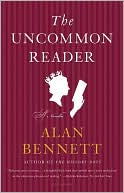
The Uncommon Reader
by Alan Bennett

I received this charming novella from a friend. Can I just tell you? There can be no more perfect gift for the bibliophile in your life. What a joy!

The story is simple. The Queen of England has some very bad corgis. One day on a walk through the grounds at Windsor, the dogs start barking their heads off at a mobile library. (What I'd call a bookmobile.) Neither the Queen, nor the dogs apparently, had ever noticed it parked by the castle before. Propriety being everything, the Queen pops her head in to apologize for the corgis' behaviour, but then feels compelled by that same sense of propriety to borrow a book while she's there. (It would be rude not to.)

She asks for help selecting the book from the librarian, and also consults with a young man who happens to be picking out a book of his own. It turns out that the young man, Norman Seakins, works in the castle's kitchen. So begins an odyssey that changes the monarchy, because quite by accident the Queen discovers that reading is the great passion of her life.

Not that everyone is happy with the Queen's new, all-consuming pursuit. She has to deal with Kiwi private secretaries and the Prime Minister, among others. This slim book is the story of the extraordinary friendship between a Queen and a dish washer. It explores the camaraderie of the literate. There are ruminations on books, and ruminations on writers--and why the latter are more enjoyable on the page than at a party.

The Uncommon Reader is short, sweet, funny, smart, and utterly delightful! It's just the thing to stuff in a stocking or give to a bookish friend "just because." Or, even better, just give it to yourself.

Monday, November 2, 2009

Douglas Preston’s homage to H.G. Wells?


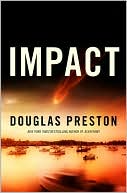
Impact
by Douglas Preston

Doug Preston's latest solo effort starts with a bang--literally--in the form of a meteoroid impact off the coast of Maine. And that's where the juggling begins. Preston's juggling three narrative threads. The first involves two young girls who go in search of the fallen meteoroid. They're after big bucks on Ebay, and maybe a little adventure. They get a hell of a lot more than they bargained for.

The second thread involves a researcher with the Mars Mapping Orbiter (MMO) project at the National Propulsion Facility (NPF, but you might as well think JPL). Mark Corso has just been promoted. In fact, he's taken the position of his disgraced mentor, Jason Freeman, who was fired and then murdered in a random home invasion. (Uh huh.) A few days after Dr. Freeman's death, Mark receives a package from his mentor with a stolen hard drive full of very classified, very illegal data. He can not have this data! He's got to destroy the thing, forget he ever saw it... but he can't help looking to see what's on it first. And so Mark Corso gets sucked into what may be the biggest, most dangerous scientific discovery of all time. And possibly the biggest cover up, too.

And finally, the third thread involves our old friend Wyman Ford. (Don't worry if you haven't read his previous adventures. This book is essentially a stand alone. There's not a thing you need to know from previous books that will affect your reading of this one.) Ford's a former CIA operative, a freelancer now, and he's just been offered a job. There have been some very unusual gems showing up for sale in Asia. They're strikingly beautiful, but notably unlike anything anyone's seen before. And potentially quite dangerous. Ford is tasked with finding the source of the stones and reporting back. It's one of the easiest assignments he's taken in recent years. (Uh huh.)

Preston does a good job of keeping all his balls up in the air. This 368-page book has an even 100 chapters. You can do the math. That's a whole bunch of short, fast-paced chapters. Almost every one of them ends on a hook, making the novel virtually impossible to put down. Preston places his characters in every type of peril you can imagine, from the everyday unpleasantness of a strung out drug addict, to an extraordinary threat to all life on earth. Simply put, Preston goes all out with this one.

Is some of it ridiculous? Sure. I mean, what waitress knows that much about astrophysics? But then again, I'm a college drop-out who knows a hell of a lot about physics. It could happen. Actually, now that I try to think of examples of ridiculousness, they evade me. My point is, read Impact with a sense of fun. Enjoy it as the thrill ride, and the homage to the greats of science fiction, that it is. If you set out to pick it apart, you'll be able to find flaws. Just leave it alone and have a good time. Because this book is a really good time. You're going to be holed up inside some snowy weekend this winter. I seriously can't imagine a more entertaining way to pass the time.

John Irving’s finest novel in years


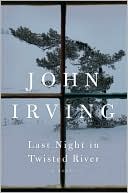
Last Night in Twisted River
by John Irving

I may as well come out and say it: I love John Irving. My love is unconditional. I will defend his lesser novels against all defamers. Happily, I will not be put in that position any time soon, because Last Night in Twisted River is his strongest novel in years. It's a wonderful read!

I recently told a friend, "It's so good it hurts." Reflecting on what I had said, I realized I was right. Sometimes reading his books hurts. He populates his novels with sweet, sentimental, anxious men, and then he tortures them. Mr. Irving's signature blend of comedy and tragedy is again on display. Only in his world does an oft-repeated tale of whacking a bear on the nose with a frying pan lead to an accidental death.

The novel opens in rural New Hampshire in 1954. Widower Domenic Baciagalupo is the cook at a logging camp, where he is assisted by his 12-year-old son Danny. It's a rough and tumble world, personified by the gruff and rugged logger, Ketchem, who becomes the closest thing to family that either Baciagalupo has. Last Night in Twisted River is an epic novel, spanning some 50 years. The aforementioned accidental death is the novel's catalyst. It causes Domenic and Danny to go on the run, sought for decades by a vigilante sheriff. But aside from being the tale of this truncated family's life in exile, this is a story about how you become the person you are.

Specifically, Mr. Irving is looking at how a writer becomes a writer, because that, indeed, is what Danny Baciagalupo becomes--a successful one, too. In fact, Danny Baciagalupo's career is... John Irving's career. There is no attempt to disguise the obviousness of the career trajectory, the subject matter of the books, the literary criticism--all are identical to Irving's. It seems clear that the author is having some fun with the self-referential material, but for fans like me, Irving gives us unusual insight into his process, and possibly some of his own attitudes on the life of a writer. Though, perhaps we can't assume that is so, as Danny has much to say about readers' assumptions about the autobiographical nature of fiction, and the value of what is borrowed versus what is imagined.

In a recent review, I commented on the way that Pat Conroy returns again and again to certain themes and plot elements in his fiction, but "jumbles them up in new and interesting ways." certainly this is true, too, of Mr. Irving. In this novel we again find bears, writers, absent parents, endangered children, New England settings, prep schools, and so forth. It's easy to compare different aspects of this novel to what has come before. A dash of Garp and a soupcon of Owen Meany. But right from the start, the work of which this reminded me the most was The Cider House Rules. Not in subject matter, but in the period setting and the span of the story being told. And probably in the nature of the male relationships in this novel.

Last Night in Twisted River is a long, heart-wrenching story. You won't be racing through it. You may learn more about logging than you ever wanted to know. But John Irving's language is magnificent and you won't soon forget these characters and their epic journey. This book is a must read for all fans of John Irving and of great literature.

More milestones!

Today I posted my 100th review on Amazon.com. I wrote my first review in July of 2006, but I surely wrote a majority of those 100 reviews this year. I started out sporatically, inspired to write by the worst book I've ever read. Now I review everything, and I've grown to enjoy it. It forces me to think critically while I'm reading. It forces me to pay attention to what I'm reading. I'd better watch out or those novels won't go in one eye and out the other much longer.

So, when I saw the way things were shaking out, it was pretty easy to arrange my 100th review to be Last Night in Twisted River, the latest work by my favorite author. That felt good. I'll be posting that review here momentarily.

I passed one other milestone several weeks ago. I broke into the top 500 Amazon reviewers. I was pretty happy when it happened. It was a goal, and I achieved it. As of today, I'm ranked at #419. Not bad for three and a half years. Thanks to everyone who's ever given me a helpful vote.

And thanks to everyone who reads the reviews here. I'm always amazed by the notes and comments I get from complete strangers. Thanks so much for reading!

Wednesday, October 14, 2009

The real and the surreal clash in Lethem's Manhattan


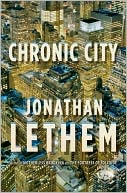
Chronic City
by Jonathan Lethem

If Seinfeld was "the show about nothing," then Chronic City just may be the novel about nothing. It's beautifully written, but very little happens in the course of it's 480 pages. To keep my comparison alive, you'd find your "Jerry" in protagonist Chase Insteadman--one of the many unusual names we'll discuss in a moment. The book's jacket copy describes him like this:

"Chase Insteadman, a handsome, inoffensive fixture on Manhattan's social scene, lives off residuals earned as a child star on a much-beloved sitcom called Martyr & Pesty. Chase owes his current social cachet to an ongoing tragedy much covered in the tabloids: His teenage sweetheart and fiancee, Janice Trumbull, is trapped by a layer of low-orbit mines on the International Space Station, from which she sends him rapturous and heartbreaking love letters."

Within the novel's text, Chase describes himself: "My distinction (if there is one) lies in the helpless and immersive extent of my empathy. I'm truly a vacuum filled by the folks I'm with, and vapidly neutral in their absence." In other words, a hard character to really care about.

Chase is surrounded by a group of equally oddly-named friends. Foremost among them is Perkus Tooth, the "Kramer" of the bunch. Perkus is long past quirky and deep into weird territory. He's a largely sequestered social critic who spends his days and nights getting high and sharing semi-coherent rants with a selected few. Perkus's life-long friend, Richard Abneg, a city bureaucrat, can be our "George." And their long-time associate, and Chase's secret lover, Oona Laszlo, rounds out our quartet as "Elaine."

My comparison with this long-dead television show is a little ridiculous, but at the same time, it's not crazy at all. These are caricature New Yorkers, doing their thing. Chase is the least objectionable of the bunch, but none of them are all that likeable. By far, the most sympathetic character is Janice Trumbull, trapped in space and pining for her man. Her letters home were my favorite part of the novel, but they were few and far between.

So, I mentioned the names. To those already listed add Strabo Blandiana, Laird Noteless, Georgina Hawkmanjani, Anne Sprillthmar, and many others. The crazy names certainly weren't randomly selected, and it's no casual mistake when Chase is erroneously addressed as "Chase Unperson," and Perkus is later referred to as "Mr. Pincus Truth." Lethem winks at his readers with this passage:

"His name is Stanley Toothbrush."
"See, now you're definitely making fun of me, because that's idiotic."
"Stanley would be awfully hurt if he heard you. You have no idea how often people laugh in his face."
"Toothbrush... that's just a little hard to swallow."
"No more so than stuff you swallow every day."

The New York setting is as much, if not more, of a character than any of the others. (And the title references not only Manhattan, but a grade of marijuana. Did I mention the characters spend interminable portions of the novel getting high and having only vaguely comprehensible conversations?) Lethem's Manhattan is immediately recognizable; I've eaten at the burger joint the characters frequent. At the same time, it's a sort of bizarro Manhattan where the city and the citizens have to deal with tigers run amok, a pervasive scent of chocolate, and can choose to read the "War-Free Edition" of the Times. Muppets are Gnuppets, and are referenced constantly. What does it all mean?

I don't think anyone but Jonathan Lethem will ever understand what it all means, but by the end I understood what he was getting at. I just didn't care. As terrific as some of the writing is, the novel as a whole is rather tedious, and ultimately unsuccessful. I can't honestly recommend reading it unless, perhaps, you're a pothead with an extraordinary vocabulary.

Tuesday, October 13, 2009

Rawr is totally a thing...


Bite Me: A Love Story
by Christopher Moore

In my rave review of Moore’s last novel, Fool, I implied that his novels inspired by Shakespeare and the Bible are more substantive than his fluffier San Francisco/Pine Cove novels. This latest novel, Bite Me, has me rethinking that statement. Funny, it is. Fluffy, it is not. Bite Me is the third (and final?) novel in the Bloodsucking Fiends series. The first novel in a great series is always special because it’s our introduction to a new world. That said, this latest installment just might be the best. What I can tell you is this: I found it to be darker, scarier, more suspenseful, and at least as funny as the previous novels. And in addition to all of the above, it’s genuinely moving. These characters have been friends for more than a decade now. I’ve grown to care about them.

The novel opens pretty much in the immediate wake of You Suck. The opening chapter is the first of many that are narrated by the unforgettable Abby Normal, self-proclaimed "emergency back-up mistress of the greater Bay Area night." Abby begins by providing a dizzying (and helpful) recap of the first two novels, but I’d strongly suggest you read Bloodsucking Fiends and You Suck before tackling this one. She and Foo Dog still inhabit the “love lair.” Jody and Tommy are still encased in bronze. Chet, the huge shaved vampire cat is on the prowl. And all of our favorite San Franciscans are back: the Emperor, Bummer, and Lazarus; the Animals; cops Rivera and Cavuto; the folks from Asher’s Secondhand Store; and others. And Moore fans, a beloved past character who’s never shown up in San Francisco before makes a surprise appearance in a supporting role. Be careful what you read about this novel. It would be a shame to ruin the surprise!

I don’t want to summarize the plot. It’s too crazy, it lurches in all sorts of unexpected directions, and why should I ruin your fun? What I can tell you is that I was completely surprised by the novel’s ending. Earlier I said this novel is darker, scarier, and more suspenseful. (At this point I should admit that I’m a total wuss who’s afraid of horror movies and rollercoasters.) Still, characters are placed in real jeopardy. Not all will survive. And I was definitely on the edge of my seat for large stretches of the novel. That Moore can maintain this level of tension while being spit-milk-out-your-nose funny is astonishing. I didn’t actually spit any milk out of my nose. I read this novel while laid up with the flu. Every time I laughed out loud it started a coughing jag. I nearly coughed up a lung, but I just couldn’t put it down! If that’s not a recommendation, what is?

Despite aphorisms about old dogs and new tricks, I have to say it: I think Chris Moore is getting better. I’ve been a hardcore fan for years, and that is saying quite a bit.

This novel sells itself...


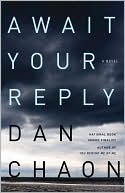
Await Your Reply: A Novel
by Dan Chaon

As soon as you read the opening pages you'll be hooked. Dan Chaon's intricately-plotted novel opens in the middle of the night with a father rushing his son to the hospital. "Listen to me, Son: You are not going to bleed to death." The son's hand is in a cooler on the front seat.

Elsewhere in the night, freshly-minted, eighteen-year-old grad Lucy Lattimore has just surreptitiously left town with her former high-school history teacher, George Orson. They're making "a clean break" together.

The final narrative strand is the story of Miles Cheshire and his--Dare I say it?--evil twin. Miles has been looking for his twin brother, Hayden, for more than a decade. As the novel opens, he's approaching the Arctic Circle in far northern Canada on this latest quest.

What do these people have in common? All of them have huge mysteries in their lives. Many of them appear to be engaged in illegal activities. From the start, the reader knows that there are connections. They are tantalizingly close, but nothing in Chaon's novel is obvious, and revelations don't come easily. The author plays with time, like an artist playing with perspective, to further obfuscate connections. Not all of the stories are told in a linear manner. Meanwhile, the characters explore the very concept of identity. And so many questions are raised... Just because you're paranoid, doesn't mean they aren't out to get you.

Constantly while I read Await Your Reply, I kept thinking, How did he do this? He, being Dan Chaon, who has written a complexly-plotted and compulsively-readable thriller that is also a work of incredible literary beauty. Await Your Reply is an amazing accomplishment. You won't be able to put it down. Once you've followed all the trails and unraveled the last clues, you'll be blown away! What are you waiting for?
Comment Permalink

Moore's a revelation!


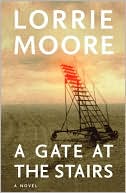
A Gate at the Stairs
by Lorrie Moore Given that it's been 15 years since Lorrie Moore's last novel, it is not that surprising that I have not read her previously. A Gate at the Stairs was my introduction to Moore's work. What an eye-opener!

Now many would disagree with me, but one of the things that distinguishes a great many of my favorite authors is their distinctive use of language. Frequently the writers I admire most are so stylistically idiosyncratic, that I could consistently identify their work without a name attached. Add Lorrie Moore to a short list with John Irving, Kurt Vonnegut, and a few others. In A Gate at the Stairs, Moore wrote about subjects covered by many writers, but at almost all times, I felt like she was writing about these people, these issues in a way that no other writer would ever tackle the subject matter. The word that came to my mind over and over was: revelatory.

The story of The Gate at the Stairs is both simple and complex. It is simply the coming of age story of an unsophisticated mid-western college student named Kassie Keltjin. Her life is complicated by a year of introductions to new people and ideas that kicks off when she accepts a position as nanny to a freshly-adopted mixed-race child. Issues of race, marriage, male/female relationships, family, friendships, identity on the deepest level, and terrorism in post-9/11 America are tackled.

Sometimes these issues are handled with sensitivity and finesse, other times with the subtlety of a sledgehammer. Some readers may have trouble with the more heavy-handed elements of the plot, but I was so interested in what Moore was saying, I was riveted at all times. Moore has a wonderful satirical eye, and what could be an overly heavy or melodramatic plot is leavened with her playfulness and humor. That said, there were parts of this novel that were staggeringly painful to read. While more character-driven than plot-driven, it must be said that a whole lot happens to Kassie as she begins her journey into adulthood.

I can't pretend that A Gate at the Stairs is without flaws. What I can say is that I was COMPLETELY absorbed in Moore's tale. If you ask me to list the novels faults, I can't do it. I couldn't say what the problems were. To ME, it was flawless. It's been a very, very long time since a writer has knocked me out like this. Every page or two there would be sequences just begging to be read aloud. I urge anyone who's serious about becoming a writer to spend some time with Lorrie Moore. I can't wait to explore her backlist!
Comment Permalink