Tuesday, July 14, 2009

Thrillerfest 2009: Where do I even begin?


Well, I've been back from New York for a couple of days now, but every time I want to sit down and start writing about Thrillerfest 2009, I start to feel overwhelmed. This has never been a problem in the past. So--whatever--I'm just going to start typing...

I had an absolutely WONDERFUL time at the fourth annual Thrillerfest. Like many of my friends, I haven't missed a year yet. Personally, I thought this year's T-fest was the best one since that first magical year in Phoenix--even considering that Barry Eisler and his fabulous hair were absent for the first time this year. Major bummer.

I actually arrived in New York several days early. The morning of Sunday, July 5th, to be specific. My plan was to see friends, see shows, and just enjoy some free time in New York. And in the above goals, I was successful. I spent time with my friends Roland and Mony and managed to squeeze in six Broadway shows. For those who are curious, they were:
  • 9 to 5
  • Next to Normal
  • God of Carnage
  • Waiting for Godot
  • Hair
  • Blithe Spirit

Now, since I'm not a writer, I didn't attend the first two days of T-fest. They were filled up with Craftfest (bestselling authors teaching classes on the craft of writing) and Agentfest (essentially speed dating with literary agents). My conference started with the official opening cocktail party on Thursday evening. Thursday was a long day for me. I'd awoken at 5:00am, cabbed up to Central Park, and utterly failed to acquire tickets to the Shakespeare in the Park production of 12th Night. I walked the 50 blocks back to my hotel dejectedly, and crashed in my room for a few hours. Later I was running around the garment district trying and failing to accessorize a dress. Then I rushed back up town to pick up tickets to Blithe Spirit, my fallback show, and finally across town to the Grand Hyatt to make a brief appearance at the cocktail party.

Walking the few steps from Grand Central to the Hyatt, I immediately ran into two friendly faces, my friends Chris Kuzneski and Donna. Much more on them later. Arriving in the lobby of the Hyatt, the party was obvious, but I hadn't picked up any of my registration packet, my name badge, etc. A writer named Ed Mitchell was guarding the entrance of the party. He took one look at me and said, "You're okay. I know you. C'mon in!" Well that was a nice welcome!

Moments later I was greeted by novelist A.J. Hartley. A.J. and I were introduced by James "Jimbo" Rollins a couple of years ago, at which time he'd signed a copy of his novel On the Fifth Day for me. (A really enjoyable read, BTW.) Anyway, I was kind of stunned that A.J. was greeting me like an old friend, but it turned out he knew exactly who I was. Apparently my trashy underwater fiction obsession made quite an impression on him. A few moments later I hooked up with Jimbo, and it was so good to finally see him! We synchronized our schedules, made plans for later that night, scarfed down some pasta, and ultimately went our separate ways.

I was off to the theater, but I returned to the Hyatt later that night, because every seasoned T-fest-goer knows, all the real action takes place late at night in the bar.

I guess that will be installment two of this saga. I promise it will get more interesting. Oh, and a few photos, too, once I find the damn download cable...

Tuesday, July 7, 2009

The sweet smell of success...


No, not my success, but that of someone I'm very fond of. And it's appropriate that the news comes this week. I'm writing from New York. I'm in town for the fourth annual Thrillerfest. I haven't missed one yet, and I've made some great friends over the years at this conference. It's essentially the reason I keep coming back.

At the very first T-fest in Phoenix, I met an unpublished author named Boyd Morrison. Nicest. Guy. Ever. Unlike most of my T-fest pals, Boyd and I keep in touch throughout the year. And, in the years since we first met, I've had the priviledge of reading and offering editorial notes on two of his manuscripts. The Palmyra Impact was a thoroughly entertaining disaster thriller. But the second MS he shared with me was even better. At the time I read it, it was called The Noah Covenant. It has since been renamed The Ark. I'm not the only fan of his work. Boyd has gotten "blurbs" from several of the biggest names in publishing. Once his agent started submitting the novel to publishers, we just sat back and waited for the good news.

And waited. And waited. Boyd got some positive feedback, but not one house picked the book up. Now, obviously, it's not that easy to get published--but I'd read two of his novels and they were waaay better than so many published novels.

Boyd took his rejections in stride. Rather than dwell, he sat back down at the computer and started a new story. Like other writers I know, he seems to have an endless supply of ideas. I have no idea where that comes from. Anyway, in addition to continuing his work, Boyd's the type of guy to take advantage of whatever technology is available. He actually had three unpublished manuscripts. (The third was written like 14 years ago.) He created a website and offered his novels to readers for free. Additionally, he uploaded his novels for sale at a nominal price on the Amazon Kindle.

Boyd's a pretty savvy guy. He didn't just offer them for sale, he joined several online Kindle user's sites and made contact with potential readers. Enough were interested in what he was saying to give the novels a try. Early rave reviews garnered more readers and more raves. Before he knew what was happening, unknown, unpublished author Boyd Morrison was climbing the Kindle bestseller charts. His agent thought it might be time to shop The Ark again.

Suddenly the New York houses were a lot more receptive. And Boyd may well have made history. He may be the first author to turn Kindle success into a major publishing contract! Boyd has a two-book deal with Simon and Schuster and The Ark has also been sold in seven foreign markets! You'll see the hardback release of The Ark on store shelves next summer, and the as-yet-unwritten sequel a year later.

Now, I know a lot of successful authors. But they were all succesful before I knew them. This is the first time a writer I've been a fan of and rooting for for years has called to share such wonderful news. I couldn't have been happier had it happened to me.

So listen up, thriller fans--you are going to want to read Boyd Morrison. Unfortunately, his novels are no longer available for free on his website, or for sale on the Kindle. You'll have to wait til next summer. But I do encourage you to visit his website here:

http://www.boydmorrison.com/

Check out the description of The Ark. And also spend a moment reading Boyd's bio. It's fascinating--and I didn't know most of that stuff until I read it there.

I'm predicting a big hit next summer. Remember, you read it here first. And, uh, Boyd? My fictional counterpart is available for cameo appearances. Maybe with a happy story for once?

Wednesday, July 1, 2009

Lisbeth Salander is Stieg Larsson's immortality


It feels like a ridiculous cliché to call Stieg Larsson's premature death a tragedy--no matter how true it is. But now, as I am still breathless having finished the second novel of his dazzling Millennium Trilogy, I truly believe this man has achieved immortality. I can easily imagine his creation Lisbeth Salander joining the ranks of the most enduring literary characters. Once you've met Lisbeth, you'll never forget her.

The Girl Who Played With Fire opens quite provocatively, with an unknown 13-year-old girl being held captive by a sexual predator. Whatever ideas you form at that point--you're wrong. Trust me, you are. From there, we have some one-on-one time with Lisbeth. She's been busy since we last saw her, getting a personal makeover and taking some time to see the world. She's been away from Sweden for about a year, and it's time for her to return home. She left without a word to anyone, and she cautiously begins making contact with the people who care about her, with the notable exception of Mikael Blomkvist. Much to his consternation, she wants nothing to do with him, and has refused all contact.

That's okay. Mikael's busy running Millennium magazine and jumping in and out of affairs. And, as it happens, a huge story has just walked into Millennium's office in the form of Dag Svensson. Dag's a young journalist who has been researching sex trafficking in Sweden for years. He's written an explosive book, and he wants Millennium to publish it. They decide not only to take the book, but to build an entire issue of the magazine around it. The question is, how far is someone willing to go to keep a crime quiet?

As an American, I've always had a very positive opinion of the Scandinavian peoples. They always seemed "better" than us, more enlightened somehow. Let me tell you, Stieg Larsson has disavowed me of that notion. The Swedes are just as unpleasant as we are. God, maybe worse! Reading this book, written by a native, is a fascinating glimpse at a culture in many ways quite different from our own. Regardless, it seems that people are people and there's a lot of ignorance, hatred, violence, venality, and sickness in the world.

Others will write more about the plot, but I see no reason to go there. I read this novel without knowing what to expect, and the reading experience was the more enjoyable for it. There were some BIG surprises. That said, the plot was the most flawed part of a luminous novel. On the one had, I absolutely loved it. On the other, Stieg Larsson cheated--not once, but twice! Deep into the middle of the novel, a major plot point revolves around a coincidence. That's not cool. I had a conflicted internal debate, and had just about decided to let Larsson have a pass on at least a semi-plausible coincidence when he did it again! A second major plot point based on a coincidence. That's bad. I was so disgusted at that point that I put the book down for a day. But, I have to admit that when I picked it back up, the story moved along at such a headlong pace that I could hardly bare to set it down again. Seriously, I went without food. Ultimately, it's an amazing story being told, but very flawed from a technical standpoint. As much as I want to, I just can't give it five stars.

Now, what aren't flawed are Larsson's characterizations, and that's what elevates this novel from being one hell of a good mystery to a work of far greater significance. And as I alluded earlier, it is Lisbeth Salander that is his showstopper. I've never met anyone like her. You've never met anyone like her. She's one of a kind; a damaged genius who will break your heart while pissing you off. Lisbeth's past had only been hinted at in Dragon. We learn a lot more about her in Fire. Happily, I feel confident there is still much to unravel in Hornet's Nest. The ending of this novel will leave you deeply impatient to get your hands on the final installment, and fearful of how that one will end.
Comment Permalink

Okay, I did not see THAT coming...


Vanished (Nick Heller)
by Joseph Finder

What the hell has Roger Heller gotten himself into? Vanished, the latest thriller from Joe Finder opens with an attack on Lauren and Roger Heller as they are leaving a Georgetown restaurant. Lauren wakes up more than 24 hours later, badly concussed. Of Roger, there is no sign. In the interim, their 14-year-old son, Gabe, has called in his uncle, Nick, for help. It is Nick Heller, brother of Roger, who Finder is setting up to be the hero of a new series of novels.

He's made a good choice. Born to a life of extreme wealth--all of which was lost in a scandal--Nick gave up the pursuit of cash and joined the armed forces. Now he works as a private investigator for a high-end DC firm. He's tough, charismatic, and extremely competent. Nick Heller strikes me as a character that could go over equally well with both men and women.

Nick and Roger haven't been close in years, but Nick can't leave his only brother's disappearance entirely in the hands of the DC police. He begins his own investigation, while at the same time continuing to look into loose threads from his last work case. The deeper he digs into each, the more convoluted these two cases become. And the more enemies he seems to acquire.

Occasionally I thought I knew where Finder was going with his story, and occasionally I was right. More often I was wrong. A couple times I was completely stunned by a plot development. Joe Finder is definitely more clever than I am. Nick Heller is also more clever than I am, and the man really knows how to throw a punch. Fight scenes in the book were unusually interesting and well-written. Additionally, take it from a native Washingtonian that the DC setting was used with specificity and authenticity. (And observations like, "Washington, D.C., is to lying what Hershey, Pennsylvania, is to chocolate" made me smile.) Plenty of details that ring true do a lot to sell the whole story.

These days, I've got a litmus test for thrillers: Can I read it in a single day? Because it has relatively little to do with how many pages or how fast I read. It's all about a novel holding my interest for hours on end. Vanished passed with flying colors. It's not Finder's strongest work, but it's a good start to a new series.
Comment Permalink

Thursday, June 25, 2009

No sophomore slump for “Kramer the Namer”


Missing Mark
by Julie Kramer

Julie Kramer's debut novel, Stalking Susan, involved Minnesota investigative journalist Riley Spartz pursuing a serial killer of women named Susan. Some marketing genius at Doubleday thought it would be a good idea to send a galley to every Susan on their mailing list. He must have been right; I couldn't resist reading it. And I found it to be an exceptionally entertaining debut.

In Missing Mark, Kramer is sticking with what works--namely an appealing protagonist and a strong supporting cast. Aside from her considerable mystery solving abilities, Riley is a constant font of info on the TV news biz, and I, for one, find it as fascinating as the cases she investigates. Likewise, the series' supporting characters are uniformly interesting without being too quirky to be real.

Good news, the entire gang is back this time around, including some characters I didn't necessarily expect to see again. The plot of this second novel involves a missing persons case. Specifically, it's Mark, a bridegroom who fails to show on his wedding day--or in the several months that have passed since. Riley's cases are never simple, and this investigation quickly grows convoluted, with any number of possible explanations, suspects, and motives. However, Riley's boss thinks a missing bigmouth bass will garner higher ratings for sweeps. She may be right.

Two-thirds of the way through, I figured out who-done-it and why. I have no idea where that intuitive leap came from, but it was no fault of Kramer's plotting, which is tight and well-paced.

I don't have a lot of time for mystery series, but I'm going to stick with Riley & Co. (For readers intrigued by this book, I'd suggest backing up and reading Stalking Susan first. Lucky you, it's just been released in paperback.) So far, the name books are a nice blend of light and dark entertainment. They're not terribly violent or graphic and the mysteries within feel fresh.

In conclusion, I'm Recommending Riley and Judging Julie to be well worth your reading time.
Comment Permalink

Tuesday, June 23, 2009

Another winner--why do I even doubt?


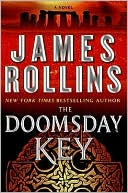
The Doomsday Key: A Novel
by James Rollins

Yes, I doubted, very briefly. I'm ashamed. It's not that The Doomsday Key doesn't start off in a readable and totally entertaining manner. It really does. Rollins has what he does down to a science by now. He quickly reintroduces the main players (a few of whom we haven't seen in a while: Rachel Verona and Seichan) and establishes their relationships with each other. In addition to the ladies above, all the main Sigma players make their appearance, but as usual not all of them are heavily featured on this adventure. Seichan fans rejoice, she has a major role and experiences tremendous character development in this novel.

After the characters are reestablished, (again, as you'd expect) the action starts. A motorcycle chase here, a shootout there, a dash of international travel. Now, I love James Rollins with all my heart, but these opening salvos--while very well-written--felt a little... generic. My moment of doubt.

Happily, it didn't last long. Once Rollins set the main plot in motion, all such thoughts vanished. Seriously, WHAT was I thinking? For me, things really kicked into high gear with the introduction of a new character, Professor Wallace Boyle, whose lecture on peat bogs thrilled me to my soul. I know, peat bogs, who'd a thunk it? But again, that's Rollins' gift. He must look at the world through curiosity-colored glasses; he can find the wonder in the most unlikely of places and subjects. And even more brilliantly, he manages to string together a laundry list of disparate fascinating topics into the plot of a tight, tense thriller. And he does it again and again.

I know I'm being very, very vague about the plot. It would be a shame to give too much away. The central plot revolves around a plague from the past and a plague of the future: hunger. As characters in the novel expound, there will soon be a tipping point where there are far too many people on this planet to feed. Who gets to choose who lives or who dies? If you had the power and resources to make the hard choices, what would you do "to save the world?" And would you be a hero or a villain?

It is the exploring of the above questions that entails ancient artifacts, hidden rooms, booby traps, prophecies come true, missing bumble bees, miracle-performing saints, love triangles, the final resting place of Merlin the wizard, polar bears, teddy bears, and the world's healthiest apple. And I didn't even give you a hint of the real shocker!

A lot of thrillers make the goal, save the world, whatever, and end abruptly. Not so here. There was a nice... cooling down period after the action ended. It's a chance to check in with all the major characters, and a chance for Rollins to leave us with another of his signature cliff-hangers. This one isn't as brutal as some he's written, but those invested in the series will be left with a question to keep them wondering for the coming year.

A final note: Is it wrong that the author's afterwards have become my very favorite part of these novels? This may be the longest one yet (And for God's sake, DON'T read it before you finish the book!), and I am staggered by how much true stuff was worked into the novel. I mean, pretty much every too-amazing-to-be-true fact was, in fact, true. James Rollins, you rock my world!
Comment Permalink

Monday, June 22, 2009

Something wicked and whimsical this way comes...

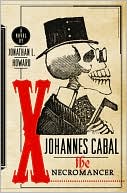
Johannes Cabal the Necromancer
by Jonathan L. Howard

Faustian novels don’t come along every day. Inexplicably, I’ve read two in a row. However, Johannes Cabal the Necromancer and The Angel’s Game are as different as night and day. If Carlos Ruiz Zafon’s dark gothic drama is night, then Jonathan Howard’s light comic fantasy must be day.

As the novel opens, Johannes is pursuing an audience with Satan, to whom he sold his soul some years earlier in exchange for the secrets of necromancy. As you know, Satan never gives something for nothing. He proposes a wager—Johannes must collect 100 souls within a year’s time or forfeit his life as well as his soul. To aid in this endeavor, Satan lends Johannes a “carnival of discord.”

From there, the first half of the novel is picaresque, almost like a series of linked stories: Johannes and the Vampire, Johannes Meets a Ghost, Johannes Takes on a Madman. You get the idea. The second half of the novel is really an extended dénouement, and I’m not entirely sure the two halves join together gracefully. The latter half of the novel is more dramatic in tone and features less of the comedy that buoyed the opening.

When he puts his mind to it, Howard does have that distinctly British comic voice. Here are two brief examples:

* The mayor of Murslaugh was a jolly, ebullient man of the sort who, in a well ordered world, would be called Fezziwig. That his name was Brown was a powerful indictment on the sorry state of things.
* We’re supposed to be doing the devil’s work and you’ve gone and contaminated it all with the whiff of virtue. I really don’t think you’ve quite got the hang of being an agent of evil.

One of the problems with this novel is that it’s a redemption story. As the seeker of redemption, Johannes starts out as a fairly unlikable character, and remains so for much of the book. Truthfully, I generally wasn’t sure if I was rooting for or against him in his wager with Satan. His brother Horst is repeatedly described as “the charismatic one,” but we’re told this rather than shown. While Horst is definitely the more likable of the two, there are few characters to care about in this novel.

As I read, there was one revelation regarding Johannes’s motivation that I kept expecting to be revealed. I didn’t expect, however, to have to wait all the way until the penultimate paragraph of the novel. It’s an ending, of sorts, but leaves me thinking that we haven’t seen the last of Johannes Cabal the Necromancer.
Comment Permalink

As good a starting place as any...


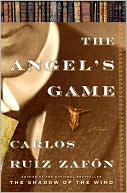
by Carlos Ruiz Zafon
Let me start by saying that I haven’t read The Shadow of the Wind. Ruiz Zafon has stated that The Shadow of the Wind and The Angel’s Game are the first two of a quartet of linked novels that can be read in any order. Reading this prequel, I genuinely feel like it’s a fine starting point.

The Angel’s Game is the story of writer David Martin, and it’s atmospherically set in Barcelona, Spain roughly between 1900 and 1930. The story opens when David is a very young boy. His childhood is a chronicle of deprivation. Despite his modest background, David forms strong relationships with writers, editors, and booksellers. They see an innate intelligence and a natural talent that they mentor. David Martin is a born story-teller.

It is this ability that attracts the attention of French publisher Andreas Corelli, who offers the young writer the proverbial offer he can’t refuse, because The Angel’s Game is essentially a Faustian tale. Oddly enough, it was this central theme that I found least interesting. It was the many supporting characters and their stories that captivated me. The love triangle, the happenings at the bookstore, the murder mystery, and, of course the Cemetery of Forgotten Books—it sounds like there’s a lot going on, and there is, but it all manages to blend into a cohesive story.

Zafon does a brilliant job of developing Martin’s character from innocence to bitter experience. I often found myself wondering how that sweet little boy became a not very admirable adult. It was unfortunate, but the evolution was entirely believable. And Martin is a fully formed character, with many different facets. I especially loved the relationship that developed with his young assistant. And despite the darkness of the tale, a match-making subplot had me laughing out loud.

I’d heard talk that some readers are disappointed with the endings of Zafon’s novels. I don’t count myself among them. The ending of the novel is strange, and may hurt your head if you think too long about it, but how are you going to end this story anyway? I’m looking forward to reading The Shadow of the Wind, and seeing where Zafon goes next with his epic.

Thursday, June 4, 2009

My friend Nicole is the devil

Have you met my friend Nicole? She's the devil. You heard me.

On the very day that I write that I'm drowning in review books she puts this temptation before me: http://infinitesummer.org/

I'll save you the click. A bunch of folks online are making it their summer project to read David Foster Wallace's 1,079 page brilliant, challenging novel Infinite Jest. I have always wanted to read this monster. This is absolutely the best opportunity to do so. Unfortunately, I owe reviews on 12 novels.

Nicole's like, "Come on, we should all do it. It'll be fun!" Grrr.

Now, clearly I don't have time to read this book, but just, you know, out of idle curiosity, I downloaded a lengthy "sample" on my Kindle. I've just read Dave Eggers' forward and the opening of the novel. And OMG, this is the perfect book to read on a Kindle! Even a fully tricked out Kindle weighs like a tenth of that doorstop. The built-in dictionary will help with tricky vocabulary. (Although, there were already words in the sample that the dictionary couldn't help with. Kekuléan. Really?) And instead of having to page all the way to the back of the book for footnotes, you can just click on them and then click back. If I ever read this book, I'm definitely reading it on the Kindle.

Nicole, you suck.

Now this is cool... I just googled Kekuléan and found this:


"I stare carefully into the Kekuléan knot of the middle Dean's necktie."


"Kekuléan" is not a type of knot. To Hal, the knot he is focusing on resembles the, self-consuming, annular shape of the snakes that inspired August Kekulé's discovery of Benzene's molecular structure. August Kekule (1829-1896), a renowned German organic chemist was the principal founder of the theory of chemical structure. His most famous work, the discovery of Benzene molecule's structure, is said to be inspired by a dream. "Kekulé's Dream" was that of a self-devouring snake, the shape of which, he used to describe the Benzene Ring. Hal's intense focus on this annular, or ring-like, part of the tie is the first reference to annular shapes.

That's one small part of this amazing Infinite Jest wiki:
Everything imaginable is fully annotated. No that it matters. I am not reading this book.

Tuesday, June 2, 2009

Drowning in Review Books

A question from a friend just reminded me that I still owe reviews on about a dozen books. Just when I think I'm getting ahead, I fall behind again! The next couple of weeks should prove disasterous for reading and for blogging.

I work for a graduate school IRL. One of my many jobs there entails organizing and running academic conferences. My biggest, most grueling conference of the year begins this weekend, ending with graduation next weekend. I'll be working like mad this week, and next week will be exhausting, non-stop, 16-hour days. Not a time to get a lot of reading done.

Part of my problem is that I'm not reading a single book and finishing it. I'm still working on the increasingly delightful Doomsday Key by James "Jimbo" Rollins on my Kindle. I'm also reading a galley of The Angel's Game, Carlos Ruiz Zafon's soon-to-be-published follow-up to The Shadow of the Wind. That's about 1,000 pages combined, and I don't owe a review on either title. D'oh! I just really really wanted to read them, and will surely wind up reviewing them anyway. The review's not the time consuming part.

So, my latest acquisitions from Amazon's Vine program are Johannes Cabal the Necromancer, a debut novel by Jonathan L. Howard. It's a Faustian, period, comic novel featuring the eponymous necromancer, the Devil, a charismatic vampire, and a carnival of the dead. What's not to like?

I wasn't wowed by the leftover choices. I could have picked my friend Chris Kuzeski's latest--and I probably would have--but I'm expecting a galley from the publisher. So in the end I went with Joe Finder's latest. Joe writes a reliable page-turner. The sort of novel you can read and review quickly and enjoyably. I really need to stay away from the 600-page literary fiction until I get these review numbers down.

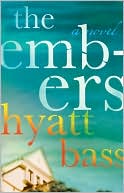
Finally, the good folks at LibraryThing are sending a copy of The Embers by Hyatt Bass. This is another debut novel. It's one of those family drama/family secrets novels that can be so compelling when well done. So far, it's gotten mixed reviews.

On the personal front, I am healing. I was so miserable last week that I flew 3,000 miles to my parents' house on the spur of the moment. Surprise! They took good care of me, and I'm feeling much better. :-)