Monday, January 31, 2011

Two hundred and fifty bittersweet years

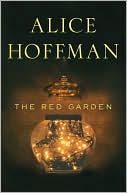
The Red Garden
by Alice Hoffman

The older I get, the more I appreciate magic. Not of the tacky abracadabra variety, but the kind of magic that comes from miraculous beauty, true love, the glory of nature, profound sorrow, serendipity, heartbreak, mystery, magnetism, whimsy, isolation, enchantment, and masterful storytelling. Alice Hoffman’s latest novel, The Red Garden, contains all of the above and more.

This was my introduction to Ms. Hoffman’s work, and all I can say about that is: So many books, so little time. The novel is composed of a series of 14 linked stories. The first tale, The Bear’s House, details the 1750 founding of the small Western Massachusetts town that came to be known as Blackwell. Hoffman writes:

“Blackwell was deep in Berkshire County, where the weather was mysterious and the people equally unpredictable. Several of the inhabitants were descendants of the foundling settlers, families who had intermarried often enough so that many of the women had red hair, with mercurial tempers that suited their coloring. The men were tall and quiet and good at most everything.”
That story introduces us to Hallie Brady, the first of those of strong-willed, red-haired women. In addition to keeping her fellow settlers alive that initial winter, it is Hallie that plants the eponymous garden. The red-soiled garden flourishes and flounders over the centuries, but is just one of many recurring elements featured in these tales. The book might just as easily have been named for the gentle bears or the haunted river, for the stories revolve far more around the town and its people than the red garden itself.

Each successive story moves forward in time, sometimes by just a few years, other times by decades. A child in one story is an adult in the next. A woman in her prime is soon on her death bed. The passing of time is measured not only in human terms. A field named Dead Husband’s Meadow by an unhappy wife soon becomes Husband’s Meadow and eventually Band’s Meadow over time, all without need for emphasis or punctuation. And stories that the reader “witnesses” first-hand early on in the book grow over time into the legends told later.

As these stories progress, we meet successive generations of Partridges and Kellys, Starrs and Motts. Some of the characters can trace their roots all the way back to the founding of Blackwell, others are just passing through. You may even recognize one or two of them. Each story within the novel is complete and does not necessarily lead in any direct way from one to the next, but usually there is a connection. The Red Garden could certainly be read as a short story collection, but there is far more to be savored when appreciating the whole.

Novels of this structure seem to be in vogue of late, but rather than compare it to any recent example, the novel I found myself thinking of as I read was Gabriel García Márquez’s One Hundred Years of Solitude. I read that book decades ago, and just about the only thing I remember is that it was so staggeringly beautiful that I didn’t realize just how truly sad it was until after significant reflection. It may be that the magical realism and similar themes of a town and its successive generations was what brought García Márquez’s masterpiece to mind, but I think it was the allure of Ms. Hoffman’s fables and the captivating beauty of her words. Her stories are not universally sad, but had me experiencing a wide spectrum of emotions. I suspect that I will be picking this book up again and again in years to come, as magic is rare and hard to come by.

Friday, January 28, 2011

I'm a Tale chaser...


So, my BFF Jon and I went to the theater last night to see what turned out to be a FANTASTIC production of Bruce Norris's play Clybourne Park at the American Conservatory Theater (ACT).  Little known fact:  I'm actually as passionate about theater as I am about books.  This post is an opportunity to indulge two of my loves at once.  What inspired today's post was a first sighting of the artwork above, the logo for the new Tales of the City musical on a poster outside the theater.  So exciting! 

It occurs to me that I never blogged about my encounters with Armisted Maupin and his husband Christopher Turner this past fall.  The first time I ran into them was at a concert of crooner Spencer Day, of whom I'm a huge fan.  Jon wasn't available that night, so, somewhat lethargically, I schlepped out to the Palace of Fine Arts Theater on my own.  After the concert, people were sort of milling around in the lobby, many of them waiting to see if Spencer would be coming out to sign discs, greet fans, etc.  I was about to leave when I spotted a man who looked just like Armisted Maupin.  I wanted to approach him, but I was embarrassed.  I mean, what if I was wrong?  However, observing the man, I noticed that he and I were the only two people carrying books at a concert.  That made up my mind.

I asked, "Are you Armisted?"  Of course, it was him, and he was as friendly as could be.  A few minutes into our conversation his husband Christopher walked up and Armisted introduced us.  Christopher was equally warm and friendly, and the three of us had an unhurried conversation.  The timing was perfect! I got to open with, "I just read Mary Ann in Autumn (his then forthcoming Tales of the City novel) and I loved it! In fact, I currently have the number one review on Amazon."  He had totally read the review, and was delighted with it. (Yay!) So we talked about his books, other books, and the weekend he'd just spent in New Mexico with about 40 other "storytellers" at the invitation of Jeff Bezos. A few other guests he mentioned were Neil Gaiman, Temple Grandin, and Gloria Steinem. He said it wasn't a business thing, Bezos just wanted to get all these people together and have them interact. I said, "It's like that game people play when they make guest lists for imaginary dinner parties. Bezos actually threw the party!"

The other reason the timing of this conversation was perfect was that there was currently a private workshop production of the Tales musical going on that month at ACT, and the casting of the fabulous Betty Buckley as Mrs. Madrigal had just been announced.  It's a toss-up whether Armisted or I was more excited by the news.  It's just one of those rare instances in life of absolutely perfect casting.  I think it was crystal clear to both Armisted and Christopher that I was as much a theater geek as a book geek, but well-informed on both counts.  So, I peppered them with behind the scenes questions about the musical.  Armisted was so pleased and excited with the work in progress.  He specifically commented on how much he loved the score, noting that it was very much character-driven more than plot driven.  He and Christopher were planning on attending the first run-through with Ms. Buckley the following night.

I didn't want to overstay my welcome, so I left them after about 15 minutes of friendly chat.  However, I saw both of them a week later at Amisted's book signing for Mary Ann in Autumn.  After only a week, they both remembered me well, and again I had the opportunity to chat with each of them.  In reference to the review I had written, Armisted signed my novel, "Keep pulling a Mary Ann."  I also had a chance to ask a Tales-related question that I hadn't gotten around to last time.  I told him that I hoped he'd continue writing the resumed Tales series for years to come and asked, "Now that you've written a Michael-centric novel and a Mary Ann-centric novel, do you think there's a Brian-centric story to look forward to?  I think he needs one."  Amisted responded, "It's interesting you said that. I've been thinking about it. We're the same age now." So, fingers crossed.

For now, Jon and I have been looking forward to seeing the musical for over a year, and it's finally beginning to feel imminent.  At $250 a pop for the cheapest seats and $1,250 for orchestra tickets, I can't afford a ticket to the black-tie Gala Opening Night events on June 1st.  We've settled for the next best thing:  We've got 5th row orchestra seats for the very first preview on May 19, 2011--the true world premiere performance.  I'll be looking for Armisted at the theater, and , yes, I'll be blogging about it the next day!

Thursday, January 27, 2011

"My marriage ended the way these things do: with paramedics and cheesecake."

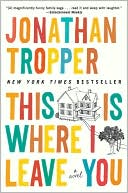
This Is Where I Leave You: A Novel
by Jonathan Tropper

It’s always the same story with me… Hear about an intriguing author. Start purchasing (or acquiring) their novels. Keep purchasing (or acquiring) their novels. Never get around to reading them. Well, eventually I do, and then I’m glad to have the backlist standing by.

I’ve finally read Jonathan Tropper! Talk about being worth the wait. This is Where I Leave You was a delight from start to finish. As you may have gathered from the quote that titles this review, the first-person narrator, Judd Foxman, is in some distress. Not only has his marriage fallen apart, it’s taken his career with it. And in the first sentence of the book he learns that his father has died. It’s this latest loss that’s the catalyst for all the events that follow.

Despite a life-long lack of faith, apparently his father’s dying wish was for his surviving family to sit Shiva in the Jewish tradition. For seven days. Constant togetherness. To honor this request, Judd joins his mother, three siblings, and assorted other family, friends, and loved ones for the longest, most drama-filled, and downright funniest week ever. Here’s an example of the cleverness of Tropper’s writing, “He is the Paul McCartney of our family: better-looking than the rest of us, always facing a different direction in pictures, and occasionally rumored to be dead.” I laughed all the way through the novel.

I don’t need to fill you in on any more plot points or specifics. This is a dysfunctional family. Odds are that you’ll recognize some or all of these characters. You just may laugh until you cry.

Monday, January 24, 2011

Oops, I blurbed!

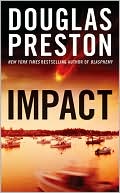
So, the weirdest thing happened a couple of weeks ago. I was killing time in a bookstore with a friend. (That's not the weird thing.) I noticed that my buddy Doug Preston's latest novel had been released in paperback, and for whatever reason I picked it up. Flipping past the pages at the front of the book, I stopped and did a double-take. There was a blurb (a quote from a review) credited to In One Eye, Out the Other. Yes, ladies and gentlemen, a review I wrote here was quoted in the front of the book!

And, I'm sorry, but that is just so cool. I don't know how it happened or why it happened, but I'm quite honored. It was a terrific thriller, and I'm happy if my enthusiasm for the title was infectious.

This raises an interesting thought. I rarely look at paperback books. There was no reason for me to look at this one. I never would have known that I was quoted. Certainly no one asked permission or informed me of this fact. Perhaps I'm blurbing all over the place and never knew it?

If you happen to see a quote from Susan Tunis or In One Eye, Out the Other in a book, do give me a heads up, okay? You'll make my day.

If I were less of a curmudgeon...

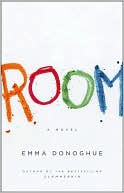
Room
by Emma Donoghue

I didn't get around to reading Room until several months after it was published, and arguably I heard too much before I started it. But more than plot points or spoilers, I heard too much hype. Friend after friend spoke so glowingly of the novel: "I read it in one sitting." "I can't sleep for thinking about it." "This book was transformative." I have to tell you, that was not my reaction at all.

It was a good book--unusual--but I didn't love it. One thing I knew going in is that the story is told from the point of view of five-year-old Jack. In very broad strokes, I'll describe the plot. Jack's mother was abducted as college student by a man she calls "Old Nick." She has been held in an 11 X 11-foot finished shed in his back yard for the past seven years. At five, Jack has never set foot outside. He has never looked out a window. The eponymous room and its contents is his entire world. As noted above, Jack is narrating the story in his own semi-precocious voice. Certainly this is a creative approach to story-telling and is why so many people have loved the novel, but it was my least favorite aspect of the story.

We all know that as horrific a tale as Donoghue is telling, aspects of it might as well be ripped from the headlines. But I'd much rather experience the complex fear and despair of the captive mother's thoughts than hear from the five-year-old, "Ma's having one of her bad days." While there are some amazing aspects of seeing the tale unfold through Jack's innocent eyes, there's a price to be paid in sophistication. I'd have been a lot more satisfied had the narration alternated between the two.

And then there's this: I am not a child-oriented person. I'm not a parent, and if I'm going to be blunt, I'm not a fan of small children. As they tend to do in life, this child narrator annoyed me. (Sorry! I know I'm an awful person--but honest.) I don't recall feeling the same way about Jonathan Safran Foer's child protagonist of Extremely Loud and Incredibly Close. What a difference a few years makes.

So, clearly I'm unable to embrace this novel with the affection that others have. That said, it handily earns four stars for the caliber of the writing, the awesome creativity of the approach, the depth of the characters, and the riveting plot. Undoubtedly, were I not a curmudgeon, I'd quickly cough up that fifth star and give this book the full accolades it deserves.

Add me to the cult

Kraken
by China Mieville

I've been intimidated by China Mieville for years. I keep buying his books, but I don't read them. In part, it's because I'm not a big fan of one of his primary genres, science fiction. Of course, trying to pigeonhole a writer like Mieville is futile, as his novels are a jumble of sci-fi, fantasy, mystery, humor, and God knows what else. No, mostly I'm intimidated by his intelligence and literacy. I've met the man several times. He's lovely. But you can tell right away: Dude is wicked smart. I'm no light-weight, but when it comes to Mieville I've just wimped out.

Well, I'm a wimp no more! I've read Kraken, and guess what? I LOVED it! In fact, it made my top ten list for 2010. This is one of those times when you just want to kick yourself for not getting around to something earlier. Happily, Mr. Mieville's backlisted titles are sitting on my shelf waiting for me.

It helped that this latest novel was essentially written for me. Who else but the world's foremost collector of "trashy underwater fiction" would gravitate to a novel about squid worshippers? But I'm getting ahead of myself... The protagonist of this novel is biologist Billy Harrow who, as the novel is opening, is leading a tour though the museum where he works. The highlight and finale of the tour is the preserved architeuthis dux, the giant squid. When Billy and his tour enter the room where it's kept, the immense creature and its 25-foot tank are, impossibly, nowhere in evidence.

So begins a bizarre tale. Billy is as flummoxed as the average reader. Early on in the novel he is told, "How could you possibly understand what is going on? Even if you wanted to. Which, as I say, dot dot dot." Not all of the dialog is quite so enigmatic, but a good deal of it is as funny. At least if you have an appreciation for British humor.

I honestly don't know what else to say about this novel. The plot is impossible to summarize. It's been incredibly polarizing among readers. Elements of Kraken were reminiscent of authors like Neil Gaiman and Jonathan Barnes--high praise in my book. There's a limit to how much weird I can take, and Kraken is weird, but it was fantastic, too! I suspect that this is one of those "love it" or "hate it" novels. Based on that assessment alone, it's worth giving a try. Like me, you just might surprise yourself by falling into the "love it" camp.

Monday, January 10, 2011

Let the readers find their way

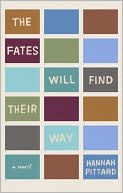
The Fates Will Find Their Way
by Hannah Pittard

How often, in this day and age, does an author find a completely original way to tell a story? Avid reader that I am, I’ll tell you: Not very often. And how often, after reading a novel in a single sitting, do write an immediate review? Not very often. And how often does a debut novel—any novel—affect me this powerfully? Not very often.

This is my immediate reaction to The Fates Will Find Their Way by Hannah Pittard. It is, and is not, the story of the disappearance of sixteen-year-old Nora Lindell. More accurately, it is the story of the vacuum left in Nora’s wake, and of how that vacuum is filled. The tale is told in reflection by the men who were the neighborhood boys that Nora left behind, and it is told entirely in the first person plural. If you’re wondering how that sounds, it sounds like this:

“It seemed we had all finally stopped looking for her, asking about her. It was a sickness, a leftover from a youth too long protracted. Of course we still thought about her. Late at night, lying awake, especially in early autumn, when we could fall asleep for a few weeks with the bedroom windows open, the curtains pulled halfway, a breeze coming in and the occasional stray dry leaf, we still allowed ourselves the vague and unfair comparisons between what our wives were and what she might have been. At least we were able to acknowledge the futility of the fantasies, even if we still couldn’t control them.”
This novel is a collection of those boys’ fantasies, the fleshed out conjectures based upon shreds of evidence presented by impeachable sources. And, in the sharing of these speculative outcomes for Nora Lindell, we learn the true outcomes of the close-knit group that she left behind—from the immediate aftermath of her disappearance, through the decades that follow. And we see how Nora’s absence shaped each of their lives.

Nora’s friends are a true community, kids who grew up together and stayed local. They have a shared history. And time has transmuted Nora Lindell’s fate from mystery to mythology. Their tale is told in a collective voice, and yet, individuals stand out. Paul Epstein, Jack Boyd, Winston Rutherford, Chuck Goodhue, Stu Zblowski, Drew Price, Marty Metcalfe, Trey Stephens, and Danny Hatchet all have their own stories that unfold along with their theories of what happened to Nora.

Even with the unusual voice, I found this book fully emotionally engaging. Reading it, I couldn’t help but reflect on my own past, my relationships, stories I’ve heard, and so forth. This novel is plot-driven, literary, experimental, spare, and absolutely beautiful. One week into the new year, I’m confident that I’ve just read one of the top books of 2011.

Susan's Top 10 Books of 2010!


What a great year of reading 2010 was! I read 79 books, which is the most I've managed in recent years. Of those, 5 were young adult (YA) titles, 6 were non-fiction, and eight of them could be classified in the genre I coined... trashy underwater fiction. Of course, the more books you read, the harder it gets to narrow down the list to just ten. Plus, I was reading some of the best books of the year, right up to the final days of 2010. It seemed prudent to hold off until January before finalizing the list. Here it is:

1. The Thousand Autumns of Jacob De Zoet - David Mitchell

Union Atlantic - Adam Haslett

The Three Weissmans of Westport – Cathleen Schine

A Visit From the Goon Squad - Jennifer Egan

Skippy Dies - Paul Murray

Super Sad True Love Story - Gary Shteyngart

Freedom - Jonathan Franzen

Finishing the Hat: Collected Lyrics (1954-1981) with Attendant Comments, Principles, Heresies, Grudges, Whines and Anecdotes - Stephen Sondheim

Kraken - China Mieville

The Immortal Life of Henrietta Lacks - Rebecca Skloop

As is my tradition, only the first book is ranked. All others are listed in the order read. The Imperfectionists by Tom Rachman was a strong contender, but got edged out by Egan's Goon Squad, another novel of linked stories. Likewise, Allegra Goodman's delightful The Cookbook Collector was edged out by Cathleen Schine's equally Austenesque Weissmans. Yann Martel's Beatrice and Virgil was a strong contender in my heart, but I just didn't want to deal with the fallout if I named it.

Other high-profile books that didn't make the cut included Room by Emma Donaghue, Solar by Ian McEwan, The Passage by Justin Cronin, Great House by Nicole Krauss, By Nightfall by Michael Cunningham, The Widower's Tale by Julia Glass, Mockingjay by Suzanne Collins, C by Thomas McCarthy, and The Girl Who Kicked the Hornet's Nest by Steig Larsson. This was a year of great and diverse literature!

So these were my favorites in the past year, and I'm about to post the review of a contender for next year's list. The hits just keep on coming!

The life and times of the last American housewife

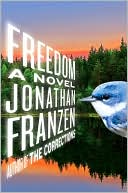
Freedom: A Novel
by Jonathan Franzen

Like Patty Berglund, the character at the center of Jonathan Franzen's Freedom, I'm not always as good a person as I wish I could be. For instance, I find it hard to root for Mr. Franzen's success. He's hardly an under-appreciated artist. Therefore, it is with all sincerity and conviction (and perhaps just a bit of disappointment) that I must tell you: This book is as good as everyone says it is. Possibly better. It's freakin' brilliant.

Freedom is nothing more than a satirical look at suburban America. Franzen accomplishes this with an intimate portrait of one American family, that of Walter and Patty Berglund. We get exhaustive information on the characters' formative years and on their lives together from a variety of overlapping perspectives. We are privy to the most intimate details of their marriage. We follow the lives of their children (primarily son Joey) and their closest friends. Franzen has created a series of deeply flawed characters in this clan, with incredibly rich, complex relationships. It is truly astonishing how thoroughly he inhabits each and every character, including many of the minor ones. Their voices are so comprehensive that every action and interaction, no matter how bizarre or inexplicable, rings absolutely true.

I mentioned above that the novel is a satire, and Franzen proves that he does, indeed, have a rich sense of humor. Getting the full nuance out of this novel was aided immeasurably by the tour de force performance by reader David LeDoux on the audiobook. LeDoux created distinctive voices for all significant characters and milked every last drop of humor and pathos from the text. His bravura performance allowed a great novel to shine all the more brightly.

Absolutely deserving of all the praise it has received!

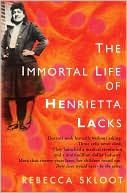
The Immortal Life of Henrietta Lacks
by Rebecca Skloot

What is there to say about a book so widely acclaimed? What can I possibly add to the discourse? Truthfully, there isn't much I can say that hasn't been said before, so I will keep this brief.

The Immortal Life of Henrietta Lacks is journalist Rebecca Skloot's first book, and it was ten years in the writing. In that time, she didn't merely research her subject matter thoroughly, she became a participant in the story she was writing. As a biology student, Rebecca's interest was piqued when she learned of the contribution to medicine and science of a cell line called HeLa--the first ever "immortal" human cell line. Immortal because the cells would continue to reproduce in culture indefinitely, as long as they were fed and cared for. It had been going on for decades. What Rebecca wondered was: Where did these cells come from? Therein lies the tale...

Nowadays, it is relatively common knowledge that these cells were cultured from a woman named Henrietta Lacks who died of cervical cancer back in 1951. That wasn't always the case. Ms. Lacks' identity, and the contribution she unwittingly made to the world, was obscured for years. Unwittingly, because the culture of her tumor was taken without her knowledge or consent. This was common practice at the time.

The book covers a lot of territory. There is detailed biographical information about the life and death of Henrietta Lacks. There is a lot of information about the contribution of the HeLa cells to science, from helping develop the polio vaccine, to going up into space. There is a thorough discussion of the bio-medical ethics in general, of the sad history of this issue and race, and in light of current issues and technology. And, finally, it is very much the story of the family that Henrietta Lacks left behind, her husband, five children, and innumerable cousins, and their interactions and relationship with the author.

Material that could have been overly complex or dry is absolutely engrossing. And all subject matter is handled with sensitivity and intelligence. It was all so interesting, but I think my favorite parts were the ethical discussions, past, present, and future. Reading the shameful history is painful. Unfortunately, in many ways the present isn't much of an improvement. Ms. Skloot ends her book in a primer of the issues we face moving forward. Hopefully, the more educated we are, the better we can protect ourselves and others. For now, it's a small step forward to see this subject matter gain such wide readership. And happily, there seems to be little danger of Henrietta's name or contribution being lost to history again.