Showing posts with label 5-star review. Show all posts

Wednesday, January 15, 2014

“Art stands on the shoulders of craft…”


This is the Story of a Happy Marriage
by Ann Patchett

Ann Patchett is a writer I’ve come late to. Everyone raved about Bel Canto, but opera-lover that I am, have I read it yet? Nope. Still, her most recent novel, State of Wonder, made my annual top 10 list, and seeing her speak inspired a blog post entitled, “No one ever told me Ann Patchett was so charismatic.” So, even though I read relatively little non-fiction, I was well-primed for this collection of essays, penned over the course of many years. Allow me to cut to the chase and tell you that I loved this book from start to finish.

After a brief introduction meditating on the differences in writing fiction and non-fiction, Patchett launches into writings on craft. And I thought to myself, I could read her thoughts on this subject all day! At one point, she writes, “If you’ve read this far, you must be pretty interested in writing yourself.” On the contrary, I’m the furthest thing from a writer and I was utterly captivated. And while I don’t write, there were plenty of underlined quotes to share with writing friends.

Ms. Patchett truly charmed me in these pages. I found her reflections on her most influential teachers
both generous and winning. Likewise, I was utterly enchanted by her essay on attending the Met’s simulcast at the local multiplex. Ms. Patchett writes on subjects that resonate with me—her love of her dog; ups and downs with her husband; on becoming an independent bookseller, and the importance of bookstores in our communities; on her relationship with her elderly grandmother. An unexpected, but terrific, story recounts her efforts to get into the LAPD Police Academy. There’s great diversity in the collection.

Ms. Patchett, as always, writes beautifully. And as so much of the writing is frankly autobiographical, her voice and personality come shining through in each entry. They paint the portrait of an artist whose work—whether fiction or non-fiction—I intend to get to know better. And they portray an interesting and accomplished woman with whom it was a true pleasure to spend time.

Tuesday, January 14, 2014

“A legend can be made, it turns out, one crude stroke at a time.”

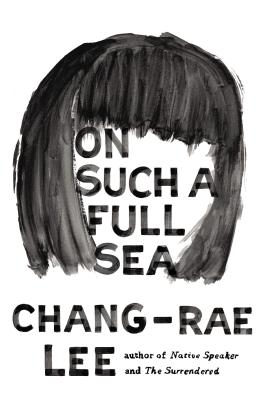
On Such a Full Sea
by Chang-rae Lee

On Such a Full Sea is the story of Fan. Not just the story… The myth! The legend! It is being narrated—unusually—by the collective, first-person plural voice of the citizens of B-Mor, once Baltimore. (“The nation has collapsed. Once, we had a country of federated states. Now we have charter villages for the rich, and settlements for the not-so-rich. In between are open counties, places of anarchy with no corporate or government protection. We don’t know exactly what happened to our planet, but it’s easy to imagine.”). The tale is being recounted from an indeterminate point in the mid-future. Not so near and not so far. In the world imagined by master craftsman Chang-rae Lee, things are very different and yet disturbingly familiar, all at once. Speak the narrators:
“Whenever we tell the story of Fan, details are apt to change. You don’t mean to alter anything, in fact your intention is the very opposite, you want nothing more than to be an echo of the previous speaker, who, you decide, did a perfectly super job. And try as you might to match the very tone of the telling, the bellow of certain episodes and the half-breathed whisper of others, isn’t it the truth that despite your fealty to the story, a moment will arise that compels a freelancing, perhaps even rebellious, urge?”
Fan, it seems, knows from freelancing, even rebellious, urges. At 16, as a skilled diver and citizen of the protected workers facility of B-Mor, her life is far better than most. In sheltered B-Mor, spitting is among the community’s worst crimes. (Though, at one point the narrators ask, “Don’t sanctuaries become prisons and vice versa, foremost in the mind?”) When Fan’s boyfriend, Reg, is called to the Directorate and never comes back, Fan impulsively leaves the safety of B-Mor and strikes out in search of him.
“If she possessed a genius, and a growing number of us think she did, it was a capacity for understanding and trusting the improvisational nature of her will. This might seem a contradictory state, and for most of us it would be. We have hopes and make plans, and if they are dashed or waylaid, we naturally rationalize and redraw the map to locate ourselves anew. Or else we brood and too firmly root. Very few can step forward again and again in what amounts to veritable leaps into the void, where there are no ready holds, where little is familiar, where you constantly get stuck in the thickets of your uncertainties and fears. Fan was different.”
And so Fan embarks on what proves to be a picaresque journey. (“What perverse episode lay ahead for her now?”) Perverse, indeed! What Fan encounters in the open counties is immediately alarming and becomes increasingly shocking along the way. Mr. Lee avails himself of some genre tropes, but his imagination doesn’t stop there. My jaw LITERALLY dropped open at least once while reading. There is plenty of plot here for readers to sink their teeth into.

Character, on the other hand, it trickier in this novel. Readers never get into the head of Fan. She’s a
quiet and somewhat opaque individual. And this makes sense because Fan is, essentially, a fiction. Fan is not a real person, but rather the composite that the citizen-narrators have created. (“Why, in the life of a community, does a certain happening or person become the stuff of lore?”) Furthermore, there’s no clear way that these interested parties can know the details of what actually occurred to Fan after she left. The entire tale is suspect.

In discussing this novel’s collective voice, comparisons have been made to works by Jeffrey Eugenides, Joshua, Ferris, and everyone in between. But the book that immediately came to my mind was Hannah Pittard’s underrated The Fates Will Find Their Way. It, coincidentally, is also the collectively-voiced imaginings of a community in the wake of a 16-year-old girl’s disappearance. You know what they say, there are only so many stories. And while that may be true, there are an infinite number of ideas, and this novel is chock-full of insightful observations not only about Fan’s world, but our own. Mr. Lee has not built his world of whole cloth. Rather, he’s paid careful attention to the (mis)direction in which we are heading. There is sly commentary on the environment, government, immigration, healthcare, privilege, race, and so much more.

Beyond plot, character, and ideas, there is language, and here Mr. Lee is pure genius! The language spans from colloquial to eloquent and reading it was a joy from start to finish. I found myself truly savoring passages. And so it is, I’ll leave the final word on this book to Mr. Lee and his narrators:
“The funny thing about the tale of Fan is that much of what happened to her happened to her. She showed plenty of her own volition. Really, more than any of us could ever dream up. And yet at the same time, her tale demonstrates how those who met her, often took it upon themselves to help her, without, really, any hesitation. Without always a ready self-interest. Every once in a while there are figures who draw such attention. Even when they aren’t especially charismatic, or visionary, or subtly, cleverly aggressive in insinuating an agenda into the larger imagination. For some reason, we want to see them succeed. We want them to flourish. Even if that flourishing is something we’ll never personally witness. They draw our energy so steadily and thoroughly, that only toward the finish of events can we recognize the extent of our exertions, and how those exertions, in some, might have taken the form of a movement.”

Monday, November 4, 2013

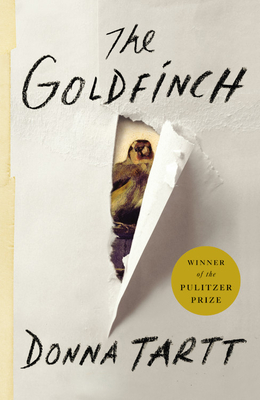
VIDEO: Donna Tartt says, "All educated Southerners have three different voices..."


Ugh.  I find myself again on the roll of bad bloggers. 

In my defense, I've been out doing--rather than in writing about it.  San Francisco has had back-to-back festivals: Litquake for literature and the Bay Area Science Festival for, uh, science.  There was some overlap.  And as literature and science are two of my favorite things, I've been running around a lot!

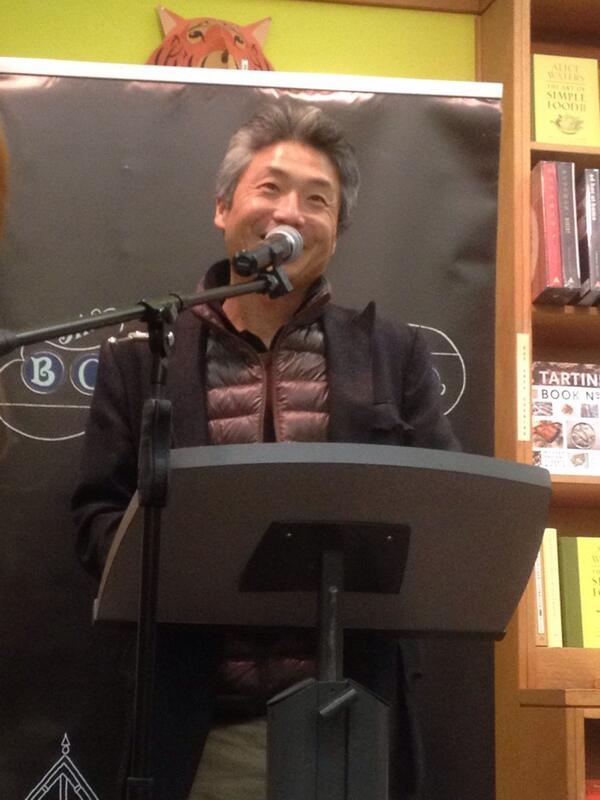
These two interests overlapped up in Marin County about a week ago--though not technically a part of either festival.  Now, I don't like to schlep out to the suburbs too often.  There has to be good reason, if you get my drift.  Donna Tartt, who publishes a novel about once every decade--and who consequently tours about once a decade--was a darn good reason for a road trip.  Book Passage was hosting an unusual daytime event, but I guess you take Donna Tartt when you can get her, right?  Despite the weekday timing, the bookstore was packed.  (Oh, and while Donna Tartt was plenty inducement on her own, I couldn't believe my luck when I saw that geneticist/legend J. Craig Venter was speaking at the store that night!  Look for that footage tomorrow.)

So, Donna's latest novel, The Goldfinch, has been generating buzz for months.  I didn't grab an advance copy of this one.  Actually, I purchased (Yes, I still purchase books.) a copy of the audiobook read by the wonderful stage actor David Pittu on the day of it's publication.  In paper, it's a hefty 750 pages or so, and recorded it's about 32 hours, 25 minutes, and 11 seconds--give or take.  By the time I heard Donna speak, two days later, I was just a couple of hours from the end and finished it in the gap between the two lit events.  All I can say is that the buzz was justified.  I loved this rich and gripping tale from start to finish.  I think the description "Dickensian" comes up with Ms. Tartt from time to time.  I can understand that.  It's been close to 30 years since I read Great Expectations, but for some reason I found myself thinking of Pip as I read the harrowing journey of her young protagonist.  I wholeheartedly recommend the novel, and I further recommend the audiobook, if you are so inclined.  David Pittu is simply astounding.  He brings her words and characters vividly to life.

I so enjoyed this rare opportunity to hear Ms. Tartt speak, and hope that you do as well.  And I'd like to thank Book Passage for bringing her to the Bay Area.  One great way to thank them is to eschew that lousy audiobook and order a signed first edition from Book Passage.  I know they'd be delighted to ship one right out!


Wednesday, September 4, 2013

Psycho killer qu’est-ce que c’est?

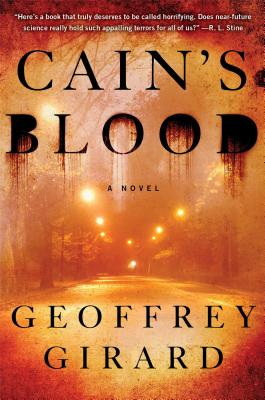
Cain's Blood
by Geoffrey Girard

I heard about this novel’s audacious high-concept premise several months before its publication. Marketing copy said:
“A terrifying debut novel about the evil in each of us: when clones of infamous serial killers escape from a secret government facility, it’s up to a former Army Ranger to stop them… with the help of a teenage killer clone.”
And I was basically like: You had me at ‘clones of infamous serial killers.’ I mean, with a premise like that, it was either going to be unbelievably awesome or excruciating bad. Execution would be everything. And I am officially declaring Geoffrey Girard’s debut thriller UNBELIEVABLY AWESOME. If Cain’s Blood doesn’t rocket to the top of the bestseller list in the land of Hannibal Lecter, well, there is no justice in the world of publishing. And, of course, there isn’t, so who knows.

Okay, back to the story… Honestly, beyond the blurb above, there’s nothing you really need to know. Well, I’ll mention that teenage helper is an innocent, 15-year-old clone of Jeffrey Dahmer. Oh yeah, Girard’s not playing around. This novel is a who’s who of serial murder, with appearances by Ted Bundy, David Berkowitz, Ed Gein, etc. The gang’s all here. As I stated above, execution is everything with a premise this bold. Mr. Girard starts things off provocatively by giving readers a prologue in the form of “A Brief History of Cloning” in which he writes, “Cloning humans, by the way, is still completely legal in the United States, everyone just assumes it’s not.” Uh, I certainly did. Mr. Girard has done his homework on everything from genetics to the differences between psychopaths and sociopaths:
“About one half of one percent of Americans could be diagnosed as sociopaths or psychopaths. So says the National Institute of Mental Health… There are degrees to everything. Ninety-eight percent of that two million are only sociopaths, and most sociopaths are little more than flaming assholes… Guys with no regard for the feelings and rights of others. Care only about Number One, steal for the hell of it, moody guys who screw over coworkers, start bar fights out of boredom, won’t talk to their kids…that kind of thing. True psychopaths are much, much rarer. The difference is important, and also horrible.” [I’ve condensed the quote above with ellipses.]
How is that not fascinating? When it comes to science thrillers, the science doesn’t have to be rock solid, but you have to make me believe it. Mr. Girard did a laudable job of making his outrageous premise plausible. And there was neither too much nor too little of the science. He got the balance just right.

Now, obviously a tale like this lives and dies with plotting and pace. Honestly, there wasn’t a whole
lot to the plot. Some bad dudes escaped and a good, if damaged, soldier had to round them up. But within that simple structure, Girard kept his tale lively, offered up some surprises, and kept things moving at a lightning pace. Turning pages was not only effortless, it was mandatory. I can’t imagine that any reader will be surprised to learn that this novel is full of the most lurid and graphic kind of violence. It’s definitely not for everyone. I’m not generally a fan of gratuitous violence, but I’m not even sure it was gratuitous. All I know is that I couldn’t look away.

Character development is not what drives this sort of story. The damaged soldier thing is a bit of a cliché, but Shane Castillo was a likeable enough protagonist. And Mr. Girard did a fine job with his teen Dahmer, making him sympathic and creepy all at once. There is much that is black and white in this tale, but the author also makes good fodder of the moral ambiguities inherent in the situation. Should Cain’s Blood be your next book club pick? Probably not. But I say give yourself a pass and enjoy the guilty pleasure of this very wild ride.

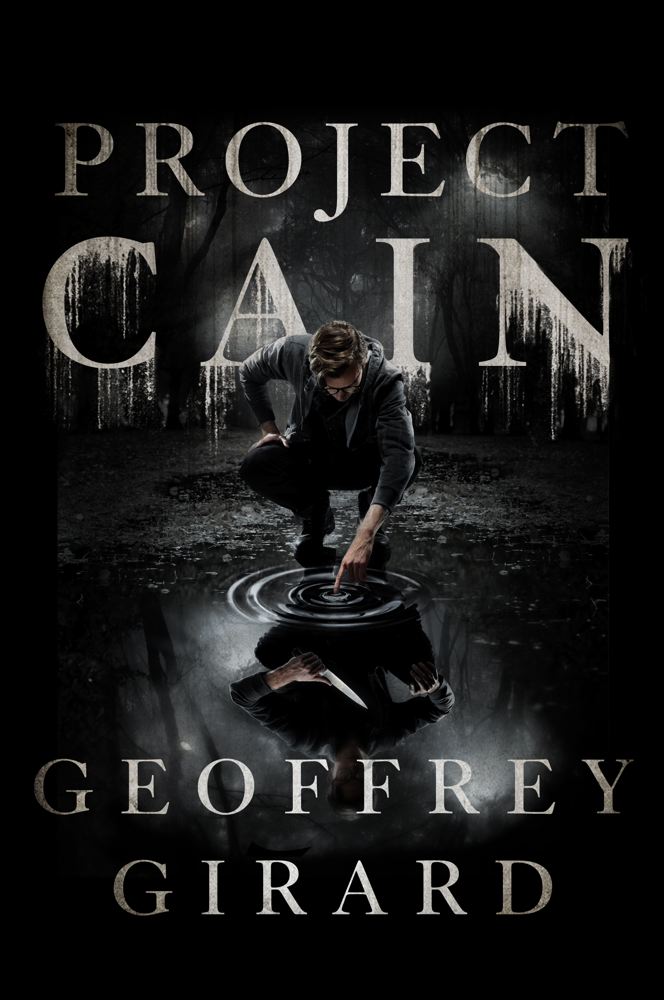
And one more note: Cain’s Blood is actually one half of Mr. Girard’s debut. It’s a complete novel, but he is simultaneously publishing a young adult novel called Project Cain. It tells the exact same story as this novel, but from the POV of the teen Dahmer. I haven’t read it yet, and I know it will be somewhat redundant, but I have to admit I’m curious.

Tuesday, September 3, 2013

“There’s the story, then there’s the real story…”

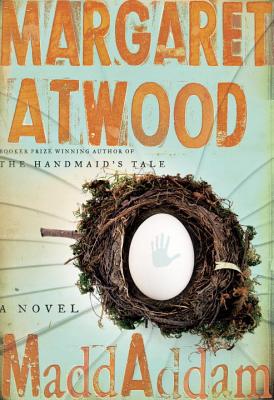
MaddAddam
by Margaret Atwood

Early on in the long-awaited conclusion to her MaddAddam trilogy, Margaret Atwood writes:
“There’s the story, then there’s the real story, then there’s the story of how the story came to be told. Then there’s what you leave out of the story. Which is part of the story too.”
And in MaddAddam, at last, Ms. Atwood gives us all of the above.

It’s been a decade since I first read Oryx & Crake, and four years since I read The Year of the Flood. I loved both books, loved the way the two intertwined and complemented each other. So, in preparation for this final volume, I started by rereading the first two novels of the trilogy. Wow, oh wow, did they hold up well! I realize that not all readers have the time or inclination to revisit books they’ve already read, but in this case it was well worth the extra effort, if only to fully appreciate the connections between the three novels. I don’t believe that a trilogy was planned when Ms. Atwood wrote Oryx & Crake, and yet it was almost as if she had salted away loose ends a decade ago as part of some subconscious, brilliant master plan. For those who aren’t inclined to follow my suit, MaddAddam helpfully opens with a four-page summary entitled, “The Story So Far.” Personally, I wouldn’t consider reading this final volume without having first read the prior two at some point.

When last we visited with the God’s Gardeners, it was the post-pandemic Year of the Flood. We’d been on a harrowing journey narrated through the eyes and voices of two Gardeners, Toby and Ren. In MaddAddam, Toby is back as narrator, and while Ren is a secondary character in the novel, I have to admit that I missed her voice. This time around, the tale is told by Toby alone until late in the novel a surprising second narrative voice emerges.

And it’s appropriate that Toby tells the tale, because it is primarily (Finally!) the story of Zeb, a man that Toby has secretly desired for years. Up until now, Zeb has been an enigmatic character, always hard to pin down. In MaddAddam, it becomes clear that Zeb’s history is inextricably linked to that of Adam One and the God’s Gardeners, as well as that of Crake and the Crakers.

But in addition to looking backward, the story of Toby, Zeb, Snowman, the God’s Gardeners, the Crakers, and the “MaddAddamites” who engineered them, moves forward. The whole bunch of them are joined in an uneasy community. The Crakers are an alien intelligence. Says one of the MaddAddamites, “Their brains are more malleable than Crake intended. They’ve been doing several things we didn’t anticipate during the construction phase.” Amen to that! There are many unexpected complications of joining humans and Crakers together, many of them quite comic. The comic relief is welcome, because Atwood’s post-apocalyptic future is dark. Of all the Craker characters, there is really only one who stands out, a young boy christened Blackbeard. He befriends Toby, and is, simply put, adorable. He is also the entrée for readers into the Craker mind. Can it possibly be accurate to say he “humanizes” them?

There are many dangers facing this little tribe. Probably the most aggressive threat is that of the
Painballers—escaped prisoners who have all but lost their humanity. The matter of humanity is, I think, central to this tale because if humanity is to be measured among the characters, it’s a broad spectrum. The Gardeners and their allies are a fairly admirable bunch, trying to live in peace, sustainably, and protect the Crakers. While the Crakers have some extraordinary natural defences and abilities, left to their own devices in this harsh world, these childlike beings would surely perish. The Painballers are entirely human, but have regressed to an almost animalistic state. And then there are the pigoons—the enormous, genetically-engineered pigs that have acquired an unknown degree of human intelligence in addition to the transplant organ-compatibility they were designed for. The pigoons are a threat to all constituencies, and in MaddAddam, we learn a great deal more about these animals.

I can only write so much here, and yet it is a testament to Ms. Atwood’s epic achievement with this final volume that there is so much substance contained within a mere 416 pages. I want to discuss the role of mythology and written language within this tale, the allegorical elements, the cyclic nature of the story being told, and the connectedness of all things. And, I want to quote her at length, for the sheer intelligence of her thoughts, and the beauty of her expression of them. Truly, I could go on and on.

She has given us the story, the real story, and how it came to be told. Ms. Atwood has looked into our future with this trilogy. She has extrapolated trends in our culture today and carried them into a worst possible tomorrow. Her work is disturbing because her vision is undeniable. Different readers will get different messages from this tale, and will take away different lessons. Despite the darkness, I am left with a feeling of hope. And a very strong impulse to start talking with the bees.

Tuesday, August 6, 2013

“Speak of the Devil and he shall appear.”

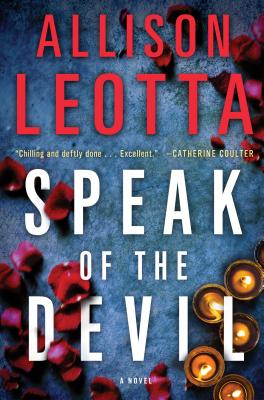
Speak of the Devil
by Allison Leotta

WARNING: Spoilers for Allison Leotta’s prior novel, Discretion, below.

Readers of Allison Leotta’s Anna Curtis legal thrillers have been waiting on tenterhooks for her latest novel, Speak of the Devil. The mystery of the prior installment, Discretion, was thoroughly wrapped up, but Anna’s personal life ended on a cliff-hanger with the words, “I am going to ask him to marry me.” The End. I ask you, who does that? Torture! The good news is, Speak of the Devil picks up immediately with Anna’s proposal to her significant other, Homicide Chief Jack Bailey. I’ll let you discover what his response is on your own; you won’t have to wait long.

On the professional side of things, what should have been a routine bust on a brothel turns into a murder investigation. Anna is trying to hunt down a machete-wielding monster with ties to a massive criminal gang. Unfortunately, before long this monster with the face of a devil is trying to hunt Anna down as well.

Obviously, there’s much, much more to the tale than that, but in this case, I think that telling less is more. Each of Ms. Leotta’s novels has been more enjoyable than the last, as the plotting of her mysteries becomes defter and readers become more invested in her cast of characters. Reading Speak of the Devil, I was almost incensed by what Ms. Leotta put her protagonist through. I know that authors are supposed to torture their creations, but enough already! As for the mystery, there are some real shockers this time around, causing me to be especially circumspect in my synopsis.

The good news is that most of the supporting characters that readers have grown fond of, such as
Detective McGee and Special Agent Sam Randazzo, are again by Anna’s side, and some interesting new characters are introduced. Mysteries alluded to in prior novels are answered conclusively. In general, the author excels at creating a consistent universe, with passing references to elements of past novels helping to sell the ongoing story.

Also helping sell the story is the extensive knowledge of Anna Curtis’s world that Ms. Leotta brings to her books. Like her protagonist, she too prosecuted sex crimes as an Assistant U.S. Attorney in the DC Attorney General’s office. Leotta’s experience lends weight to observations like:
“Why, she wondered, just once, couldn’t a trial go just as planned—with the witnesses saying what you expected? There was always something. In the dozens of cases she’d taken to trial, not a single one went down without some sort of surprise in the middle or immediately before. The only question was how bad the surprise would be.”
Of course, it is those surprises that make for compelling page-turners. Speak of the Devil moves quickly, and to be honest, I had a hard time putting it down. I had never heard of the street gang MS-13 before, but apparently every terrifying thing in this book is true. And just as truth is stranger than fiction, it’s scarier, too. I don’t know whether to be relieved or dismayed that I’m so uninformed about what’s going on in the streets.

I’m grateful that Speak of the Devil doesn’t have the same kind of cliff-hanger ending that Discretion did. However, there may be changes ahead for Anna. This series consistently gets better as it goes. I can’t wait to see what the next chapter brings.

Friday, August 2, 2013

“It became one of those stories, never told honestly.”

& Sons
by David Gilbert

I think I was about 7% into David Gilbert’s sophomore novel, & Sons, when I started emailing friends that it was brilliant. That was a pretty snap judgment, but by the time I made it to 100% I knew my instincts about this novel were dead on. Now I’m going to use Mr. Gilbert’s words more than my own in this review, as it quickly became apparent that he is the most delightful sort of prose stylist—smart, sophisticated, inventive. Here, for instance, is how he introduces a character:
“Richard was handsome in the style of generations of handsome men who marry and pass along their handsome genes like pieces of family silver, in a pinch pawnable. Whatever former hard living had colored his face with almost exotic damage, like a psychological tan. He. Had. Lived.”
The novel opens at the funeral of Charles Topping and is primarily narrated by his youngest son, Philip, whose life is in something of a crisis. An extramarital affair has caused the dissolution of his marriage, as well as the loss of his teaching job. Attending the funeral is Charlie’s oldest friend, the legendary, reclusive novelist A.N. (Andrew) Dyer, about whom it is written:
“…his last novel, The Spared Man, was published roughly ten years ago and most of that was cribbed from something he had abandoned 20 years before—since then nothing new from the celebrated author of Ampersand and Here Live Angry Dogs and Brutal Men and a dozen other books, not even a decent letter of length. It seemed a vital piece had gone loose in his brain and he could feel the bit rattling around, a temporal gear that had slipped its carriage and no longer stamped thoughts into proper words and sentences. He was, in effect, broken.”
Upon hearing that Philip is renting a room at a depressing residence hotel, Andrew extends an invitation to stay at his large Upper East Side apartment with himself and his teenage son, Andy. The two families have always been close:
“It seemed that no matter where we were, the Dyers and Toppings were within shouting distance—New York, Southampton, Hobe Sound—brought together by mothers who took the obligation of our fathers’ friendship more seriously than our fathers ever did. I think that these women hoped that the continuation of this history might provide the missing words from these heavily redacted men, as if we might fill in a full and pleasing account of their life together.”
Women are very much secondary in this novel. It is about the complicated and sometimes fraught
relationships of men. And more than anything else, as the novel’s title would suggest, it’s about fathers and sons. The other central characters in this tale are Andrew’s two adult sons, Richard and Jamie, half-brothers to young Andy, as well as Richard’s teenage son, Emmett. This is a family drama, but along the way there is more than a hint of satire of both the publishing and film industries. Much hay is made of the literary trappings.

And then, just when you think you know the story you’re reading, Mr. Gilbert throws in a real shocker from out of left field. As I reader I was like, “Wha…?” But that’s okay, it was a bold choice. It wasn’t the only time that Mr. Gilbert surprised me in the course of this tale. & Sons is wonderfully character-driven, but much happens within its 448 pages. He does not stint on story.

As I read, I reflected that for whatever reason, there are few novels that examine, in depth, the internal lives and relationships of men. Mr. Gilbert has a great sensitivity for nuance, and has created some endearingly flawed and fallible characters. This novel was truly a joy to read and one which it’s a pleasure to recommend.

NOTE: Check out the unusually fun book trailer below.  Brooke Shields gets top billing, but the stalkerish fan featured is the author.  And San Francisco readers, please note the Mr. Gilbert will be reading and speaking at the Book Passage's Ferry Building location on Wednesday, August 7, 2013 at 6:00pm.  See you there!


Tuesday, July 30, 2013

“Time is more complex near the sea than in any other place…”—John Steinbeck, Tortilla Flat

Sea Creatures
by Susanna Daniel

I can’t say why it is, but some stories grab you right from the opening pages. That was the case with Susanna Daniel’s fantastic sophomore novel, Sea Creatures. Early in the tale, Georgia, the novel’s first person narrator relates:
“A year before, I’d been running a business that if not thriving, exactly, then still had potential. A year before, Graham still had a shot at tenure, and his sleep troubles were more or less under control. Frankie had been a well-adjusted two-and-a-half-year-old, a little slow to talk, but not yet entirely mute.”
So, already I’m curious about these changed circumstances. As Georgia’s tale begins, it’s 1992, and she and her family have left their lives in Chicago to return to her hometown of Miami. Her dad and stepmom offer refuge, and Graham has a professional opportunity at the university. Unfortunately, work requires him to be away a lot. Georgia, meanwhile, takes on a part-time job of her own. Her stepmother sets her up working as a personal assistant to an old family acquaintance referred to as “The Hermit.” In actuality, he is a reclusive artist living in isolation in a stilt house surrounded by water, in a loose community called Stiltsville. Georgia and Frankie visit several times a week, ferrying out supplies and doing odd jobs.

That’s the set-up and the cast of characters, and that’s about all I’m going to tell you. Parts of this tale move in somewhat predictable directions—not because there’s anything clichéd going on, but because there are just some truths to relationships. Still, Ms. Daniel managed to surprise me many times along the way, and kept me captivated by the tale she was telling. For a book that’s not a traditional page-turner kind of genre, I could barely put it down! The novel is both character-driven and plot-driven, and some fairly dramatic events do occur. For instance, as I began the novel, I wondered about the 1992 setting. Why? Well, there is a reason, and it concerns a historic event.

The novel’s prose is lovely, as are her observations about human nature and relationships. Ms. Daniel
has created an appealing cast of characters, likeable, well-rounded, and flawed. Another brief quote:
“The strange reverse-nostalgia itched at me every time I stepped from the boat to the stilt house dock, and it was several minutes before I could slough it off and relax. I think as much as anything else it was a weighty sense of gratitude, as well as the foreknowledge that whatever this was—this occupation, this friendship, this parallel life—it would not last forever.”
It’s not too overwhelming, but there is a foreshadowing of events to come. By the time I’d reached the novel’s end, all lingering questions had been answered, the drama was passed, and I was a deeply satisfied reader. I’m looking forward to more from Ms. Daniel, who is now firmly on my radar!

Wednesday, July 24, 2013

“Kittens one day, old cats the next.”

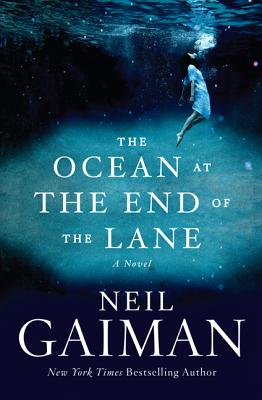
The Ocean at the End of the Lane
by Neil Gaiman

I’m not going to tell you much about the plot of Neil Gaiman’s latest, The Ocean at the End of the Lane. It’s a slender book, under 200 pages, and his first novel for adults in eight years. Here, however, is a short exchange that happens early in the tale:
She shrugged. “Once you’ve been around for a bit, you get to know stuff.”
I kicked a stone. “By ‘a bit’ do you mean ‘a really long time’?”
She nodded.
“How old are you really?” I asked.
“Eleven.”
I thought for a bit. Then I asked, “How long have you been eleven for?”
She smiled at me.
That exchange occurs between the unnamed seven-year-old narrator and his new friend, Lettie Hempstock. However, we first meet this narrator about 40 years later in the novel’s prologue. He’s returned to the rural English village of his youth to attend a funeral. After the service, he takes a drive and finds himself strolling down not only the lane of his childhood home, but down memory lane as well. And what this visit unearths are some long-suppressed memories of extraordinary events.

Mr. Gaiman has been candid in admitting that the bookish protagonist of the tale is a stand-in for his younger self, and that the novel has autobiographical elements—though I think it will be clear that they are merely a jumping off point for the fantastic. And fantastic it is! In all senses of the word.

I read The Ocean at the End of the Lane on Father’s Day, which somehow felt appropriate. And I
read it travel-woozy and jet-lagged. Also good, I think. I was halfway into another world already. What I can tell you is this: I read the book in one sitting. I did not eat, drink, or take a bathroom break. I did not move. It’s possible I did not breathe. But I did get chills. The book opens with what I gather was a true incident from the author’s childhood, a tragedy that is the catalyst for all that is the come. And as the tale grew darker and darker, I began to truly fear for these characters Gaiman had brought to life and made me care about.

The story is a heady combination of fantasy, horror, nostalgia, and coming-of-age tale. Like all of Mr. Gaiman’s work, there is much subtext to be mined. One could discuss the fascinating Hempstock women at length—their mythic origins, the various legends and cultures from which they may have derived, and their relationship to other Hempstocks in the author’s catalog. Or, you could concentrate on how the author examines adulthood from a child’s perspective and childhood from an adult’s perspective. Or, you could identify the influences of numerous other writers on this work, and explore the importance of literature in our lives and the power of story within the tale. The narrator asks, “Why didn’t adults want to read about Narnia, about secret islands and smugglers and dangerous fairies?” (Some of us do, Neil, some of us do.) What I’m saying is, that while The Ocean at the End of the Lane may be short on page count, it’s quite long on substance.

The writing is evocative, eerie, and very, very good. Dialogue and dialect bring characters’ voices to life. (“Right, my proud beauties,” said Ginnie Hempstock, loudly.) The tale moves quickly. At that length, there is nothing superfluous. More than anything, Mr. Gaiman is a masterful story-teller. When he tells you, in the guise of a pre-adolescent old soul, that a duck pond is an ocean, well, you will believe it.


Saturday, July 20, 2013

“The date for the end of the world… it’s in four days.”

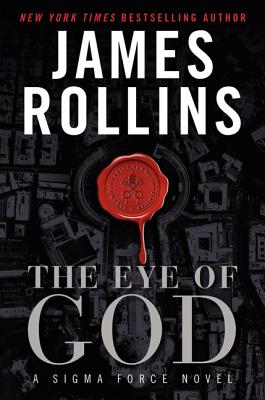
The Eye of God
by James Rollins

The quote above is the final sentence of the first chapter of James Rollins’ latest Sigma thriller, The Eye of God. In other words, it’s just another low-stakes drama from this master of disaster. This time around, the prologue opens in AD 453 with the death of Attila the Hun. From there, we quickly move to present-day Rome, with our old friends Vigor and Rachel. (Already, things are off to a good start.) Vigor is consulting with his niece about a mysterious package he’s just received from an old friend—a priest declared dead more than a decade prior. The package contains an artifact, a human skull etched with Jewish Aramaic. “I believe this relic is an example of early Talmudic magic practiced by Babylonian Jews.” It also contains a book bound in human skin. And these artifacts are pointing towards a coming apocalypse with a very imminent date.

Meanwhile… At an air force base in California, “something’s gone wrong.” So says Sigma’s Painter Crowe, who happens to be in attendance. A special camera has been tracking a comet’s progress through space, trying to collect “proof that the comet was shedding or disturbing dark energy in its wake.” After a few pages of fairly sexy physics talk, remote data is retrieved: “It displayed a satellite view of the eastern seaboard of the United States, the photo taken as the satellite blazed a trail across the sky. It was detailed enough to make out the major coastal metropolises. Boston, New York City, Washington, D.C. Every city lay in a smoldering ruin.” So, you’ve got your ancient prophecies lining up disturbingly with your weird space-time science anomaly prophesies. Ladies and gentlemen, we are off to the races!

Now, I’ve reviewed a lot of Rollins’ novels in the past decade plus, and the reviews are beginning to feel a bit redundant only because Mr. Rollins is so consistent with the strengths of his novels. So please bear with me as I go over the major bullet points:
  • I read a lot of this type of science/adventure thriller and I don’t think there’s another writer out there that can touch Rollins for the complexity of the tales he weaves—and I mean that in an entirely positive way. Above I alluded to Attila the Hun, the Roman Catholic Church, advanced physics, and Jewish mysticism. That is merely the tip of the iceberg. Throw into the mix Genghis Khan, the world’s only freshwater seal, exotic locales spanning the globe, magnetic fingertips (So freakin’ cool!), St. Thomas, multiverses, and the question, “Could the ancient Chinese have had knowledge of events described in the book of Genesis?” In every book, Rollins weaves an astonishing number of incredibly diverse, incredibly cool elements into one cohesive tale. And usually it hangs together so well, I wonder if he hasn’t stumbled onto some secrets of the universe.
  • Again, I must commend the author on his strong female characters. I don’t think readers are ever disappointed when Rachel and Seichan are both a part of the mix. The Eye of God introduces several noteworthy new female characters as well. (And for those of you waiting for something to happen with Gray… Your wait is over.)
  • How many different times and ways can I express my love of Kowalski? This time around he
    enters with the line, “Why does that duck keep looking at me?” Which is just so Kowalski. I thought he was funnier than ever in this book. I want to quote all his best lines, but I’ll refrain.
  • Easter eggs! There are Easter eggs in this novel that refer to a non-Sigma book in the Rollins-verse. It’s not a character this time around. Really, really fun!
  • Not just one super-cool author’s note at the end describing what’s fact and what’s fiction, this time there are several of them.
Now, this is the point where I usually kvetch about a bunch of nit-picky stuff, but I don’t really have any significant complaints this time around. Once I was going to ding him on a plot element being too outlandish, but as he often does, he followed it up with enough science that I was willing to continue suspending my disbelief. No, this is a strong novel in the long-running Sigma series. The plot is fascinating, and I hope it goes without saying that it moves at a lightning pace. Furthermore, there are significant developments among the major players. And that’s all I’ll say about that.

I honestly don’t know how long James Rollins can possibly come up with these convoluted tales he spins. Surely he’s written about every single interesting thing in the universe by now? But apparently not. As long as he keeps writing them, I’m going to keep reading them!

Friday, July 19, 2013

“The Impossible happens once to each of us.”

The Impossible Lives of Greta Wells
by Andrew Sean Greer

I warn you now, I’m going to gush.

The speaker of the above sentiment is the eponymous Greta Wells, the first-person narrator of Andrew Sean Greer’s fourth novel. We are introduced to her as the story opens. It’s New York City, circa 1985, the height of the AIDS crisis. She has just lost her twin brother, Felix—to whom we are introduced in a flashback that occurs not long before his death—at the age of thirty-two. Greta’s grief is almost more than she can bear. When, a few months later, her long-term relationship dissolves, it is more than she can bear. A pervading sadness leads her eventually to the door of Dr. Cerletti, who will administer a course of 25 electroconvulsive therapy (ECT) treatments over a span of 12 weeks. The doctor warns she “might experience some disorientation afterward.”

What Greta experiences is more migration than disorientation. She awakens in a different time, a different life. A different Greta. After her first treatment, Greta finds herself in 1918. World War I is nearly over. Just as she finds herself inhabiting an altered version of herself there, so too she discovers alternate versions of the most important people in her life: Nathan, the lover who left her; her beloved, bohemian aunt, Ruth; and her brother, Felix. Alive.

After her second ECT treatment, Greta awakens in yet another version of her life. It is 1941, and America is about to go to war. Here again are versions of those she loves and a new version of herself and the life she might have lived. So the months pass, spending a day or a week rotating through these different lives in 1985, 1918, and 1941, each with its own joys and sorrows. Because, as Greta learns, no life is perfect.

That is the set-up of this moving masterpiece of a novel. Mr. Greer is rather brilliant in his choice of time periods. The beginning of a war is juxtaposed with the end of a war. The plague of AIDS is juxtaposed with the Spanish influenza of 1918. Changing social mores are examined, and our protagonist gets to explore the lives she might have known if some of her fondest wishes and greatest fears came true. Ultimately, it is up to her to decide the life she will lead, in an eerie echo of her lover’s words, “I leave it to you.” Greer writes:
“A shrew, a wife, a whore. Those seemed to be my choices. I ask any man reading this, how could you decide whether to be a villain, a worker, or a plaything? A man would refuse to choose; a man would have that right. But I had only three worlds to choose from, and which of them was happiness? All I wanted was love. A simple thing, a timeless thing. When men want love they sing for it, or they smile for it, or pay for it. And what do women do? They choose. And their lives are struck like bronze medallions. So tell me, gentlemen, tell me the time and place where it was easy to be a woman?”
At times, I found it difficult to believe this novel was written by a man, so convincing was the voice of his female protagonist. I’m not sure how much I related to Greta, but I believed in her—despite a premise that required significant suspension of disbelief. And I didn’t have to love her, because I fell in love with those she loved, none more so than warm and colorful Aunt Ruth, a veritable Mrs. Madrigal of a woman, complete with kimonos. And I was deeply moved by the relationship of these fraternal twins, so eloquently conveyed by the author, a twin himself.

There are many echoes in this brief book. Echoes of other novels—though Greer’s tale is unique. I
found myself reflecting upon stories as diverse as Ken Grimwood’s Replay, Jack Finney’s Time and Again, and even Baum’s Oz! Greta’s life had echoes of other lives, with lines of dialogue recurring like motifs in entirely different circumstances:

“When you were a little girl, was this the woman you dreamed of becoming?”

“I understood nothing! But it was a great show!”

“If only we just loved who we’re supposed to love.”

These are brief quotes, but I want to pull long passages from this novel. Greer’s prose is so beautiful it hurts. Indulge me once more:
“They say there are many worlds. All around our own, packed tight as the cells of your heart. Each with its own logic, its own physics, moons, and stars. We cannot go there—we would not survive in most. But there are some, as I have seen, almost exactly like our own—like the fairy worlds my aunt used to tease us with. You make a wish, and another world is formed in which that wish comes true, though you may never see it. And in those other worlds, the places you love are there. Perhaps in one of them, all rights are wronged and life is as you wish it. So what if you found the door? And what if you had the key? Because everyone knows this:  
That the impossible happens once to each of us.”
I was very fortunate to receive a review copy of this extraordinary novel from the publisher in late 2012. I held on to it and made it my very first read of 2013. Will it make my top 10 list for the year? Absolutely. Will it be the single best novel I read in 2013? Very likely. But more than that, this is the book I will be foisting on friends 20 years from now. My love of Greta Wells will last a lifetime.

Tuesday, April 30, 2013

Lauren Graham: As funny on the page as she is on the stage!

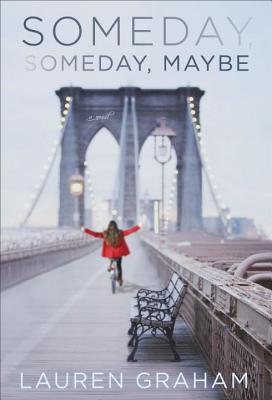
Someday, Someday Maybe
by Lauren Graham

Life is often heavy. Literature is often heavy. Sometimes I just want a little light entertainment, and Lauren Graham’s debut novel, Someday, Someday Maybe sounded like just what the doctor ordered. Now there’s no reason to believe that a gifted comic actress would be a particularly gifted comic novelist. Actually, my expectations might lean slightly in the opposite direction. So let me be the first to proclaim what a fun, funny, clever, and refreshing debut this is. It was absolutely everything I wanted and more than I expected.

Someday, Someday Maybe is the story of aspiring actress Franny Banks. She’d given herself three years to make it in New York, and as the novel opens in 1995, her deadline is fast approaching. Currently, she’s waiting tables, not for Godot. The novel details Franny’s travails personally and professionally as her deadline looms. There’s no real need to describe the plot further.

It seems reasonable to assume that there’s at least a smidge of autobiography in the mix. It can’t be a coincidence that Lauren Graham’s first professional listings on IMDB showed up right around 1995. She’s writing about a time, a place, and a world that she knows. The details ring true. And she does an excellent job of articulating the work of an actor. It’s quite interesting being inside Franny’s head, hearing her thought process, as she taps into the emotions she needs to convey. It’s easy to empathize with the likeable Franny and to root for her to succeed.

One of the greatest pleasures of the novel is the humor. Both actors and the industry are satirized. Additionally, there is rich observational humor. In discussing a neighbor, Graham writes:
“We worry about Frank in the way New Yorkers worry about strangers whose apartments they can see into. Which is to say, we made up a name for him and have theories about his life, and we’d call 911 if we saw something frightening happen while spying on him, but if I ran into him on the subway, I’d look the other way.”
Aside from her career, Franny is a twenty-something woman navigating the rocky shoals of romance. There’s a light chick-lit feel to the novel, and the romantic subplot was truly delightful. Graham has meta-fictional fun with romance tropes:
“I mean, the whole ‘love triangle’ THING bothers me. Who even thought of that? I’ve never been in a love triangle. Especially one where the girl is torn between the obviously right guy played by the more famous actor and the obviously hideously wrong guy played by the slightly less famous actor. And also, why does the heroine always have a sassy best friend? And why is she always a brunette?”
This is not literary fiction. Graham is writing in the voice of her first-person narrator. Yes, there are a
fair number of run on sentences and sentence fragments, but she brings Franny’s voice to life. I could hear her, and she didn’t actually sound very much like Lorelei Gilmore at all. Franny is a new creation. The novel’s prose is very readable, and occasionally it’s more than that. Also, Franny’s tale moves swiftly. It’s a story you’ll read in no time, and the odds are good you’ll be left wishing for a few chapters more.

Graham’s characters are appealing. You want these young people to find their happy ending—whatever that happens to be. The novel comes to a very satisfying conclusion, and I enjoyed my time in Franny’s company enough that I wouldn’t mind at all visiting with her in the future. Given her creator’s success, I’m going to gamble that things turn out alright for her. As for Lauren Graham, I can only hope those long hours on set translate to further forays into fiction. This was an auspicious and entertaining debut. I’m waiting for a sequel.

Friday, April 19, 2013

Creatures of earth and fire connect in a dazzling debut

The Golem and the Jinni
by Helene Wecker

There is a certain satisfaction in coming to the end of a long novel, but as the pages dwindled on Helen Wecker’s The Golem and the Jinni, all I felt was grief that this magical story had to end. After 500 pages, I wanted it to go on and on. And if you stop reading this review right now, that’s all you really need to know.

You will be shocked to hear that the novel is, in fact, about a golem and a jinni. For those who are unaware, a golem is a figure of Jewish myth, an automaton made of earth or clay, brought to life to do the bidding of another. A jinni (or genie) is a figure of Arab myth, a magical creature of fire. So, before we even get into plot details, look at that fascinating set-up! Jewish/Arab. Earth/fire. Just hearing the premise, I anticipated some sort of culture clash to be central to the tale. And while the story does primarily unfold amongst the Jewish and Syrian immigrant populations of late 19th century New York, it is not a parable of Mid-East conflict. This was merely the first of many instances when Ms. Wecker defied expectation and convention, keeping me guessing in what direction her tale would evolve again and again.

Talk about defying convention—the titular golem is a woman, and self-aware. She was originally created (with a laundry list of attributes that included intelligence, curiosity, and propriety) to be a rich merchant’s wife. He, alas, died en route to America, shortly after bringing her to life. She arrived at Ellis Island without a master or a plan. The jinni, on the other hand, was freed from imprisonment in a flask—but don’t expect him to start granting wishes any time soon.

This is the story of two creatures in turn of the century New York who are both Old Worldly and
otherworldly. Separately, they must find their way in circumstances that neither is prepared for, all the while concealing their essential natures. As the golem says to the jinni, “We’re our natures, you and I.” Because, yes, eventually their paths do cross and it’s the start of a most unexpected friendship.

Can I tell you? This wonderful, literary fantasy left me wanting to slap the next writer who sits down in front of a keyboard and starts typing about a vampire. Ms. Wecker has created a story unlike anything I’ve ever seen. Her central characters, while not human, share a deep humanity (for better or worse) and are beautifully drawn. Other characters, which at first seem peripheral to the tale, prove to be central, as Wecker’s story expands encompassing a larger community. And at all times the relationships depicted between men, women, creatures, adults, children, friends, lovers, and enemies were complex, unpredictable, and captivating. The novel’s prose is as rich as the period setting is evocative. And while I really haven’t gone into any detail, please know that the plotting is both elegant and assured.

Of course, there is culture clash in this novel, and conflict galore. But in every instance that her tale could be ordinary, Ms. Wecker makes it extraordinary. The lush cultures, heritage, and history depicted so beautifully are merely the jumping off point for a dazzlingly inventive fantasy. Where did this writer come from, and how is it possible that this accomplished work is her debut? It is sure to be one of the literary highlights of the year!

NOTE: This book will be released next Tuesday, April 23, 2013.


Monday, April 8, 2013

A good, old-fashioned creature feature

Island 731
by Jeremy Robinson

When I reviewed Jeremy Robinson’s novel SecondWorld, I suggested that he might find broader readership by toning it down just a smidge. I’d like to report that he did-but I don’t think I can honestly say that. And yet… Somehow the completely insane over-the-top… everything… of his latest novel, Island 731, works. It just works. If you can’t have fun reading this novel, you simply aren’t trying hard enough.

Of course, while I’ve voiced all sorts of criticism over the years, I’ve never denied the fun of Robinson’s novels. This one, for instance, opens with a brief, disturbing prologue set during WWII, and then immediate jumps to the present day aboard the research ship Magellan. Well, overboard the research ship Magellan. They are investigating the Great Pacific Garbage Patch. A scientist jumps overboard to acquire a valuable research specimen, and a crew member jumps to the rescue. Add a great white to the mix and we’re off to the races!

The scientist is Avril Joliet and her rescuer is Mark Hawkins, a former park ranger and expert tracker. (Yeah, yeah, these fictional characters do tend to come equipped with invaluable skill sets.) They are merely two of a small ensemble of characters at the heart of the tale. Possibly the most entertaining among the characters is high school science teacher Bob Bray. It is Bray who is the vehicle for most of the exposition once the novel’s plot kicks into gear, and much of the humor. This book is all about plot, so I don’t want to give much away. Succinctly, there’s a major storm that is merely the beginning of the problems that are about to plague the Magellan. Cascading failures lead members of the crew to a mysterious island. (And Jules Verne smiles from heaven.) There, they encounter astonishing and very frightening creatures. Bray attempts to explain:
“Okay, let’s talk science… Chimeras are formed when two fertilized eggs, or embryos, fuse in the womb… The main difference between natural chimerism and laboratory chimerism is that the process can be controlled in a lab… Anyway, instead of randomly merging embryos, scientists can select specific embryonic cells from one organism—say a bird’s wings and breast muscles strong enough to use them—and transplant them on to something else. Like a lion.”
(If that sounds choppy, blame me. The ellipses are due to my condensing of the text.) Later, clues point to horrors from WWII. Again Bray is the agent of exposition: “There have been several nations and individuals who have done horrible things in the name of biological scientific progress throughout history. But none hold a candle to Unit seven thirty-one. They were Japan’s covert R and D division during World War Two. They performed sadistic experiments on human beings.”

I don’t think it’s necessary to go into further detail. Robinson’s plot unfolds at a lightning pace, and
revelations occur throughout the novel. Along with those revelations are a goodly number of shocks and surprises along the way. As noted above, Robinson has written a science thriller, and he makes a good faith effort to dress his outlandish tale in enough facts to make the fiction go down easier. Me, I’m a Googler. I stop and check details regularly. Is there a Great Pacific Garbage Patch? I’m sad to say it’s true. Japanese cannibalism in WWII? I’d never heard of it, but-check! And what the heck is an aye-aye? Do yourself a favor and look it up. Robinson is the master of the strange but true. That will only get you so far. As always, Robinson really pushes the envelope of what readers will buy. I’ve been known to balk. But this time I just grinned and went along for the ride. I do love me some monsters!

You’ll recognize all sorts of classic and contemporary influences to this novel. Let’s just call it an homage to the greats. Mr. Robinson is walking where others have gone before, but he puts his own spin on this science-run-amok tale. And I ask you, who doesn’t like a good, old-fashioned creature feature?

Wednesday, April 3, 2013

Keep calm and mermaid on

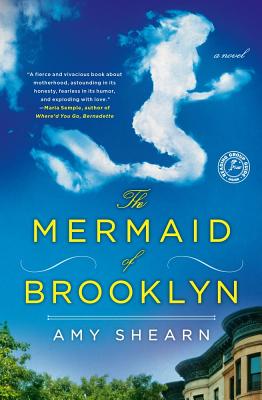
The Mermaid of Brooklyn
by Amy Shearn

The tag line for Amy Shearn’s sophomore novel, The Mermaid of Brooklyn, reads “Sometimes all you need in life is a fabulous pair of shoes—and a little help from a mermaid.” Now, if you ask me, that sounds like some kind of light chick-lit novel—and there’s nothing wrong with light chick-lit. But that’s not what you’ll find in these pages. That’s selling Amy Shearn’s novel way too short.

First, it’s not chick-lit at all. If you must classify, put this one down as women’s fiction, but with a sharply-observed, Perotta-esque take on the village-within-a-city that is Park Slope, Brooklyn. It’s the story of Jenny Lipkin, the overwhelmed mother of an infant and a toddler. In the novel’s opening pages, her husband Harry calls to tell her he’s stopping to pick up cigarettes on his way home. He never arrives. Days pass, and no one has heard from Harry, no one can reach him. This would, of course, be upsetting under any circumstances, but this isn’t the first time it’s happened. Harry has issues of his own. But he’s never stayed away this long before…

Jenny is an appealing protagonist, appealing in her imperfection. She’s not extraordinarily beautiful, clever, or together. Quite the contrary, she was barely getting through her days when she had her husband’s support. Now the struggle really begins. The kids, the bills, the home: “This was not one of those ‘Oh, ha, sorry it’s such a mess’ moments. It was dangerously messy. It was call-child-services-doubt-the-mental-health-of-the-mother messy. It was TLC-reality-programming messy. We cohabited with dust bunnies I knew by name…” That’s a funny passage, and there is a good amount of humor and some real wit within the text, but there’s also a fair amount of darkness and desperation. I suspect that more than a few women will relate to Jenny’s feelings of bone-deep exhaustion and inadequacy.

Where, you may be asking, is the mermaid in all this? Where indeed? There’s no mermaid in sight
until more than a quarter of the novel has passed. And this nameless entity is not, perhaps, the mermaid you’re expecting. She’s no fairytale friend. This mermaid of Brooklyn is a creature of Slavic myth, a rusalka. I’m a connoisseur of mermaid legends and lore, and this was a new one on me. Per Wikipedia, “In Slavic mythology, a rusalka is a female ghost, water nymph, succubus, or mermaid-like demon that dwelt in a waterway.” I’ll leave you to discover how Jenny encounters her, and the exact nature of their relationship. It’s not entirely negative, as the above might lead one to believe, but it’s not exactly positive either. Jenny muses:
“I was starting to realize the rusalka wasn’t the best person to listen to. What did I know about her? Who WAS she, this new self of mine, this recently arrived Siamese twin? It was beginning to strike me, in moments of sickening dread, that I might be just another sailor coiled in her hair, seduced by her promises of impossible passions, believing I was being buoyed up as she slowly strengthened her squeeze, dragging me down to the ocean floor.”
Notwithstanding an amusing tendency to pepper her dialogue with Yiddish, there’s an opaqueness to the rusalka that leaves readers a lot of room for conjecture as to her nature. But despite this supernatural element, this is an unusually realistic look at one woman’s struggle to find her way through neighborhood politics, temptation, depression, and family life. I’m neither married nor a mother, but I related tremendously to Jenny, and I cared about her struggles.

The writing in The Mermaid of Brooklyn is terrific. I don’t use phrases like “chick-lit” or “women’s fiction” in a pejorative manner, but rather to describe genres of fiction. Still, those genres will give certain readers expectations as to literary quality. Whatever those expectations are, the depth of this book will surpass them. Shearn uses language in clever and observant ways. “We’d been in the park all morning, and I was Pompeiied in a gritty paste of apple juice, dirt, and sandbox.” Or, as two mothers express their exhaustion: “It was an exchange we shared about thirty times a day, like songbirds trading musical phrases.”

This was my introduction to Ms. Shearn’s work. I came to it with expectations that weren’t met at all. Fortunately, they were significantly exceeded. The Mermaid of Brooklyn is a whole lot more than a book about a fabulous pair of shoes.

Wednesday, March 27, 2013

"Ladies and gentlemen, may I present Pandemonium."

by Warren Fahy

UPDATE 3/27/13:  The following review was written on an earlier version of Pandemonium. Having now read the two versions concurrently, I can tell you that there isn't a single page unaltered--but none of the changes are substantive. My review stands. In the time since this was originally published, Fahy has polished the prose to a high gloss. In addition to tightening the language, he's added tiny character moments, comic relief, the occasional great line of dialogue, etc. I'd read the first draft; this is the final. It held up remarkably well to a second reading, and I liked Pandemonium for all the same reasons all over again.

Additionally, I want to mention just how beautiful the design of the hardback novel is. In addition to the shiny foil cover, please know that there are eleven pages of gorgeous illustrations and maps at the back of the book--some of which are pasted below. They're an excellent resource as you read the book. I loved reading this on my Kindle, but I'm thrilled to finally have a copy to place on my bookshelf!

Nearly three two four years ago, I read a debut thriller by an unknown author leading me to ask the immortal question, "Where have you been all my life, Warren Fahy?" And more to the point, where did you go? Happily, Mr. Fahy is at last back with a self-published sequel to Fragment. It would be an understatement to say that my expectations for this book were high. Arguably, too high. Let me cut to the chase and simply tell you: this book is totally AWESOME!

Pandemonium opens just a few months after the events of Fragment. Fahy had left the door wide open for a sequel, and he steps right through it as the desiccated body of Thatcher Redmond washes up on a remote Japanese island, carrying it's deadly cargo of Hender's fauna. (Don't assume you know where this is leading. Fahy is always three steps ahead.)

Across the world, Nell and Geoffrey Binswanger are enjoying their first days of wedded bliss. Since their escape from Henders Island, they—along with colleague Andy Beasley—have been working with the five surviving hendros from the island. These gentle creatures have captured the world's imagination and are well on their way to winning their hearts. But the powers that be aren't sure how much freedom these alien intelligences should be granted. They are currently being held in comfortable isolation, but they are petitioning for full freedom—or at least internet access.

Nell and Geoffrey are shaking up the hendros' comfortable routine by going off on their honeymoon. However, just as they're about to depart for Hawaii, the two are given the proverbial offer they can't refuse. It’s a lucrative working vacation studying an extraordinary unknown ecosystem. Their benefactor is a slightly suspect Russian billionaire by the name of Maxim Dragolovich. And before anyone knows where they’re going, he’s whisked Nell and Geoffrey off to a subterranean world like nothing you’ve imagined in your wildest dreams, a world he calls “Pandemonium.” There, Nell and Geoffrey renew old acquaintances and make new ones, and at first it’s all so magical… I don’t want to tell much more. It’s far too much fun to make each delicious discovery on your own!

There’s a reason why sequels rarely live up to reader expectations. When an author has done his job really well, he’s created a whole new world in a book. No matter how great the second novel is, it simply can’t offer the freshness and originality of the first. Let me tell you why I think Fahy succeeds so well here.

First, he offers more of what he got right in Fragment. This novel moves at an absolutely breathless pace. I read it in a single day, and there was simply no way you could have gotten me to put this book down before I reached the conclusion. Fahy’s bread and butter is creating fantastic creatures, both magnificent and horrifying. He revisits some territory in Pandemonium, but he expands quite satisfactorily on what he’d created previously. His imagination is off the hook! But what I love the most is that everything he creates, from the environment, to the creatures, to the technology (which I’ll get to in a moment), is so thoroughly grounded in real, right-up-to-the-moment, science. It’s smart, it’s fun, and it’s truly a joy to read.

I criticized the character development in Fragment and I’m not going to claim that this is a nuanced character study. In fact, the main villain of this novel is again a bit on the cartoonish side, but this time he’s cartoonish in a good way! He’s definitely a more interesting, more well-rounded character. I don’t know that I learned a great deal more about Nell, Geoffrey, and Andy, but they’re likable characters and fulfill their roles admirably. This novel introduces a child character—always a dicey proposition—but I have to admit I kind of loved her. (Except, Warren, isn’t Sasha a man’s name in Russia?)

He definitely walks the same cuteness tightrope in his depiction of the hendros, or sels, or whatever you want to call them. It would have been so easy for them to become twee, but here again, I think Fahy gets the balance just right. I simply loved them. These characters are a golden opportunity for comic relief, like when they gather around to watch a movie and it’s Jurassic Park, LOL. But these creatures are more than cute comic devices. They’re supposedly possessed of great wisdom, and Fahy manages to illustrate that, such as with Hender’s oft repeated admonition for tolerance, “There is no ‘they.’ Remember? There is only one. And one. And one. No ‘they!’” He’s managed to create alien characters that are, if anything, more intriguing and complex than the human ones. Plus, they have a better grasp of social media than I do.

The latter part of this novel involves a military operation. This is where Fahy brings in the big guns. Literally. The military hardware and technology was just so cool! Here Fahy tapped into my inner child, and apparently my inner child is a 13-year-old boy. Who knew? But I was completely enthralled with the exoskeleton robot (think Avatar) worn by one character, the ROVs named after Dr. Who’s Daleks, and the sheer firepower assembled. As one soldier says, “These species may be more evolved for battle than we are, but we have the technology, folks. I guarantee they’ve never come up against what we’re bringing to the fight.”

So, yeah, there’s a fight. And no one is safe. Fahy may kill off your favorite character in the blink of an eye. He creates tension, jeopardy, adrenaline, and he brings it all home for a most satisfying conclusion. He hasn’t left the obvious open door to a sequel this time around, but there was one question he left unanswered… I can’t stop wondering if it was intentional. I sure hope it was.

The bottom line is this: If you liked the first book, I think you’re going to love this one.

NOTE:  We haven't checked in with Warren Fahy in a while.  Look for a new interview with him in the near future.

Thursday, March 21, 2013

Not all the leopards are metaphorical...

The Unchangeable Spots of Leopards
by Kristopher Jansma

Look, I won’t claim there aren’t disappointments, but after decades of selecting books for myself, I’ve gotten pretty good at guessing what I’m going to like. And from the first time I heard even the briefest description of The Unchangeable Spots of Leopards, it was high on my must-read list. I mean, seriously, the title alone--somehow it just spoke to me. And I wasn’t disappointed.

But the odd thing is, when I read the jacket copy, the part that I really honed in on was about the rivalry between the two writers. And while certainly that is an element of the novel’s plot (such as it is), that’s not the part that I should have been paying attention to. No, it was phrases like “search for identity,” “web of lies,” and “exploration of the nature of truth and storytelling” that are really at the crux of Kristopher Jansma’s exciting debut novel.

Let’s back up… There have been some fantastic novels that blurred the lines between fact and fiction through a variety of narrative devices. In Life of Pi, Yann Martel opened the novel in direct address to readers, eventually becoming the character of The Writer. And when The Bridges of Madison County was published a few decades ago, so many readers wrote to the National Geographic believing the tale was true that they made a museum exhibit of the correspondence. I digress, but the opening of The Unchangeable Spots of Leopards brought these examples to mind, because the first page after the table of contents says this: “If you believe that you are the author of this book, please contact Haslett & Grouse Publishers (New York, New York) at your first convenience."

Interesting. We move on, but that opening note is never quite forgotten.

And this tale begins, again, in direct address to readers in the form of an author’s note. It launches, “I’ve lost every book I’ve ever written.” And the narrator tells the tale of that first loss. You will learn of others along the way. The last line, incidentally, of that author’s note is this: “These stories all are true, but only somewhere else.” And this coming after not one, not two, but three separate epigraphs on the nature of truth. Interesting.

The novel’s first-person narrator seems earnest enough, but be prepared for sleight of hand—or whatever the literary equivalent might be. The storytelling here is unconventional, it’s meta-fictional, it’s challenging, it’s non-linear, it’s literary, and, oh yes, it is always interesting. Jansma’s characters are… Well, to be honest, they’re not all that likable when you get right down to it, but they’re well-drawn enough for familiarity to breed contempt. (And in the scheme of unlikable characters, these ones are not so unpleasant as to put you off from following their journey.) You’ll note that I did not describe them as “believable,” because there’s a heightened quality about the trio at the center of the tale, and the circumstances they find themselves in, as they chase and/or flee each other around the globe. Jansma isn’t trying to replicate reality. There is artifice throughout, and it’s very intentional.

His writing is fantastic! It’s read-aloud, eminently quotable, just a pleasure to absorb. Everything about this novel is stylish, stylized, and sophisticated. It’s also very funny. It’s gonzo, romantic, clever, and the sort of book to remind readers and writers both why they do what they do. In short, this is an exhilarating debut novel. My instincts were right on this time. Score one for me.

Thursday, March 14, 2013

“For the moment, then, let’s allow our imaginations free reign.”

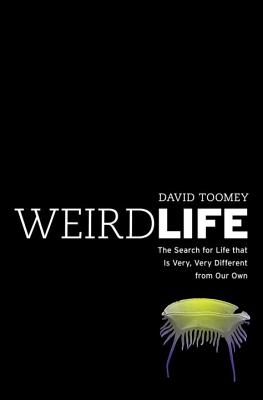
Weird Life: The Search for Life That Is Very, Very Different From Our Own
by David Toomey

Look, I’m as geeky as the next girl. How can you hear the subject matter of this book and not be fascinated? David Toomey opens Weird Life exactly where I would expect—with extremophiles. Extremophiles are some of the most unusual and extraordinary creatures in all of biology. Which makes sense, because life = biology. Right?

That’s what I thought, but clearly that’s due to a massive failure of imagination on my part. One the most impressive things about Toomey’s book are the sheer breadth, depth, and scope of what is covered. Toomey starts with biology—microbiology, exobiology, marine biology, synthetic biology, molecular biology, astrobiology, evolutionary biology. That, friends, is the mere tip of the iceberg. Toomey touches on disciplines and theories including: organic chemistry, inorganic chemistry, interstellar chemistry, molecular chemistry, biochemistry, nuclear chemistry, geology, genetics, robotics, computer science, mathematics, theoretical physics, particle physics, quantum physics, astrophysics, string theory, nanotechnology, multiverses, astrology, botany, taxonomy, engineering, ecology, epistemology, psychology, and philosophy. If that’s not enough, there’s even a chapter on weird life in science fiction! This book is thorough, that’s all I’m saying. There’s a reason for this:
“The attentive reader may have noticed that ideas for the weirdest sorts of weird life did not originate with biologists or even, for that matter, with astrobiologists. They came from scholars and practitioners in other fields. The hypotheses of life in other universes were formulated by theoretical physicists (Harnik, Kribs, and Perez; and Jaffe, Jenkins, and Kimchi). Ideas of life in the vicinity of black holes and the atmospheres of white dwarf stars were conceived by astrophysicists (Adams and Laughlin). Hypotheses of life surviving through eternity were developed by a mathematician and theoretical physicist (Dyson), who also supplied us with what may be the broadest definition of life so far. Of the many ideas of weird organisms from science fiction, two that are notably well grounded in science are from a physicist turned aerospace engineer (Forward) and from a professional astronomer (Hoyle). Even the relatively conservative hypothesis of hydrogen-breathing dirigibles was proposed by a physicist (Saltpeter) and a planetary scientist turned astrobiologist (Sagan).”
So… there’s some smart stuff in this book. Do not be intimidated! I’m incredibly uneducated, and I had no difficulty reading Weird Life from cover to cover. My mind was occasionally blown—but always in a good way. And if you need a little reminder on the difference between a mesophile and a methanogen, please be aware that there’s a glossary at the back of the book between the text and the endnotes, but before the very thorough bibliography.

This book covers science that is being done right up to the minute. At least three times a variation on the phrase “as we go to press” was used. This science is emergent and so very, very fascinating. Here’s a good example, arising from our lack of understanding of what comets are made of:
“Being mostly solid bodies, comets resist interferometry. In 2003, it occurred to Allamandola and his colleague Doug Hudgins that there was another way. If they could make a comet from scratch, they could study it. They took a sample chamber called a “cosmic ice simulation chamber,” removed most of its atmosphere, and froze what was left to a temperature near absolute zero, thus making the inside of the chamber a fair representation of deep space. They introduced into the chamber a few simple molecules that might be found in a star’s outflow, and turned on a lamp (representing nearby stars) that bathed the molecules in ultraviolet radiation. Then they waited. They were not expecting much, and they were certainly not expecting what happened. The molecules combined, split, and recombined, and before long the chamber contained some very complex molecules, many of which were prebiotic.”
Is your mind blown? Maybe it’s just me. But I couldn’t put this book down. My only minor disappointment is that there weren’t more photos and illustrations, but I guess it’s hard to fault an author for not including images of hypothetical things that may or may not exist. Toomey did pretty well, all things considered.

Life, in all its colors and flavors, is amazing. Mr. Toomey has reminded me of that fact. This was the most enjoyable science book I have read in quite a few years. My mind and ideas have been expanded, quite painlessly. So let’s, as Mr. Toomey suggests, allow our imaginations free reign.

Monday, March 4, 2013

Reassessing the Short Form

We Live in Water
by Jess Walter

It wasn’t that long ago that any publisher would have told you that “story collections don’t sell.” These days, however, they’re all the rage. If asked, I would proclaim, “I’m not into short-form.” And yet, I’ve read three excellent collections within the past month. I am being forced to reassess my attitudes because there is a lot of exciting short fiction being produced these days!

Jess Walter’s debut collection, We Live in Water, is literally overflowing with story. The first several tales in the collection deal with parent/child relationships. Do I detect a motif? But then there were tales of male/female relationships, and then tales of crime and punishment. Eventually some themes did emerge, and if there is one commonality to be found throughout these stories, I believe it to be the question of honor. Walter explores this concept from a variety of angles and approaches.

Most of the tales within this collection are fairly realistic. The one exception is “Don’t Eat Cat.” I’m trying to think of how to describe it. It’s speculative and satirical, moving and poignant, all at once. It was one of my favorite stories in the collection, but as I made my way through the baker’s dozen tales, I proclaimed several to be my favorite for a time. The first was the title story, “We Live in Water.” The reader comprehends the significance of the title at the same time as the central character does. It’s a beautiful revelation.

A few of these stories seem to reside in the same Walterverse. The characters and settings of “Can of Corn” overlap with those of “The Brakes.” Less obviously, is the Mr. McAdam referenced in “Thief” (another favorite) he same Mr. McAdam who shows up later in “The Wolf and the Wild”? I guess it’s not surprising there would be some overlap. Most of these tales stick pretty close to Walter’s home territory of Spokane, Washington. His characters have challenges and fallibilities. They are flawed and funny at once. They are at all times believable.

I believe different story writers have different strengths. Some you read for their beautiful language. Others offer extraordinary insight into character. Mr. Walter is fine on both counts, but that’s not where he really shines. The greatest satisfaction of this collection is the completeness of the stories that he is telling. They have a beginning, a middle, and an end. They were unusually well-structured and well-plotted, regardless of length. They did not leaving me hungering for the rest of the tale. Simply put, Mr. Walter knows how to tell one hell of a good yarn.