Showing posts with label debut novel. Show all posts

Tuesday, April 30, 2013

Lauren Graham: As funny on the page as she is on the stage!

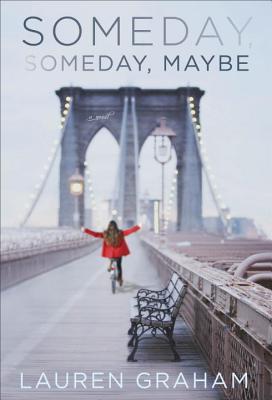
Someday, Someday Maybe
by Lauren Graham

Life is often heavy. Literature is often heavy. Sometimes I just want a little light entertainment, and Lauren Graham’s debut novel, Someday, Someday Maybe sounded like just what the doctor ordered. Now there’s no reason to believe that a gifted comic actress would be a particularly gifted comic novelist. Actually, my expectations might lean slightly in the opposite direction. So let me be the first to proclaim what a fun, funny, clever, and refreshing debut this is. It was absolutely everything I wanted and more than I expected.

Someday, Someday Maybe is the story of aspiring actress Franny Banks. She’d given herself three years to make it in New York, and as the novel opens in 1995, her deadline is fast approaching. Currently, she’s waiting tables, not for Godot. The novel details Franny’s travails personally and professionally as her deadline looms. There’s no real need to describe the plot further.

It seems reasonable to assume that there’s at least a smidge of autobiography in the mix. It can’t be a coincidence that Lauren Graham’s first professional listings on IMDB showed up right around 1995. She’s writing about a time, a place, and a world that she knows. The details ring true. And she does an excellent job of articulating the work of an actor. It’s quite interesting being inside Franny’s head, hearing her thought process, as she taps into the emotions she needs to convey. It’s easy to empathize with the likeable Franny and to root for her to succeed.

One of the greatest pleasures of the novel is the humor. Both actors and the industry are satirized. Additionally, there is rich observational humor. In discussing a neighbor, Graham writes:
“We worry about Frank in the way New Yorkers worry about strangers whose apartments they can see into. Which is to say, we made up a name for him and have theories about his life, and we’d call 911 if we saw something frightening happen while spying on him, but if I ran into him on the subway, I’d look the other way.”
Aside from her career, Franny is a twenty-something woman navigating the rocky shoals of romance. There’s a light chick-lit feel to the novel, and the romantic subplot was truly delightful. Graham has meta-fictional fun with romance tropes:
“I mean, the whole ‘love triangle’ THING bothers me. Who even thought of that? I’ve never been in a love triangle. Especially one where the girl is torn between the obviously right guy played by the more famous actor and the obviously hideously wrong guy played by the slightly less famous actor. And also, why does the heroine always have a sassy best friend? And why is she always a brunette?”
This is not literary fiction. Graham is writing in the voice of her first-person narrator. Yes, there are a
fair number of run on sentences and sentence fragments, but she brings Franny’s voice to life. I could hear her, and she didn’t actually sound very much like Lorelei Gilmore at all. Franny is a new creation. The novel’s prose is very readable, and occasionally it’s more than that. Also, Franny’s tale moves swiftly. It’s a story you’ll read in no time, and the odds are good you’ll be left wishing for a few chapters more.

Graham’s characters are appealing. You want these young people to find their happy ending—whatever that happens to be. The novel comes to a very satisfying conclusion, and I enjoyed my time in Franny’s company enough that I wouldn’t mind at all visiting with her in the future. Given her creator’s success, I’m going to gamble that things turn out alright for her. As for Lauren Graham, I can only hope those long hours on set translate to further forays into fiction. This was an auspicious and entertaining debut. I’m waiting for a sequel.

Friday, April 26, 2013

Helene Wecker says: "I'm a giant nerd."


Okay, I'm just going to make this Helene Wecker Week on the blog, because I can't seem to stop talking about her wonderful debut novel, The Golem and the Jinni.  I have already bullied stiff-armed coerced encouraged several friends to read this novel, and they've loved it as much as I have.  Really stunning debut novels are rare.  When you uncover one, the news must be shared.  Am I right?

Helene and I have been chatting casually via Twitter for months now.  It's just a coincidence that she,
This photo was too cute not to steal from Linus's Blanket!
too, lives in the Bay Area.  (Good God, we have some serious literary talent in this part of the country!)  We'd never met until last night.  I was so delighted to be able to attend her official book launch party held--where else?--at the Booksmith on Haight Street.  (For those who are keeping score, it was my third visit to the shop in a week.)

And I am equally pleased to be able to share footage of this event with folks who aren't able to catch Helene on tour.  This was her first bookstore event ever, and she performed like a seasoned pro.  In the very first clip above, she makes a few introductory remarks and also sets up the first selection that she will read.  That takes up the first seven and a half minutes.  After that, she reads the passage that introduces her golem.  In this second clip, she introduces her jinni:


These next two video clips below are the Q & A session.  Helene discusses both pop-culture and literary influnces, the research process, language barriers, and (in response to me) why golems are cool and vampires are not.  In part two, she discusses the industry of turn of the century New York, audiobiographic influences, what she'll be working on next, and overseas publication.  Look for a really amusing response to a reader's interpretation of an element of the book.

Enjoy the book, enjoy the video, and spread the word!


Friday, April 19, 2013

Creatures of earth and fire connect in a dazzling debut

The Golem and the Jinni
by Helene Wecker

There is a certain satisfaction in coming to the end of a long novel, but as the pages dwindled on Helen Wecker’s The Golem and the Jinni, all I felt was grief that this magical story had to end. After 500 pages, I wanted it to go on and on. And if you stop reading this review right now, that’s all you really need to know.

You will be shocked to hear that the novel is, in fact, about a golem and a jinni. For those who are unaware, a golem is a figure of Jewish myth, an automaton made of earth or clay, brought to life to do the bidding of another. A jinni (or genie) is a figure of Arab myth, a magical creature of fire. So, before we even get into plot details, look at that fascinating set-up! Jewish/Arab. Earth/fire. Just hearing the premise, I anticipated some sort of culture clash to be central to the tale. And while the story does primarily unfold amongst the Jewish and Syrian immigrant populations of late 19th century New York, it is not a parable of Mid-East conflict. This was merely the first of many instances when Ms. Wecker defied expectation and convention, keeping me guessing in what direction her tale would evolve again and again.

Talk about defying convention—the titular golem is a woman, and self-aware. She was originally created (with a laundry list of attributes that included intelligence, curiosity, and propriety) to be a rich merchant’s wife. He, alas, died en route to America, shortly after bringing her to life. She arrived at Ellis Island without a master or a plan. The jinni, on the other hand, was freed from imprisonment in a flask—but don’t expect him to start granting wishes any time soon.

This is the story of two creatures in turn of the century New York who are both Old Worldly and
otherworldly. Separately, they must find their way in circumstances that neither is prepared for, all the while concealing their essential natures. As the golem says to the jinni, “We’re our natures, you and I.” Because, yes, eventually their paths do cross and it’s the start of a most unexpected friendship.

Can I tell you? This wonderful, literary fantasy left me wanting to slap the next writer who sits down in front of a keyboard and starts typing about a vampire. Ms. Wecker has created a story unlike anything I’ve ever seen. Her central characters, while not human, share a deep humanity (for better or worse) and are beautifully drawn. Other characters, which at first seem peripheral to the tale, prove to be central, as Wecker’s story expands encompassing a larger community. And at all times the relationships depicted between men, women, creatures, adults, children, friends, lovers, and enemies were complex, unpredictable, and captivating. The novel’s prose is as rich as the period setting is evocative. And while I really haven’t gone into any detail, please know that the plotting is both elegant and assured.

Of course, there is culture clash in this novel, and conflict galore. But in every instance that her tale could be ordinary, Ms. Wecker makes it extraordinary. The lush cultures, heritage, and history depicted so beautifully are merely the jumping off point for a dazzlingly inventive fantasy. Where did this writer come from, and how is it possible that this accomplished work is her debut? It is sure to be one of the literary highlights of the year!

NOTE: This book will be released next Tuesday, April 23, 2013.


Wednesday, April 17, 2013

Kristopher Jansma says, "It's not really as pretentious as you think it would be."


I was introduced to Kristopher Jansma--literally and figuratively--at the Northern California Independent Booksellers' Association Trade Show back in October.  He was one of a handful of authors who spoke at a lunch I was fortunate to attend.  I also had a chance to speak to Kris briefly on that day.  I was mildly offended by his youth and talent, but otherwise he seemed pleasant enough. 

As as I wrote in my rave review, I knew as soon as I heard the description that I was going to love his
debut novel, The Unchangeable Spots of Leopards.  And, of course, I did.  So, naturally when I saw that Kris was coming to the Bay Area on his book tour, I jumped at the opportunity to hear him speak again.  Honestly, I don't remember a word he said last fall, but even if I did, I don't think it would have meant much.  The Unspeakable Spots of Leopards is the type of complex, sophisticated novel where you want to hear what the author has to say after reading the novel.  Everything will have greater resonance and meaning then.

And I'm here to help you out with that.  I was lucky enough to be able to record his event at the renowned independent bookstore, Book Passage.  The short video clip at the top of the page is Kris's opening remarks.  After that brief introduction, he read for nearly 25 minutes.  That reading is captured on the two videos below.


Now, this is the part that I like best, the Q & A session. Kris discusses his characters, influences, process, his next project, research, the book's reception, favorite authors, teaching, and much more.

Now, it's hard to find the right place to end each video segment. As soon as I determine that a recording is getting too long and the author is going to keep answering questions, I end one clip and start another. Invariably, that's the exact moment he takes the last question! And so, for the completists out there, that's exactly what the final little snippet below is.

The Unchangeable Spots of Leopards is a phenomenal debut. Expect to see it on all kinds of year-end best-of lists, including my own. I encourage you to beat the end-of-the-year rush and grab a copy now.  Enjoy! 


Monday, October 22, 2012

VIDEO: Meet Scott Hutchins. (Or, This is what it takes to get me to read a book.)


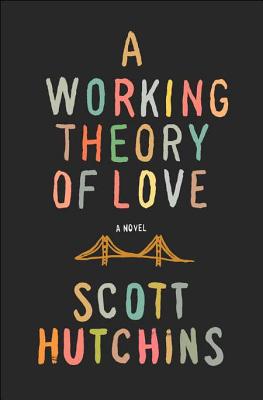
Scott Hutchins and his debut novel, A Working Theory of Love, first came to my attention last June at BEA, or BookExpo America, a huge publishing trade show. The novel had a lot of what industry insiders call "buzz." People were interested. Reviews were positive. I grabbed a galley.

I didn't read it, of course. I mean, it wasn't even scheduled to be published until October, and I had way more books I had to read between now and this novel's pub date. But I did look at the book. I liked the title, and was that...? Yes, it's a highly-stylized representation of the Golden Gate Bridge on the cover. Hmmm, both author and story are local. Bonus points.

I still didn't read the book. I was waiting for Penguin to come through with an electronic galley so that I could read it on my Kindle. (Paper is so five years ago.) Those weasels at Penguin never did cough up that e-galley. And so, I attended Scott Hutchins' local launch party at The Booksmith on Haight Street without having read the novel.

And this is how it happens sometimes with me: an unknown author impresses me at a reading. Such was the case with Scott Hutchins--at his first ever event for his debut novel--and so now, at long last, I am reading the book. (And, so far, it is excellent.)

Scott got me off to a good start with the reading recorded here. In the video at the top of this page, after a few opening remarks, he begins reading from the beginning of the book. That reading continues through video 5 of 7 below. I was surprised, later, when reviewing this footage, that he had read for almost half an hour, somewhat on the long side for this sort of thing. It didn't feel that long at all in the store. He really held the audience rapt. It's a strong opening, and he read it well.

The last two video segments on this page constitute a brief Q & A session, also worth watching. Mr. Hutchins teaches at Stanford, and he handles himself well in front of an audience. ( BTW, sorry about the brief shakiness in the first video; it passes fairly quickly d a workable shooting angle.  This is actually better footage than what is usually seen on this blog, LOL. )

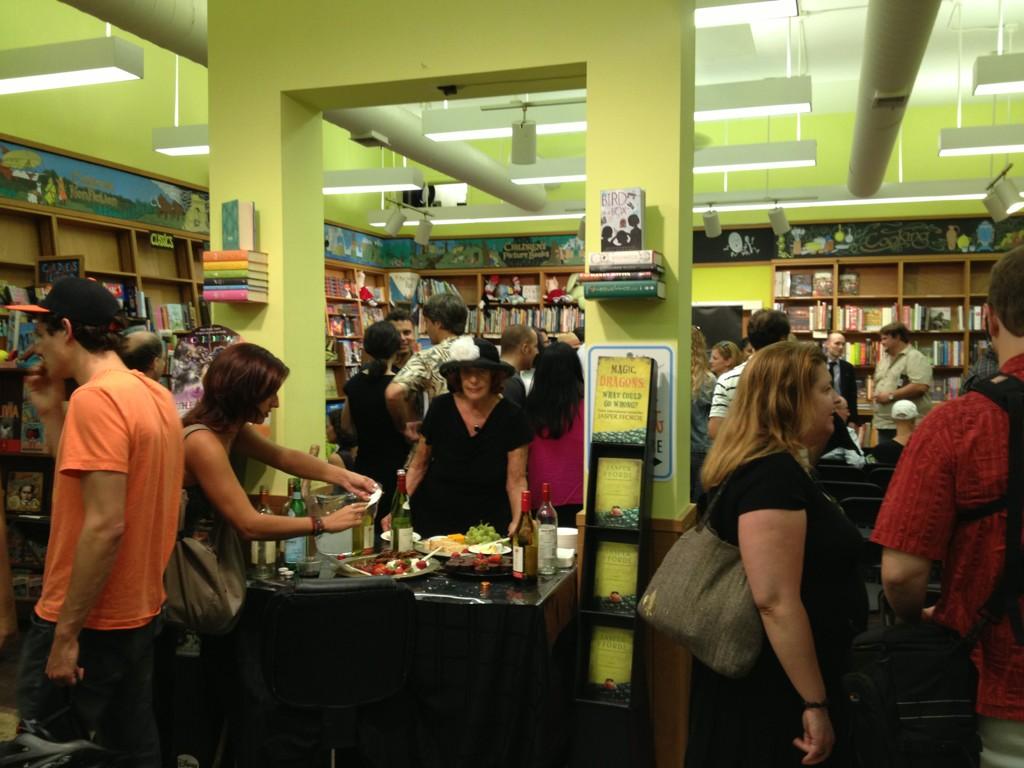
The crowd at the Booksmith launch party.
So, I mentioned above that this was a launch party hosted by The Booksmith. Those guys are awesome, and they unfailingly throw a lovely event. And one of the nicest things about the San Francisco literary community is that they come out for each other. I can't tell you how many times I've encountered Bay Area literary luminaries at an event celebrating a far less well-known writer. Case in point, who did I run into that night? Adam Johnson, author of one of my favorite novels this year, The Orphan Master's Son.

As it happens, I'd had a really nice interaction with Johnson in that very same bookstore last January on the night of his launch. I'd similarly blogged and posted video, after which Mr. Johnson, a truly lovely man, had sent me a note of thanks via snail mail. Who does that? To say I was charmed is an understatement. So, when I saw him at this event, I approached to reintroduce myself and thank him for his note. The reintroduction was unnecessary. Mr. Johnson remembered exactly who I was and introduced me to his companions with such flattering words that I blushed. Seriously, what a genuinely nice man he is! (That's not a compelling reason to read his novel, but after reading close to 200 novels in 2013, I can tell you without hesitation that The Orphan Master's Son will be on my Top 10 List at the end of the year. Niceness has nothing to do with it.)

But, speaking of lovely interactions, I did speak with Scott Hutchins at the event as well. I explained the reason I'd had a video camera in his face the whole evening was that I was a book blogger. He, too, inexplicably seemed to know my name and blog. (I assure you this is unusual.) I'd forgotten to bring my galley to the event, but seeing as we are both local, I told Scott that I'd undoubtedly "see him around town."

I received a very nice and unexpected follow-up email from Scott a few days later, so he really must known my name, because I never gave him my contact info. And it turns out that I was quite right, as I ran into him twice the week following this event. I was worried he'd think I was a stalker, but it was a major lit week in San Francisco, with both the Litquake Festival and the Northern California Independent Booksellers' Association Trade Show going on. I'm exhausted again just thinking about it.

Anyway, it turns out that Scott Hutchins is as pleasant as he is talented. In our interactions, he always seemed very authentic, and not at all like a schmoozing author on tour. I did eventually get a copy of A Working Theory of Love signed, and I am very much looking forward to finishing the novel and hopefully reviewing it in the not too distant future. For now, I'm happy to be able to share this event that finally introduced me to Scott Hutchins.

 
Oh, and one more thing... If you're inspired to read the novel as I was, I totally know where you can get a signed first edition. That's right, from the awesome folks at The Booksmith. They have amazing customer service and can ship anywhere. I'm just sayin', support your local indies!


Thursday, January 5, 2012

Now, this is a Winter I can get on board with!

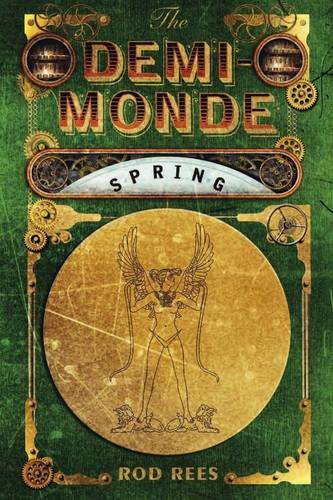
The Demi-Monde: Winter
by Rod Rees

I started reading this novel on Christmas Day, and what a gift to me!  I enjoyed it way more than expected—to the point that I could barely drag myself away to celebrate with friends.  Why the limited expectations?  Well, I was unfamiliar with the author, but even more I was wary of a science fictiony-sounding premise.  The novel does indeed intersect the genres of science fiction, fantasy, and thriller, making it a bit difficult to pigeonhole, but it all comes together terrifically.

Unfortunately, if you try to summarize the plot to anyone, you’ll sound like a lunatic.  Early in the novel, a character explains the basic set-up to Ella Thomas, the novel’s protagonist:
“Asymmetric Warfare is the U.S. military’s name for all those messy little conflicts that our country keeps finding itself fighting in hellish places like Afghanistan, Iraq and Pakistan.  They are wars without rules and without honor and, to be blunt, they are wars the U.S. Army isn’t particularly good at fighting.  When the U.S. military began to study its performance in Asymmetric Warfare Environments it discovered that its soldiers, especially its officers, weren’t effective because they had no appreciation of or understanding of what sort of war they would be fighting.  So in order to prepare them better, the U.S. Army InDoctrination and Training Command came up with the idea of creating a computer simulation that would let our combat personnel experience what was waiting for them in Peshawar and desperate places like it…  The Demi-Monde is the most sophisticated, the most complex and the most terrifying computer simulation ever devised.  It’s a simulation that recreates the visceral anxiety and fear of being in an… Asymmetric Warfare Environment.  To play the Demi-Monde you have to be hardwired into it and the hardwiring creates a full sensory bypass: you believe you are in the Demi-Monde.”
Oh, and one other little detail…  If you die in the Demi-Monde, you die in real life.  Ella has been recruited for a rescue mission.  She possesses unique skills and qualifications—and is desperate enough to risk her life—in order to save the daughter of the President of the United States, who has somehow been lost in the Demi-Monde.

Okay, that is not the premise of what I typically read, but this book grabbed me almost immediately.  Without being “literary” in any way, the novel is very well written.  Rees isn’t merely setting his novel, he is world-building.  And doing so very, very effectively.  (In addition to the descriptions within the novel, I was fascinated by the maps scattered throughout.)  Elements of the Demi-Monde are based on Nazi Germany, but the world that Rees has created is so much richer and more complex than just that.  The novel is both political and philosophical, and Rees plays around a lot with language.  In fact, at the back of the book there’s a complete glossary of words like UnFunDaMentalism, HerEticalism, HimPerialism, ill-ucination, and the like.  At first, I thought the author was just having fun and being clever, but soon enough the use of language became highly Orwellian.  After all, it was Orwell who said, “But if thought corrupts language, language can also corrupt thought.”  It’s all so entertaining and so smart.

And we haven’t even discussed the characters yet.  Ella is terrific character to build the novel around, but is actually one of several major characters.  The bulk of this novel takes place in the virtual reality of the Demi-Monde, which is peopled with 30 million “dupes,” basically artificial intelligences.  And they are so convincingly rendered that the reader experiences the same cognitive dissonance that Ella does in distinguishing exactly who and what is real.  The relationships depicted encompass the entire spectrum from love to hate and everything in between.  Race, religion, nationality, and yes, reality, all cause conflict with countless lives on the line.  But do dupe lives even matter?

You’ve probably gathered by now that this is a complicated 500+ page novel, and it is only the first of a quadrilogy.  There is a story arc in this first novel, but there really is no resolution.  It ends on multiple cliff-hangers.  This is the sort of thing I generally hate, but I was so caught up in this fast-moving epic that really I’m just looking forward to the next installment and pleased that there will be three more volumes to look forward to.  Hooray for trying something a bit outside my comfort zone!  What a great find!  My New Year’s resolution: resist ordering a copy of the sequel from England.  It’s going to be hard.

NOTE:  Click on the link attached to the author's name above to visit the very cool Demi-Monde website!

Monday, November 7, 2011

Get out the vote! Tomorrow is Election Day!

Tension City: Inside the Presidential Debates, from Kennedy-Nixon to Obama-McCain
by Jim Lehrer

40-Some years of water cooler moments

While as a Washingtonian I have always considered myself a political person, this is not a subject I have ever chosen to read about in books.  It was hearing Jim Lehrer speak about Tension City at a conference, I think, that got me to pick it up.  That, and the unintimidating page count.  Still, I’m almost surprised by how much I enjoyed the book. 

One of the things that worked for me is how personal the subject matter is to journalist Lehrer.  This isn’t just a book about famous moments (and their aftermaths) in the last 40-some years of political debates; it’s about Lehrer’s personal experiences as moderator of 11 presidential or vice-presidential debates since 1988.  To that extent, Tension City has elements of memoir, and a strong undercurrent of journalism within the subject matter.  Lehrer reflects on the highs and lows of his performances and those of his colleagues over the years.  I now have a far greater appreciation of the role of a debate moderator, and doubt I will watch future presidential debates with the same eyes.

Still, it’s the politics and history that were most riveting, because these debates did change history.  Had he answered one question differently, might Michael Dukakis have had a shot at the White House?  We can never know, but there is room for speculation.  I so clearly remember so many of the moments that Lehrer singles out over the past several decades.  They were the water cooler moments that the entire nation was talking about the next day.  But here we have the added perspective of time as we look at these famous exchanges.  Plus, Lehrer has the prestige and the relationships to get the major players to speak frankly about events of the past.  So, for example, Lloyd Bentsen and Dan Quayle share recollections of “Senator, you’re no Jack Kennedy.” 

This is the history of my lifetime.  I was fascinated.  Tension City is a brief book, and many serious political and history junkies will be looking for something more in-depth.  For them, this book might work as a light companion volume.  But for this reader, Mr. Lehrer’s book was the perfect introduction to uncharted literary territory.

Friday, September 2, 2011

Never trust a monk—or a publisher

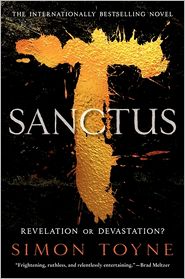
Sanctus
by Simon Toyne

Once upon a time, I used to describe myself as, “the person who read Dan Brown before The Da Vinci Code.” Subsequent to the unprecedented success of that novel and its many, many “Da Vinci clones,” I’ve been completely burned out on religious thrillers. Until now. Kudos to Simon Toyne on a highly entertaining debut novel, and for writing a religious thriller that didn’t feel like the same old thing.

Most of Sanctus’s action takes place in and around the historic Citadel in Ruin, Turkey. I’m mildly amused to see that I’m not the only reader tricked into thoroughly Googling this fictional landmark in this fictional town. Props to Toyne for making his setting seem real enough that I asked myself, “Why don’t I know about this place?”

In Toyne’s reality, this Turkish Citadel on a mountain is perhaps the longest continuously inhabited place on earth. A sect of secretive monks has lived there since before the birth of Christ, studying, praying, and guarding their “Sacrament.” The exact nature of that sacrament may be the most closely guarded secret on the planet. Only a handful of the hundreds of monks know the truth, and apparently some of the initiates to the inner circle can’t handle the truth.

In the novel’s opening pages, Brother Samuel is locked in a room after his traumatizing initiation. He knows they intend to kill him. Rather than die passively with the secret, he attempts a daring escape—climbing out the window and up an unscaleable mountain. Once he reaches the summit, Brother Samuel attracts worldwide attention when he plummets 1,000 feet to the ground on live television. His actions are as incomprehensible to watchers as they are tragic.

Back in the States, we have previously met newspaper reporter Liv Adamsen. She is mourning the absence of someone close to her. After 8 years, he has been declared legally dead. The connection between these two people was not immediately apparent to me, but when it is finally made clear, it is pretty darn cool. Other major and secondary characters are introduced along the way. Make no mistake, this is a book about plot, not character, but Toyne does such a good job cloaking his characters in hints of intriguing back stories that I continually wished to know more.

Given that this is a 500-page tale of a centuries-old struggle, Toyne does an exceptionally good job of containing the sprawl. The cast is made up of a manageable number of people. Toyne has plotted very cleverly. Everything and everyone is there for a reason. He does not indulge in the superfluous. And he keeps the story moving swiftly with short chapters, lots of white space on pages, and revelations at regular intervals. Rather than dwell on dreary theological issues, Toyne’s tale is all about the action. He’s written some very bloodthirsty monks and the body count is high. Will anyone make it to the end of the novel?

By the time the Sacrament is finally revealed, you’ve been given enough clues to have figured it out on your own. I did not realize before starting this book that it is the first volume in yet another trilogy. (And, I swear to God, publishers, you have to start warning unsuspecting readers about this before they invest their time in an unfinished story.) While the novel does come to a reasonably satisfactory ending of this arc of the story, it is clear that there is much more that remains to be told. I feel a bit torn about this. Clearly I enjoyed this novel. But I’m tempted to quit now and cut my losses. I don’t feel that I absolutely must go on, and I’m somewhat grateful for that. I guess I’ll read the description of the next novel and decide then if it’s of interest.

Tuesday, April 5, 2011

Another win for Marcia Clark

Guilt by Association
by Marcia Clark

After having previously written about her life and role as chief prosecutor on the O.J. Simpson trial, former Assistant District Attorney Marcia Clark has turned her hand to fiction. And multiple starred reviews in the publishing trades attest that she hasn’t done a half-bad job of it.

After a brief prologue, Guilt by Association opens with colleagues toasting a legal victory at the end of the workday. The victor is ADA Rachel Knight, who was just handed a guilty verdict in record time. The wins are why she and her colleagues put in the long hours, and no one is a bigger workaholic than Rachel, except perhaps for Jake. When Jake and Toni head out for the night, Rachel promises she’ll follow just as soon as she gets a little more work done... And, after all, home is only a six-block walk from the office. Once outside she hears sirens and quickly comes across an unfolding crime scene—a homicide by the looks of it. She’s waiting around out of professional curiosity when a ranking cop tries to send her packing. Rachel is confounded and annoyed—until she sees the face of one of the two victims. It’s Jake; hard-working, nice guy Jake.

The next morning, the news gets worse. The crime appears to be a murder-suicide. Jake was in a sleazy motel room with a 17-year-old boy, who he appears to have shot before then shooting himself. There was a naked photo of the kid in his pocket. Hung-over and still in shock, Rachel doesn’t believe it. The facts are damning, and even though no one really knew about his personal life, she just knows Jake can’t have done what they’re saying. Unfortunately, she’s warned off Jake’s case in no uncertain terms. Rather, she’s asked to take over one of the cases that Jake had been working on, that of the rape of affluent 15-year-old Susan Densmore. Rachel, with the help of her detective friend Bailey and a host of other allies, launches herself into both cases, constantly fearing she’s about to be fired for insubordination. “I took another sip of my drink and pondered what I could do on my own. Being a prosecutor, I was not, as they say, without resources.” True that.

It’s a strong debut, no doubt. Right from the opening, you just can’t help thinking as you read, “Wow, this woman really knows what she’s writing about!” So much of the novel has the ring of verisimilitude. It may be the greatest strength. Even so, this novel really wasn’t what I was expecting. It’s been described as a legal thriller, but truthfully, it was far more a police procedural. There wasn’t a single scene in a courtroom. Rather, Rachel was frequently out in the field, partnering Bailey, gun literally in hand, as they investigated the cases. She’s not a lawyer content to sit behind a desk while the cops do their job, and I have to wonder how realistic the depiction is. It’s not that it was unbelievable, but it was surprising. Either way, it’s fiction, and I was willing to go along for the ride.

Rachel Knight is a strong, likable protagonist. Ms. Clark has imbued her with enough idiosyncratic detail that she, too, has the ring of verisimilitude. For instance, Rachel’s obsessed with every calorie she puts in her mouth, unless it’s in an alcoholic beverage or eaten off someone else’s plate. While this is a stand alone novel, it’s easy to image that Rachel and the various supporting characters may be back in future novels. If so, Guilt by Association serves as a good introduction. The novel is not perfect. There were times when Clark told instead of showing. Another time Rachel took an unbelievably stupid risk. And the plot did suffer one big fictional cliché, but I can’t mention it without spoilers. Still, those are relatively minor complaints.

Clark keeps things moving along briskly, and while the pace never lags, about midway through things really pick up and stay up straight through the novel’s end. It’s a nice, tight, coherent plot with plenty of surprises and a satisfying conclusion. Looks like you’ve racked up another win, Ms. Clark.

Wednesday, March 2, 2011

An unpleasant discovery awaited me…

A Discovery of Witches
by Deborah Harkness

The Montagues and the Capulets. The Jets and the Sharks. The witches and the vampires? Yes, it’s Romeo and Juliet all over again in Deborah Harkness’s lukewarm debut.

Harkness has invented a world with four types of humanoid “creatures.” As the main character states, “Witches aren’t the only creatures sharing the world with humans, however. There are also daemons—creative, artistic creatures who walk a tightrope between madness and genius. ‘Rock stars and serial killers’ was how my aunt described these strange, perplexing beings. And there are vampires, ancient and beautiful, who feed on blood and will charm you utterly if they don’t kill you first.” These more exotic creatures live amongst us, and mostly they just skate through life trying not to attract attention. In fact, other than painfully repetitious admonitions to not attract their attention, the humans really aren’t a part of this tale at all.

Witches, it seems, have a natural affinity for the humanities, whereas vampires are drawn to math and science. Our two protagonists are true to their natures. Our Juliet stand-in is Dr. Diana Bishop, scion of one of the most powerful and respected witch families. She’s a tenured Yale professor, a historian of science and alchemy, spending a year at Oxford. She is also a witch who has made a nearly life-long practice of stifling her magic, although she cheats on very rare occasions when convenience trumps long habit.

It is a witnessed act of illicit magic that provides the required meet-cute for our star-crossed lovers. Our Romeo is Dr. Matthew Clairmont: tall, dark, handsome, vampire, scientist. (Not to mix my literary metaphors, but he is a veritable Mr. Darcy of a vampire, and when the film is made I insist that Colin Firth is cast.) Matthew, along with a host of other creatures, has his eyes glued to Diana Bishop because she has managed to do what no one has done for hundreds of years. Without realizing the significance, she has called up a most powerfully enchanted and widely desired manuscript, which she just as blithely returns to the library’s stacks. Now there’s all kinds of interest in both the manuscript and Diana, and there is danger in the air—though that may be due to the constant proximity of this vampire.

One thing Harkness does get right in the first half of the novel is an intriguing mood of fear and eroticism. I found it compelling, and it kept me turning the pages. And turning the pages. And turning the pages. After a while, this book began to seem interminable. At one point near the end, Matthew says to Diana, “At first I was sure this was about the manuscript. Then I supposed it was all about you. Now I’ll be damned if I can figure what it’s about.”

Um, Matthew, let me help you out. It’s about race relations and a plea for tolerance. It’s about alternate lifestyles and marriage equality and a plea for acceptance. These are issues about which I care deeply, yet I still found Harkness’s message unsubtle and banal. Her use of language is quotidian at best. Her romance fizzles somewhere along the way. Once our lovers get together they’re far less interesting. I find her magical landscape to be utterly lacking in… magic.

Still, the novel was plodding it way towards a three-star review. I’m a generous rater, and there were aspects of the story that interested me, such as the dynamics of Matthew’s vampire family. As the stakes of the novel grew and headed towards an inevitable confrontation, I found myself wondering how Harkness could possibly wrap things up in the remaining pages. It never occurred to me that she wouldn’t.

That’s right, folks. I dragged my little eyes through 600 pointlessly drawn out pages only to discover that this book has absolutely no resolution! It ends on a cliff-hanger! I struggled through this mess to get to an end that never came. And THAT is unforgivable. God knows how many volumes Ms. Harkness has planned, but I doubt I’ll give her any more of my precious reading time.

Monday, January 10, 2011

Let the readers find their way

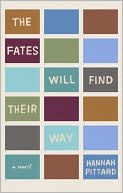
The Fates Will Find Their Way
by Hannah Pittard

How often, in this day and age, does an author find a completely original way to tell a story? Avid reader that I am, I’ll tell you: Not very often. And how often, after reading a novel in a single sitting, do write an immediate review? Not very often. And how often does a debut novel—any novel—affect me this powerfully? Not very often.

This is my immediate reaction to The Fates Will Find Their Way by Hannah Pittard. It is, and is not, the story of the disappearance of sixteen-year-old Nora Lindell. More accurately, it is the story of the vacuum left in Nora’s wake, and of how that vacuum is filled. The tale is told in reflection by the men who were the neighborhood boys that Nora left behind, and it is told entirely in the first person plural. If you’re wondering how that sounds, it sounds like this:

“It seemed we had all finally stopped looking for her, asking about her. It was a sickness, a leftover from a youth too long protracted. Of course we still thought about her. Late at night, lying awake, especially in early autumn, when we could fall asleep for a few weeks with the bedroom windows open, the curtains pulled halfway, a breeze coming in and the occasional stray dry leaf, we still allowed ourselves the vague and unfair comparisons between what our wives were and what she might have been. At least we were able to acknowledge the futility of the fantasies, even if we still couldn’t control them.”
This novel is a collection of those boys’ fantasies, the fleshed out conjectures based upon shreds of evidence presented by impeachable sources. And, in the sharing of these speculative outcomes for Nora Lindell, we learn the true outcomes of the close-knit group that she left behind—from the immediate aftermath of her disappearance, through the decades that follow. And we see how Nora’s absence shaped each of their lives.

Nora’s friends are a true community, kids who grew up together and stayed local. They have a shared history. And time has transmuted Nora Lindell’s fate from mystery to mythology. Their tale is told in a collective voice, and yet, individuals stand out. Paul Epstein, Jack Boyd, Winston Rutherford, Chuck Goodhue, Stu Zblowski, Drew Price, Marty Metcalfe, Trey Stephens, and Danny Hatchet all have their own stories that unfold along with their theories of what happened to Nora.

Even with the unusual voice, I found this book fully emotionally engaging. Reading it, I couldn’t help but reflect on my own past, my relationships, stories I’ve heard, and so forth. This novel is plot-driven, literary, experimental, spare, and absolutely beautiful. One week into the new year, I’m confident that I’ve just read one of the top books of 2011.

Thursday, October 28, 2010

"Something happened to little girls that grew up watching their mothers being hit... It was a peculiar law of attraction."

Law of Attraction: A Novel
by Allison Leotta

Until reading Allison Leotta's novel, Law of Attraction, I'd forgotten just how much I enjoy legal thrillers. This debut is a pleasure from start to finish. The central character is Anna Curtis, a freshly-minted Assistant U. S. Attorney. Anna prosecutes misdemeanor domestic violence cases, and as the novel opens we witness the Laprea Johnson case from the first intake. Anna's opposing counsel for the trial is an old law school pal, Nick Wagner. Despite a strong attraction, Anna knows that she can't get involved with a public defender--and certainly not one she's up against! But after the unsatisfactory conclusion of the Johnson case, Anna and Nick's relationship changes. And it changes once more when they find themselves on opposing sides of the Johnson case for a second time.

While it is no doubt annoying for a novelist to be compared to her fictional creation, it is clear that Allison and Anna share more than a hair color. Allison Leotta also graduated Harvard Law and became an AUSA in Washington, DC. Her intimate familiarity with Anna's world really shows. She is unquestionably strongest when writing from Anna's POV, and somewhat weaker when channeling her inner city characters. At one point one of them claims, "All due respect, Ms. Curtis, but you don't know my life." `Nuff said. Still, Leotta manages to create some interesting and layered characters.

For a novice novelist, she does an excellent job with exposition, and really explains the ins and outs of what prosecutors are up against. The prose and dialogue are strong as well. It's not that the writing is particularly beautiful, but it isn't clunky either. It's just easy reading without being dumb. The pages fly by and there's a welcome vein of humor throughout the book to relieve the dark subject matter.

With any mystery or thriller, it's really the plot that makes or breaks the story. I basically figured the whole thing out about halfway through the novel. (I'm clever like that.) When, 50 pages later, the protagonist was thinking along the same lines as me, I realized that perhaps the novelist was more clever than I had given her credit for and had tossed a few red herrings into the mix. In the end, I did get some of it right, but there were a heck of a lot of surprises along the way. This is a fast-paced book, and if somehow the mystery doesn't keep you completely riveted, there's a good chance the romantic aspect will. Things get a bit steamy.

While Law of Attraction isn't going to win any literary awards, it was a terrifically entertaining debut and was more than enough to satisfy me. This is an author to watch. I'm looking forward to seeing what she comes up with next!

And out of the Darkwood Mr. Toppit comes...

Mr. Toppit
by Charles Elton

When a reader decides to give a debut novel a try, all they have to base the decision on, really, is the book's description. That's what grabbed my interest in Mr. Toppit, Charles Elton's debut, and I was not disappointed. It's not a work of literary fiction that's going to set the world on fire, but is some pretty good story-telling.

The novel revolves primarily around two characters with a most unusual bond. The first is overweight, middle-aged Laurie Clow of Modesto, CA. It didn't take me long to see there was something a little... off about Laurie, a sort of desperation, almost. But even now it's hard to articulate exactly what it is about her. It's 1981, and Laurie is vacationing in England. She witnesses a terrible accident; a stranger is hit by a truck. She rushes to the scene and tries to comfort this man, Arthur Hayman, as he lay dying.

Later, at the hospital, Laurie somehow becomes attached to Arthur's grieving family: his wife, Martha; 17-year-old daughter, Rachel; and 13-year-old son, Luke. It is while visiting the family's home that Laurie learns Arthur was the author of five not especially successful children's novels called The Hayseed Chronicles. The protagonist of the series is Luke Hayseed, a character based on his son, and it is Luke Hayman who is the other central character of the tale.

The first half of the book relates how Laurie comes into the Hayman's dysfunctional lives, and how she is somehow transformed by her experience with Arthur. She's a bit obsessed by him, his family, and certainly by the books he wrote. As a character, I found her to be bizarre, and yet still entirely believable. There are a lot of odd people in the world, and by and large they're fascinating to watch.

Roughly the second half of the novel takes place five years later in LA. Laurie, almost single-handedly, has turned The Hayseed Chronicles into a world-wide phenomenon. Imagine that Harry Potter was identifiably based on a real kid. That's what Luke Hayman has been contending with. During a summer visit, we get to see the myriad ways his and Laurie's lives and relationships have changed. Throughout the novel, Elton manages to insert small mysteries and questions in a not too heavy-handed way, but gradually revelations do come about.

Not everything in this novel is a slam dunk. I wasn't sure that all the changes of perspective and POV were necessary or elegantly handled. Perhaps not every narrative thread paid off in the end, but I kind of enjoyed the diversions along the way. And there was so much to like. Amidst the darkness and drama, there is a lot of excellent satire going on. At times I was almost laughing aloud. And I found Luke to be sympathetic in a way that Laurie was not, and I cared about him and those he loved.

You may be wondering who the eponymous Mr. Toppit is. He's the mostly unseen villain of the Hayseed Chronicles. The events of all five books revolve around him, but he doesn't make a true appearance until the last line of the last book. As I read Mr. Elton's story, I wondered if Mr. Toppit would make a last minute appearance. It's not that simple. The final pages of the book cover several years, from the late 80's to the mid 90's. Did Mr. Toppit make an appearance? Maybe...

Tuesday, July 27, 2010

Meet Stella Hardesty...

A Bad Day for Sorry: A Crime Novel
by Sophie Littlefield

She's the 50-year-old the proprietress of Prosper, Missouri's only sewing machine and repair shop. Oh, and she's a card-carrying badass. Just ask anyone. This wasn't always the case. For nearly three decades, Stella was trapped in a physically and emotionally abusive marriage. Until the day she stopped it. Permanently. With a wrench. In her own words, that's "the day when she finally had enough of Ollie's abuse and made the transformation from passive victim to hell-for-leather avenger."

Because Stella wasn't content to help only herself. In the two years since she was acquitted for murder, she's started a little side business. "...A little seed of an idea had begun to germinate in her mind, a growing conviction that no woman should have to put up with abuse by her husband or boyfriend, and--to Stella's surprise--that she just might have a calling to help put a stop to it. After all, she already had one notch in her belt, so to speak." Stella Hardesty is in the "justice business."

Now, I don't mean to make this warm Midwestern lady sound like Missouri's answer to Dirty Harry, but she does have quite a reputation in certain circles. Let's put it this way, it's probably best to stay on her good side. Once you're there, she's as loyal as they come. And she has a terrible time turning away anyone in need, even if it's the 13-year-old kid across the street.

Now, knowing that this novel was the first of a series built around this character, I wasn't really sure what I was expecting. Or maybe I was. I think I was expecting something a little more cartoonish. I mean, look at the character I just described. She seems a little larger than life. Here's where Sophie Littlefield's talent comes in, because the truth is that she's created a fully believable, fully realized woman in Stella Hardesty. She's not a caricature at all. We spend this novel inside her head, hear her most intimate thoughts, and empathize with her fears, desires, and trouble with cosmetics. Well, at least I did.

The plot of A Bad Day for Sorry eventually proves to be a compelling mystery. Chrissy Shaw is the damsel in distress. Her no-good husband is one of Stella's "parolees." But just when Stella thinks she's knocked some sense into the man, he goes and runs off with Chrissy's toddler. Or did he? And why take the little boy?

This isn't one of those mysteries that you'll be able to solve if you correctly decipher the clues. No, this is one of those stories that you just need to read to the end to see how it plays out. But it sure wasn't predictable. I read this book in about a day and a half. The plot kept me turning the pages, but it's the endearing characters I met along the way that made me pick up the sequel as soon as I put this one down. Let me tell you--that Stella, she grows on you. Besides, I have to see what's going to happen between her and the Sheriff...

Friday, June 25, 2010

There's a sucker born every minute...

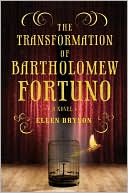
The Transformation of Bartholomew Fortuno: A Novel
by Ellen Bryson

Oh, those marketing guys over at Henry Holt & Co. are good! They did a great job of capturing my interest in Ellen Bryson's debut novel The Transformation of Bartholomew Fortuno (TToBF) by comparing it to two beloved books, Geek Love and Water for Elephants. And I can't even complain that the comparisons aren't apt.

Like Geek Love, TToBF is the story of... well, some "human curiosities." Bartholomew Fortuno is an employee (performer? exhibit?) in P.T. Barnum's American Museum in New York as the Civil War is winding down. He is billed as "the world's thinnest man," and he just may be. His best friend is, of course, Matina, the fat lady. Like the characters in Geek Love, Fortuno views their differences as "gifts." While TToBF does share a bit of Geek Love's darkness, that's where any similarity ends. What're missing are the black humor, the wonderful satire, the knock-out prose, and the pure weirdness of Dunn's brilliant novel.

Like Water for Elephants, TToBF is a period novel--albeit one set 70 years earlier--with a male first-person narrator. And while these performers don't work for a circus (Barnum wasn't in the biz yet) some of the trappings and much of the hokum are the same. Unfortunately, Ellen Bryson can't (yet) hold a candle to Sara Gruen as a story-teller. Any comparison only serves to highlight TToBF's inadequacies in terms of character, of pacing, and of narrative substance.

The catalyst of this tale occurs in the opening pages. Unable to sleep, Fortuno happens to be looking out the window late one night just in time to observe Barnum's unexpected return with a mysterious veiled woman. Eventually she is revealed to be a new curiosity, Iell Adams, a bearded lady. From that first glance, Fortuno's obsession with this woman grows exponentially and inexplicably, putting what had been an odd but orderly life into turmoil. There are all sorts of allegiances, agendas, and intrigues within the insular museum community that get set into motion.

Reading over what I just wrote, this still sounds like a pretty interesting book--and it wasn't terrible--but neither was it good. Let's start with Fortuno. We spend the entire novel inside his head, and the two words that come to mind to describe him are: prissy and neurotic. These are not attractive qualities, but he fits in well with his colleagues; there wasn't a single character in this book that I found to be likeable. Given that, it's awfully hard to care what happens to them. Take Fortuno's pursuit of Iell, for example. Eventually he proclaims himself to be in love. If that's love, well, yuck. Just... yuck.

There are small intrigues that propel the story, but they were thin material to keep a novel going. Given the fascinating setting, it was all surprisingly boring. The pace felt glacial, and when the "big reveals" finally came, I could not have been less surprised. "It's not terrible" is faint praise indeed. My advice is go read Water for Elephants or Geek Love. You'll be better off.
Comment Permalink

Thursday, June 17, 2010

Seems pretty close to perfection to me

The Imperfectionists
by Tom Rachman

When a novel receives the kind of high-profile rave reviews this one has, reader reaction generally goes one of two ways. You'll either be disappointed, or you'll jump on the bandwagon. Move over; make some room on the bandwagon.

As others have noted, the novel is made up of a collection of linked stories. Each story is told from the POV of an employee of "the paper," or in one case a reader. The paper is a small, second-rate international newspaper published by American expatriates in Rome. Readership is low and dropping all the time, and the publication doesn't even have a web presence! It really is an artifact of another time, though these are pressures being faced currently by more or less every newspaper in the world.

It is with the background stressors of budget cuts, limited resources, and threatened layoffs that we peek through episodic windows at the characters that make up the collage of this novel. And despite the setting and what I described above, The Imperfectionists is much more about their personal lives than their professional ones. Much of the novel is about the relationships that make up our lives: the complicated algebra of male/female relationships, the power struggles between friends, the games we play, the sacrifices we make.

All of the above make for great drama, but the book, actually, has an absolutely delightful sense of humor. Some of the chapters are uproariously funny, others are heavier. Even with the humor, however, there's a thread of melancholy that runs through the novel, adding a real poignancy.

I read a lot, but I never feel that I can find enough time to read. Every time I picked up this book, the pages just melted away. I read it in no time flat, and Tom Rachman left me wanting more. What else can I say? I'll save a spot on the bandwagon for you.