Showing posts with label Margaret Atwood. Show all posts

Monday, January 6, 2014

Top 10 Books of 2013


Happy New Year, readers!  It's a fresh year, so I'm making a resolution to get back on the blogging bandwagon.  So, what can I tell you about 2013? Well, I read 225 books in total. Yes,
that's a record. Yes, that's ridiculous.  I will be sharing the full list in my next post, for those who are curious.  I can tell you that roughly 158 of them were published in 2013, 42 of them were debut novels, 20 were re-reads, 18 were YA titles, 14 were non-fiction, 14 were trashy underwater fiction, and 9 were short story collections. But who's counting.

Again roughly, my star rankings were as follows: (1) one star, (8) two stars, (36) three stars, (92) four stars, and (87) five stars. (I'm aware that's one short. One book was not rated.)  It was a superlative reading year, obviously. Here, for the purposes of this discussion are my top ten books of the year.  The first two are tied for first place, the rest are in completely random order.  In the cases that I've written a review, I've linked it here.  Other's will hopefully appear on the blog in the weeks to come.


1. The Impossible Lives of Greta Wells - Andrew Sean Greer

1. The Golem and the Jinni - Helene Wecker

Tenth of December - George Saunders

The Interestings - Meg Wolitzer

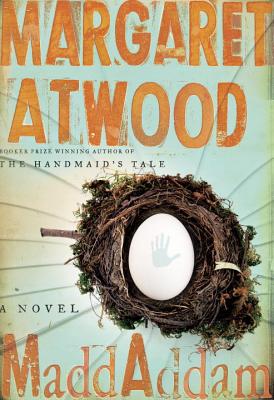
Maddaddam - Margaret Atwood

The Serpent of Venice - Christopher Moore

& Sons - David Gilbert

The People in the Trees - Hanya Yanagihara

The Circle - Dave Eggers

A Constellation of Vital Phenomena - Anthony Marra


A few additional notes... I generally try to pick books published in the year ended for my top 10
list. I made an exception for Christopher Moore's The Serpent of Venice, which will be released on April 22, 2014. It's as good as anything he's ever written. And I thought I was bad last year, with three Bay Area authors making my top 10 list. This year there are five Bay Area writers! I'm sorry, we just have some wicked talented people in this part of the world.  It's also worth noting that three of the above are debut novels.  Wow.

Winnowing a list of 225 books down to just 10 is pretty awful. I flat out loved all the books above. I loved the 10 honorable mentions below almost as much, and they might have just as easily made the top 10 list were the competition not so brutal.


The Goldfinch - Donna Tartt

The Son - Philipp Meyer

Eleanor & Park - Rainbow Rowell

The Cuckoo's Calling - Robert Galbraith

This is the Story of a Happy Marriage - Ann Patchett

A Tale for the Time Being - Ruth Ozeki

We Need New Names - NoViolet Bulawayo

The Ocean at the End of the Lane - Neil Gaiman

Night Film - Marisha Pessl

The Unchangeable Spots of Leopards - Kristopher Jansma


Tell me, readers, what were your favorite books this year?  Truly, I'd love to know!

Tuesday, September 3, 2013

“There’s the story, then there’s the real story…”

MaddAddam
by Margaret Atwood

Early on in the long-awaited conclusion to her MaddAddam trilogy, Margaret Atwood writes:
“There’s the story, then there’s the real story, then there’s the story of how the story came to be told. Then there’s what you leave out of the story. Which is part of the story too.”
And in MaddAddam, at last, Ms. Atwood gives us all of the above.

It’s been a decade since I first read Oryx & Crake, and four years since I read The Year of the Flood. I loved both books, loved the way the two intertwined and complemented each other. So, in preparation for this final volume, I started by rereading the first two novels of the trilogy. Wow, oh wow, did they hold up well! I realize that not all readers have the time or inclination to revisit books they’ve already read, but in this case it was well worth the extra effort, if only to fully appreciate the connections between the three novels. I don’t believe that a trilogy was planned when Ms. Atwood wrote Oryx & Crake, and yet it was almost as if she had salted away loose ends a decade ago as part of some subconscious, brilliant master plan. For those who aren’t inclined to follow my suit, MaddAddam helpfully opens with a four-page summary entitled, “The Story So Far.” Personally, I wouldn’t consider reading this final volume without having first read the prior two at some point.

When last we visited with the God’s Gardeners, it was the post-pandemic Year of the Flood. We’d been on a harrowing journey narrated through the eyes and voices of two Gardeners, Toby and Ren. In MaddAddam, Toby is back as narrator, and while Ren is a secondary character in the novel, I have to admit that I missed her voice. This time around, the tale is told by Toby alone until late in the novel a surprising second narrative voice emerges.

And it’s appropriate that Toby tells the tale, because it is primarily (Finally!) the story of Zeb, a man that Toby has secretly desired for years. Up until now, Zeb has been an enigmatic character, always hard to pin down. In MaddAddam, it becomes clear that Zeb’s history is inextricably linked to that of Adam One and the God’s Gardeners, as well as that of Crake and the Crakers.

But in addition to looking backward, the story of Toby, Zeb, Snowman, the God’s Gardeners, the Crakers, and the “MaddAddamites” who engineered them, moves forward. The whole bunch of them are joined in an uneasy community. The Crakers are an alien intelligence. Says one of the MaddAddamites, “Their brains are more malleable than Crake intended. They’ve been doing several things we didn’t anticipate during the construction phase.” Amen to that! There are many unexpected complications of joining humans and Crakers together, many of them quite comic. The comic relief is welcome, because Atwood’s post-apocalyptic future is dark. Of all the Craker characters, there is really only one who stands out, a young boy christened Blackbeard. He befriends Toby, and is, simply put, adorable. He is also the entrĂ©e for readers into the Craker mind. Can it possibly be accurate to say he “humanizes” them?

There are many dangers facing this little tribe. Probably the most aggressive threat is that of the
Painballers—escaped prisoners who have all but lost their humanity. The matter of humanity is, I think, central to this tale because if humanity is to be measured among the characters, it’s a broad spectrum. The Gardeners and their allies are a fairly admirable bunch, trying to live in peace, sustainably, and protect the Crakers. While the Crakers have some extraordinary natural defences and abilities, left to their own devices in this harsh world, these childlike beings would surely perish. The Painballers are entirely human, but have regressed to an almost animalistic state. And then there are the pigoons—the enormous, genetically-engineered pigs that have acquired an unknown degree of human intelligence in addition to the transplant organ-compatibility they were designed for. The pigoons are a threat to all constituencies, and in MaddAddam, we learn a great deal more about these animals.

I can only write so much here, and yet it is a testament to Ms. Atwood’s epic achievement with this final volume that there is so much substance contained within a mere 416 pages. I want to discuss the role of mythology and written language within this tale, the allegorical elements, the cyclic nature of the story being told, and the connectedness of all things. And, I want to quote her at length, for the sheer intelligence of her thoughts, and the beauty of her expression of them. Truly, I could go on and on.

She has given us the story, the real story, and how it came to be told. Ms. Atwood has looked into our future with this trilogy. She has extrapolated trends in our culture today and carried them into a worst possible tomorrow. Her work is disturbing because her vision is undeniable. Different readers will get different messages from this tale, and will take away different lessons. Despite the darkness, I am left with a feeling of hope. And a very strong impulse to start talking with the bees.

Thursday, July 30, 2009

Margaret Atwood makes me want to stick my head in the sand…


The Year of the Flood
by Margaret Atwood

I know that sounds bad, but her dystopian visions are so profoundly disturbing, I find they influence my thinking for forever after. Say what you will--her nightmares are not easy to dismiss!

Readers of 2003's Oryx and Crake will recognize the world of The Year of the Flood. Neither a prequel nor a sequel, the latter is more of a companion novel. It's set in the same world, covering roughly the same time span. Whereas Oryx and Crake was a post-apocalyptic narrative told from Jimmy's point of view, here the narrators are Toby and Ren. Jimmy, Oryx, and Crake make appearances in this novel, and readers of both books will discover minor characters from the former are major characters in the latter. In short, the two are intertwined, but may be read in any order. It is not necessary to have read Oryx and Crake first, thought ultimately reading them both is an immensely satisfying experience, shedding light on many aspects of the story being told.

Now to the story... Toby and Ren have both spent significant portions of their lives with a fringe religious group called God's Gardeners. Ren was brought to the ascetic group as a child by her mother. Toby found her way there out of desperation in adulthood. Each has professed a disbelief in the tenets of the religion, but the pacifistic and environmental teachings of the group have become deeply ingrained in both. At the opening of the novel, it is Year Twenty-Five in the God's Gardeners' calendar; the Year of the Waterless Flood.

From the beginning, the group's prophet-like leader had preached that a "waterless flood" was coming to wipe out humanity. In addition to their dogmatic environmentalism, the group believed in preparing for this flood with survival skills and food caches called "Ararats." The predicted day has come in the form of a global pandemic. Society has broken down completely. From their respective places of isolation, each woman wonders if she may be the last human left and struggles to survive in this altered world.

As everyone knows, there's nothing like apocalypse to make a person introspective. As each woman reflects upon the ups and downs of her life with the Gardeners and beyond, the reader gradually gleans a fuller picture of the world these women lived in, their individual and joint histories, what led to cataclysm, and what has ultimately happened to the world.

As one might expect from Atwood, The Year of the Flood is a beautiful telling of an ugly story. And what a story it is! In addition to being very much a novel of ideas, it is an utterly un-put-downable page-turner! It's a quick read, with lots of short chapters and white space on the pages. The novel flies by. The ending is satisfying and unsatisfying at once. It sheds some light on Oryx and Crake's enigmatic conclusion and completes this arc of the story, but leaves this reader very much hoping for a final volume of this rumored trilogy.