Monday, January 10, 2011

The life and times of the last American housewife

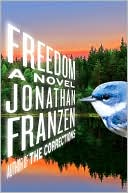
Freedom: A Novel
by Jonathan Franzen

Like Patty Berglund, the character at the center of Jonathan Franzen's Freedom, I'm not always as good a person as I wish I could be. For instance, I find it hard to root for Mr. Franzen's success. He's hardly an under-appreciated artist. Therefore, it is with all sincerity and conviction (and perhaps just a bit of disappointment) that I must tell you: This book is as good as everyone says it is. Possibly better. It's freakin' brilliant.

Freedom is nothing more than a satirical look at suburban America. Franzen accomplishes this with an intimate portrait of one American family, that of Walter and Patty Berglund. We get exhaustive information on the characters' formative years and on their lives together from a variety of overlapping perspectives. We are privy to the most intimate details of their marriage. We follow the lives of their children (primarily son Joey) and their closest friends. Franzen has created a series of deeply flawed characters in this clan, with incredibly rich, complex relationships. It is truly astonishing how thoroughly he inhabits each and every character, including many of the minor ones. Their voices are so comprehensive that every action and interaction, no matter how bizarre or inexplicable, rings absolutely true.

I mentioned above that the novel is a satire, and Franzen proves that he does, indeed, have a rich sense of humor. Getting the full nuance out of this novel was aided immeasurably by the tour de force performance by reader David LeDoux on the audiobook. LeDoux created distinctive voices for all significant characters and milked every last drop of humor and pathos from the text. His bravura performance allowed a great novel to shine all the more brightly.

Absolutely deserving of all the praise it has received!

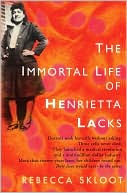
The Immortal Life of Henrietta Lacks
by Rebecca Skloot

What is there to say about a book so widely acclaimed? What can I possibly add to the discourse? Truthfully, there isn't much I can say that hasn't been said before, so I will keep this brief.

The Immortal Life of Henrietta Lacks is journalist Rebecca Skloot's first book, and it was ten years in the writing. In that time, she didn't merely research her subject matter thoroughly, she became a participant in the story she was writing. As a biology student, Rebecca's interest was piqued when she learned of the contribution to medicine and science of a cell line called HeLa--the first ever "immortal" human cell line. Immortal because the cells would continue to reproduce in culture indefinitely, as long as they were fed and cared for. It had been going on for decades. What Rebecca wondered was: Where did these cells come from? Therein lies the tale...

Nowadays, it is relatively common knowledge that these cells were cultured from a woman named Henrietta Lacks who died of cervical cancer back in 1951. That wasn't always the case. Ms. Lacks' identity, and the contribution she unwittingly made to the world, was obscured for years. Unwittingly, because the culture of her tumor was taken without her knowledge or consent. This was common practice at the time.

The book covers a lot of territory. There is detailed biographical information about the life and death of Henrietta Lacks. There is a lot of information about the contribution of the HeLa cells to science, from helping develop the polio vaccine, to going up into space. There is a thorough discussion of the bio-medical ethics in general, of the sad history of this issue and race, and in light of current issues and technology. And, finally, it is very much the story of the family that Henrietta Lacks left behind, her husband, five children, and innumerable cousins, and their interactions and relationship with the author.

Material that could have been overly complex or dry is absolutely engrossing. And all subject matter is handled with sensitivity and intelligence. It was all so interesting, but I think my favorite parts were the ethical discussions, past, present, and future. Reading the shameful history is painful. Unfortunately, in many ways the present isn't much of an improvement. Ms. Skloot ends her book in a primer of the issues we face moving forward. Hopefully, the more educated we are, the better we can protect ourselves and others. For now, it's a small step forward to see this subject matter gain such wide readership. And happily, there seems to be little danger of Henrietta's name or contribution being lost to history again.

The Widower's Community

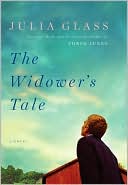
The Widower's Tale: A Novel
by Julia Glass

While former National Book Award winner Julia Glass's latest most certainly is The Widower's Tale, it might more accurately be described as the widower's community. Septuagenarian Percy Darling is at the center of this tale, but it delves significantly into the lives of his daughters, their families, and a diverse cast of others whose lives intersect his own.

Before I discuss the plot further, let me disclose a preconception. After reading the novel's description, I expected Percy to be some sort of stereotypical curmudgeon. I mean, he'd been alone since losing his wife decades earlier. Right there, I guess I expected him to be isolated and aloof. On the contrary, Percy is a loving family man. He has an especially strong relationship with his eldest grandchild, Robert, a student at Harvard. And Percy is pretty "with it" for a 71-year-old retired librarian. He emails, stays physically active, and has a pithy sense of humor. And, within these pages, he begins dating for the first time in years.

Percy's girlfriend Sarah is one of the characters whose life directly intersects his. I was rather more surprised when I suddenly found myself reading about a gentle Guatemalan gardener, and later a gay pre-school teacher. These individuals all become significant members of the community of Percy's later life, almost an extended family. Each has his or her own voice and a vivid internal world.

So, I was wrong. Percy Darling is no cardboard curmudgeon. But neither is this Widower's Tale one of those twee stories of a recluse being returned to the fold. There are elements of that familiar tale, but to dismiss Ms. Glass's work so reductively is simply unfair. It's not a May/ December romance, or a dysfunctional family drama, or a social and political commentary. It is all of those things and none. Glass's characters do not live lives free of tragedy, and I would never count on neat, predictable, happy endings. But by the time I reached the conclusion of The Widower's Tale, I was deeply satisfied with the tale told.

Resistible, but wholly worthwhile

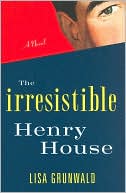
The Irresistible Henry House: A Novel
by Lisa Grunwald

I must confess that my interest in Lisa Grunwald's latest novel, The Irresistible Henry House was captured by comparisons to the work of John Irving. That's a reliable way to catch my attention, but it almost always leads to disappointment. Not so here. The book does have a distinctly Irvingesque quality, though it's difficult to put my finger on what exactly makes it so.

Spanning from 1946 to the late sixties, the novel presents a portrait in intimate detail of Henry Gaines from infancy though early adulthood. The one-time Henry "House" was a practice baby. For several decades in the mid-twentieth century, it was common for university home economics departments to run practice households in which to teach their students how to run a home. Many of these came complete with practice babies, borrowed from orphanages when they were just a few months old, and handed off from "mother" to "mother" as the students learned childcare.

Of course, this is unimaginable today--to the point that I thought the premise was the author's invention, until I researched further. The inability to form close attachments is just the tip of the iceberg of the issues this kid's got, which makes him an intriguing literary character. Unlike most practice babies, Henry never returned to the orphanage after a couple of years of being handed off like a baton in a relay race. He'd captured the heart of Martha Gaines, the needy Program Director. Henry was raised in the practice house with the cloying Martha and a never-ending procession of "mothers" and babies. We observe Henry through many stages of development and phases in his life, and not only are we treated to a really fascinating character study, but we also get a perceptive study of a changing post-war America. Along the way there are cameo appearances by a surprising number of famous figures of the times.

As enjoyable a read as this was, it had two significant flaws in my view. Starting with the novel's title, and again and again throughout the text, we're told how charming, charismatic, and yes, downright irresistible Henry is, but for me it never translated to the page. I've read plenty of characters who charmed my socks right off. Not only didn't Henry Gaines even come close, he really wasn't all that likeable. He was a character that I felt sympathy for, but he was a frankly manipulative cold fish. Grunwald really failed to bring the character's purported attractiveness to life.

The other problem is that most of the other significant characters were, if anything, less likeable than Henry. Martha vacillates between an intense neediness and something close to evil. The less said about Henry's birth family the better. The women who parade through Henry's life are largely an unappealing lot. The most sympathetic is Mary Jane, the proverbial girl-next-door, a constant through Henry's tumultuous life. I suspect that there are readers who will have difficulty connecting emotionally with these characters.

Despite the criticisms above, I really enjoyed this novel, and would recommend it to readers intrigued by the premise and the era, and who are willing to spend time with flawed characters seeking redemption.

Ruminations on the nature of love and art

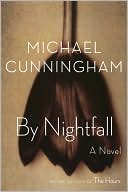
By Nightfall
by Michael Cunningham

Neither the film of The Hours nor the reviews of Specimen Days inspired me to want to give Michael Cunningham a try, despite the urgings of a respected friend. However, By Nightfall, coming in at 256 pages was a temptation I couldn't resist.

Basically, this novel is a character study of New York art dealer Peter Harris. Saying that it's a character study doesn't mean that nothing happens. The catalyst of events in the book is the visit of his wife's aimless younger brother Ethan, known as Mizzy (for "the mistake") in the family. Happily married, heterosexual Peter suddenly finds himself attracted to this younger, male version of his wife.

That brief description sounds lurid, but this book is far from it. It's as much about Peter's thoughts on art as it is about sexuality. And the reason the book worked so fantastically well for me is that, in Peter, Michael Cunningham has created a character that absolutely fascinated me. I was captivated by the world he lived in and the way he thought.

There is a certain amount of suspense as the novel draws to a close. I read it in a day, and though starving, refused to break for dinner until I had finished the book. In fact, I literally found myself holding my breath as I read the final sentences. As far as introductions go, this one was an overwhelming success. Highly recommended.

Boyd Morrison resurrects a lost art form

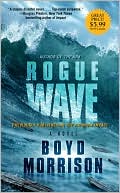
Rogue Wave
by Boyd Morrison

As a child of the seventies, I have a lingering affection for an all but lost art form--the disaster thriller. Remember the fun of first reading (and then watching) classics like The Poseidon Adventure, Airport, and The Towering Inferno? Good times.

Novelist Boyd Morrison has transported me back to that era with his latest, Rogue Wave. (Well, at least it's his latest for mainstream publication. It was originally published via Kindle under the title The Palmyra Impact.) The formerly eponymous impact is that of an asteroid in the Pacific, which is the cause of the currently eponymous rogue wave. Today it's a tsunami; if we were back in the seventies, we'd simply call it a tidal wave--a big one--and it's heading straight for Hawaii.

One person who is immediately aware of the jeopardy is Kai Tanaka, the acting director of the Pacific Tsunami Warning Center in Honolulu. You'd think he'd be exactly the person to get out a warning in this situation, but things are never that cut and dried. "Sending out a tsunami warning would be a bold step. The situation didn't fit any established scenarios. He would simply be going on gut. Issuing a tsunami warning was not a responsibility that he took lightly, particularly because he'd been on the job for less than a year. Doing so would cause a massive disruption to businesses and tourists in Hawaii, not to mention the enormous cost associated with an evacuation." Soon enough, however, the magnitude of the event becomes clear... "A catastrophe of epic proportions," and Tai and a small band of others do all that they can to save as many lives as possible.

The timeline of this novel is ridiculously compressed, with the bulk of the action taking place over about three hours. The pace of this story is petal to the metal all the way--often literally. The novel isn't about a heroic effort to save Honolulu, it's about one man's struggle to get a message out and save the people he loves. Kai battles against all manner of impediment as he races against Mother Nature. You will be holding your breath as you wait to see who will live and who will die. Revel in the destruction! Dare we hope for a film?

A more mature Hornby leaves the lad lit behind

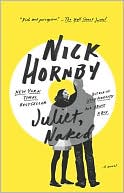
Juliet, Naked
by Nick Hornby

If you've had the pleasure of reading Nick Hornby once, it's hard to imagine not wanting to read all of his subsequent works. Certainly that is true of me, and I've finally had the chance to read his latest, Juliet, Naked. I don't know that this surpasses his very strongest work, but in no way does that imply that it is anything less than delightful.

Juliet, Naked is the story of three people. At the very center is Annie. Annie has been in a 15-year-relationship with Duncan. Duncan's not a bad guy, but perhaps the most notable thing about him is his obsessive fandom for a long-retired, minor musician named Tucker Crowe. Tucker is the third character in this triangle. We get one picture of Tucker's life and art through Duncan's smitten (and ignorant) eyes, but we are also privy to the reality, which is quite a bit different.

That is the set-up. Once we've met all the players, there is a catalyst that results in two major plot developments. The catalyst is the release of Tucker Crowe's album Juliet, Naked, a new, stripped-down version of his classic album, Juliet. It's the first anyone's heard from Crowe in 20 years, and the reception is polarizing. So much so, that it's the straw that breaks the back of Annie and Duncan's relationship. The other major, if improbably, development is that Annie and Tucker strike up a friendship. The novel is a warm, funny, affectionate look at three flawed individuals. Despite their flaws, it's hard not to fall in love with them. I can think of any number of less pleasant things to do than while away a few hours in their company.

Keep your secret and give me back my reading time

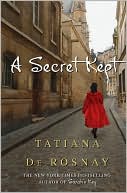
A Secret Kept
by Tatiana de Rosnay

When a novel is entitled A Secret Kept, you can safely assume it revolves around a secret. And that secret better be a good one. Unfortunately, I found Tatiana de Rosnay's sophomore effort to be a disappointment.

I was one of many readers who'd enjoyed Sarah's Key, and that was the principle reason I chose to read this novel. With her previous novel, it was the subject matter and the story being told that captured my attention, far more than the quality of her writing. Even then, I had to acknowledge that there was a cheesiness factor.

Unfortunately, that cheesiness is front and center in A Secret Kept. I started to write that it is the story of siblings Antoine and Mélanie Rey, but Antoine is our first-person narrator and this is really his story. As the novel opens, he has surprised his sister on the occasion of her 40th birthday. They are visiting the island resort they frequented for years as children. Neither has been back in 30-some years, since the sudden death of their mother. The return has been a mixed success, and it has reawakened old memories disturbing enough to cause Mélanie to literally lose control of the car they are in.

Antoine is unharmed, but Mélanie has a long recovery ahead of her. At first they begin to explore the implications of Mélanie's recovered memory together, but she pulls out, leaving him to dig alone. Along the path to discovery, de Rosnay throws every roadblock imaginable--including literal roadblocks!--in his way.

In addition to researching the past, there are events afoot in the present: family dramas, relationships beginning and ending, career highs and lows. I could summarize it all, but who really cares? None of it is especially compelling. And when the secrets are finally revealed and all the cards are on the table, none of it is very shocking or even that interesting. Plus, we had to read several love letters along the way that can only be described as cringe-worthy.

I partially read this book on paper, and partially listened to the audiobook. Narrator Simon Vance does a reasonable job with the material he has, but why have a novel peopled with French characters read by an actor with a British accent? Every French name and phrase is pronounced impeccably, so why not have the characters speak in their own accent? It seemed an odd choice.

This is certainly not the worst book I've ever read. It's solidly mediocre. And that's just not enough for me to go out of my way to recommend it to anyone. In the future, I'll think twice before reading a story because of de Rosnay's name alone.

Delicious dish!

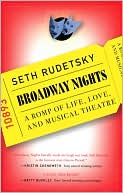
Broadway Nights: A Romp of Life, Love, and Musical Theatre
by Seth Rudetsky

I just returned from my third New York theatre trip in seven months. Seth Rudetsky's Broadway Nights: A Romp of Life, Love, and Musical Theatre was the perfect guilty pleasure to enjoy leading up to and during my trip. And enjoy it I did. It's the story of Rudetsky alter-ego Stephen Sheerin, a musician who makes a career of subbing in Broadway pit orchestras. His dream is to conduct on Broadway, and the novel is the story of his big chance to do just that. It's told in Stephen's own voice thought the journal he's been keeping at the suggestion of his therapist.

I had the pleasure of listening to the amusing Mr. Rudetsky read his own work in the audiobook version of Broadway Nights. Am I the only one who thinks it's hysterical that he complains about Dr. Phil's accent and constant name-dropping? While some of his humor may be unintentional, most of it lands right where it's supposed to. This is a man who describes eggs being "drier than a Noel Coward one-liner." It's a New York, Jewish, gay sensibility that Rudetsky brings to his fiction--perhaps not everyone's cup of tea--but it is funny.

Rudetsky is a real Broadway insider, and half the fun of this book is all the backstage stories he tells. (As well as trying to figure out who the loosely-veiled characters might be based upon.) The other half of the fun is that he was joined on the audiobook by an A-list cast of Broadway veterans. Kristin Chenoweth, Jonathan Groff, Richard Kind, Emily Skinner, Billy Porter, Andrea Martin, and three of the four [Tossers] are just a few of the talents lending their voices to the endeavor. I'm sure this is a fun read for any theatre geek like me, but if at all possible get hold of the audiobook. You'll be so glad you did.

And should Mr. Rudetsky return to the world of fiction, I'll be the first in line for his continuing adventures.

Thursday, January 6, 2011

She's alive!


This is so sad.

I got an "Are you still alive?" email yesterday, and I haven't had a chance to respond. Yes, Kerry, I'm still alive. Thanks for asking.

You know how it is. I was doing well with the blogging for a while. Then I was traveling to the east coast for a couple of weeks. And I told myself, I'll stick with it. But have you ever tried to give attention to anything other than family in my mother's presence? I didn't think so. When I got back it was December. There were a million social commitments, and my asthmatic lungs were trying to fight off every respiratory infection in the book. It was a challenging month. I ended it in full hibernation.

But, it is a new year. Happy New Year, readers! I've got all sorts of content to update the blog with, and I promise to start in the immediate future. I've got book reviews, more giveaways, and my Top Ten Books of 2010. It's all coming soon.

For now, please know that I'm alive.