The Ninth Wife
by Amy Stolls
What would you do if you learned the man you wanted to spend the rest of your life with had been previously married eight (!) times? Thankfully, that’s a question very few of us will ever have to ask ourselves. However, it is at the heart of Amy Stolls’ adult fiction debut, The Ninth Wife.
Bess Gray is successful, attractive, independent—and still single at 35. It’s not the life she thought she’d be leading. That sounds like the opening of a chick-lit novel, and while this rumination on the nature of marriage and the permanence of relationships does have some heightened, chick-lit-like elements, there’s actually quite a bit going on in this unusual novel. It’s the story of Bess and Rory—at long last, a man with whom she can see a future.
For the first 16 chapters, Part I of the novel, every other chapter is narrated by Bess or Rory respectively. Bess’s narrative details their meeting and courtship, leading up to his surprise marriage proposal and dropped bombshell. Rory’s narrative is essentially a monologue. Each of the eight alternating chapters is a marriage told in his own words. The reader is hearing Rory’s colorful matrimonial history as the two lovers inexorably head towards this difficult conversation. At one point speaking of a drunken, one-night mistake, Rory says:
“I don’t know what I’m trying to say. I guess I just get angry that people can have lots of relationships that no one would blink an eye at, but because mine have formal labels they get listed against me somehow, and they get lumped together as if they’re all equal, but they’re not. I’ve been married eight times, this is true, but Fawn shouldn’t count. She just shouldn’t. It was an evening that got out of hand. No casualties…”
Part II of the novel is the aftermath. Bess is understandably confused and concerned. Needing a little space to explore her feelings, Bess embarks on a cross-country road-trip, nicely set up in Part I, to drive her elderly grandparents to their new retirement home. In addition to an opportunity to learn more about her roots and observe the good, the bad, and the ugly of a 65-year marriage, it turns into an odyssey to connect with Rory’s various exes.
I really liked the structure of this novel, and there was a great deal to enjoy in the course of the story-telling. For starters, it’s not your everyday conundrum. I don’t believe this was ever tackled on an episode of Sex and the City. Bess and Rory (“the octo-husband”) are likeable, relatable characters. The plotting was a little unconventional, frequently surprising me. It was refreshing, as I wasn’t always sure where things were going.
My biggest problem with The Ninth Wife is that in the end it was neither fish nor fowl. What I mean by that is that Stolls’ kept adding wacky elements to an interesting adult dramedy. There was Gaia, the possibly clairvoyant earth mother, and Cricket the flamboyant gay neighbor—a last minute addition to the road-trip. I didn’t dislike their storylines, really, but I didn’t feel they added anything to the novel. They detracted (or perhaps distracted) a bit. I’m all in favor of a little comic relief, but I just felt like maybe they were in a different novel altogether.
This was my introduction to Ms. Stolls’ work. Despite the criticisms above, I found The Ninth Wife a surprisingly quick (at 496 pages) and engaging novel. Not being married, it gave me plenty of food for thought. And above all, it was simply entertaining. That’s enough for a thumbs up from me.
Showing posts with label Vine. Show all posts
Thursday, April 28, 2011
Monday, April 4, 2011
“There are some stories you keep to yourself.”
The Tiger's Wife
by Téa Obreht
I took my time reading The Tiger’s Wife, 25-year-old wunderkind Téa Obreht’s debut novel. It’s a book to be savored. Time and time again, people stopped to inquire about the title. To each, I would say, “It’s wonderful!” but I never talked about the plot. It defies easy summarization.
The first-person narrator of the novel is Natalia, a young doctor who is traveling across the border with a colleague. They are on a mission to immunize children in an orphanage. Well into the journey, Natalia calls home and learns that her beloved grandfather has passed away. It’s both shocking and unsurprising all at the same time; he was old and sick. But the most inexplicable detail of his death is that it took place far from home in a village no one has ever heard of. Supposedly, he was on his way to see Natalia. This is a lie.
Natalia’s story is a framing device for a deeper, richer tale. It’s the story of her relationship with her grandfather, also a physician, and how he passed his love of tigers along to her. It’s the story of how this improbable love came to be. Her grandfather’s tale telescopes to encompass the stories of both the Tiger’s Wife and the Deathless Man, each of whom he knew in the course of his long life. In turn, their tales telescope into the tales of butchers and apothecaries and bear hunters. These rich, magical, and fable-like stories lead from one character to another and sometimes interconnect in unexpected ways. And they are all a part of Natalia’s growing understanding of her grandfather.
The novel is set in a pair of unspecified Balkan countries, and the geopolitical history of the region is a major element, as war and its ramifications are significant influences on both Natalia’s and her grandfather’s lives. But alongside the harsh realism of war is the author’s use of magical realism derived from both her culture and her vast imagination. Obreht’s is a reality where wild animals roam free, where Death is an entity, and almost anything is believable. Her prose is magnificent, magical, and haunting.
I wrote above that I took my time with this book. I paused for reflection. I found myself thinking about life and death and Steven Galloway’s unforgettable depiction of war in The Cellist of Sarajevo. I considered Obreht’s literary influences. But more than anything else, I thought about my grandfather as I read this book. He’s been gone many years now, and my grandfather and Natalia’s bear little resemblance, but Obreht brought him back.
And to think, this is her immature work… What must she have in store for us?
by Téa Obreht
I took my time reading The Tiger’s Wife, 25-year-old wunderkind Téa Obreht’s debut novel. It’s a book to be savored. Time and time again, people stopped to inquire about the title. To each, I would say, “It’s wonderful!” but I never talked about the plot. It defies easy summarization.
The first-person narrator of the novel is Natalia, a young doctor who is traveling across the border with a colleague. They are on a mission to immunize children in an orphanage. Well into the journey, Natalia calls home and learns that her beloved grandfather has passed away. It’s both shocking and unsurprising all at the same time; he was old and sick. But the most inexplicable detail of his death is that it took place far from home in a village no one has ever heard of. Supposedly, he was on his way to see Natalia. This is a lie.
Natalia’s story is a framing device for a deeper, richer tale. It’s the story of her relationship with her grandfather, also a physician, and how he passed his love of tigers along to her. It’s the story of how this improbable love came to be. Her grandfather’s tale telescopes to encompass the stories of both the Tiger’s Wife and the Deathless Man, each of whom he knew in the course of his long life. In turn, their tales telescope into the tales of butchers and apothecaries and bear hunters. These rich, magical, and fable-like stories lead from one character to another and sometimes interconnect in unexpected ways. And they are all a part of Natalia’s growing understanding of her grandfather.
The novel is set in a pair of unspecified Balkan countries, and the geopolitical history of the region is a major element, as war and its ramifications are significant influences on both Natalia’s and her grandfather’s lives. But alongside the harsh realism of war is the author’s use of magical realism derived from both her culture and her vast imagination. Obreht’s is a reality where wild animals roam free, where Death is an entity, and almost anything is believable. Her prose is magnificent, magical, and haunting.
I wrote above that I took my time with this book. I paused for reflection. I found myself thinking about life and death and Steven Galloway’s unforgettable depiction of war in The Cellist of Sarajevo. I considered Obreht’s literary influences. But more than anything else, I thought about my grandfather as I read this book. He’s been gone many years now, and my grandfather and Natalia’s bear little resemblance, but Obreht brought him back.
And to think, this is her immature work… What must she have in store for us?
Saturday, April 2, 2011
McEuen’s ostentatious talent abundantly on display
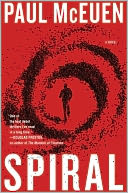
Spiral
by Paul McEuen
Two of my very favorite things are auspicious debut novels and really smart techno-thrillers. Kudos to physicist Paul McEuen, Spiral is both. The novel opens with a gripping prologue set in March 1946 on a U.S. Navy ship in the South Pacific. World War II is over, but the Japanese have reserved one devastating weapon for their endgame.
In that prologue we are introduced to biologist Dr. Liam Connor, who saves not only the day, but perhaps the world. At 22, the Irishman is at the very beginning of a prodigious career. We next meet him 64 years later. Now the 86-year-old Nobel laureate is one of the most distinguished and beloved professors at Cornell. And he’s still vital as well, actively engaged in research that spans from his specialization in fungi to the very frontiers of nanotechnology.
Now, a lot of gee whiz science does not a thriller make. Thrillers require plot and pacing and character, and McEuen supplies them all in spades. I’m sorry, don’t get too attached to lovely Liam, as his death—well, murder—is the main catalyst of a plot that centers on his scientist granddaughter, Maggie, teaming up with Jake Sterling, the young nanotech expert who was Liam’s close associate. While at first they’re trying to understand why Liam appears to have killed himself, soon they’re unraveling clues Liam left from beyond the grave. Their path of discovery is engrossing, and the threat they uncover is terrifying.
I haven’t really told you much at all. Why should I? The pleasure is in the twists and turns along the way. The plot is there. The pacing is excellent. I flew through the novel in no time at all. And perhaps most impressive, all things considered, is McEuen’s deft touch with his characters. Not only does he do an excellent job fleshing out his central characters, he’s populated the novel with rich, colorful, and interesting secondary characters.
by Paul McEuen
Two of my very favorite things are auspicious debut novels and really smart techno-thrillers. Kudos to physicist Paul McEuen, Spiral is both. The novel opens with a gripping prologue set in March 1946 on a U.S. Navy ship in the South Pacific. World War II is over, but the Japanese have reserved one devastating weapon for their endgame.
In that prologue we are introduced to biologist Dr. Liam Connor, who saves not only the day, but perhaps the world. At 22, the Irishman is at the very beginning of a prodigious career. We next meet him 64 years later. Now the 86-year-old Nobel laureate is one of the most distinguished and beloved professors at Cornell. And he’s still vital as well, actively engaged in research that spans from his specialization in fungi to the very frontiers of nanotechnology.
“Though Liam was a biologist, he loved the wonderful precision of all this technology, the miniature landscapes of almost impossibly intricate detail that were created…Liam believed that a second wave was coming—one even bigger than the information revolution. When the technologies of the information age were applied to biology, life would become an engineering discipline. Using tools such as microfluidic labs-on-a-chip, PCR machines, and assemblers such as the Micro-Crawlers, you’d be able to make living cells the way you made computer chips, process DNA like so many ones and zeros. He was incredibly excited. He thought that in five years he’d be making fungi from scratch.”Ah, doesn’t it make you want to grab a textbook! No? Maybe it’s just me. And, relax, I pulled a very technical quote because clearly I love that stuff. The novel is so very satisfyingly smart, but it’s also fully accessible to any lay reader. Dr. McEuen must be a pretty impressive lecturer himself, and he’s writing about a world and subjects he knows intimately.
Now, a lot of gee whiz science does not a thriller make. Thrillers require plot and pacing and character, and McEuen supplies them all in spades. I’m sorry, don’t get too attached to lovely Liam, as his death—well, murder—is the main catalyst of a plot that centers on his scientist granddaughter, Maggie, teaming up with Jake Sterling, the young nanotech expert who was Liam’s close associate. While at first they’re trying to understand why Liam appears to have killed himself, soon they’re unraveling clues Liam left from beyond the grave. Their path of discovery is engrossing, and the threat they uncover is terrifying.
I haven’t really told you much at all. Why should I? The pleasure is in the twists and turns along the way. The plot is there. The pacing is excellent. I flew through the novel in no time at all. And perhaps most impressive, all things considered, is McEuen’s deft touch with his characters. Not only does he do an excellent job fleshing out his central characters, he’s populated the novel with rich, colorful, and interesting secondary characters.
As I said, it’s a freakin’ auspicious debut! I know that Dr. McEuen has a fairly heavy-duty day job as a physicist and professor. I can only hope that he’s able to continue to carve out time for fiction.
Friday, August 13, 2010
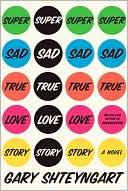
Super sad, super satirical--it's just SUPER!
by Gary Shteyngart
At one point when I was reading this disturbing, satirical look at a possible American future, I just thought, "Wait! How did we get there from here? How did we get from the America I know to a totalitarian nation on the verge of financial and political collapse?" And in the next moment, unbidden, I thought, "It's a totally logical projection."
Gary Shteyngart's Super Sad True Love Story is provoking some strong responses. It's polarizing. It's disturbing. It is funny, but you know how humor is, so subjective. What I find uproarious, you'll find imbecilic. As a great man said, "So it goes." Perhaps one of the reasons the novel is so provocative is that despite the absurd humor and the extremity of Shteyngart's vision, his satirical eye is dead on. He's got us pegged.
As for the plot, it's an epistolary novel, a romance related from the pages of Lenny Abramov's diary and Eunice Park's emails and instant messages. Poor, sweet, neurotic Lenny. He'll never be the best looking guy in the room, but he has other redeeming qualities. He's kind, sincere, loving, fiscally responsible, a reader and a thinker. Unfortunately, 39-year-old Lenny lives in an aggressively vulgar and illiterate culture that is obsessed with youth, beauty, and consumerism. The object of his affection is the much younger, much hotter Eunice. It's an unlikely match, but I was actually touched as the relationship progressed, all the while fearing for Lenny's tender heart.
There is so much I could write about this novel! The fact that Lenny works in the indefinite life preservation industry, based on the idea that if you're rich enough you never have to die. His boss, Joshie Goldman, is a post-adolescent septuagenarian. The fact that LNWI (Low Net Worth Individuals) have formed a tent city in Central Park, and there are armed National Guardsmen all over the New York. The very idea of privacy is essentially a thing of the past. Everyone wears a device that simultaneously connects them online and broadcasts the most intimate details of their lives, and people--lliterally--feel they can't live without the constant stream of data. The dystopian near future that Shteyngart has created is so rich and fully realized and so worthy of contemplation and discussion. I can barely touch on the ideas he explores in a few paragraphs.
It is worth mentioning just how strong his writing is as well. Even in the midst of the tortured language used by his characters, I found his prose to be a joy to read. There were interesting subtleties to the end of the novel, and I'm not completely sure I understood everything. Rather than weaken the ending, I find this to be a strength. I'll be pondering Eunice's decisions for some time, and look forward to discussing the end with friends. Yeah, this one's going to stick with me for a while.
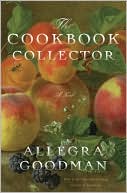
What do metaphorical bubbles taste like?
by Allegra Goodman
One of my favorite things is reading a novel with a setting with which I'm intimately familiar. That was certainly the case with Allegra Goodman's wonderful The Cookbook Collector. In the 90's, I worked for a high-tech start-up in Cambridge, MA. I shopped at Store 24. I lived on Newbury Street. In 2002, I relocated to San Francisco in the very depths of the dot-com bust. I window shop in Palo Alto. I eat at Greens. And I certainly know what it is like to be one of a pair of very different sisters. I recognize Emily and Jess, the sisters at the center of this novel, as they are easily identifiable Bay Area types, and I know the mixture of admiration and exasperation they evoke in me.
As familiar as it all was, Ms. Goodman grabbed me from the opening pages of this beautifully-written novel. And the story she told, a story I was so intimately familiar with, held me rapt, excitedly turning pages, wondering what was going to happen next--even though I knew what was going to happen next. I'd lived these times, but still Allegra Goodman managed to surprise me, as though history would turn out differently in her capable hands.
For what she has written is a story of our recent history, from 1999 to 2002. Far beyond the rise and fall of the dot-com economy, however, this is a novel of relationships. Relationships between siblings, friends, lovers, parents and children, colleagues, competitors, and acquaintances. Some of these relationships are successful, others not so much, but one in particular was utterly delicious. Goodman writes:
"...he longed to nourish her with clementines, and pears in season, fresh whole-wheat bread and butter, wild strawberries, comté cheese, fresh figs and oily Marcona almonds, tender yellow beets. He would sear red meat, if she would let him, and grill spring lamb. Cut the thorns off artichokes and dip the leaves in fresh aoli, poach her fish--thick Dover sole in wine and shallots--julienne potatoes, roast a whole chicken with lemon slices under the skin. He would serve a salad of heirloom tomatoes and fresh mozzarella and just-picked basil, Serve her and watch her savor dinner, pour for her, and watch her drink. That would be enough for him. To find her plums in season, and perfect nectarines, velvet apricots, dark succulent duck. To bring her all these things and watch her eat."
I'll admit the food passages were among my favorite, and a seduction over dinner was the most erotic thing I've read in some time.
This is a bittersweet tale about a bittersweet time. Allegra Goodman has done an amazing job capturing time and place and creating some indelible characters and some gorgeous prose along the way. What a joy to read!
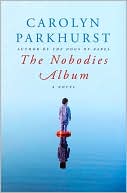
Can we revise our endings?
by Carolyn Parkhurst
Have you ever had the experience of starting a novel and just falling in love with the protagonist right away? This isn't that novel. When we meet first-person narrator Olivia Frost, the best-selling novelist is flying to New York to drop off her latest manuscript at her editor's office. She's a little quirky, a little acerbic. Walking through Times Square, she's stopped in her tracks by a news feed. Her estranged son, the rock star Milo Frost, has just been arrested for the murder of his girlfriend.
So begins Carolyn Parkhurst's latest, The Nobodies Album. It's part conventional murder mystery, part character study, and part rumination on the art and life of a novelist. For me, the book worked on all levels. I won't go so far as to call it a page-turner, but I was engaged by the mystery plot. The dénouement may have been obvious to some readers, but not to this one. I did warm up to Olivia and found her to be an interestingly complex character to build a novel around. But more than anything, I think, I enjoyed the insights into what it is to be a writer:
"I've often wondered if writers are the ones who feel compelled to narrate their lives as they live them, to stand in the shower and wonder whether there's a less predictable word than `lather.' I used to think it made me a good writer--look at me, honing my craft as I stand here to pour a cup of coffee, drafting and revising my descriptions of the mug, the smell, the sound of the hot splatter! Now I just find it tiresome, though it doesn't seem to be something I can stop. An end to narration: that's what I imagine death will be like."
Olivia isn't just ruminating on her writing, however. A significant subplot of the novel is her desire to rewrite the endings of all of her previously published works. (And I don't think you need to be Freud to see the significance in that.) To that end, scattered strategically throughout the novel (in order to create maximum tension and suspense) we are treated to the jacket copy and the original and revised conclusions to Olivia's seven novels. These interruptions are relatively short, and read more like self-contained stories than the true final pages of books, but the overall effect reminded me of Italo Calvino's experimental novel If on a Winter's Night a Traveler. Basically, you'd get caught up in the story snippets and feel slightly jarred when they ended.
Reading back over what I've written, I realize my description of this novel sounds a bit busy and overwrought. On the contrary, I thought it all came together really well. It was both entertaining and illuminating.
Oh, and Ms. Parkhurst, if you're reading this, I'd really like to read the entirety of Olivia's imaginary novel The Human Slice!
Food for thought
by Paolo Bacigalupi
Cal*o*rie (kal-uh-ree)
n.
A unit of energy equal to the amount of heat needed to raise the temperature of one gram of water by one degree Celsius. One calorie is equivalent to 4.1868 joules.
The biggest problem with Paolo Bacigalupi's novel The Windup Girl is me, the reader. I'm not a big fan of science fiction due to my own failure of imagination. The further away from reality as I know it, the harder it is for me to get involved in and follow a story.
Bacigalupi's much-lauded and honored debut is set in our world--in Thailand, a few hundred years in the future. But it's a much-changed world. Specifically, it's a post-petroleum world. I started this review with a definition of the word "calorie." In this weight-obsessed time, people have forgotten that a calorie is actually a measure of energy. That point isn't commented upon in the text, but it seems relevant as much of the novel revolves around the Kingdom of Thailand's need to feed its people and power its nation and economy.
It seems a variety of plagues have beset the agricultural world. Some may have been natural, some engineered, and surely climate change has taken its toll. Unfortunately, commerce may have played an even larger role, with sterile, disease-resistant seed stocks being owned by huge multi-national "calorie companies." The powers that be in Thailand seek independence from these monopolies, even as central character Anderson Lake, a "calorie man," investigates the available food sources cropping up outside of Agrigen's control.
This description barely scratches the surface of this complex novel. It is an intriguing exploration of a post-petroleum society with regard to the science, industry, and politics of the time. Internal Thai politics are a big part of the story, as are crime and punishment, social mores, and the often clashing cultures which have been thrust together in a volatile environment. Finally, it is a novel of relationships, human and not-quite-human...
Narrator Jonathan Davies does a good job with the unabridged audiobook. I won't swear that his Asian accents are authentic or even culturally sensitive, but my American ears could understand the dialogue clearly. In fact, I had an easier time discerning the huge cast of characters from the distinct voices he created than I did from the unfamiliar foreign names.
The Windup Girl wasn't exactly my cup of tea, but I'm glad to have read it. It's left me with more than a little food for thought.
Thursday, April 23, 2009
Yahoo-oooo!!!
OMG, freebies are so much fun! Today is my Amazon Vine leftover newsletter day, and for the first time ever they let us choose four items instead of two! It's so hard to pick just two out of about 200 items. Here are the four I chose:


Fragment: A Novel by Warren Fahy
Okay, since the moment I heard about it, I have been dying to read this novel. One reviewer described it as "the love child of James Rollins, Michael Crichton, and Al Gore." Seriously, what's not to love? It got a starred review in PW, and so far it seems to be getting raves. This sort of trashy science thriller is so up my all
ey it's not even funny. Oh, and debut novelist Fahy has some really cool stuff over on his website: http://www.warrenfahy.com/. Don't forget to check out more fragments... for more cool artwork and creature animations.
Hothouse Flower and the Nine Plants of Desire: A Novel by Margot Berwin
Last week I selected a novel called Tomato Rhapsody: A Fable of Love, Lust & Forbidden Fruit basically because it sounded "happy." As it happened, when it arrived on Monday it looked so appealing, I couldn't resist tossing aside the weighty (literally and figuratively) Sunnyside and diving in immediately. And you know what? It's charming, and it does make me happy while I'm reading it. So, Hothouse Flower is chosen for the same reason. It sounds like a light, fun happy book, with a little adventure and romance on the side. Plus, it got a starred review in PW, and is one of Amazon's picks for summer.
The Devlin Diary by Christi Phillips
This one also got a starred review in PW. I don't always agree with or understand why certain books receive the honor, but it's still something that carries a lot of weight with me. This is one of those thrillers that jumps back and forth between the past (London circa 1672) and the present (Cambridge in 2008) and it's a style I tend to enjoy.
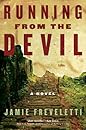
Running from the Devil: A Novel by Jamie Freveletti
Okay, this is yet another thriller. There's a reason. I now owe reviews on about 14 novels. It's getting ridiculous! If there's a hope for me to ever catch up, I need to put down the 600-page
literary tomes, and read and crank out reviews on some fun, light weight, fast-paced fiction. There's a method to my madness. Anyway, this one didn't get a starred review in PW, but it's been getting raves from my fellow Viners. It's Freveletti's debut, and I love giving those a chance. So, we shall see...
These should keep me busy for a few weeks. Thank goodness I've got four weeks until the next newsletter comes out. I can't wait to dive into these books!
Thursday, April 16, 2009
It's newsletter day!
So, have I ever mentioned I'm a member of the Amazon Vine program?
What's Vine? Basically, if either a human or a computer (we're not sure which) over at Amazon.com likes the reviews you write, you may be invited to join this program. Members are sent two newsletters a month (and on occasion a third), and from each newsletter they get to pick two items that Amazon will send them for free. To remain a "Viner" in good standing, you have to review at least 75% of what they send you. It is a very, very cool thing to be a Viner, especially when you are as poor as I am!
Oh, I didn't mention that the first newsletter you receive (on the 3rd Thursday of each month) is "targeted" to you by Amazon, and the second newsletter is the so-called "leftover" newsletter (on the 4th Thursday of the month). It contains all the items that weren't selected by the people they were targeted for. The targeting is supposedly based on your reviewing and purchasing history. I've never spent much money with Amazon, but when I did, it was usually DVDs or food. As everyone knows, I feel strongly about supporting my local independent booksellers. Nonetheless, generally speaking, I review books, so invariably that is what my targeted newsletter is full of with few exceptions.
I'm not complaining; I love books. But other Viners get newsletters full of camcorders and printers and Rosetta Stone software. Others get household items like sheets, hair dryers, or electric tooth brushes. Once there was a $700 leather armchair! Anyway, I almost always pick a book, but occasionally I break things up with a DVD or food item if it's offered.
I always send an email to my mom and my friend Jon on newsletter day, so they can see what was offered and what I picked. (Mom likes to tell me what I should have picked instead of yet another book.) Today it occurred to me that I should share with you, Anonymous Reader, my Vine picks each month, if for no other reason than it will give you an idea of some of the books you'll eventually see reviewed.
Possibly I am hungry, because today I chose two novels with a culinary theme. The first was Monica Ali's In the Kitchen: A Novel which has several things going for it. One, it's written by one of Britain's most celebrated young authors. Two, it's set in a world I know well, having cooked professionally. Three, it seems to be a bit more plot-driven than some literary fiction.
The other book is Adam Schell's debut novel Tomato Rhapsody: A Fable of Love, Lust & Forbidden Fruit. I chose this one first and foremost because it sounded like a happy story. Also, I love debut novels. You never know who you'll discover. Plus, I read a few paragraphs of the excerpt, and the writing was strong. It sounds like a fun and inventive novel. I will let you know. :-)
What's Vine? Basically, if either a human or a computer (we're not sure which) over at Amazon.com likes the reviews you write, you may be invited to join this program. Members are sent two newsletters a month (and on occasion a third), and from each newsletter they get to pick two items that Amazon will send them for free. To remain a "Viner" in good standing, you have to review at least 75% of what they send you. It is a very, very cool thing to be a Viner, especially when you are as poor as I am!
Oh, I didn't mention that the first newsletter you receive (on the 3rd Thursday of each month) is "targeted" to you by Amazon, and the second newsletter is the so-called "leftover" newsletter (on the 4th Thursday of the month). It contains all the items that weren't selected by the people they were targeted for. The targeting is supposedly based on your reviewing and purchasing history. I've never spent much money with Amazon, but when I did, it was usually DVDs or food. As everyone knows, I feel strongly about supporting my local independent booksellers. Nonetheless, generally speaking, I review books, so invariably that is what my targeted newsletter is full of with few exceptions.
I'm not complaining; I love books. But other Viners get newsletters full of camcorders and printers and Rosetta Stone software. Others get household items like sheets, hair dryers, or electric tooth brushes. Once there was a $700 leather armchair! Anyway, I almost always pick a book, but occasionally I break things up with a DVD or food item if it's offered.
I always send an email to my mom and my friend Jon on newsletter day, so they can see what was offered and what I picked. (Mom likes to tell me what I should have picked instead of yet another book.) Today it occurred to me that I should share with you, Anonymous Reader, my Vine picks each month, if for no other reason than it will give you an idea of some of the books you'll eventually see reviewed.
Possibly I am hungry, because today I chose two novels with a culinary theme. The first was Monica Ali's In the Kitchen: A Novel which has several things going for it. One, it's written by one of Britain's most celebrated young authors. Two, it's set in a world I know well, having cooked professionally. Three, it seems to be a bit more plot-driven than some literary fiction.
The other book is Adam Schell's debut novel Tomato Rhapsody: A Fable of Love, Lust & Forbidden Fruit. I chose this one first and foremost because it sounded like a happy story. Also, I love debut novels. You never know who you'll discover. Plus, I read a few paragraphs of the excerpt, and the writing was strong. It sounds like a fun and inventive novel. I will let you know. :-)
Subscribe to:
Posts (Atom)