Thursday, January 5, 2012

Now, this is a Winter I can get on board with!

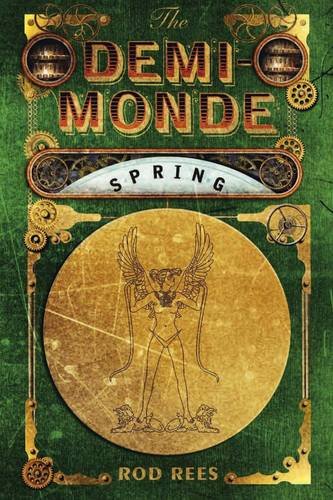
The Demi-Monde: Winter
by Rod Rees

I started reading this novel on Christmas Day, and what a gift to me!  I enjoyed it way more than expected—to the point that I could barely drag myself away to celebrate with friends.  Why the limited expectations?  Well, I was unfamiliar with the author, but even more I was wary of a science fictiony-sounding premise.  The novel does indeed intersect the genres of science fiction, fantasy, and thriller, making it a bit difficult to pigeonhole, but it all comes together terrifically.

Unfortunately, if you try to summarize the plot to anyone, you’ll sound like a lunatic.  Early in the novel, a character explains the basic set-up to Ella Thomas, the novel’s protagonist:
“Asymmetric Warfare is the U.S. military’s name for all those messy little conflicts that our country keeps finding itself fighting in hellish places like Afghanistan, Iraq and Pakistan.  They are wars without rules and without honor and, to be blunt, they are wars the U.S. Army isn’t particularly good at fighting.  When the U.S. military began to study its performance in Asymmetric Warfare Environments it discovered that its soldiers, especially its officers, weren’t effective because they had no appreciation of or understanding of what sort of war they would be fighting.  So in order to prepare them better, the U.S. Army InDoctrination and Training Command came up with the idea of creating a computer simulation that would let our combat personnel experience what was waiting for them in Peshawar and desperate places like it…  The Demi-Monde is the most sophisticated, the most complex and the most terrifying computer simulation ever devised.  It’s a simulation that recreates the visceral anxiety and fear of being in an… Asymmetric Warfare Environment.  To play the Demi-Monde you have to be hardwired into it and the hardwiring creates a full sensory bypass: you believe you are in the Demi-Monde.”
Oh, and one other little detail…  If you die in the Demi-Monde, you die in real life.  Ella has been recruited for a rescue mission.  She possesses unique skills and qualifications—and is desperate enough to risk her life—in order to save the daughter of the President of the United States, who has somehow been lost in the Demi-Monde.

Okay, that is not the premise of what I typically read, but this book grabbed me almost immediately.  Without being “literary” in any way, the novel is very well written.  Rees isn’t merely setting his novel, he is world-building.  And doing so very, very effectively.  (In addition to the descriptions within the novel, I was fascinated by the maps scattered throughout.)  Elements of the Demi-Monde are based on Nazi Germany, but the world that Rees has created is so much richer and more complex than just that.  The novel is both political and philosophical, and Rees plays around a lot with language.  In fact, at the back of the book there’s a complete glossary of words like UnFunDaMentalism, HerEticalism, HimPerialism, ill-ucination, and the like.  At first, I thought the author was just having fun and being clever, but soon enough the use of language became highly Orwellian.  After all, it was Orwell who said, “But if thought corrupts language, language can also corrupt thought.”  It’s all so entertaining and so smart.

And we haven’t even discussed the characters yet.  Ella is terrific character to build the novel around, but is actually one of several major characters.  The bulk of this novel takes place in the virtual reality of the Demi-Monde, which is peopled with 30 million “dupes,” basically artificial intelligences.  And they are so convincingly rendered that the reader experiences the same cognitive dissonance that Ella does in distinguishing exactly who and what is real.  The relationships depicted encompass the entire spectrum from love to hate and everything in between.  Race, religion, nationality, and yes, reality, all cause conflict with countless lives on the line.  But do dupe lives even matter?
You’ve probably gathered by now that this is a complicated 500+ page novel, and it is only the first of a quadrilogy.  There is a story arc in this first novel, but there really is no resolution.  It ends on multiple cliff-hangers.  This is the sort of thing I generally hate, but I was so caught up in this fast-moving epic that really I’m just looking forward to the next installment and pleased that there will be three more volumes to look forward to.  Hooray for trying something a bit outside my comfort zone!  What a great find!  My New Year’s resolution: resist ordering a copy of the sequel from England.  It’s going to be hard.

NOTE:  Click on the link attached to the author's name above to visit the very cool Demi-Monde website!

Tuesday, January 3, 2012

Susan's Top 10 Books of 2011


Now, in a normal year, paring down a top 10 list is a torturous process for me.  This year, it was just ridiculous.  Oddly enough, in some ways, having to be so ruthless with the cuts made it easier.  What I've compiled below is a very idiosyncratic list.  I'll tell you right now, from an objective viewpoint, these are not necessarily the best books I read this year.  There were a lot of highly acclaimed novels that I read and loved that surely deserve to be on this list more.  A few examples:

The Marriage Plot by Jeffrey Eugenides was the 11th book on my short list.  I thought it was fantastic.  But it didn't effect me as strongly as some of theses others that I did choose. 

And I wrote a review of The Art of Fielding, the acclaimed novel by Chad Harbach, the other night.  I read the book months ago, but reflecting on the book in order to finally write the review, I realized more than ever how much I'd enjoyed reading it, and what an accomplished debut it is.

And I read Haruki Murakami's massive and impressive 1Q84 this year!  And I enjoyed it so much!  The language, especially, was just unbelievable.  I still want to carry the tome around and make people listen to me read from it.  But truthfully...  It was just a little too much work to make my top 10 list.

So, what did make the cut?  And how did I choose?  Well, simply put, these are the books that I felt that I had the strongest response to.  Perhaps I can explain that a little better in the notes that accompany each pick.  What you'll notice is that about half of these books are on every mainstream reviewers' list, and about half of them are on no one's.  That seems like a good balance to me.  But the single most interesting thing about this collection of titles?  Seven of the ten are debut novels.  Me and the NYT, we're simpatico, yo.  (And we are.  Three of their five fiction picks overlap my own.)

As is my tradition, only the #1 pick is ranked.  The rest are in no particular order.  And without stalling any further, here are my top ten books of 2011:

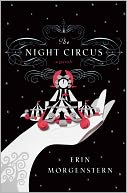
1. The Night Circus by Erin Morgenstern - I started hearing the buzz about this book months and months before it was published.  Months before the galley was in my hands.  And I believed it.  I passed it on, forcing other reviewing friends to read the title before I'd ever picked it up myself.  But when I finally did, wow.  Magic.  I've known that this would be my top pick of the year since I was about midway through the book, and when I've tried to explain how I feel about this book, I tell people, "This book didn't entertain me; it made me happier to be alive."  It's true.  You can tell me that it needed more character development, or that debut novelist Morgenstern is still learning her craft, but I don't care.  What an imagination!  What beauty!  It made me happier to be alive.  And that's not just rare in books, it's rare in almost everything.

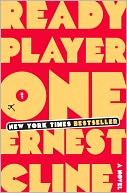
Ready Player One by Ernest Cline - Okay, this is the pick on my list that I'm most uncomfortable with, so I may as well get this over with first.  It's arguably insane to list this book rather than Eugenides, Harbach, Murakami, or any number of other serious literary novelists I read this year.  This debut is not a brilliant literary work.  But it is probably the most out and out fun I've had reading any book in years.  It's an homage to my formative years, and it was just a nostalgic blast!  Shoot me; I think reading should be fun.

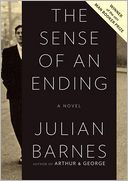
The Sense of an Ending by Julian Barnes - Okay, I'm regaining a semblance of literary street cred with this pick of this year's Man Booker Prize winner.  It will be no surprise that this novella is beautifully written, but what really elevated it above other major literary works I read this year was that kick in the stomach that the novella's end evinced.  Wow.  I did not see that coming.

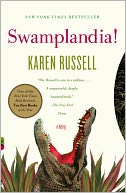
Swamplandia! by Karen Russell - I didn't love this debut novel when I started reading it.  It's told in three parts, and I had a fairly mixed reaction to part one.  It wasn't what I expected.  It was a lot sadder, for starters.  But things picked up a lot in part two.  By part three, you couldn't have pried the book from my hands.  by the end, I was won over completely by this quirky story full of humor and pathos.  It is truly unlike anything I've read in recent memory.  But more than anything, I loved the language, which was beautifully crafted and unexpected at every turn.  This book has been highly polarizing among readers, who seem to have a love it or hate it response.  Clearly I'm in the "love it" camp, but this won't be the only polarizing choice on my list.

The Tiger's Wife by Tea Obreht - I'm right on the bandwagon with this one.  Early in the year, this became one of the most acclaimed debut novels in recent memory, and the young author something of a wunderkind.  All hype aside, I thought this was a gorgeous, beautifully-written book.  Unlike some readers I know, I'm not turned off by a little magical realism.  In fact, in my book it's a plus.

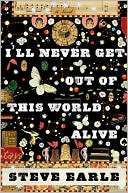
I'll Never Get Out of this World Alive by Steve Earle - I was not familiar with Renaissance man Steve Earle in his incarnations as a musician, playwright, political activist, or actor.  And the description of this novel's plot--dealing as it does with junkies, dealers, prostitutes, and the ghost of Hank Williams on a Texas Skid Row in the early 60--was distinctly weird and unappealing.  I'm pretty sure I only picked it up because it was so short.  Well, thank goodness I'm lazy!  This was surely the surprise of the year.  It was heart-warming, bittersweet, and uplifting.  I loved it.

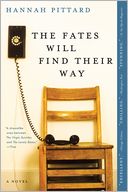
The Fates Will Find Their Way by Hannah Pittard - This was another short debut novel to which I brought absolutely no expectations.  It was also a book I read in the first week of the new year, in a single day.  This is what I remember most about the experience of reading it:  By the time I finished, I felt like I was going to jump out of my skin if I couldn't discuss it with someone--immediately!  (This is a very rare response.  And a problem; the novel had not yet been published.)  This book has been compared to Eugenides' debut, The Virgin Suicides, and it is likely that had I read that novel, this one would not have affected me so powerfully.  But I haven't, and it did.  I thought the strange first person plural voice and structure of the novel was fascinating, effective, and beautiful.

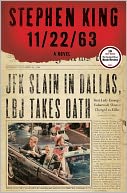
11/22/63 by Stephen King - As I wrote in my review of this book, it's amazing and awesome that Mr. King is still finding inventive ways to tell new stories at this stage of his career.  This was just great storytelling pure entertainment.  And there are few authors as adept at character development.  All of his characters wind up feeling like friends--especially when you spend nearly 900 pages with them.

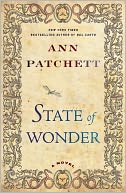
State of Wonder by Ann Patchett - Two of my favorite literary genres are thrillers and literary fiction.  It is incredibly rare to find the two blended in the manner that Ann Patchett did with this book.  Really, this was like my dream novel, and unlike some others, I thought she did an amazing job pulling it off.

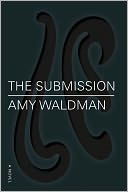
The Submission by Amy Waldman - This one sneaked up on me.  If you had asked me at the time I read it, I would not have expected it to make my top 10 list.  This is one of the most provocative novels I've read in years.  It made me angry.  It was totally fictional, but so realistically (and yet still somehow satirically) depicted that I fumed for weeks over an imaginary situation.  This one is really going to stick with me for a long time, and that counts for something.


So, for better or worse, those were my top 10 for 2011.  Agree?  Disagree?  Feel like sharing your own list?  I'd love to get the year started with a good discussion!

What DID Susan read last year?


Happy New Year, Readers!  Please forgive the radio silence of late.  I sincerely hope you all had wonderful holiday seasons.  This seems like an ideal time to thank you all for coming around.  I'm looking forward to another good year together!

Wow, December was a weak blogging month for me, but I'm giving myself a pass.  It was a prolific year, and frankly, there's been a lot of stuff going on on my end--and probably yours too.  It's that kind of month.  Plus, while I haven't been posting them to the blog--yet--I've been making a concerted effort to catch up on review writing.  So, hopefully, I'll get back with the program as we enter the new year.

So, about the books...  In 2010, I read 78 or 79 books, and it was a record year for me.  100 books felt like an unobtainable goal.  Therefore, I'm at a loss to explain this, but I read nearly 150 books this year!  I have 148 listed right now, but to be honest, I didn't really keep a faithful list this year, and those are the books I was able to confirm having read after looking at what's in my Kindle and iPod,  what I've reviewed, and what I can remember.  I'm surely missing a few, and perhaps I'll add them later.  This list is plenty long enough.

So, for those who are incurably curious, here's the complete list:

  1. The Vault – Boyd Morrison
  2. Aftertime – Sophie Littlefield
  3. This is Where I Leave You – Jonathan Tropper
  4. One of Our Thursday’s is Missing – Jasper Fforde
  5. The Red Garden – Alice Hoffman
  6. I Think I Love You – Alison Pearson
  7. Faking Life – Jason Pinter
  8. Gideon’s Sword – Douglas Preston & Lincoln Child
  9. Swamplandia! – Karen Russell
  10. Blogging for Dummies – Susannah Gardner & Shane Birley
  11. A Discovery of Witches – Deborah Harkness
  12. Pandemonium – Warren Fahy
  13. The Weird Sisters – Eleanor Brown
  14. Storm Front – Jim Butcher
  15. The Tiger’s Wife – Tea Obreht
  16. Miss Pettigrew Lives for a Day – Winifred Watson
  17. Spiral – Paul McEuen
  18. The Peach Keeper – Sarah Addison Allen
  19. Devil’s Plaything – Matt Richtel
  20. The Devil Colony – James Rollins
  21. The Devil’s Elixir – Raymond Khoury
  22. Guilt by Association – Marcia Clark
  23. The Ninth Wife – Amy Stolls
  24. The Tragedy of Arthur – Arthur Phillips
  25. A Tale of Two Castles – Gail Carson Levine
  26. The
    Inner Circle
    – Brad Meltzer
  27. The Sixth Man – David Baldacci
  28. The Girl in the Garden – Kamala Nair
  29. Skipped Parts – Tim Sandlin
  30. Long Gone – Alafair Burke
  31. The Door to Lost Pages – Claude Lalumiere
  32. The School of Night – Louis Bayard
  33. Bossypants – Tina Fey
  34. The Two Deaths of Daniel Hayes – Marcus Sakey
  35. Kraken: The Curious, Exciting, and Slightly Disturbing Science of Squid – Wendy Williams
  36. Jake Ransom and the Howling Sphinx – James Rollins
  37. A Little Bit Wicked – Kristen Chenoweth
  38. Let the Great World Spin – Colum McCann
  39. Arcadia: The Complete
  40. Love You More – Lisa Gardiner
  41. Sweet Jiminy – Kristin Gore
  42. I’ll Never Get Out of This World Alive – Steve Earle
  43. Bellwether – Connie Willis
  44. The Informationist – Taylor Stevens
  45. Skinny – Diana Spechler
  46. Mr. Poppers Penguins – Richard & Florence Atwater
  47. The Uncertain Places – Lisa Goldstein
  48. Blood of the Reich – William Dietrich
  49. The Map of Time – Felix J. Palma
  50. State of Wonder – Ann Patchett
  51. The Woodcutter – Reginald Hill
  52. Before I Go to Sleep – S. J. Watson
  53. A Bad Day For Scandal – Sophie Littlefield
  54. The Fates Will Find Their Way – Hannah Pittard
  55. Still Missing – Chevy Stevens
  56. Hard-Boiled Wonderland and the End of the World – Haruki Murakami
  57. Charlie All Night – Jennifer Cruisie
  58. Then Came You – Jennifer Weiner
  59. Rebirth – Sophie Littlefield
  60. Killing Kate – Julie Kramer
  61. Jaws – Peter Benchley
  62. The Sherlockian – Graham Moore
  63. The Help – Kathryn Stockett
  64. You’re Next – Gregg Hurwitz
  65. The Forgotten Waltz – Anne Enright
  66. The Wise Man’s Fear – Patrick Rothfuss
  67. 22 Britannia Road
    – Amanda Hodgkinson
  68. The Stranger’s Child – Alan Hollinghurst
  69. Mr. Fox – Helen Oyeyemi
  70. Zone One – Colson Whitehead
  71. The Litigators – John Grisham
  72. Special Topics in Calamity Physics – Marisha Pessl
  73. There But For The – Ali Smith
  74. Micro – Michael Crichton & Richard Preston
  75. Native Tongue – Carl Hiaasen
  76. The Prague Cemetery – Umberto Eco
  77. Anne of Green Gables – L.M. Montgomery
  78. A Thousand Lives – Julia Scheeres
  79. Too Much Stuff – Don Bruns
  80. Why Read Moby Dick – Nathaniel Philbrick
  81. 11/22/63 – Stephen King
  82. 1Q84 – Haruki Murakami
  83. When She Woke – Hillary Jordan
  84. Countdown – Mira Grant
  85. Replay – Ken Grimwood
  86. I’ve Got Your Number – Sophie Kinsella
  87. City of Thieves – David Benioff
  88. Lightning Rods – Helen DeWitt
  89. 1222 – Ann Holt
  90. The Time in Between – Maria Duenas
  91. Look, I Made a Hat – Stephen Sondheim
  92. The Family Fang – Kevin Wilson
  93. I Married You For Happiness – Lily Tuck
  94. The Revisionists – Thomas Mullen
  95. Death Match – Lincoln Child
  96. The Callahan Chronicles – Spider Robinson
  97. The Invention of Hugo Cabret –Brian Selznick
  98. The Marriage Plot – Jeffrey Eugenides
  99. Matched – Ali Condie
  100. Tension City – Jim Lehrer
  101. The Sense of an Ending – Julian Barnes
  102. Reamde – Neal Stephenson
  103. The Visible Man – Chuck Klosterman
  104. The Dovekeepers – Alice Hoffman
  105. Heft – Liz Moore
  106. The Language of Flowers – Vanessa Diffenbaugh
  107. Eyes Wide Open – Andrew Gross
  108. Sanctus – Simon Toyne
  109. Sacre Bleu – Christopher Moore
  110. Why We Broke Up – Daniel Handler
  111. Sister – Rosamund Lipton
  112. Darkness, My Old Friend – Lisa Unger
  113. Only Time Will Tell – Jeffrey Archer
  114. The Black Stiletto – Raymond Benson
  115. Birds of Paradise – Diana Abu-Jaber
  116. The Art of Fielding – Chad Harbach
  117. The Submission – Amy Waldman
  118. One Day – David Nicholls
  119. The Leftovers – Tom Perotta
  120. The Magician King – Lev Grossman
  121. The Night Circus – Erin Morgenstern
  122. Cold Vengeance – Douglas Preston & Lincoln Child
  123. The Winters in Bloom – Lisa Tucker
  124. The Griff – Christopher Moore
  125. Ready Player One – Ernest Cline
  126. Machine Man – Max Barry
  127. LA Mental – Neil McMahon
  128. Pigeon English – Stephen Kelman
  129. The Twelfth Enchantment – David Liss
  130. Bed – David Whitehouse
  131. Girls in White Dresses – Jennifer Close
  132. Luminarium – Alex Shakar
  133. Jamrach’s Menagerie – Carole Birch
  134. Crossed – Ali Condie
  135. Beauty Queens – Libba Bray
  136. The Name of the Wind – Patrick Rothfuss
  137. Fever Dream – Douglas Preston & Lincoln Child
  138. The Accident – Linwood Barclay
  139. Dominance – Will Lavender
  140. Sleeping Beauty – Elle Lothlorien
  141. The Gunslinger – Stephen King
  142. 420 Characters – Lou Beach
  143. We the Animals – Justin Torres
  144. The Demi-Monde: Winter – Rod Rees
  145. Smut: Stories – Alan Bennett
  146. Island of Wings – Karin Altenberg
  147. From the Memoirs of a Non-Enemy Combatant – Alex Gilvarry
  148. The Whisperer – Donato Carrisi

Over 100 of the books above were published in 2011, but there is a generous smattering of 2012 titles in the list as well.  And, yes, I am still working to catch up on the reviews.

Plus, I'll finally be posting my 2011 top 10 list next.  Meanwhile, 2012 is already off to a great reading start!

Wednesday, December 21, 2011

Imagine the most boring John Hughes film never made…

Why We Broke Up
by Daniel Handler
Art by Maira Kalman
Release date: 12/27/2011

“Dear Ed,

In a sec you’ll hear a thunk.”

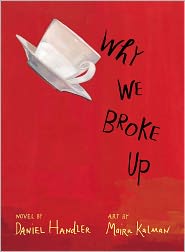
So begins Daniel Handler’s (AKA Lemony Snicket) latest YA offering, Why We Broke Up. The aforementioned “thunk” is the sound of a heavy box flung by Min Green hitting the porch of her ex-boyfriend, Ed Slaterton. The 350-page novel is comprised of the long, long, long letter that she includes as she returns to him the minutia of their relationship. This relationship is recounted from start to finish in the letter/novel through Min’s apparently photographic recall. Scattered throughout the text are Maira Kalman’s charming illustrations of the contents of the box, which range from bottle tops to ticket stubs to clothing.

With all the drawings and white space throughout the book, it isn’t really a full 350 pages, and yet it felt longer. It was written as an angsty, teen, stream of conscious rant, and it was chock-full of pointless filler, such as detailed descriptions of dozens of fictional films, made by fictional people, starring fictional stars. You see, Min’s the substantive one in the relationship. She’s “different.” Ed’s a popular jock, co-captain of the basketball team. They’re from different worlds, with different friends! And yet they struggle to make it work.

I’ve never been an adult that had the slightest problem reading and appreciating YA or children’s fiction, but this was just an overly drawn-out, boring, and humorless waste of time. Ultimately, I found it unsatisfying on every level. And that, Daniel, is why WE broke up.

Note to parents: This novel includes frequent obscenities, underage drinking, references to drug use, lack of respect for parents and authority figures, and teen sex.

Thursday, December 15, 2011

Too much... something

Too Much Stuff
by Don Bruns

I had been looking forward to reading Too Much Stuff, my introduction to Don Bruns' work. I love both comic novels and treasure hunts, so I thought this would be a sure-fire winner. Ever the optimist, in this case I was mistaken.

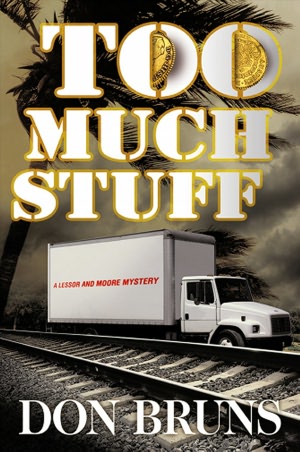
Too Much Stuff is, I believe, the fifth sixth novel in Bruns' Stuff series. While it's true that I have not entered this series with the characters' full back stories and histories, I have a very difficult time imagining it would have made a difference in my enjoyment of the novel. The protagonists at the center of the series are 20-somethings Skip Moore and James Lessor. They're high school grads that have been bumbling their way through a series of menial jobs. Now they've decided they're going to be private detectives. They got the licenses and placed the yellow pages ad. This leads to their improbable first job, helping track down a fortune in lost gold in the Florida Keys.

The blurb from Mystery Scene Magazine promised me "witty dialogue and likeable, wacky characters." Well, I suppose that first person narrator Skip was ok, but violent, cop-hating, married woman-chasing James left me rather cold. As for the dialogue, it was about as far from witty as I can imagine. Sophomoric is more like it. In fact, that's really the best description for these two characters. They are so unbelievably unsophisticated (emphasis on the unbelievable) that the prospect of valet parking throws them completely for a loop. I get it that these are working class characters, but, what? They've never seen a movie? I simply don't find stupidity, ignorance, and a lack of sophistication to be a recipe for hilarity. What it is is tiresome.

And perhaps I could have gotten past the cast of not very interesting or likable characters, and the decidedly unfunny comedy, if only there had been a great mystery plot. But the simple truth is, I was bored. The pages plodded, the dénouement was telegraphed, and surprises were rare. It was a short novel, but it was work to get through it.

The publisher recently offered the first novel in this series as a Kindle freebie and I downloaded it, but somehow I doubt I'll be revisiting this series. I'm glad others have enjoyed the novels, and goodness knows that humor is subjective. This stuff, it seems, is not for me.

Tuesday, December 13, 2011

The romantic writer, the unruly muse, and the reality of the wife

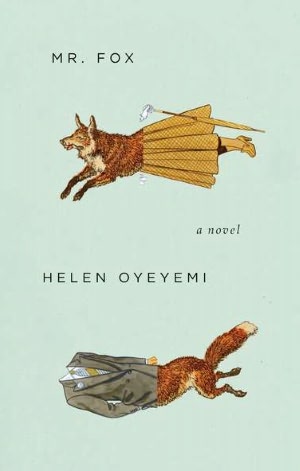
Mr. Fox
by Helen Oyeyemi

Generally speaking, most fiction worth pursuing is on my radar, but somehow both Helen Oyeyemi and her latest novel, Mr. Fox, passed me by completely until they showed up on Audible.com’s Best Audiobooks of the Year list.  (And rightly so, reader Carol Boyd gives a standout performance.)

Mr. Fox is different.  It is the story of the love triangle between a writer and his unruly muse (Always an excellent starting point!) and his flesh and blood wife.  But don’t for a minute think things are as straightforward as all that.  The love triangle and the muse’s struggle for independence are merely the base of a novel comprised of constantly shifting stories, each of which feature an iteration of writer St. John Fox and his imagined perfect woman Mary Foxe.  In one, he’s a psychologist and she a model.  In another, they are children in an African village.  In one he’s an actual fox and she an old woman.  The imagery of all things foxy is pervasive, from foxes both human and animal to foxglove flowers and foxholes.

Here is an illustrative exchange between writer and muse:
’Mary, I think I know what we’re trying to do with this game of ours.’
‘Tell me.’
‘We’ve been trying to fall in love.’ 
She raised her eyebrows.  ‘With each other?’ she asked coolly.
‘Would you let me finish?’
‘With pleasure.’
‘We’ve been trying to fall in love, yes with each other, but we’ve been trying to take some of the danger out of it so no one ends up maimed or dead.  We’re trying for something normal and nice.’
Mary folded her arms.  ‘That is not what we’re trying to do.’
‘Oh, what then?’
‘Your wife loves you.  Turn to her properly.  Stop fobbing her off and being a counterfeit companion.  It would be good, if after all this, just once you wrote something where people come together instead of falling apart.  Just show me you can do it and I’ll leave you alone.’
‘But I don’t want you to leave me alone.’
As you can see, the dialogue is witty as hell, and aside from the brilliant dialogue, the book is a joy to read from start to finish.  Oyeyemi’s prose is lovely.

As much as I read, there is an element of free association when I consider books.  This novel has an unusual structure, but it’s nothing I haven’t seen before.  I found myself thinking of Italo Calvino’s If On a Winter’s Night a Traveler.  The two novels are completely different, but each features a base story fleshed out by many changing tales that, just as you get into them, end suddenly.  Actually, Oyeyemi’s version isn’t quite that cruel.  There is a completeness or arc to each of the stories contained within Mr. Fox, but still be prepared for a novel comprised of different stories connected only by themes, and what the tales themselves reflect upon the internal lives of the three individuals at the center of the novel.  What an amazing way to illuminate her characters!

What Oyeyemi has done is impressively complex and sophisticated without being in any way onerous for the reader.  In fact, there is a lightness of tone, and a slight air of whimsy to the proceedings despite frequently heavy subject matter.  Mr. Fox is full of fable, fairytale, and elements of magical realism.  There is a delightfully comic and romantic core to this tale, and yet, in addition to romance, these stories feature recurring themes of violence against women, death, and the pain of love.

Oyeyemi is a delightful discovery!  With three prior novels and surely a long career ahead of her, I look forward avidly to exploring her work further.

Monday, December 12, 2011

John Grisham isn't taking things too seriously

The Litigators
by John Grisham

There may be no literary cachet to this admission, but I've always enjoyed John Grisham novels. They're fun, they're entertaining, and Grisham rarely lets me down. A lot of his novels come packaged with a message, but his latest, The Litigators is really just a romp. It opens with successful bond lawyer David Zinc "snapping" on the way to his 80-hour-a-week job. Instead of the office, he spends the day in a bar getting absolutely blotto and reevaluating his life. Clearly changes have to be made. Still enormously inebriated, David staggers into the offices of Finley & Figg. If you were being charitable, you might call them "ambulance chasers." Senior partner Oscar Finley and junior partner Wally Figg are a couple of hustlers scraping by in their street practice. They aren't too picky about their cases, and don't loose any sleep over legal ethics. What other law firm would actually hire a drunken lunatic with no relevant experience?

Finley and Figg would because Wally insists that their ship is finally going to come in in the form of a huge mass torte case against a drug manufacturer. This case may indeed be their ticket to the big time, but all meal tickets come with unexpected complications. I've made the premise of this novel sound light, and it is, but things do get heavier as the story goes along. It's a good yarn, but the real strength of this novel is the characters. It's hard not to root for David to find his way as he swims with the sharks in treacherous legal waters. Wally is a larger than life and deeply flawed character, but it's hard not to root for him, too--for the entire firm of underdogs. Even a bar patron with a walk-on role held me captivated. The story moves quickly and the end is satisfying.

I was looking for a light vacation read and The Litigators was exactly what the doctor ordered. I shall look forward to seeing the film (that is surely in the works) some day.

Thursday, December 8, 2011

"I hate therefore I am"

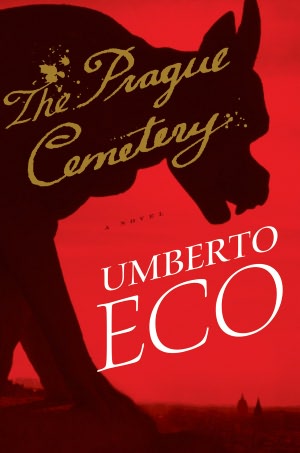
The Prague Cemetery
by Umberto Eco

The quote above tells you almost everything you need to know about the protagonist of Umberto Eco's latest novel. Set in 19th century Europe, Captain Simonini is an equal opportunity misanthrope, and early in the novel there's a lengthy diatribe against not only the Jews (always very much at the center of Simonini's hatred), but also the Germans, French, Italians, priests, Jesuits, Masons, women, and several other groups in asides. Simonini expounds, "They say that a soul is simply what a person does. But if I hate someone, and I cultivate this grudge, then, by God, that means there is something inside! What does the philosopher say? Odi ergo sum. I hate therefore I am."

I think it took me about three attempts to make it past these over-the-top opening salvos of hatred, and a smarter reader would have quit, but Eco has defeated me in the past, and I was determined to read this entire book. Why? Why? The Prague Cemetery is a dense, complex, convoluted tour through 19th century European history. (I strongly recommend that you acquire a Ph.D. in the subject before you sit down to read.) Simonini, it seems, is--Forrest Gump-like--at the center of almost all major events, and pretty much behind every conspiracy of the era.

As you may have gathered above, he is not a good guy. At one point he justifies: "Yes, I admit it. In my conduct toward my would-be Carbonari comrades, and to Rebaudengo, I did not act in accordance with the morals you are supposed to preach. But let us be frank: Rebaudengo was a rogue, and when I think of all I have done since then, I seem to have practiced all of my roguery on rogues." Yeah, right.

The novel is an autobiography of sorts, as there is some confusion as to Simonini's identity. He seems to be possibly inhabiting the same apartment? body? mind? as a clergyman named Abbé Dalla Piccola. Simonini's memory is full of holes, which Dalla Piccola seems to be able to fill, as he inserts his own recollections into Simonini's written document. Does this sound confusing? You have no idea. "Abbé Dalla Piccola seems to reawaken only when Simonini needs a voice of conscious to accuse him of becoming distracted and to bring him back to reality, otherwise he appears somewhat forgetful. To be frank, if it were not for the fact that these pages refer to events that actually took place, such alternations between amnesiac euphoria and dysphoric recall might seem like a device of the Narrator."

On the subject of "events that actually took place," pretty much all of the history (if not the stories behind the events) took place, and in fact, according to Eco, Simonini is the only fictional character in the entire novel. So, those European history Ph.D.s are really going to have a field day. For the rest of us, not so much fun, I have to say.

If it's not yet clear, I hated this book. I violently HATED this book! Reading it gave me PTSD. I know, you're wondering why the three stars? Well, as much as I hated it, I can't actually tell you it's bad. Eco is a brilliant, talented writer. I simply can't imagine why he chose to use his talent to tell this particular story. Here are some of the issues I had with the novel:
  • The required knowledge of history was oppressive. Without that knowledge, the novel was almost impossible to follow and/or appreciate.
  • The cast of thousands, all with multi-syllabic foreign names, was impossible to keep track of, especially as characters would reappear decades after their last appearance in the book.
  • Despite the sheer amount of stuff that happens within these pages, the story moves at what, for me, was an excruciatingly slow pace. I'm not actually sure how Eco managed that.
  • Not only is the central character a truly awful human being, there really is no one to like or care about much in the book.
  • While at first I was able to shrug off the anti-Semitic content of the novel, after 464 pages of the most vile garbage imaginable, it really, really got to me. As a Jew of European descent, no matter how ridiculous and over-the-top the hatred was (from all characters, not just Simonini), I know that everything Eco wrote was very reflective of the attitudes of the era. It made me ill. Make no mistake; I don't believe Mr. Eco is an anti-Semite. I just didn't need to read this hatred. It hurt me.
Umberto Eco is a great writer, but any way you chose to look at The Prague Cemetery, I don't believe to be among his strongest works, and it is certainly not one of his more accessible titles. Despite Mr. Eco's talent, I can't recommend this book to anyone. And it'll be a long time before I decide to read him again.

Wednesday, December 7, 2011

It's not a masterpiece, but it's fine airplane reading

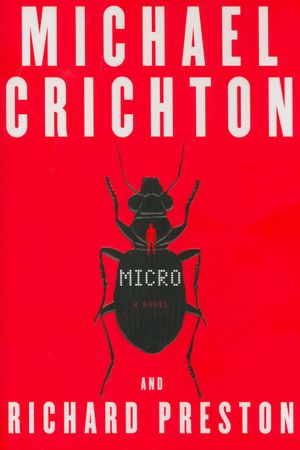
Micro
by Michael Crichton & Richard Preston

I was, and am, a huge fan of Michael Crichton's work. I never had very high expectations for this final novel, but that's no reflection on the choice of Richard Preston to complete the work. In any case, for better or worse, Micro lived up to my tempered expectations.

Like several of Crichton's earlier novels, Micro has a high concept hook. Most nanotech companies fabricate on a nano scale, but Nanigen MicroTechnologies has developed revolutionary shrinking technology. Not only can they reduce machines and robots, they can reduce living beings and then return them to full size. I won't get into all the details of the novel's set-up, but seven graduate students learn about this technology the hard way once they become a threat to Nanigen's president. Seven against one is much easier to manage when the seven (and one unlucky Nanigen employee) are half an inch tall. Before they can be dispatched quickly, however, the students escape into Hawaii's verdant "micro world."

Crichton's strengths and weaknesses as a storyteller remain consistent. His primary characters are more archetypes than individuals. Rather than Rick, Erika, Amar, and Karen, these students quickly show themselves to be the Leader, the Warrior, the Know It All, the Weasel, and so forth. Each has an assigned role to fulfill. Some barely live long enough to become typecast, because the micro world is treacherous. When you're half an inch tall, a beetle is not unlike a rhinoceros. Luckily, these students are unusually well prepared to survive their hostile surroundings--or unusually well informed about the danger they're in--depending on how you look at it. Among them there are experts in insects and arachnids, poisons and venoms, and the chemical defenses of plants and animals.

Crichton is great about translating the wonder of science. His amazing shrinking technology won't send me running to the textbooks this time around, but there's still plenty of gee whiz science to be enjoyed in Micro's pages. More than that, he effectively shows the beauty as well as the horror of the situation his characters are in. As for the horror, I have to admit that I found it especially disturbing this time out. I have no special fear of dinosaurs, but I am absolutely phobic about spiders and insects. There are scenes that I definitely could have done without reading, and if this is an issue for you as well, be forewarned.

Much like Jurassic Park, Micro has a picaresque quality, with its protagonists leaping from one threat to another. I hate to say it, but the plotting was pretty by the book. There was a police procedural subplot that never really went anywhere, and true surprises were few and far between. Despite this, I read the novel easily in a day (instead of saving it for my Thanksgiving flight like I was supposed to). Once I started, I didn't want to stop reading, and the pages flew past swiftly.

Preston appears to have done a good job finishing what Crichton left behind. There is no feeling that this is the work of another author. Still, I do find myself wondering how the novel would have differed had Crichton written it all. Alas, we'll never know. If you're a hard-core Crichton fan like me, by all means read this novel. Just don't expect this final work to be the man's masterpiece. And even if you're not a hard-core fan, if the premise sounds fun to you, you could do a lot worse for airplane reading.

Tuesday, December 6, 2011

It’s time to admit that I like zombies

Zone One
by Colson Whitehead

For the past year or so, I’ve been reading and reviewing all of these zombie novels with the caveat that “I’m not a zombie fan.”  While it’s true that I’ve never seen any of the classic films, I think it’s time to admit that I AM a zombie fan.  (But please don’t chip away at my vampire denial.)  I’ve read take after take on the end of the world, and each one is compelling in its own way.  There’s something elemental in the horror of an end by zombies.  Do I believe this could ever happen?  Absolutely not.  But in the hands of a talented writer, anything is believable.  All is believable.  Perhaps I am too willing with my suspension of disbelief, but this is the stuff of nightmares.

Much has been made of this “literary” foray into the horror genre.  In addition to being a zombie fan, I am also a fan of literary fiction, and I love that serious writers are now being allowed to practice their craft on a broader range of genres and are exploring plot-driven stories in addition to character-driven fiction.  This is a win/win trend for both readers and writers.  Ironically, reading this beautifully-written exploration of the apocalypse made me reflect less on how good it was, but more on how good a lot of the zombie novels I’ve been reading have been.  (Sophie Littlefield’s Aftertime Trilogy in particular comes to mind.)  There’s just something deeply touching in these fights for survival, and I think a lot of apocalyptic writers are really plugging into something powerful and profound.

Certainly I count Colson Whitehead among their number.  Whitehead’s tale centers on a character identified only by his nickname, Mark Spitz.  Want to know why he’s called that?  Read the book.  As the novel opens, the worst has passed.  The zombie plague has come, many have died, and society is taking its first baby steps towards rebuilding.  Mark Spitz’s tale is told in a non-linear fashion, as he attempts to move forward despite suffering PASD (because the world has moved beyond “post-traumatic” to “post-apocalyptic” stress disorders).  As he observes the new world around him and performs his duty of putting down zombie stragglers in a reclaimed lower Manhattan, he reflects on what he’s witnessed, who he’s left behind, and on what he’s survived while doing his “cockroach impression.” 

Glancing over the reader reviews on Amazon before I sat down to type this, I have to admit that I’m surprised by the harsh criticism that many have brought against the novel.  Some had issues with the non-linear nature of the story-telling, some felt it didn’t move fast enough, some thought the author was “showing off” or using “absurdly big words,” some seem to simply hate New York.  There were many complaints about the protagonist, and I’ll admit that he’s not a dynamic character.  He’s a traumatized everyman chronicling a dying world.  Don’t go into this expecting an upper.  There are more critical reviews than complimentary, and many of them are thoughtful and articulate.  All I can tell you is that I disagree with these criticisms.  I read this book in two days, and despite the depressing story told, I didn’t want to put it down.  I was very invested in the fates of the primary and secondary characters.  Whitehead’s prose was a pleasure to read without being overly ornate or intrusive in any way. 

And one last thing—this is one of those rare novels where the author had me hanging on his words until the very last page.  And those final words were just so… perfect.  They gave me chills.  I read them over several times.  The end of this novel was amazing, and I simply don’t know how it could fail to impress.  But that’s opinions for you.  If you’re prepared to read a heavy, disturbing, and, yes, horrific tale, I’d highly recommend this novel.  But you might want to survey some other opinions of this polarizing book before you take my word on it.