Showing posts with label Booker longlisted. Show all posts

Saturday, October 8, 2011

Boy + Tiger + Sea voyage = Booker nomination?

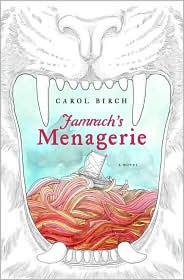
Jamrach's Menagerie
by Carol Birch

Set in the unforgiving world of 19th century England, Jamrach’s Menagerie is the story of Jaffy Brown, who claims to have been reborn at the age of eight. On that day, he’s out and about when everyone around him starts running and pressing themselves up against walls. Looking up, he sees a large tiger padding right towards him. Jaffy walks up and pats its fur—at which point the tiger takes the boy in its mouth and starts carrying him off, little bare toes dragging over the cobbles. Jaffy doesn’t struggle or fuss.

Soon enough, the boy is saved by the eponymous Jamrach, the dealer in wild and exotic animals from whom the tiger had escaped. Jamrach decides that Jaffy is “good with animals,” and fearless to boot. The eight year old is offered a job, and he spends his formative years working with the animals alongside a frenemy, one year older. As teenagers, the two boys decide to ship off to sea aboard a whaling ship with a secondary mission. They are to capture an unknown beast—a dragon—for one of Jamrach’s wealthy clients. We haven’t entered the realm of fantasy; this reader knows that what they are after is a Komodo dragon, even if the characters themselves don’t.

While this is Ms. Birch’s ninth novel, it’s her first novel-length work published in the U.S. It has also been short-listed for the Man Booker Prize this year, and I can certainly see why. Rarely have I seen more evocative prose. She has vividly captured the sights and sounds and ghastly smells of this harsh era. She has also captured the wonder of this more innocent age. Beauty and wonder are a joy to read when so evocatively rendered, but when the tale devolves into terror, madness, and a struggle to survive—as it does—the power of her prose is painful. It’s amazing how affecting mere words can be!

Jaffy Brown is a character who leads an extraordinary life, and Carol Birch takes her readers on an adventure well worth traveling!

Thursday, August 11, 2011

Tortured English is more like it!

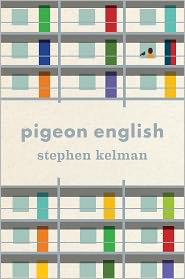
Pigeon English
by Stephen Kelman

While I can’t say that Stephen Kelman’s novel Pigeon English was a whole lot of fun to read, I don’t regret having made the effort. Elements of the novel can be challenging and/or tedious, but by the time you reach the end it packs a powerful punch.

The novel opens with a body on the ground, a murdered child, never identified beyond “dead boy.” It is being gazed upon by 11-year-old Harrison Opuku, our first-person narrator and torturer of the English language. Harri is a recent emigrant from Ghana. He’s come to the London with his mother and older sister, while his father saves money back home to bring over the rest of the family. And Harri seems to be adapting well. He’s made friends and, for better or worse, is adapting to the prevailing culture.

Harri and his best friend, Dean, decide they’re going to investigate dead boy’s murder. Dean’s seen many episodes of CSI, so he knows how it’s done. This “investigation” is a loose thread throughout the novel, which takes place over the course of several months. But mostly Pigeon English is the Harri show. And Harri is as sweet and endearing a character as I’ve read in quite some time. He’s smack in the middle of the London projects, stabbings and AIDS and junkies are a part of his daily reality, and yet, somehow, he is an innocent. And he is in peril. The seduction of the street gangs is just one of the many threats the adult reader sees looming over the young man. And it’s painful to read. Still, there is a lot of humor salted throughout the novel.

Another narrative element is Harri’s affection for a pigeon that flies into their flat one day. Harri explains, “I just wanted something that’s alive that I can feed and teach tricks to.” A pet pigeon isn’t in the cards, but Harri keeps an eye on him. The pigeon, it seems, keeps an eye on Harri as well. Throughout the novel are brief interludes from the pigeon’s point of view as he watches over Harri. These are some of the most beautiful passages. Ironically, the pigeon’s English is flawless.

As sweet, imaginative, and funny as Harri is, reading an entire novel in his voice is a challenge. For starters, he has a very limited vocabulary. Despite his assertion that in “England there’s a hell of different words for everything,” he tends to use the same handful. Some are recognizably English—though I’ve never seen anyone so often “vexed” as he is. Other words are more open to interpretation. I think the frequent exclamation “Asweh” is “I swear.” An angry person is “red-eyes.” “Bo-styles” means cool. A long time is “donkey hours.” A tricky person is a “confusionist.” And most mysterious of all was the word “hutious,” used in so many different contexts that I’m left to conclude that it bears a grammatical resemblance to “supercalifragilisticexpialidocious.”

Thankfully, this is a short novel, and the language can be dealt with. When I finally got to the end, I can’t honestly say that I didn’t see it coming. Still, it was a shock. Or perhaps the shock was just how much of an emotional wallop it packed. And ultimately, that’s why I rate this novel a success—because by the end, I cared deeply about this child.

Saturday, October 23, 2010

Tragicomedy, my favorite

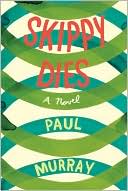
Skippy Dies: A Novel
by Paul Murray

A 672-page novel is an investment, but Skippy Dies by Paul Murray gets so much right that I hardly know where to begin. Okay, I'm going to begin at the beginning...

The novel opens with the death of the eponymous Daniel "Skippy" Juster as the 14-year-old collapses in a donut shop. From there, we are taken back in time to the myriad events that lead up to that moment. And we spend the next 450 pages falling in love with Skippy, hoping for a different outcome. The following 200 pages are the aftermath, and are arguably the most compelling of a very compelling tale.

Now, a book about the death of a young boy sounds like a bummer--and Skippy's death is far from the only tragedy depicted--but as in life, the tragedy is balanced with high comedy. The novel is set at Seabrook College, an upscale private preparatory school in Ireland. This, the institution's 140th year, is a time of transition. The Catholic priests who have been in control for more than a century are beginning to take a back-seat to secular influences. (Yes, contemporary scandals in the Catholic Church are touched on within the plot, which may be objectionable to some readers, but it's not the focus of the story.)

While Skippy is certainly a central character, the novel is an ensemble piece. We meet Skippy's school pals, the older boys that bully them, the teachers and priests that teach them, the girls from the neighboring school, a smattering of parents and significant others. There's a plot. Many of them, in fact; it's an expansive novel and much happens along the way. But this story is character-driven, and that's where Murray excels. His characters are so, so delicious! Ruprecht, the idiosyncratic genius; Mario, the teenage lothario; Howard "The Coward" Fallon, a teacher searching for himself; and an acting principal you'll love to hate. He perfectly captures the sweet innocence of young boys, right along with their monstrous side. Every word, every action rings true. In Murray's novel, protagonists disappoint. Good things do not always happen to good people. But through it all, there is still so much to laugh about.

I could not be less interest in Irish school boys, but Paul Murray has written a universal tale that simply shines. The writing is fantastic, and just gets better and better as the novel unfolds. I loved it from start to finish. Don't let the length deter you from one of this year's finest reads.