Monday, February 25, 2013

Patient readers will be rewarded

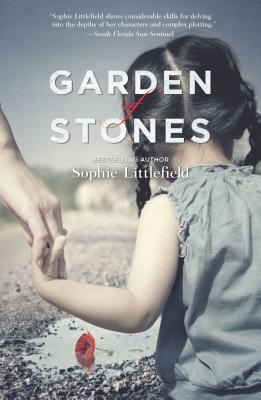
Garden of Stones
by Sophie Littlefield

Sophie Littlefield’s latest novel, Garden of Stones, opens in San Francisco in 1978. The first chapter anticipates the murder of an old man. The second chapter introduces Patty Takeda and her mother Lucy. Patty, visiting her mother in the days leading up to her (Patty’s) wedding, wakes to find Lucy having an early morning chat with a police inspector. Lucy is being questioned because she knew the victim decades prior, and neighborhood residents placed her at the scene. With her horrible facial scaring, she’s hard to miss. The third chapter is where the novel’s structure becomes apparent. It flashes us back to the Los Angeles of 1941.

Having just met the caustic older Lucy, we are now introduced to the stunningly beautiful adolescent version. This privileged young girl is about to suffer a series of blows leading up to the United States’ entry into the war. Her Japanese heritage is suddenly a huge liability. From there, the novel moves back and forth in time between the events of 1978 and those in the 1940’s—with the bulk of the tale occurring in the past. Lucy is sent to the Manzanar internment camp, along with her family, friends, and neighbors. It is events that occurred at Manzanar that directly cultivated the woman Lucy was to become—and perhaps to the murder that has occurred.

Now, I have been a fan of Ms. Littlefield’s for years, and I love the sheer breadth and depth of what she writes from comic mysteries to zombie apocalypses. The set-up above seems like another mystery, but truthfully, it’s more of a historic drama. The subject of Japanese internment strikes close to home to me—literally—having spent the past decade living a block from San Francisco’s Japantown. My neighborhood was greatly impacted by this shameful period of California’s history. I think fiction can be a powerful medium for evoking history. Through fiction, stories live on and are humanized.

I also think that a lot of research went into this novel, and yet I felt somewhat frustrated by viewing this history through the eyes of an unsophisticated teenage girl. Those flashback sections of the novel had something of a YA feel about them. Now, I have nothing against young adult fiction—I read a ton of it—but here I was hungering for a little more…detail …maturity … substance. That would be my complaint.

That said, I found myself very caught up in the story of these characters. Littlefield writes, “It was as if her mother had once been an entirely different person, and Patty faulted herself for never having seen far enough into her depths, for not being curious enough to coax out the story until now.” Lucy Takeda lived an extraordinary life in a period of great historic significance. As events led up to what felt like a climax, I realized that I was only at the center of the tale. As Lucy matured, I became more and more invested in her story. The frustration I’d felt earlier in the novel disappeared. Character development has always been Ms. Littlefield’s strength, and that is again the case here. Still, by the time I’d reached the novel’s end, she managed to truly surprise me with a couple of unexpected plot twists. One, in particular, was really cleverly done.

Ultimately, the murder that opens this novel is little more than a framing device, but as such it works well. Garden of Stones is a great choice for readers interested in mother-daughter relationships, or who are simply looking for a great story set against a historic backdrop. While it took me a little while to become fully invested in the tale, the deeper I read, the more I enjoyed this novel.

Thursday, February 21, 2013

“I know it sounds crazy.”

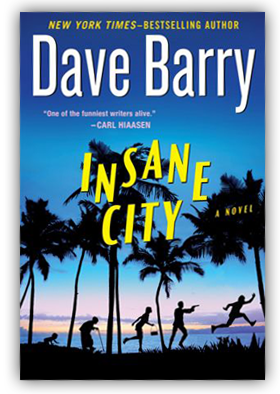
Insane City
by Dave Barry

I’ve been a fan of Mr. Barry’s for decades. He has elicited from me embarrassing snorts of laughter on too many occasions to count. Therefore, and new novel is always an occasion to be looked forward to.

The insane city of the novel’s title is Miami, Florida, soon to be the site of the Weinstein-Clark wedding. At the heart of the tale is groom Seth Weinstein, and the novel’s first few chapters could be the opening of The Hangover III. It’s bachelor party night, and while amusing, I did think to myself, “If this is 300 pages of Boys Behaving Badly, I’m not sure I can take it.” Happily, that is not the case. Well, there is a lot of bad behavior from boys, girls, and, uh, various other creatures, but the bachelor hijinks soon pave the way for a far more absurd and entertaining tale. It’s goofy as all get out, but has both substance and heart at its very core. I could try to summarize the novel’s plot, but I think it would be a lot more fun to share a few brief quotes:
“This isn’t what it looks like.”

“So, you’re not bleeding from the head and hanging out with a BeyoncĂ© look-alike and a Jerry Springer bouncer carrying a large snake?”

“He had to stop being an idiot.”

“Wait, he shot a Jet Ski? Even in Miami, that has to be against the law.”

“I know it sounds crazy.”

“Eventually these people decided that this was just another one of those strange things that seem to happen in Miami.”

“Nothing I hate more than an orangutan shooter.”

“If you’re just joining us this morning, we’re following one of those weird stories that makes you shake your head and say, ‘Only in Miami.’”

“It’s complicated.”

“Even by Miami standards, this was a weird group making its way through the Bayside crowd.”

“Any man fleeing from the police with three women, two children, and an orangutan is a friend of mine.”
Oh, yes, it’s novels like this that make me wonder why I’m considering relocating to Miami. Dave Barry can still make me laugh out loud after all these years. And while no one will ever mistake his work for literary fiction, he did once win a Pulitzer Prize for Commentary. He knows how to write a proper sentence. Furthermore, he did a nice job of creating characters who, over the course of the novel, manage to reveal their true natures.

Don’t come to this one looking for sophistication or subtlety, but if you’ve had a bad day and are seeking a little screwball comedy, look no further. Insane City is guaranteed to lift your spirits.

Tuesday, February 19, 2013

“Extinction is the rule. Survival is the exception.”—Carl Sagan

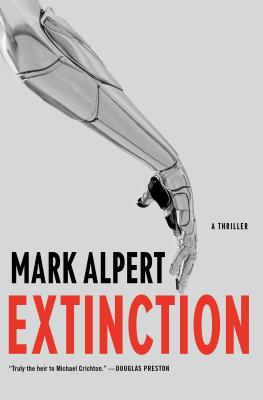
Extinction
by Mark Alpert

Every time a writer is compared to the late, great Michael Crichton, my heart skips a happy beat. I don’t think his large shoes will be filled any time soon, but I am delighted to see other writers trodding the same territory. Mark Alpert is a natural for these comparisons. With a degree in astrophysics and more than a decade on the editorial staff of Scientific American magazine, the man knows his science. Extinction is his third foray into the word of fiction.

After a brief prologue, readers are introduced to former soldier Jim Pierce. Himself an amputee, Jim has turned his engineering know-how to the world of high-tech prosthetics. In the novel’s opening scene, he’s having a consultation with a young soldier, explaining to the wounded man just how advanced these devices have become. The prosthetics Jim builds (and wears) are like something out of a James Bond film, and controlled wirelessly by the user’s brain—just like a natural body part.

Shortly after he leaves Jim’s workroom, an unexpected visitor arrives asking questions about Jim’s estranged, 22-year-old daughter, Layla. The visitor claims to be from the military, but that story quickly breaks down into threats and violence. Jim is more than an ex-soldier, he’s a former intelligence officer, and he knows a Chinese spook when he sees one. What the hell has his daughter gotten herself into?

Alpert’s tale is not a simple high-concept plot that can be summarized in a few sentences or even paragraphs. I suspect I should quit this synopsis while I’m ahead. Extinction deals with a variety of technologies involving machine-brain interfaces. Some are as innocuous as bionic limbs and eye glasses that function as eyes for the blind. Other technologies lead to the threat at the heart of this novel—a dangerous new artificial intelligence, a sort of human-machine hybrid that wants to rid the world of the vast majority of those pesky human components. It is this borg-like entity that may well pull the trigger on our extinction. And Jim Pierce and his daughter somehow get sucked into this high-stakes drama. I’ll leave it to you to uncover the details.

It is unsurprising that Mr. Alpert is at his best when delving into the science that is integral to the novel’s plot. Says one character:
“Just think of it! We won’t be tied to these fragile bodies anymore! If we can store a person’s memories in a sufficiently powerful processor, we can program it to generate new thoughts based on those memories. For all intents and purposes, the intelligence inside the processor would be identical to the one inside the person’s brain. And this will become possible very soon, within the next few decades. There are people alive today who will never die!”
An author’s note at the novel’s end gives readers a better idea of what is fact and what is fiction. It’s surprisingly difficult to figure out in this day-after-tomorrow-set tale. The science in this book is smart, fascinating, and has a really high gee-whiz quotient. Alpert delves enthusiastically into several different disciplines. It’s exactly what I want to see in this type of thriller. Further, Mr. Alpert has fashioned a fun, fast plot in which to imbed all that science. Yes, it is somewhat formulaic, but aren’t they all?

Mark Alpert brings a heap of knowledge to his fiction, and he’s great at explaining complex ideas and building a plot around them. However, it’s the actual mechanics of writing fiction where he’s weakest. This is most apparent near the novel’s opening. Some of the early exposition was truly graceless. Nor will he win any awards for the elegance of his prose. It’s serviceable, but nothing more. And, yes, there were a few plot contrivances. Alpert does better with his action sequences. They really propel the narrative in the second half of the novel. Character development is a mixed bag. A description of how Layla experiences music, for example, was a great insight into how she experiences the world. It was a lovely detail.

Most readers of techno-thrillers aren’t concerned about a little clumsy exposition. Most are looking for some smart, speculative science buried in a propulsive plot. They’re looking for a glimpse of that old Crichton magic. And they just might find it in Extinction.

Monday, February 11, 2013

Russell’s sophomore collection proves provocative and disquieting

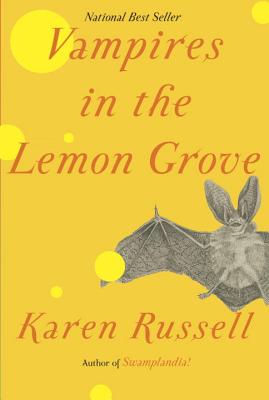
Vampires in the Lemon Grove
by Karen Russell

I was introduced to Ms. Russell’s work through her Pulitzer Prize finalist debut novel, Swamplandia! I was immediately seduced by her imaginative use of language, as well as the quirky tale and endearing central character. I came to Vampires in the Lemon Grove, her second story collection, expecting more of the same except, you know, shorter. I don’t know that my expectations were fully met.

Ms. Russell writes beautifully—so no complaints there. She has an idiosyncratic and evocative style, and if you’ll indulge me, here are a few quotes:
  • “Marcy McFadden was gone. But Beverly could read the Braille of her mother’s curved spine—it was composed in the unspeakable, skeletal language that she had learned at school.”
  • “Beverly once read a science magazine article about bioluminescence, the natural glow emitted by organisms like fireflies and jellyfish, but she knows the dead also give off a strange illumination, a phosphor that can permanently damage the eyes of the living. Necroluminescence—the light of the vanished. A hindsight produced by the departed’s body. Your failings backlit by the death of your loved ones.”
  • “It was a terribly embarrassing voice—a weak white grasshopper species that we would have tried to kill, had it belonged to a fellow child.”
Hers is a rare and extraordinary gift. And, yes, she is still telling quirky tales, some of them extremely so. The title story is exactly as advertised. It’s about an elderly vampire living in an Italian lemon grove. Russell has fun exploring the “reality” of pop culture vampire tropes. Even the vampires buy into them, apparently. That first tale is emblematic of the stories in the collection—almost all of them involve some fantastic element or other. And then there’s this: Ms. Russell’s premises can suggest a certain lightness or even humor, but her tales often turn dark.

It was the collection’s second story, “Reeling for the Empire,” that—for lack of a better description—completely freaked me out. I’m not going to describe it at all; it’s better for you to just discover it exactly as the author has presented it. What I will say is that it’s deeply, deeply weird and nightmarish. But also kind of brilliant and… and… What kind of sick mind thinks up this stuff? That is where I began to feel disquieted and also provoked. Ms. Russell’s stories provoked strong reactions from me. I’m not sure they were entirely positive reactions, but I could always appreciate the talent, intelligence, and imagination that Ms. Russell displayed.

I don’t feel like it would be productive to write up summaries of the eight stories that make up this collection. Ultimately, a plot synopsis wouldn’t be very illustrative. It was interesting for me to read this collection virtually back-to-back with George Saunders’ much-vaunted collection, Tenth of December. There were interesting aspects to their work to compare and contrast, which was not surprising as Mr. Saunders is often listed as influencing Ms. Russell. Speaking broadly, reading him was a more joyful experience. But for better or worse, it’s her tales that will probably have the greater staying power. Ms. Russell’s stories disturbed me at the same time as they entertained me. I had confusing emotional responses to her work. I suspect that she would be very pleased to have aroused such reactions.

Monday, February 4, 2013

“More than kisses, letters mingle souls.” –John Donne

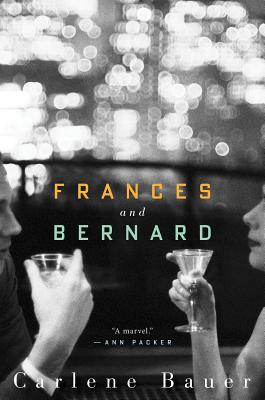
Frances and Bernard
by Carlene Bauer

I love letters—both writing and receiving them. It’s a lost art, and an intimate form of communication. Perhaps it is these feelings that make me especially receptive to the epistolary novel. The obvious has only occurred to me recently, but I flat-out love them. Where’d You Go, Bernadette?; The Guernsey Literary and Potato Peel Pie Society; and The Lawgiver were all favorite reads within the last few months. Epistolary novels have an unusual structure. For me, it’s just an exceptionally interesting and non-linear way to tell a story.

The other thing is, our voices come alive in our correspondence. Within the first few pages of Frances and Bernard, I’d fallen in love with both of the titular characters. I could hear their voices so clearly through the letters they wrote. They were funny, intellectual, literate—no wonder these two hit it off immediately when they met at a writers’ colony in 1957. Frances is a novelist, not yet published, and Bernard, a poet, with a bit more of a track record. The book follows their correspondence for just over a decade.

According to the novel’s jacket copy, these two are loosely based upon Flannery O’Connor and Robert Lowell. May I be honest? I don’t know a thing about these literary progenitors. I’m sure an intimate knowledge of O’Connor and Lowell’s history and work would have added untold richness to my read. However, my ignorance detracted nothing as far as I can tell, and made their story feel completely fresh and unexpected to me.

Truthfully, I’m rather surprised by just how much I liked this debut. It should be noted that a significant percentage of Frances and Bernard’s correspondence with each other deals with matters of Catholicism and faith—not my favorite subject matter. For me, this tale was ALL about the two central characters that were so beautifully realized by Carlene Bauer. What is the nature of their connection, and where will it lead? Bernard writes to his best friend:
“You have posited that she may have, your words, a thing for me, but I don’t think she does, and I am fairly sure that I don’t have one for her. I kept looking at her from different angles and examining my response. Various types of affection flared up in her presence, but not romance.”
Don’t expect the typical boy-meets-girl tale. Later he writes to the same friend, “…she knew me when I was at my most Bernard and I knew her when she was at her most Frances.” I ask you, who wouldn’t want to be known like that?

Friday, February 1, 2013

New series, new collaborator, new genre for the New Year!

The Blood Gospel
by James Rollins & Rebecca Cantrell

It's no secret to readers of my reviews that I'm a huge fan of James Rollins' novels, and have been ever since Subterranean was first published. In the years since, in addition to penning the wildly popular Sigma Force series and several excellent stand alone thrillers, he has written seven fantasy novels under the name James Clemens as well as two young adult adventures. I love that he isn't content to write the same type of story over and over. Not only has he expanded his own literary horizons, he's very much expanded my own.

The Blood Gospel is yet another new direction for Mr. Rollins. Well, two new directions, actually. For the first time, he's sharing authoring responsibilities with Rebecca Cantrell, a writer well-respected for her own historic mystery series. And while The Blood Gospel is as much a fast-paced thriller as anything Mr. Rollins has written to date, it also falls firmly in the territory of a new genre: horror.

The novel opens with a brief prologue set in the past--AD 73 in Masada, Israel--where readers are witness to events leading to the tragedy for which the historic site is known. However, we are also witness to a far more inexplicable drama... After just a few pages, the action shifts to present-day Israel, at the dig of American archaeologist Erin Granger. Her own promising work is interrupted by an earthquake--and is further interrupted when Israeli and American soldiers arrive to escort her to Masada. The quake has unearthed something and her expertise is required. Along on the journey is a mysterious figure. "He was no soldier. He was a priest. He wore black pants, overhung by an ankle-length hooded cassock, along with black leather gloves, dark sunglasses, and the familiar white collar of the Roman Catholic clergy." You've just been introduced to Father Rhun Korza. He's not the first priest to appear in Rollins' fiction, but I'm telling you right now that he's the most interesting.

At Masada, this is what Erin finds:
"A macabre sculpture hung on the wall, like a blasphemous crucifixion. She moved past the corner of the sarcophagus. With each step, a growing horror rose in her.

It wasn't a sculpture.

On the wall hung the desiccated corpse of a small girl, maybe eight years old, dressed in a tattered, stained robe. A handful of blackened arrows pinned her in place, a good yard off the floor. They pierced her chest, neck, shoulder, and thigh."
What can I say? These authors can paint a tableau, and sometimes the details are haunting. I don't know if it was Mr. Rollins or Ms. Cantrell who supplied the detail of the doll, but that is the beauty of collaboration. It's hard to say who did what (I couldn't tell), but hopefully the work is stronger when two talents bring their a-game.

I'm not going into any detail about the plot of this novel. What I can tell you is that the third primary character is an American soldier named Jordan Stone. The novel is the first of the new "Order of the Sanguines" series. These three diverse characters find themselves on an urgent quest for an artifact called the Blood Gospel. "It is the Gospel. Written by Christ's own hand. In his own blood."

So, let's talk about religion. You may have heard, it's a hot-button topic for some. I'll be VERY curious to see the popular response to this novel. Me, I'm a secular Jew. I'm not going to lie. This got kind of New Testament for me. BUT this is not--emphatically-- Christian fiction. I wouldn't call it excessive, but there's foul language within the text. Even more noteworthy, there's some fairly steamy erotic content. (Well done, too!) So, this is NOT Christian fiction, but it has a fair amount of religion, some of which might be considered blasphemous by certain segments. Rollins tries to look at faith from different angles. At one point, Erin asks, "Why me?" and is told:
"I have followed your work, Dr. Granger. You are skeptical of religion, but steeped in biblical knowledge. As a result, you see things that nonreligious scholars could miss. Likewise, you question things that religious scholars might not. It was that rare combination that made you perfectly suited to bring the Gospel back to the world."
Suffice it to say, there is significant opposition to our heroes' quest. Some of it is worldly and some of it is otherworldly. There's a big word that I'm not saying, but it won't take you long to discover the supernatural elements to the tale. Readers have seen a lot of this in recent years, but James Rollins is putting his own twist on the familiar.

Mr. Rollins and Ms. Cantrell are off to a strong start with this series. This book introduces some truly intriguing characters with complex backgrounds and motivations. And it features a plot that surprised me at every turn. More importantly, there's a complete story arc to Book One, with a conclusion. That's not to say that there aren't bigger picture questions left unanswered for future books--and one flat-out jaw-dropper in the final chapter. (Seriously, DO NOT PEEK.) You've gotta love the jaw-dropper! Um, when is Book Two out?

Thursday, January 31, 2013

Hollywood, Jews, & Hollywood Jews

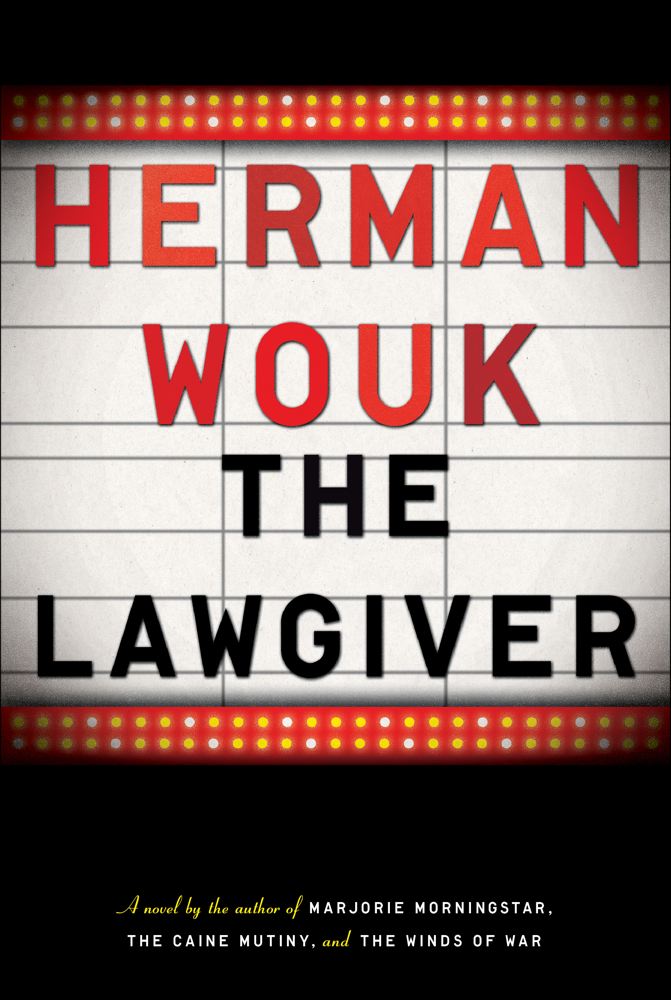
The Lawgiver
by Herman Wouk

Ninety-seven-year-old Herman Wouk (or a fictionalized version of him) is minding his own business. And his business, as you know, is writing novels. He’s finally tackling the ambitious project he’s wanted to write for decades, the story of Moses. It is a huge coincidence, therefore, when a hot Hollywood producer finagles a meeting insisting that he’s the only man for the job of writing a Moses screenplay.

Well, Mr. Wouk wants nothing to do with this. Meetings are refused until a rabbi intervenes. Ultimately, it is revealed that the epic film’s funding—through unconventional sources—rests upon Wouk’s participation. Under duress, he agrees to act as a consultant to the film, with final script approval. A screenwriter for this all-but-unwritable film must be found. Enter Margo Solovei, a young, independent film auteur who has eschewed her orthodox Jewish upbringing. And it is actually Margo who is at the novel’s heart, as she pursues this project while dealing with producers, directors, actors, Herman Wouk, and any number of people tying her to her roots.

I doubt I can express how much I loved this novel! Oh, how I laughed! It’s true that I am Jewish, and that I have worked in the film industry, so it’s possible that the tale “spoke” to me more than it might to some, but Wouk’s satire is dead on. Not just of an industry, but of human nature. I guess nearly a century of life gives a man some perspective. Also, as the Booklist reviewer astutely pointed out, there are subtle reflections of Wouk’s classic 1955 coming of age novel, Marjorie Morningstar, adding an additional layer of pleasure for fans such as myself. It’s really quite amazing the various themes and commentaries that Mr. Wouk manages to work into this slender novel. It’s playful as hell, but still whip smart.

Oh, yeah, I should mention that this is an epistolary novel, always a fun and inventive way to tell a tale. It’s comprised of letters, emails, faxes, IMs, Skypes, transcripts, voicemails, and so forth. Through the correspondence of the characters’ personal and professional lives, a web of connections is formed. And in the end, The Lawgiver is a romantic comedy. I rooted for lovers to find their way. I rooted for unsavory characters to get their comeuppance. And I rooted for Mr. Wouk, who has proved that at 97 he is as sharp as he ever was. I was moved by the novel’s epilogue, and I shall be waiting with anticipation for his next two novels.

Wednesday, January 30, 2013

Matt Richtel knows how to hook readers...

The Cloud
by Matt Richtel

…The openings of his novels are always grabbers. In The Cloud, protagonist Nat Idle is waiting to catch a late-night train when an enormous drunken man staggers into him. They both crash to the ground, with Nat very nearly thrown to the tracks in front of an oncoming train. A near-death experience instead becomes a nasty crack on the head, and a kind passerby rushes to assist. The drunk takes off, with a paper falling from his pocket as he exits. Nat’s ready to write the incident off, grateful to have gotten off relatively lightly—until he picks up the paper the man dropped. His name is on it. This was no accident.

That is merely the beginning of another of Idle’s investigative adventures. For a medical journalist and blogger, he does seem to become embroiled in some dark stuff. This story involves a technology designed to help kids learn to multi-task that may be causing a far more serious side effect. And yet, as intense of the plots of these novels are, at their heart they are character-driven, and none more so than this latest installment. Character absolutely drives plot, but in this case, prior knowledge of the character from his debut in Hooked or Devil’s Plaything would be helpful. Nat sustains a head injury in that opening scene. It affects him. He’s not himself, and I think that will be appreciated more by readers acquainted with the character. Nat’s funny, friendly, flawed, and fallible. He’ll go after a story like no one’s business. But in The Cloud, he’s altered. And he’s something of an unreliable narrator, which makes an already convoluted mystery that much more mysterious.

Mr. Richtel, incidentally, is also a journalist. By day, he writes about technology for the New York Times. He, in fact, won a Pulitzer Prize for doing so a few years ago. My point is, the man can write. His prose has an effortless readability, a sense of fun, and frequently rises above what one expects to find in a thriller. The novel moves swiftly, as events take place over the course of just a few virtually sleepless days. Furthermore, by the time all is revealed, the elegance and intricacy of the novel’s plot will become apparent. Oh, I had suspicions along the way. Some were right, many were wrong. But once I knew the truth, it was all so clear. The clues were salted everywhere.

Richtel didn’t learn about character development, pacing, and plot on the day job. I’m not sure where he learned the tools of his trade, because in this novel especially, he eschews literary convention while at the same time embracing certain genre tropes, for instance a beautiful and mysterious woman straight out of a detective noir. Tropes are tropes for a reason, and Richtel has his fun. But it’s where he diverges from convention, notably with this novel’s conclusion, that things get really interesting. I can’t discuss the choices made without spoilers, so I’ll simply say that Mr. Richtel wrapped up his mystery in a way that was unexpected, unconventional, sophisticated, and satisfying.

And aside from solving the mystery, Mr. Richtel has taken his protagonist into uncharted territory. The tale comes to a complete conclusion with no annoying cliff-hangers, but Nat evolves so much (and so believably) in this novel that I’m now consumed with knowing what the next chapter in his life will bring.

NOTE: For local San Francisco readers, Matt will be appearing along with novelist Sophie Littlefield at the SF in SF literary series on Saturday, February 9, 2013 at 7:00pm.  Please join me there!

Monday, January 21, 2013

What DID Susan read in 2012?


1. Rules of Civility – Amor Towles ★★★★★
2. The Night Swimmer – Matt Bondurant ★★★
3. The Odds – Stewart O’Nan ★★★★★
4. Bet Me – Jennifer Crusie ★★★
5. Stories I Only Tell My Friends – Rob Lowe ★★★★★
6. Sleeping Beauty – Elle Lothlorien ★★★★
7. Stay Awake: Stories – Dan Chaon ★★★★
8. Love and Shame and Love – Peter Orner★ ★★★★
9. The Spy Who Jumped Through the Screen – Thomas Caplan ★★
10. Hope: A Tragedy – Shalom Auslander ★★★★
11. The Borrower – ★★★
12. The Orphan Master’s Son – Adam Johnson ★★★★★
13. The Roswell Conspiracy – Boyd Morrison ★★★★★
14. Gideon’s Corpse – Douglas Preston & Lincoln Child ★★★
15. The Secret Adversary – Agatha Christie ★★★★
16. 150 Pounds – ★★★★
17. The Flame Alphabet – Ben Marcus ★★★
18. Horizon – Sophie Littlefield ★★★★★
19. Bloodland – Alan Glynn ★★★★★
20. Defending Jacob – William Landay ★★★★★
21. Starters – Lissa Price ★★★★★
22. The Secret of the Sands – ★★★
23. Back to Zero – ★★★
24. Entangled – ★★★
25. The Snow Child – Eowyn Ivey★★★★★
26. Ragnarok – A.S. Byatt ★★★
27. Beat the Reaper – Josh Bazell ★★★★★
28. Wild Thing – Josh Bazell ★★★★★
29. The Hunger Games – Suzanne Collins ★★★★★
30. Catch Me – Lisa Gardner ★★★★★
31. The Eden Prophesy – Graham Brown ★★★★★
32. Extremely Loud and Incredibly Close – Jonathan Safran Foer ★★★★★
33. How to Cook Like a Man – Daniel Duane ★★★★
34. The Technologists – Matthew Pearl ★★★
35. The Rook – Daniel O’Malley ★★★★★
36. The Help – Kathryn Stockett ★★★★
37. The Starboard Sea – Amber Dermot ★★★
38. The Dressmaker – Kate Alcott ★★★★
39. River Monsters: True Tales of the Ones That Didn’t Get Away – Jeremy Wade ★★★★
40. Clawback – Mike Cooper ★★★★★
41. The Salmon of Doubt – Douglas Adams ★★★★
42. The Mirage – Matt Ruff ★★★★
43. The Games – Ted Kosmatka ★★★
44. This is How – Augusten Burroughs ★★★★
45. Catching Fire – Suzanne Collins ★★★★★
46. The Good Father – Noah Hawley ★★★★★
47. The Vanishers – Heidi Julavits ★★★★
48. How to Eat a Cupcake – Meg Donohue ★★★★
49. The Lifeboat – Charlotte Rogan ★★★★
50. The Thief – Fuminori Nakamura ★★★★
51. Mockingjay – Suzanne Collins ★★★★★
52. Angelmaker – Nick Harkaway ★★★★★
53. The Professionals – Owen Laukannen ★★★★★
54. The Importance of Being Earnest – Oscar Wilde ★★★★★
55. Edge of Dark Water – Joe Lansdale ★★★★★
56. Love is Murder – ITW ★★
57. The Philanthropist’s Danse – Paul ★★★★★
58. Oath of Office – Michael Palmer ★★★★
59. The Gilly Salt Sisters – Tiffany Baker ★★★
60. Gods Without Men – Hari Kunzru ★★★★★
61. The Return of the Ancients – Greig Beck ★★
62. An Economist Gets Lunch – Tyler Cowen ★★★★★
63. The Innocent – David Baldacci ★★★★
64. Wife 22 – Melanie Gideon ★★★★★
65. The New Republic – Lionel Shriver ★★★★
66. Lunatics – Dave Barry & Alan Zweibel ★★★★
67. Don’t Turn Around – Michelle Gagnon ★★★★★
68. The Fault in Our Stars – John Greene ★★★★★
69. Sorry Please Thank You – Charles Yu ★★★★
70. Overseas – Beatriz Williams ★★★★
71. White Lies – Jeremy Bates ★★
72. Guilt By Degrees – Marcia Clark ★★★★★
73. The Age of Miracles – Karen Walker Thompson ★★★★★
74. Discretion – Alison Leotta ★★★★★
75. The Deep Zone – James Tabor ★★★★
76. The Columbus Affair – Steve Berry ★★★
77. How to Talk to a Widower – Jonathan Tropper ★★★★
78. Fool Moon – Jim Butcher ★★★★
79. In One Person – John Irving ★★★★★
80. The Chemistry of Tears – Peter Carey ★★★★★
81. The Third Gate – Lincoln Child ★★★★★
82. Canada – Richard Ford ★★★★★
83. Bloodline – James Rollins ★★★★★
84. Strindberg’s Star –Jan Wallentin ★★
85. They Eat Puppies, Don’t They? – Christopher Buckley ★★★★★
86. The 500 – Matthew Quirk ★★★★
87. Gone Girl – Gillian Flynn ★★★★★
88. The Long Earth – Terry Pratchett & Stephen Baxter ★★★★★
89. Don’t Ever Get Old – Daniel Friedman ★★★★★
90. ParaNorman – Elizabeth Cody Kimmel ★★★
91. The Conviction – Robert Dugoni ★★★★
92. The Maze Runner – James Dashner ★★★
93. Beautiful Ruins – Jess Walter ★★★★★
94. The Key – Simon Toyne ★★★★
95. SecondWorld – Jeremy Robinson ★★★★
96. A Bad Day for Mercy – Sophie Littlefield ★★★★★
97. Alif the Unseen – G. Willow Wilson ★★★
98. Ice Fire – David Lyons ★★★
99. Beneath the Dark Ice – Greig Beck ★★★★
100. The Dangerous Animals Club – Stephen Tobolowsky ★★★★
101. Shunning Sarah – Julie Kramer ★★★★
102. 15 Seconds – Andrew Gross ★★★★
103. Harry Lipkin, Private Eye – Barry Fantoni ★★
104. Gold – Chris Cleave ★★★
105. The Next Best Thing – Jennifer Weiner ★★★★★
106. On the Island – Tracey Garvis Graves ★★★★★
107. Some Kind of Fairy Tale – Graham Joyce ★★★★
108. The Prisoner of Heaven – Carlos Ruiz Zafon ★★★★★
109. Shadow of Night – Deborah Harkness ★
110. Medusa’s Glance and Vampire’s Kiss:The Science of Monsters – ★★★★
111. Kill Decision – Daniel Suarez ★★★
112. Spiral – Paul McEuen ★★★★★
113. Albert of Adelaide – Howard L. Anderson ★★★★★
114. The Unlikely Pilgrimage of Harold Frye – Rachel Joyce ★★★★★
115. John Saturnal’s Feast – Lawrence Norfolk ★★
116. The Fear Index – Robert Harris ★★
117. One Last Thing Before I Go – Jonathan Tropper ★★★★
118. The Pidgeon Pie Mystery – Julia Stuart ★★★
119. The Dog Stars – Peter Weller ★★★★★
120. Liar & Spy – Rebecca Stead ★★★★
121. The Last Dragonslayer – Jasper Fforde ★★★★★
122. Where’d You Go, Bernadette? – Maria Semple ★★★★★
123. The Survivor – Gregg Hurwitz ★★★★
124. Telegraph Avenue – Michael Chabon ★★★★★
125. The Passage – Justin Cronin ★★★★★
126. What in God’s Name? – Simon Rich ★★★★
127. The House at Tyneford – Natasha Solomons ★★★
128. Power Play – Joseph Finder ★★★★
129. The Cove – Ron Rash ★★★★
130. The Map of the Sky – Felix J. Palma ★★★★★
131. NW – Zadie Smith ★★★
132. Breed – Chase Novak ★★★★
133. Hanging by a Thread – Sophie Littlefield ★★★
134. How Literature Saved my Life – David Shields ★★★★
135. This is How You Lose Her – Junot Diaz ★★★★★
136. The Woman Who Died a Lot – Jasper Fforde ★★★★★
137. The Satanic Verses – Salman Rushdie ★★★★
138. Siri For Dummies – Marc Saltzman ★★★★
139. The Yellow Birds – Kevin Powers ★★★★★
140. Joseph Anton – Salman Rushdie ★★★★
141. The Twelve – Justin Cronin ★★★★★
142. Run – Blake Crouch ★★★
143. American on Purpose – Craig Ferguson ★★★★
144. The Cat Behind the Hat – Caroline M. Smith ★★★★★
145. Sailor Twain: The Mermaid on the Hudson – Mark Siegel ★★★★
146. The Blood Gospels – James Rollins & Rebecca Cantrell ★★★★★
147. The Casual Vacancy – J.K. Rowling ★★★
148. The Sign of the Four – Arthur Conan Doyle ★★★★★
149. Goldberg Variations – Susan Isaacs ★★★★
150. Mr. Penumbra’s 24-Hour Bookstore – Robin Sloan ★★★★★
151. The Middlesteins – Jami Attenberg ★★★★
152. Red Rain – R. L. Stein ★★
153. The Secret Keeper – Kate Morton ★★★★
154. Mrs. Queen Takes the Train – William Keuhn ★★★★
155. A Working Theory of Love – Scott Hutchins ★★★★
156. Back to Blood – Tom Wolfe ★★★★★
157. The Racketeer – John Grisham ★★★★
158. Heads in Beds: A Reckless Memoir of Hotels, Hustles, and So-Called Hospitality – Jacob Tomsky ★★★★
159. Nine Stories – J.D. Salinger ★★★★★
160. The Round House – Louise Erdrich ★★★★★
161. Flight Behavior – Barbara Kingsolver ★★★★
162. Alice in Wonderland – Elle Lothlorien ★★★★
163. Bloodsucking Fiends: A Love Story – Christopher Moore ★★★★★
164. Peaches for Father Francis – JoAnne Harris ★★★★
165. I Saw Zombies Eating Santa Claus – S.G. Browne ★★★★
166. The Lawgiver – Herman Wouk ★★★★★
167. Sweet Tooth – Ian McEwan ★★★★★
168. Life Among Giants – Bill Roerbach ★★★★★
169. Far From the Trees – Andrew Solomon ★★★★★
170. Big Brother – Lionel Shriver ★★★★★
171. The Beginners Goodbye – Anne Tyler ★★★★
172. Battle Royale – Koushun Takami ★★★
173. Fairy Tales from the Brothers Grimm – Philip Pullman ★★★★★
174. Mannheim Rex – Robert Pobi ★★★
175. A Hologram for the King – Dave Eggers ★★★★★
176. Warm Bodies – Isaac Marion ★★★★★
177. Billy Lynn’s Long Halftime Walk – Ben Fountain ★★★★★
178. Nano – Robin Cook ★★
179. Behind the Beautiful Forevers – Katherine Boo ★★★★★
180. Home – Toni Morrison ★★★★★
181. The Newlyweds – Nell Freudenberger ★★★★★
182. Arcadia – Lauren Groff ★★★★★
183. Two Graves – Douglas Preston & Lincoln Child ★★★★★
184. Dear Life: Stories – Alice Munro ★★★★★
185. Tell The Wolves I’m Home – Carol Rivka Brunt ★★★★★
186. Colin Fischer – Ashley Edward Miller & Zack Stentz ★★★★★
187. Dangerous Waters – Toni Anderson ★★
188. The Guernsey Literary and Potato Peel Pie Society – Annie Barrows & Mary Ann Shaffer ★★★★★
189. The Orchardist – Amanda Coplin ★★★★★
190. The Innocent – Taylor Stevens ★★★★
191. One Shot – Lee Child ★★★★
192. A Thousand Pardons – Jonathan Dee ★★★★
193. Divergent – Veronica Roth ★★★★★
194. Little Known Facts – Christine Sneed ★★★★
195. Let’s Pretend This Never Happened (A Mostly True Memoir) – Jenny Lawson ★★★★
196. Too Bright to Hear Too Loud to See – Juliann Garey ★★★★
197. Cover of Snow – Jenny Milchman ★★★
198. Risky Business – Nora Roberts ★★★
199. Blessed Are Those Who Thirst – Anne Holt ★★★★
200. The Death of Bees – Lisa O’Donnell ★★★★★
201. Extinction—Mark Alpert ★★★★
202. Half-Blood Blues – Esi Edugyan ★★★★


Story Collections (7)
Re-reads (11)
Young Adult (15)
Non-Fiction (17)

★ = 1
★★ = 11
★★★ = 31
★★★★ = 68
★★★★★ = 91
Friday, January 18, 2013

Top 10 Books of 2012


Let me take this opportunity to offer a belated "Happy New Year!" to my tens of followers. I hope that 2013 is off to a good start for all.

Yes, I have been a bad blogger again. Life has been challenging. Blogging is time-consuming. And that's all I'm going to say about that. I thank you all for sticking with me, and I'll try to do better moving forward. That's what new year's resolutions are for, right?

One of my favorite things about the end of the old year and the beginning of the new one are all the top 10 lists. I have participated by posting a top 10 lists of my favorite books each year. This year was among the very hardest to narrow down due to the sheer number of books I read in 2012. In the end, these were my choices. It is my habit and tradition to only rank my #1 book. All others are listed in the order in which they were read.

1. Telegraph Avenue by Michael Chabon

The Orphan Master’s Son by Adam Johnson

Gods Without Men by Hari Kunzru

The Age of Miracles by Karen Thompson Walker

In One Person by John Irving

Where’d You Go, Bernadette by Maria Semple

This is How You Lose Her by Junot Diaz

The Round House by Louise Erdrich

A Hologram for the King by Dave Eggers

Tell the Wolves I’m Home by Carol Rivka Brunt

*****

I have to tell you, I have spent the past several days crafting a fantastic blog post. I wrote a paragraph or more on why each book was selected. It had live links to the books, the authors, video I shot, and lots of cover art. I saved it dozens of times along the way, and I was almost finished. It would have been posted tonight. And then it just... disappeared. And only the tinest bit of it was recoverable. I don't know why. I'm fairly sick about it. And I don't have the energy to recreate the effort. So, I'm afraid all you get this year is a list. :-(

Suffice it to say, I cannot recommend these 10 books highly enough.

In brighter news, my next post will list all 202 books I read in 2012.