Showing posts with label film. Show all posts

Friday, November 16, 2012

“Which story do you prefer?” A film review from a literary perspective


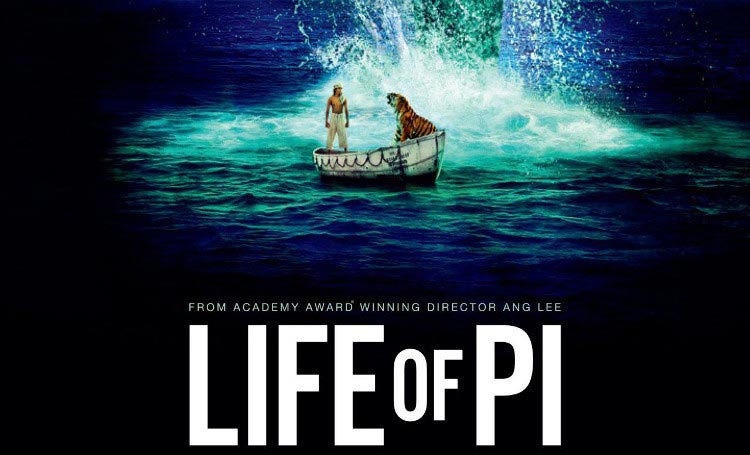
Wow, this has been an exciting fall for literary adaptations! I read Yann Martel’s Life of Pi a decade ago and thought it was fantastic storytelling. I cheered when it won the Man Booker Prize. So, I was quite excited to attend an advance screening recently with several members of my book group. I remembered the novel quite well in broad strokes, but not the fine detail. I didn’t refresh my memory before watching the film, but was curious enough to reread Life of Pi in its entirety before writing this review. The film is very true to the novel in spirit and tone, but there are small changes, additions (generally positive), and elisions (some noteworthy).

The film opens similarly to the novel. The idea is the same, but the execution is slightly different. Different mediums require different storytelling tools. For instance, I believe most film-goers will readily recognize The Writer (portrayed by actor Rafe Spall, who replaced a distractingly famous Toby Maguire) as a stand-in for author Martel. In the novel, it is Martel himself, in direct address to readers, who fulfills this role, effectively blurring the line between fact and fiction. It is established that this story is being related to The Writer by an older Pi. From there, readers are introduced to a young Piscine Molitor Patel and the world he inhabits. It’s a charmed childhood, being raised at the Pondicherry Zoo amongst a loving family and exotic animals—an Indian “We Bought a Zoo.” These scenes are as lush and colorful as any Bollywood musical.

I’ve discussed this novel with other readers countless times over the years. It’s beloved by many, but truly hated by a vocal minority. I’ve never understood the vitriol, personally. Martel writes beautifully and accessibly. His story is fast-paced and yet deeply rooted in character. And it explores the boundless subject of faith through an extraordinary tale—a “story to make you believe in God.” But one complaint I’ve heard from readers is frustration over (or lack of interest in) Pi’s religious explorations early in the novel. The young man is a practicing Hindu, Christian, and Muslim. Martel never belabored the point, but those readers will be gratified to see that director Ang Lee has streamlined the beginning of the tale to move more swiftly to the meat of the story.


And that comes about when Pi’s family packs up their lives, their animals, and moves the whole kit and caboodle to Canada by ship. Well, that’s the plan. Something goes wrong in rough seas outside of Manila. The ship goes down in a haunting scene, and now the stage is set. Sixteen-year-old Pi is shipwrecked in a lifeboat with a zebra, an orangutan, a hyena, and a 450-pound adult Bengal tiger named Richard Parker. It’s survival of the fittest on the high seas, and things get Darwinian fast. Soon enough, it’s Pi and Richard Parker in it together.

When I first heard the premise of this novel, somehow I thought Richard Parker would be some kind of cute, anthropomorphized tiger, and oversized puddy tat. He was not. He was a terrifying predator, and he stayed a terrifying predator, throughout Pi’s ordeal. This was much the same in the movie (although not quite to the degree as in the novel, a change commented upon by Martel in the Hollywood Reporter). Richard Parker was scary in the book, but he was terrifying on the screen. I flinched as he snarled and lunged in 3D.

From here, both novel and film take on an episodic or picaresque quality. The film is delightfully dream-like from its opening frames. (An early scene of the swimming pool from which Pi derives his name enchanted me!) But as the days at sea pass, and the ribs of both animals become plainly visible, the film shifts from dream-like to hallucinatory. Episodes and encounters become increasingly extraordinary. Sitting in the audience, I could clearly discern who had read the novel and who had not by the gasps and exclamations. (Among my friends, the film was enjoyed equally by those who had read the book and those who had not.)

Yes, there are episodes that are missing from the film, one of which is quite notable. Fans may miss it. And, yet, I can understand the choices made. Cuts were judicious. As noted earlier there are a few small shifts and changes. But this is a very faithful adaptation of Martel’s novel, and I suspect it will please most fans of the original. What is lost is more than made up for by how Ang Lee has brought Martel’s fantastic vision to life.


The cinematography and design of this film is exquisitely beautiful. I’m not a huge fan of 3D technology, but once in a while it seems to really augment a film. Such is the case here—all the better to experience a small boat on the vast ocean. And while we’re on the subject of technology, the CGI work on the tiger is seamless. None of us could detect where the real tiger ended and the computer-generated beast began. I have heard that young Suraj Sharma never once filmed with the live animal. For safety, their scenes were filmed separately. And I don’t know how much footage was of a real cat. All I can say is that the illusion is extraordinarily believable. That a first-time actor could give such a convincing performance playing opposite an imaginary tiger is doubly impressive. The success of the film lies firmly on Sharma’s moving portrayal of 16-year-old Pi, but the supporting performances were equally strong. It was Spall’s response to Pi’s story at the end of the film that actually gave me chills.

I’ve been circumspect about revealing specifics of the plot. I’ll leave all the surprises of Pi’s voyage intact for those new to the tale. And readers of the novel can see for themselves what made the cut. About the ending… Those who have read the novel know what to expect. Now film-goers can join the debate we’ve been having for the past decade. In the end, it truly is all about faith. Which story do you prefer?

President Barack Obama's note to Yann Martel after reading Life of Pi.

Wednesday, October 24, 2012

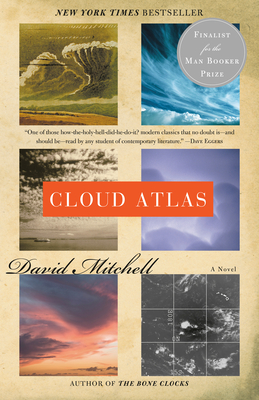
CLOUD ATLAS: An early review from a literary perspective


David Mitchell is one of my absolute favorite writers, and Cloud Atlas is among my favorite novels. It was my top pick for 2004, and it made my Top 10 Best of the Decade list a few years back. I've previously blogged about my unusual first encounter with Mr. Mitchell while he was touring for Cloud Atlas. Good times!

Anyway, considering my love of the novel, you can imagine that I've been looking forward to the film with equal measures of anticipation and trepidation. You always want the film to do the source material justice, but it's rare that it actually happens. And especially when you're looking at as complex a novel as Cloud Atlas. It was said by many to be unfilmable, and if asked, I would have agreed.

And I would have been so very wrong. What Andy Wachowski, Lana Wachowski, and Tom Tykwer have achieved is nothing short of astounding. I'll cut to the chase and tell you that I LOVED this film. It will surely be my favorite of the year.

Have you read Cloud Atlas? The novel has a very unusual structure. Mitchell's an experimental writer. The novel is composed of six linked stories taking place in six different time periods and comprised of six different literary genres. Yeah, that's not too ambitious. The novel opens with the most distant story in the past, a 19th century adventure at sea. Halfway through, the story ends abruptly, mid-sentence. Next, we're at the home of a once-eminent European composer in the early 20th century. That, too, ends abruptly, and now we're embroiled in a mystery in early 1970's San Francisco. But halfway through the tale just stops and we're on to a high comedy set in the present day. After reading half of Timothy Cavendish's dreadful ordeal, we're suddenly in the science fiction world of futuristic and dystopian Seoul--for half a story. And finally, we're in far-distant, post-apocalyptic Hawaii, in a tale written entirely in pigeon English. And at last, the story goes all the way through to the end, after which the second half of the Seoul story commences, followed by all the others.

The film is... totally not like that. It's structured completely differently, with quick scenes from all six stories rapidly juxtaposed against each other. There is constant shifting. It's an amazing way to tell the tale(s), but it works. It more than works. It really drives home the novels abstract themes of connectedness. After the film, one of the things we commented upon was the staggering job of editing this film. I can't imagine what went into it, but it was masterful.

What these three writer/directors--apparently with limited input from Mr. Mitchell--did with this screenplay is extraordinary. It is brilliant. Now, it's been eight years since I read the novel, so my memory of the details is not so fresh, but by my reckoning, the screenplay was remarkably true to Mitchell.  I recognized dialogue taken verbatim from the novel.  Yes, there were elisions, but they were minor. The composer's daughter was removed entirely. She's a character that stands out in my mind due to a memorable later cameo in Mitchell's Black Swan Green, but you know what? She was superfluous. The film didn't need her. I'm sure there were other minor changes, but nothing at all that made me cry foul. No, as I watched the film, memories of the novel came flooding back in the most wonderful way. These filmmakers did a magnificent job of realizing the world(s) that David Mitchell had created.


The film boasts an impressive a-list cast that includes Tom Hanks, Hallie Berry, Jim Broadbent, Hugo Weaving, Jim Sturgess, Doona Bae, Ben Whishaw, Susan Sarandon, Hugh Grant, and so many others. And you've never seen these actors like this. No one has. Go to IMDB and read the cast credits. They're all double, triple, quadruple, quintuple, and sextuple cast! You can't possibly catch or recognize all of their iterations. The actors change race, nationality, and gender across the roles. The makeup work is magical, and if the film doesn't win the Oscar, there is simply no justice. Trying to spot Hugh Grant (mostly in smaller supporting roles) buried under old man or cannibal makeup is all kinds of fun, but this is far more than Hollywood stunt casting. The casting reflects the novels themes. It gets the message across at times almost subliminally. It also gives these stars the opportunity to really stretch their acting muscles.  Tom Hanks brings down the house in a brief comic turn as a thuggish author. When have we seen this actor play so many different colors in a single film? It reminds viewers of just how good he is. Oh yeah, that's what those Oscars were for. The same can be said of much of the cast. I strongly encourage you to stay for the credit--at least long enough to see the photos of the actors in their many roles flash by. You will be shocked by what you missed. THAT was Hallie Berry? you'll find yourself thinking.

Oh, and look for author Mitchell in a cameo as a "Union Spy." I didn't catch him, but I'll be on the lookout next time. Because I plan to see this film many, many times. There's just too much to take in. I'd venture I'll catch something new every time I see this film in years to come. Even at the lengthy running time of 2:42, I was ready to walk right back in the theater and start over from the beginning. The film held me transfixed, and I can't wait to see it again. Not to mention, I've already got a wish list in my mind of DVD extras!

I don't generally write movie reviews, but Cloud Atlas has inspired me. The ideas, the themes, the imagery of David Mitchell's wonderful and ground-breaking novel have sprung to life. It is magical. I attended an advance screening with several members of my book group the other night, and there was equal enthusiasm from those who had read the novel, and those who hadn't. Among my group, there were six thumbs way up, and one lonely dissenter--but she can write her own review. Mine is an unqualified rave. Go. See. This. Film.

Sunday, March 13, 2011

Michael and Ayelet's Hobgoblin


This just in:  The Hollywood Reporter is, uh, reporting that Pulitzer Prize-winning novelist Michael Chabon and his wife, novelist Ayelet Waldman, will be penning (and exec-producing) a new television series for HBO.  Currently entitled Hobgoblin, the series is about a group of con men and magicians who use their unique skills to battle Hitler and the Nazi's.  Right now the show is being developed, but doesn't appear to have been picked up yet.

Ahh, that's so Michael.  Certainly I detect echoes of The Amazing Adventures of Kavalier and Clay.  As potentially awesome as this project may be, is it wrong that I'm almost more interested in the behind the scenes action?  I've had plenty of interaction with both Michael and Ayelet over the years, out and about in Bay Area literary circles, and let me tell you--they are a reality show waiting to happen.  He's lovely.  She always squints at me and asks, "How do I know you?"  Always.

My one concern is that we don't "lose" this talented literary novelist to Hollywood.  Please don't forget your roots, Michael.

And for those of you who are speculating that I posted this news merely for an excuse to feature a huge photo of the dreamy-even-when-scruffy Chabon... No comment.

Friday, February 4, 2011

GREAT writer, different medium


So, normally I blog fairly exclusively about all things bookish here, but a few nights ago Jon and I went out to hear a different kind of writer speak.  Academy Award-winning writer/director/producer James L. Brooks was at the historic Castro Theater to accept the third annual SF Sketchfest Comedy Writing Award.  For those who don't know, Jim Brooks is the writer/director of the films Terms of Endearment, Broadcast News, As Good as It Gets, and the recent How Do You Know, among others.  Additionally, he is the guy behind the classic television series The Mary Tyler Moore Show, Taxi, and The Simpsons.  He is the only person to ever win Oscars for writing, directing, and producing a feature film debut.  And he has won more primetime Emmy Awards (19) than any other person in history.  In short, he's got a few accomplishments under his belt, and has had a significant impact on popular culture.

The program last night began with a conversation between Jim Brooks and his long-time friend and colleague Danny DeVito.  What can I say about Danny DeVito?  He was raucous, vulgar, indiscreet, and absolutely hysterical.  The two of them spoke, told stories, and took questions for nearly an hour and a half--much longer than I expected.  I'd like to repeat those stories here, but I really can't.  It would be irresponsible to post the stories DeVito was telling on the Internet.  I can't believe what was coming out of his mouth!

What am I talking about?  Well, there were several tales from the set of Terms of Endeament.  Danny starts, "Jim, I don't think you'll mind me saying...  I mean, there was...  There was tension on the set."  (Brooks begins to look nervous.)  He talked about how he and Jack Nicholson decided to head down to the location shoot in Texas and brighten things up.  DeVito proceeded to tell a story so mortifying for Shirley MacLaine that my mouth literally dropped open and stayed open for at least 30 seconds.  And from there he launched into a whole routine about Debra Winger.  Brooks was visibly uncomfortable at times with DeVito's, uh, candor, but you could see that his discomfort was warring with amusement and affection.  It was hard not to laugh at DeVito's antics.  The audience was roaring.  At one point, while DeVito was talking trash about Debra Winger, Brooks said, "You're crossing the line."  DeVito's response, "What line?  This is San Francisco!  They don't care."  

There was one Winger story I can repeat.  DeVito actually acted this story out, playing the role of Jim Brooks.  Apparently Debra was holed up in her hotel room refusing to come on set.  For two days.  The production was losing a ton of money, and nobody could do any work.  So, first-time director Brooks approached the hotel door with great trepidation and knocked gently.

"Who is it?"
"It's Jim."
"What do you want?"
"Uh... I gotta use the bathroom!"
(A beat.)  "Nice try."

But Brooks was quick to note: "If Debra Winger wasn't in that film, we wouldn't be talking about it today."  Again and again he made sure to praise the people he's worked with over the years, and he gives every appearance of being an honest to goodness mensch

Later, DeVito launched into a series of stories about wild, cocaine-fueled parties back in the 70's and 80's, causing Brooks to wonder audibly about the statute of limitations, and to preface all of his stories with, "If this were true..."  DeVito's comment, "What?  This is San Francisco!  They don't care.  You know how many mushrooms these people did on the way here?"  So true, so true.

One of my favorite topics that came up was their discussion of the late Andy Kaufman.  The tales they told were funny and bizarre, and it was clear that Kaufman had plenty of detractors back in his days on Taxi.  And it was also clear that Brooks could see why.  But, again, his genuine affection for the man and admiration for his talent shone through. 

After a pleasantly impressive Q & A session, the organizers of the Sketchfest presented Brooks with the Comedy Writing Award.  He and DeVito departed.  And the final portion of the lengthy evening was a screening of Brooks' classic film, Broadcast News.  I've seen this film at least 20 times, and it still stands up today.  (Incidentally, Broadcast News was just rereleased in a comperhensive Criterion Collection DVD that's well worth picking up.)

All and all, it was a fantastic night--the sort to remind you why it's cool to live in a big city, and why it's occasionally good to put down the books and get up off the couch.  But don't worry, I'll be back to the books with my next post.  :-)